
Find the Best Geothermal Heat Pump Contractors for Your Business
No obligation • Fast responses • Nationwide coverage

Why you can trust HVAC Firms
HVAC Firms is a leading United States resource for evaluating HVAC service providers. Our team researches companies, checks credentials, and reviews customer feedback to present clear, unbiased information. Listings and rankings are based on merit, and companies cannot pay to change our editorial content.
Search providers near you
Top Geothermal Heat Pump Contractors in Bolingbrook, Illinois Ranked
A geothermal heat pump, also known as a ground-source heat pump, is one of the most energy-efficient heating and cooling systems available for your home. By leveraging the earth's stable underground temperature, these systems provide exceptional comfort year-round while significantly reducing your energy bills. For Bolingbrook residents, understanding the local options for geothermal installation and maintenance is key to making an informed decision about this long-term investment in home efficiency and sustainability.
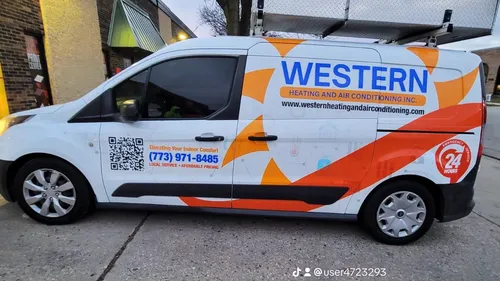
Western Heating And Air Conditioning
6925 N Greenview Ave, Chicago, IL 60626
Western Heating And Air Conditioning is an HVAC contractor based in Chicago, IL, providing a wide range of heating, cooling, and indoor air quality services. They handle installation, repair, and maintenance for air conditioners, furnaces, heat pumps, mini splits, and geothermal systems. The company also offers duct cleaning, thermostat installation, and HVAC tune-ups. Known for capabilities such as smart thermostat integration and energy-efficient HVAC solutions, Western Heating And Air Conditioning supports both residential and commercial clients in the Chicago area.
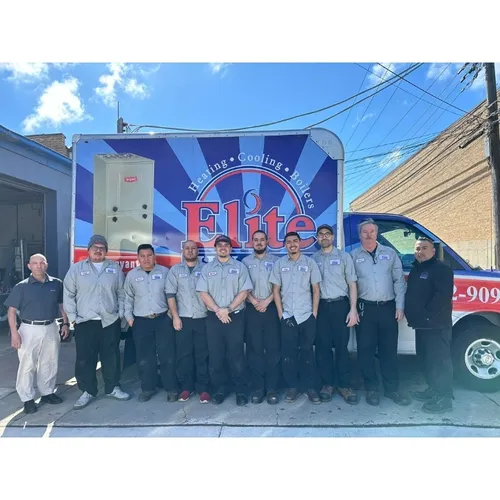
Next Step Heating & Cooling
8206 N McCormick Blvd, Skokie, IL 60076
Next Step Heating & Cooling is an HVAC contractor serving Chicago, IL, and the North Shore area. They provide installation, repair, and maintenance services for heating and cooling systems including furnaces, boilers, air conditioners, geothermal heat pumps, ductless mini splits, and thermostats. The company specializes in geothermal system installations, offering efficient heating and cooling solutions for both residential and commercial properties. Next Step Heating & Cooling is a member of the Geothermal Alliance of Illinois and Comed Energy Efficiency Service providers, emphasizing environmentally friendly and cost-effective HVAC options.
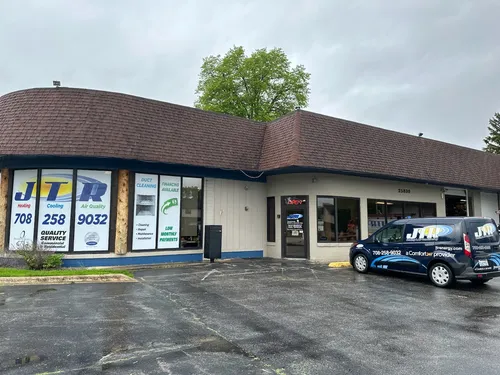
JTR Heating & Air Conditioning
25830 S Governors Hwy, Monee, IL 60449
JTR Heating & Air Conditioning is an HVAC company serving Chicago, IL, and nearby communities including Bourbonnais, Monee, and Peotone. They provide a range of heating and cooling services such as air conditioning and furnace repair, installation, geothermal heat pump systems, duct cleaning, and HVAC tune-ups. With over 30 years of experience, the company supports both residential and commercial customers. They have been recognized with the Carrier President's Award for their service in consecutive years.
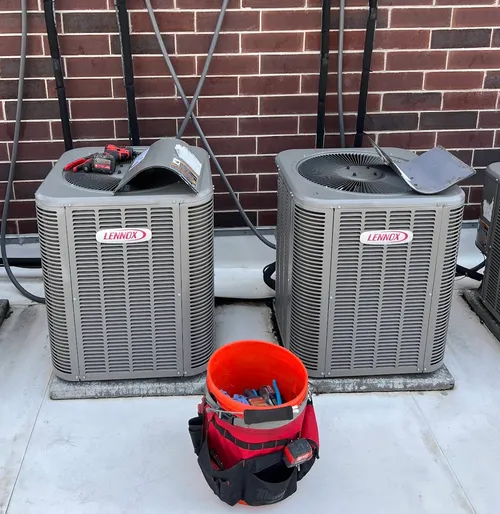
Y-Tech Heating & Air Conditioning
701 Devon Ave, Park Ridge, IL 60068
Y-Tech Heating & Air Conditioning is a licensed HVAC contractor serving Chicago, IL, and the surrounding communities. They provide a range of services including installation, repair, and maintenance of air conditioners, furnaces, heat pumps, boilers, mini split systems, geothermal heat pumps, and indoor air quality products. With over 50 years of experience, Y-Tech offers professional HVAC tune-ups and maintenance agreements to help keep systems running efficiently. They also provide 24/7 emergency service to address urgent heating and cooling needs.
How Geothermal Systems Work in Bolingbrook
Unlike traditional furnaces and air conditioners that burn fuel or use outside air, a geothermal heating and cooling system exchanges heat with the ground. Just a few feet below the surface, the earth maintains a relatively constant temperature between 50°F and 60°F year-round, regardless of Illinois' hot summers and cold winters. A geothermal system uses this stable resource through a simple, reliable process.
A fluid, typically water or an antifreeze solution, circulates through a continuous loop of durable High-Density Polyethylene (HDPE) pipes buried on your property. In the winter, this fluid absorbs the earth's gentle warmth. The geothermal heat pump inside your home then concentrates this low-grade heat and distributes warm air through your ductwork 1. In the summer, the process reverses: the system absorbs heat from your indoor air, transfers it to the fluid in the loop, and dissipates it into the cooler ground, effectively providing air conditioning 2. This "heat exchange" process is what makes geothermal technology so efficient, as it moves existing heat rather than creating it through combustion.
Types of Ground Loops for Your Property
The buried pipe system, called the ground loop, is the heart of the installation. The right loop configuration for your Bolingbrook home depends largely on your lot size, soil composition, and whether you're building new or retrofitting an existing house. Local installers are familiar with the geology of Will County and can recommend the best approach.
Horizontal Closed Loops are often the most cost-effective choice for properties with sufficient land. Trenches are dug about four to six feet deep and two to four feet wide, and pipes are laid in a series of parallel rows or coiled slinky patterns. This method requires a larger, clear area of land but generally involves lower excavation costs than drilling 3.
Vertical Closed Loops are ideal for smaller residential lots common in many Bolingbrook neighborhoods. Contractors use a drilling rig to bore holes 150 to 450 feet deep 4 5. U-shaped pipe loops are inserted into each borehole, which are then grouted. While vertical loops typically have a higher installation cost due to the specialized drilling equipment required, they minimize landscape disruption and are excellent for retrofit projects where yard space is limited 6 7.
The Installation Process: What to Expect
Installing a geothermal system is a significant project that requires careful planning and professional expertise. The process begins with a detailed site evaluation. A qualified installer will assess your property's soil conditions, available space, and existing ductwork or heating system to design an optimal system.
For a horizontal loop, the installation involves excavation with backhoes or trenchers. For a vertical loop, a drilling rig will be brought to your property. This phase may require specific local permits, which your installer should handle. Once the loop is placed and tested, it is connected to the indoor heat pump unit. If you are replacing a forced-air system, the new geothermal unit can often connect to your existing ducts. Homes with hydronic (hot water) heat or no ducts may require modifications or the installation of a ductwork system or a water-to-water heat pump for radiant floor heating.
The entire installation for a typical Bolingbrook home can take several days to a couple of weeks, depending on the loop type and system complexity. The key is working with an experienced contractor who understands the local climate and ground conditions to ensure a seamless and efficient installation.
Financial Considerations: Cost and Savings
The upfront investment for a geothermal heat pump system is higher than that of a conventional HVAC system. For a typical Bolingbrook home, total installed costs can range from $10,000 to over $40,000, with retrofits often on the higher end of the scale due to excavation or drilling and potential duct modifications 8. However, this initial cost must be weighed against substantial long-term benefits.
The primary advantage is dramatic energy savings. By moving heat with exceptional efficiency, geothermal heat pumps can reduce your energy consumption for heating and cooling by 30% to 70% compared to conventional systems 9 10. This translates to significantly lower monthly utility bills. Furthermore, these systems are renowned for their longevity. The underground loop is designed to last for more than 50 years, while the indoor heat pump unit typically has a lifespan of 20 to 25 years-much longer than standard air conditioners or furnaces 11 12.
Find the perfect geothermal heat pump contractors for your needs
Get personalized recommendations and expert advice
To improve the financial outlook, homeowners should actively explore available incentives. Federal tax credits, such as those extended under the Inflation Reduction Act, can offset a significant percentage of the installation cost 13. There may also be state-specific rebates or programs in Illinois. When combined with the energy savings, these incentives can shorten the payback period, which many homeowners find to be in the range of 4 to 15 years 14. Over the life of the system, the total cost of ownership often proves to be lower than maintaining and replacing conventional systems multiple times.
Benefits Beyond Energy Bills
Choosing a geothermal system offers advantages that extend beyond your monthly statement. These systems provide superior comfort with steady, even heating and cooling that eliminates the drafts and temperature swings associated with fossil fuel systems. They are also exceptionally quiet, as the noisiest component-the compressor-is located indoors, and there is no loud outdoor condenser unit.
For environmentally conscious residents, geothermal heat pumps represent a clean, renewable technology. They use electricity to move heat, and if that electricity comes from renewable sources, your home's heating and cooling can have an almost zero carbon footprint. They also don't burn fuel on-site, eliminating the risk of carbon monoxide poisoning and improving indoor air quality 15.
Maintaining Your Geothermal System
One of the appealing aspects of geothermal technology is its low maintenance requirements. The buried loop is virtually maintenance-free. The indoor heat pump unit requires similar care to a standard HVAC system: regular filter changes and periodic check-ups by a qualified technician to ensure all electrical components and the refrigerant charge are in optimal condition. Scheduling an annual maintenance visit can help ensure your system continues to operate at peak efficiency for decades.
Frequently asked questions
Sources
Footnotes
-
How a Geothermal Heat Pump Works | This Old House - https://www.youtube.com/watch?v=d5Tbsx3R2T8 ↩
-
Geothermal Heating and Cooling - https://geothermal.colorado.gov/geothermal-heating-and-cooling ↩
-
Geothermal Heat Pumps, Explained - Bosch Home Comfort - https://www.bosch-homecomfort.com/us/en/residential/connect/blog/geothermal-heat-pumps-go-green-save-green/ ↩
-
Geothermal heat pumps: The ultimate guide to ground-source ... - https://termo-plus.com/blog/geothermal-ultimate-guide-to-ground-source-heat-pumps/ ↩
-
Geothermal heating & cooling, heat pumps, heat exchange ... - https://aztechgeo.com/residential-geothermal/how-it-works/ ↩
-
Geothermal Heat Pumps - Department of Energy - https://www.energy.gov/energysaver/geothermal-heat-pumps ↩
-
Geothermal Ground Loop Design | Comfortworks, Inc. - https://comfort.works/ground-loop-design/ ↩
-
What Does A Geothermal System Cost? | Hillsboro, OR - https://www.hybridhc.com/what-does-a-geothermal-system-cost/ ↩
-
Guide to Geothermal Heat Pumps - https://www.energy.gov/sites/prod/files/guide_to_geothermal_heat_pumps.pdf ↩
-
Geothermal | Northbrook, IL - https://www.northbrook.il.us/1233/Geothermal ↩
-
How Does a Geothermal System Work? - ClimateMaster - https://www.climatemaster.com/homeowner/side-links/how-it-works ↩
-
Geothermal Heating and Cooling - Ecology Action Center - https://ecologyactioncenter.org/energy-home/geothermal-heating-and-cooling/ ↩
-
Heat Pump Guide | Benefits of Heat Pumps - https://www.westinair.com/heat-pump-guide.php ↩
-
Everything You Need to Know About Geothermal Heat Pumps - https://www.familyhandyman.com/article/everything-you-need-to-know-about-geothermal-heat-pumps/ ↩
-
Geothermal Heat Pumps - https://www.carrier.com/residential/en/ca/products/geothermal-heat-pumps/ ↩