
Find the Best Geothermal Heat Pump Contractors for Your Business
No obligation • Fast responses • Nationwide coverage

Why you can trust HVAC Firms
HVAC Firms is a leading United States resource for evaluating HVAC service providers. Our team researches companies, checks credentials, and reviews customer feedback to present clear, unbiased information. Listings and rankings are based on merit, and companies cannot pay to change our editorial content.
Search providers near you
Top Geothermal Heat Pump Contractors in Belleville, Illinois Ranked
A geothermal heat pump is a highly efficient heating and cooling system that uses the stable temperature of the earth to regulate your home's climate. For Belleville residents, this technology offers a reliable way to achieve significant energy savings and long-term comfort, regardless of the season. This guide explains how these ground-source systems work, the options available locally, and how you can connect with qualified professionals to explore if it's the right fit for your property.

Indoor Comfort Team
3640 Scarlet Oak Blvd, Kirkwood, MO 63122
Indoor Comfort Team is a family-owned HVAC company serving St Louis, MO, and nearby areas since 1979. They provide a wide range of services including air conditioning repair, furnace and heat pump installation and repair, mini split and geothermal heat pump systems, as well as indoor air quality solutions. Their NATE-certified technicians work with leading manufacturers to deliver heating and cooling services tailored to residential and commercial needs. Indoor Comfort Team offers specialized capabilities such as ground-source geothermal heat pump installations and maintains a commitment to customer satisfaction with workmanship guarantees.
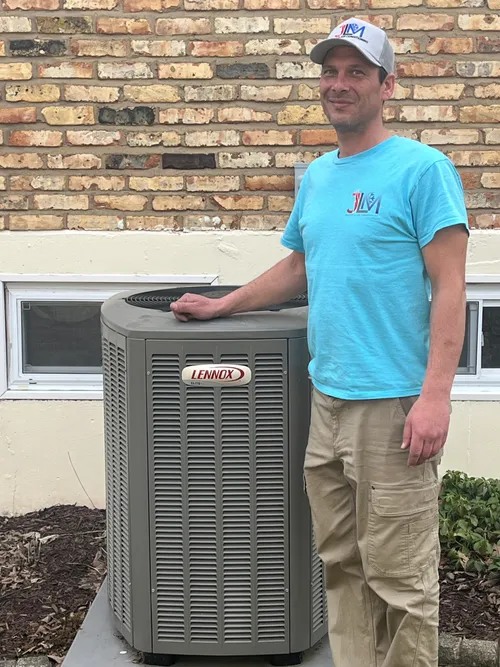
JLM Heating and Air Conditioning
3976 Royal Estates Dr, St. Louis, MO 63129
JLM Heating and Air Conditioning serves St. Louis, MO, and surrounding areas with a range of HVAC services including installation and repair of air conditioners, furnaces, heat pumps, boilers, and geothermal systems. With over 14 years of experience, their factory-trained technicians work on all makes and models and carry fully stocked service vehicles to handle most repairs efficiently. They are authorized dealers for several brands and offer flexible financing options to assist with new installations and major repairs.
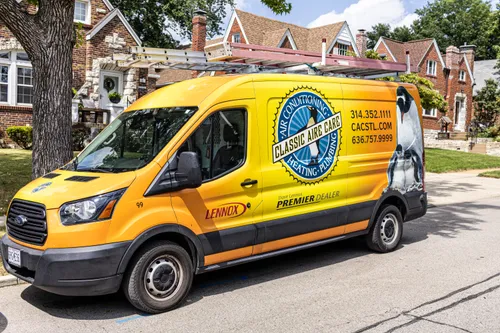
Classic Aire Care
1276 N Warson Rd, St. Louis, MO 63132
Classic Aire Care is an established HVAC and plumbing company serving St Louis, MO, and the surrounding areas. With a history dating back to 1926, they provide a wide range of services including installation, repair, and maintenance of air conditioners, furnaces, heat pumps, boilers, and geothermal systems. They also offer indoor air quality solutions such as air purifiers and humidifiers, along with expert plumbing services. Classic Aire Care is equipped to handle 24/7 emergency heating and cooling repairs, ensuring reliable service year-round.
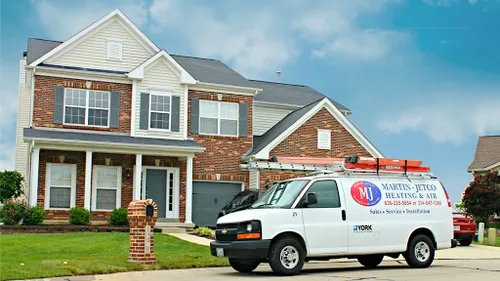
Martin Jetco Heating & Air Conditioning
1327 W Lark Industrial Dr, Fenton, MO 63026
Martin Jetco Heating & Air Conditioning is a family-owned HVAC company serving St Louis, MO, since 1964. They offer a full range of heating and cooling services, including installation, repair, and maintenance of air conditioners, furnaces, heat pumps, mini splits, and geothermal systems. Their licensed and NATE-certified technicians provide tailored solutions using leading brands like York, Goodman, and Daikin. The company emphasizes energy-efficient systems suited for the local climate and offers comprehensive maintenance plans to extend equipment lifespan and improve indoor air quality.
Viviano Heating & Air Conditioning, Inc.
201 W Main St, Collinsville, IL 62234
Viviano Heating & Air Conditioning, Inc. is an HVAC company serving St Louis, MO, and the Metro-East Illinois area. They specialize in repairing and installing air conditioners, furnaces, heat pumps, geothermal systems, and rooftop units. As Trane Comfort Specialists, their technicians are trained in the latest Trane technology to provide efficient and dependable HVAC solutions. Viviano has been serving the Metro-East region for decades, covering areas including Belleville, Collinsville, Edwardsville, and surrounding counties.
How Geothermal Heating and Cooling Works
Unlike traditional air-source systems that battle fluctuating outdoor air temperatures, a geothermal system taps into the earth's consistent thermal energy. Just a few feet below the surface, the ground maintains a relatively stable temperature of approximately 50-60°F year-round 1. This constant temperature is the key to the system's remarkable efficiency.
The process centers on a ground loop-a network of high-density polyethylene pipes buried in your yard. A water-based solution circulates through this closed loop, absorbing the earth's warmth in the winter and depositing your home's excess heat in the summer2 3. This fluid then travels to the indoor heat pump unit. During heating mode, the pump concentrates this low-grade thermal energy and transfers it to your home's air or water distribution system. In cooling mode, the cycle reverses: the pump extracts heat from your indoor air and transfers it into the cooler fluid in the loop, which then rejects the heat into the earth 4. This elegant exchange with the ground, rather than the outside air, is what allows geothermal heat pumps to operate with such high efficiency, often leading to utility bill savings of 50-60% compared to conventional systems.
Types of Geothermal Systems for Belleville Homes
Geothermal technology is versatile and can be adapted to different types of homes and heating preferences. The main distinction lies in how the conditioned air or water is delivered inside your home.
Forced Air Systems: This is the most common type and works seamlessly if your home already has ductwork. The geothermal heat pump conditions air and distributes it through the existing ducts, making it a straightforward retrofit for many homes.
Ductless Mini-Split Systems: For homes without ducts or for targeted comfort in specific zones like additions or garages, ductless mini-splits are an excellent option. An indoor air-handling unit is mounted on a wall or ceiling and connected to the geothermal ground loop, providing flexible, efficient heating and cooling without the need for extensive ductwork.
Water-to-Water Systems: These systems use the geothermal heat pump to heat or cool water directly. The conditioned water is then circulated through a radiant floor heating system for luxurious, even warmth, or used to provide a portion of your home's domestic hot water 5. This type is ideal for new construction or major renovations where radiant heating is desired.
Ground Loop Configurations: What Works in Your Yard
The underground portion of the system, the ground loop, can be installed in different configurations. The right choice for your Belleville property depends on soil conditions, lot size, and local geology.
Horizontal Ground Loops: This method involves using a trencher to dig a series of shallow trenches, typically 4 to 10 feet deep, across a sizable area of your property6 7. Pipes are laid in these trenches in a slinky-like pattern to maximize surface area. Horizontal loops are generally more cost-effective to install but require a larger, clear plot of land.
Vertical Ground Loops: When yard space is limited, vertical loops are the preferred solution. A drilling rig bores deep holes, usually between 100 and 400 feet, and U-shaped pipe loops are inserted into each borehole. This method requires less horizontal space but involves more specialized drilling equipment. The geology in the Belleville area can influence drilling depth and cost, so a professional site evaluation is crucial.
Pond or Lake Loops: If you have a sufficiently deep and sizable body of water on your property, a submerged loop system can be an efficient option. Coils of pipe are anchored at the bottom of the pond or lake, where the water's stable temperature facilitates the heat exchange. This can be one of the most economical loop installations, provided the water source meets specific volume and depth requirements.
Find the perfect geothermal heat pump contractors for your needs
Get personalized recommendations and expert advice
Key Considerations for Belleville Homeowners
Investing in a geothermal system is a significant decision that pays off over decades. Several local factors will influence your project's design and viability.
Property Evaluation: The first step is a thorough site assessment by a qualified installer. They will evaluate your lot size to determine if horizontal trenches or vertical boreholes are feasible. They'll also consider soil composition and rock content, as these affect heat transfer efficiency and drilling complexity. An energy audit of your home can also help right-size the system for optimal performance.
Understanding Costs and Value: The upfront investment for a complete geothermal heating and cooling system in Belleville typically ranges from $12,000 to over $40,000, depending on system capacity, loop type, and site-specific challenges8 9. It's important to view this cost in light of the long-term value. The dramatic reduction in monthly energy bills-often cutting heating and cooling costs by more than half-starts paying you back immediately10 11. Furthermore, the system's components are incredibly durable: the underground piping often carries warranties of 50 years or more, and the indoor heat pump unit typically lasts 20 to 25 years, which is about twice the lifespan of a standard air conditioner or furnace12 13.
Finding the Right Installer: Success with geothermal technology hinges on proper design and installation. Seek out licensed HVAC contractors in the St. Louis and Belleville area who have specific training and experience with ground-source heat pumps14. Look for installers certified by organizations like the International Ground Source Heat Pump Association (IGSHPA). A reputable professional will provide a detailed proposal, explain all available options, and help you navigate any applicable local incentives or federal tax credits that can improve the financial return.
The Long-Term Benefits of Going Geothermal
Choosing a geothermal system is an investment in lasting comfort, efficiency, and sustainability. Beyond the substantial utility savings, homeowners enjoy exceptionally consistent temperatures without the drafts or cold spots common with forced-air systems. The systems are also very quiet, with the noisiest component (the ground loop circulator) located indoors and insulated.
From an environmental standpoint, geothermal heat pumps have a minimal footprint. They use electricity not to create heat through resistance, but to move existing thermal energy, making them one of the cleanest and most efficient ways to heat and cool a home 15. For Belleville residents looking to reduce their carbon footprint while gaining unparalleled control over home comfort and long-term operating costs, ground-source heat pump technology presents a compelling, future-proof solution.
Frequently asked questions
Sources
Footnotes
-
All You Need to Know About Home Geothermal Heating & Cooling - Dandelion Energy - https://dandelionenergy.com/all-you-need-to-know-about-home-geothermal-heating-cooling ↩
-
5 Things You Should Know about Geothermal Heat Pumps - https://www.energy.gov/cmei/articles/5-things-you-should-know-about-geothermal-heat-pumps ↩
-
Geothermal Heating and Cooling - Ecology Action Center - https://ecologyactioncenter.org/energy-home/geothermal-heating-and-cooling/ ↩
-
How a Geothermal Heat Pump Works | This Old House - https://www.youtube.com/watch?v=d5Tbsx3R2T8 ↩
-
Commercial Geothermal Systems: How They Work, Where They Excel, and Why They're Growing - https://jomory.com/commercial-geothermal-systems-how-they-work-where-they-excel-and-why-theyre-growing/ ↩
-
Geothermal Heat Pumps, Explained - Bosch Home Comfort - https://www.bosch-homecomfort.com/us/en/residential/connect/blog/geothermal-heat-pumps-go-green-save-green/ ↩
-
Geothermal Ground Loop FAQs - Dandelion Energy - https://dandelionenergy.com/geothermal-ground-loop-frequently-asked-questions ↩
-
Geothermal Heating, Cooling, and Hot Water Systems - https://igshpa.org/wp-content/uploads/Homeowners-Guide-to-Geothermal.pdf ↩
-
Geothermal Heat Pump Guide: Installation Costs, Types And Benefits - https://modernize.com/hvac/heating-repair-installation/heat-pump/geothermal ↩
-
How Do Geothermal Systems Work for Residential Homes? - https://www.davisheat.com/blog/how-do-geothermal-systems-work-for-residential-homes/ ↩
-
Guide to Geothermal Heat Pumps - https://www.energy.gov/sites/prod/files/guide_to_geothermal_heat_pumps.pdf ↩
-
Geothermal Heat Pumps - EnergySmart CNY - https://www.energysmartcny.org/heat-pumps/geothermal/ ↩
-
How Does A Geothermal Heat Pump Work? Complete 2025 Guide - https://solartechonline.com/blog/how-does-geothermal-heat-pump-work/ ↩
-
Quad Cities Geothermal Heat Pump Services | Installation & Repair - https://www.scheblerhvac.com/geothermal-heat-pumps/ ↩
-
Geothermal Heat Pumps - Department of Energy - https://www.energy.gov/energysaver/geothermal-heat-pumps ↩