
Find the Best Geothermal Heat Pump Contractors for Your Business
No obligation • Fast responses • Nationwide coverage

Why you can trust HVAC Firms
HVAC Firms is a leading United States resource for evaluating HVAC service providers. Our team researches companies, checks credentials, and reviews customer feedback to present clear, unbiased information. Listings and rankings are based on merit, and companies cannot pay to change our editorial content.
Search providers near you
Top Geothermal Heat Pump Contractors in Smyrna, Georgia Ranked
A geothermal heat pump is a highly efficient heating and cooling system that uses the earth's stable underground temperature to regulate your home's climate. This technology, often called a ground-source heat pump, matters because it can drastically cut your energy use and utility bills while providing reliable comfort year-round. If you're a Smyrna homeowner considering this upgrade, you can use this guide to understand the process, benefits, and how to connect with qualified local specialists for installation and service.
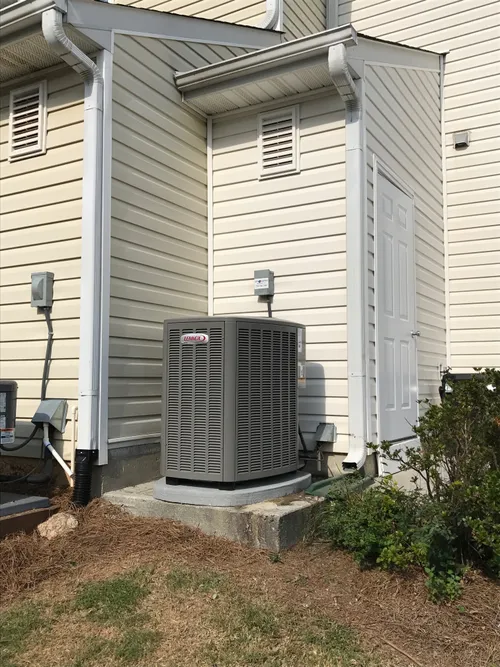
Innovative Mechanical, LLC
1700 Cumberland Point Dr Suite 17, Marietta, GA 30067
Innovative Mechanical, LLC is an HVAC company based in Atlanta, GA, offering a range of services including air conditioning repair, heat pump installation, geothermal heat pump systems, and indoor air quality improvements. They handle both residential and commercial HVAC needs, providing design, installation, and maintenance solutions. Their capabilities include working with geothermal heat pumps and air purifiers to enhance indoor air quality.
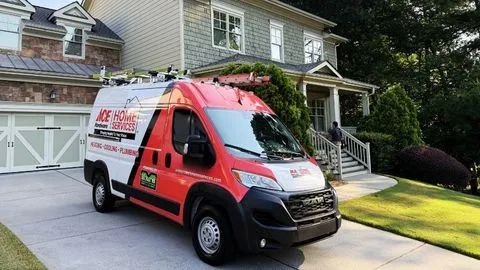
Moncrief Heating & Air Conditioning
935 Chattahoochee Ave NW, Atlanta, GA 30318
Moncrief Heating & Air Conditioning is a full-service HVAC and plumbing company serving Atlanta, GA. With over 125 years of experience, they provide installation, repair, and maintenance for heating, cooling, and plumbing systems. Their services include AC, furnace, heat pump, boiler, mini split, and geothermal heat pump installation and repair, along with HVAC tune-ups. Moncrief works closely with clients to create tailored solutions that fit individual home comfort and health needs.
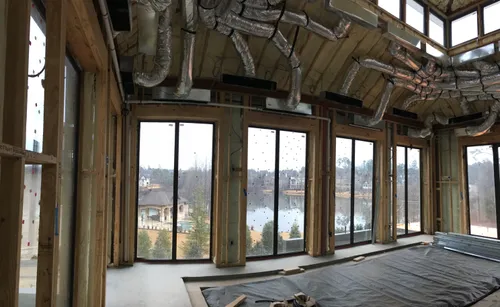
EcoMech Geothermal and Heating & Air
1100 Peachtree St NE STE 200, Atlanta, GA 30309
EcoMech Geothermal and Heating & Air is an HVAC company based in Atlanta, GA, specializing in geothermal heat pump installation and repair, as well as air conditioning and heating services for both residential and commercial clients. They focus on energy-efficient geothermal systems that use the earth's stable ground temperature to provide heating, cooling, and hot water. EcoMech also offers spray foam insulation to improve energy savings. Their expertise includes commercial and industrial geothermal system installations.
How Geothermal Systems Work in Smyrna
Geothermal heating and cooling systems leverage a simple, brilliant principle: the ground beneath your feet maintains a relatively constant temperature between 50°F and 70°F, regardless of the summer heat or winter chill above. A geothermal unit, or ground-source heat pump, moves heat to and from this stable thermal reservoir instead of generating it through combustion or electrical resistance.
During the heating season, a fluid circulating through pipes buried in your yard (called a ground loop) absorbs the earth's natural warmth. This warmed fluid is carried to the indoor heat pump unit, which concentrates the heat and distributes it as warm air through your home's ductwork 1 2. In the cooling season, the process reverses. The system extracts heat and humidity from your indoor air and transfers it into the cooler earth via the same loop system 1. Because it's primarily moving existing heat rather than creating it, a geothermal system operates with remarkable efficiency, often using up to 65% less energy than conventional HVAC systems.
Types of Ground Loop Systems
The heart of any geothermal installation is the ground loop. The right type for your Smyrna property depends on your lot size, soil composition, and budget. There are three primary configurations:
Horizontal Ground Loops: This is often the most cost-effective option if you have sufficient land. Contractors dig trenches four to six feet deep, requiring a significant amount of space-typically between 1/4 to 3/4 of an acre per ton of system capacity 3. This method is popular for new construction projects where the yard can be easily excavated before landscaping.
Vertical Ground Loops: For homes in Smyrna with smaller lots, vertical loops are the ideal solution. Installers drill boreholes 150 to 250 feet deep and insert U-shaped loop pipes 4. While the drilling process is more specialized and can be more expensive, the surface footprint is minimal, making it perfect for established neighborhoods with limited yard space.
Pond/Lake Loops: If your property has a suitable body of water-a pond or lake that is deep enough and maintains sufficient volume-this can be an excellent option. Coils of pipe are submerged at the bottom, using the water as a heat exchange medium 5 6. This method usually has the lowest installation cost if the water source is readily available.
The Installation Process: What to Expect
Installing a geothermal heating and cooling system is a significant project that requires careful planning and expert execution. Here's a typical step-by-step overview:
- Site Assessment and Design: A qualified installer will evaluate your property, considering soil conditions, available land, and your home's heating and cooling loads. This assessment determines the most effective and economical loop type and sizes the system correctly.
- Ground Loop Installation: This is the major excavation phase. For a horizontal system, trenches are dug. For a vertical system, a drilling rig creates the boreholes. The high-density polyethylene pipe is placed, connected into a continuous loop, and pressure-tested. The trenches or boreholes are then backfilled with a special grout to ensure good thermal conductivity 7 8.
- Indoor Unit Setup: The geothermal heat pump unit itself is installed in a protected location like a garage, basement, or mechanical closet. It resembles a traditional furnace or air handler and is connected to the ground loop and your home's electrical system.
- Distribution Connection: Finally, the system is connected to your home's distribution network. Most commonly, this is the existing ductwork for forced air. Alternatively, some systems can be connected to hydronic (water-based) systems like radiant floor heating 9.
Find the perfect geothermal heat pump contractors for your needs
Get personalized recommendations and expert advice
Benefits and Financial Considerations
The decision to invest in a geothermal system involves weighing higher upfront costs against long-term savings and environmental benefits.
Upfront Investment: It's true that the initial cost for a geothermal heat pump system is higher than for a standard air-source heat pump or furnace and AC unit. Total installed costs in Smyrna can range from $20,000 to over $40,000, depending on your home's size, the loop type, and site conditions. However, this cost is mitigated by significant incentives.
Long-Term Savings and Incentives: The operational savings are where geothermal shines. By slashing your heating and cooling energy use by up to 65%, the system can pay for itself over time through lower utility bills 10 11. Furthermore, a 30% federal tax credit is available for qualified geothermal heat pump installations, which can substantially reduce your net cost 11 12. The equipment itself is durable, with a lifespan of 20+ years for the heat pump and 50+ years for the underground loops, leading to decades of reliable service 13.
Why Geothermal is a Smart Choice for Smyrna Homes
Georgia's climate and geology are particularly well-suited for geothermal technology. The state's ground temperatures remain in that ideal 40-70°F range year-round, providing an excellent source for efficient heat exchange in both summer and winter 14. For Smyrna residents, this means a single, quiet system can provide exceptional comfort regardless of the season.
When looking for a provider, it's crucial to choose certified installers with specific experience in geothermal systems. They should be familiar with local soil conditions, drilling regulations, and the proper design principles to ensure your system delivers on its promise of efficiency and reliability 15. A properly installed geothermal system is not just an HVAC upgrade; it's a long-term investment in your home's comfort, value, and sustainability.
Frequently asked questions
Sources
Footnotes
-
Best Geothermal Systems for Georgia Homes - https://toptechmech.com/best-geothermal-systems/ ↩ ↩2
-
Geothermal (Ground Source) Heat Pumps - NY.gov - https://cleanheat.ny.gov/geothermal-heat-pumps/ ↩
-
Geothermal Heat Pumps, Explained - Bosch Home Comfort - https://www.bosch-homecomfort.com/us/en/residential/connect/blog/geothermal-heat-pumps-go-green-save-green/ ↩
-
Geothermal heating & cooling, heat pumps, heat exchange ... - https://aztechgeo.com/residential-geothermal/how-it-works/ ↩
-
Geothermal Heat Pumps - Department of Energy - https://www.energy.gov/energysaver/geothermal-heat-pumps ↩
-
How Does A Geothermal Heat Pump Work? Complete 2025 Guide - https://solartechonline.com/blog/how-does-geothermal-heat-pump-work/ ↩
-
Geothermal Heating, Cooling, and Hot Water Systems - https://igshpa.org/wp-content/uploads/Homeowners-Guide-to-Geothermal.pdf ↩
-
FAQs • What types of ground-source heat pumps and configurat - https://concordma.gov/FAQ.aspx?QID=484 ↩
-
Guide to Geothermal Heat Pumps - https://www.energy.gov/sites/prod/files/guide_to_geothermal_heat_pumps.pdf ↩
-
Geothermal Heat Pump Installation: What To Expect For Your ... - https://jomory.com/geothermal-heat-pump-installation-what-to-expect-for-your-property/ ↩
-
5 Things You Should Know about Geothermal Heat Pumps - https://www.energy.gov/cmei/articles/5-things-you-should-know-about-geothermal-heat-pumps ↩ ↩2
-
Guide to Geothermal Heat Pumps - https://www.energy.gov/sites/prod/files/guide_to_geothermal_heat_pumps.pdf ↩
-
Geothermal Heat Pump Guide: Installation Costs, Types And Benefits - https://modernize.com/hvac/heating-repair-installation/heat-pump/geothermal ↩
-
Geothermal Heating & Cooling - Department of Energy - https://www.energy.gov/eere/geothermal/geothermal-heating-cooling ↩
-
Geothermal Heating and Cooling: A Sustainable Solution for Architects, Interior Designers, and Construction Companies - UGREEN - https://ugreen.io/geothermal-heating-and-cooling-a-sustainable-solution-for-architects-interior-designers-and-construction-companies/ ↩