
Find the Best Geothermal Heat Pump Contractors for Your Business
No obligation • Fast responses • Nationwide coverage

Why you can trust HVAC Firms
HVAC Firms is a leading United States resource for evaluating HVAC service providers. Our team researches companies, checks credentials, and reviews customer feedback to present clear, unbiased information. Listings and rankings are based on merit, and companies cannot pay to change our editorial content.
Search providers near you
Top Geothermal Heat Pump Contractors in Atlanta, Georgia Ranked
A geothermal heat pump, also known as a ground-source heat pump, is a highly efficient heating and cooling system that leverages the Earth's stable underground temperature. For Atlanta homeowners, this technology offers a powerful way to combat seasonal temperature swings while dramatically reducing energy consumption and utility bills. This guide explains how these systems work, what installation entails, and how you can find qualified local specialists to evaluate your property for this sustainable upgrade.
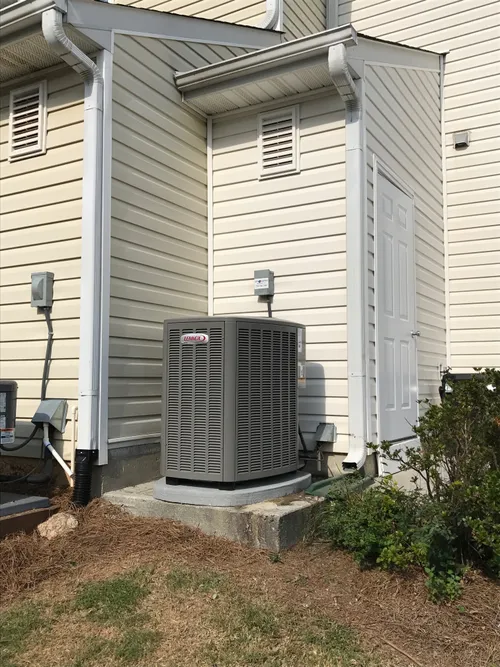
Innovative Mechanical, LLC
1700 Cumberland Point Dr Suite 17, Marietta, GA 30067
Innovative Mechanical, LLC is an HVAC company based in Atlanta, GA, offering a range of services including air conditioning repair, heat pump installation, geothermal heat pump systems, and indoor air quality improvements. They handle both residential and commercial HVAC needs, providing design, installation, and maintenance solutions. Their capabilities include working with geothermal heat pumps and air purifiers to enhance indoor air quality.
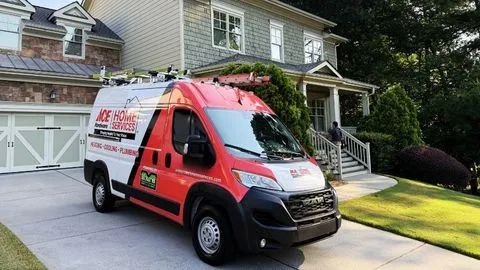
Moncrief Heating & Air Conditioning
935 Chattahoochee Ave NW, Atlanta, GA 30318
Moncrief Heating & Air Conditioning is a full-service HVAC and plumbing company serving Atlanta, GA. With over 125 years of experience, they provide installation, repair, and maintenance for heating, cooling, and plumbing systems. Their services include AC, furnace, heat pump, boiler, mini split, and geothermal heat pump installation and repair, along with HVAC tune-ups. Moncrief works closely with clients to create tailored solutions that fit individual home comfort and health needs.
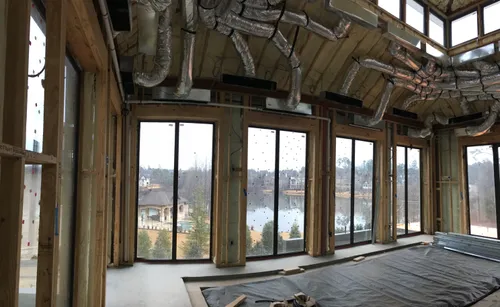
EcoMech Geothermal and Heating & Air
1100 Peachtree St NE STE 200, Atlanta, GA 30309
EcoMech Geothermal and Heating & Air is an HVAC company based in Atlanta, GA, specializing in geothermal heat pump installation and repair, as well as air conditioning and heating services for both residential and commercial clients. They focus on energy-efficient geothermal systems that use the earth's stable ground temperature to provide heating, cooling, and hot water. EcoMech also offers spray foam insulation to improve energy savings. Their expertise includes commercial and industrial geothermal system installations.
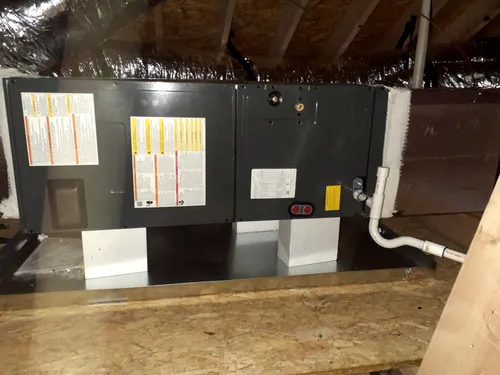
DiegoHVAC LLC
3241 Old Church Cove NE, Conyers, GA 30012
DiegoHVAC LLC is a family-owned HVAC company serving Atlanta, GA, and surrounding areas with over 15 years of experience. They provide a wide range of heating and cooling services including installation, maintenance, and repair of air conditioners, furnaces, heat pumps, boilers, mini-splits, and geothermal systems. Their offerings also include indoor air quality solutions such as duct cleaning, air purifiers, and custom ductwork. DiegoHVAC LLC is available 24/7 for emergency service, ensuring support whenever needed.
How Geothermal Systems Work in Atlanta's Climate
The core principle of a ground-source heat pump is simple: it uses the Earth as a giant thermal battery. While Atlanta summers are hot and humid and winters can be chilly, the temperature just a few feet below the surface remains a relatively constant 55 to 65 degrees Fahrenheit year-round. A geothermal system taps into this stable resource.
During the winter, a fluid circulating through pipes buried underground (called a ground loop) absorbs the Earth's natural warmth. The heat pump inside your home then concentrates this low-grade heat and distributes it through your ductwork or hydronic system 1. In the summer, the process reverses: the system extracts heat and humidity from your indoor air and transfers it into the cooler ground loop, effectively using the Earth to cool your home 2. This exchange is far more efficient than generating heat or fighting the outdoor air temperature directly, which is why these systems can slash heating and cooling energy use by 30% to 70% 3.
Types of Ground Loop Systems
The underground portion of the system, the ground loop, is the most critical installation component. The right type for your Atlanta home depends on your lot size, soil composition, and budget. There are three primary configurations:
- Horizontal Closed Loops: Pipes are laid in trenches dug 3 to 6 feet deep. This is often the most cost-effective method but requires a significant amount of available land 4.
- Vertical Closed Loops: Pipes are run deep into boreholes drilled 60 to 200 feet or more into the ground. This is ideal for homes with smaller yards, as it requires less surface area, though the drilling process increases the upfront cost 5.
- Pond/Lake Loops: If you have a sufficient body of water on your property, a coil of pipe can be submerged. This can be a very efficient option, but it requires specific water conditions.
The Geothermal Installation Process
Installing a ground-source heating and cooling system is a significant project that requires expert planning and execution. Here's a step-by-step overview of what to expect:
- Site Assessment and Design: A qualified installer will evaluate your home's heating and cooling loads, inspect your property, and conduct soil tests. This information determines the optimal size and type of ground loop system.
- Ground Loop Installation: This is the major excavation phase.
- For horizontal loops, long trenches are dug across the property.
- For vertical loops, a drilling rig creates a series of deep boreholes. The high-density polyethylene pipe is then placed in the trenches or boreholes and connected into a continuous loop.
- Loop Connection and Pressure Test: The pipes are run to the home's foundation, connected to a manifold, and the entire loop is pressurized and tested for leaks to ensure integrity before being buried.
- Indoor Unit Installation: The geothermal heat pump unit-which resembles a traditional furnace-is installed in your basement, garage, or mechanical closet. It is connected to your existing ductwork or to a hydronic (water-based) distribution system.
- Final Hookup and Commissioning: The system is connected to electrical and plumbing lines. The installer then charges the system, programs the thermostat, and tests all functions to ensure optimal performance 6.
Choosing Between Horizontal and Vertical Loops in Atlanta
Your property's characteristics will heavily influence the best loop choice. Consider these key factors:
- Available Space: Vertical loops are the standard solution for typical residential lots in Atlanta, as they minimize surface disruption. Horizontal loops require a larger, clear plot of land.
- Soil and Rock Conditions: The thermal conductivity of your soil affects loop length. Drilling through rock for vertical loops is more expensive but may be necessary in some areas.
- Upfront Cost vs. Long-Term Value: While vertical loop installation has higher drilling costs, the system's extreme efficiency leads to long-term savings. Horizontal loops have lower installation costs but require more land 7.
- Landscaping Impact: Trenching for horizontal loops will disrupt a large area of your yard, which will need to be restored. Drilling for vertical loops impacts much smaller, concentrated spots.
Find the perfect geothermal heat pump contractors for your needs
Get personalized recommendations and expert advice
Understanding Costs, Savings, and Incentives
The decision to install a geothermal system is a long-term investment in home comfort and energy independence.
- Installation Costs: A complete geothermal heat pump system in Atlanta typically ranges from $20,000 to $40,000 or more. This wide range depends on your home's size, the loop type (vertical being more expensive), soil conditions, and the complexity of the indoor installation.
- Operational Savings: The dramatic reduction in energy use is the main payoff. Homeowners often see savings of 50% to 70% on their heating and cooling bills compared to conventional systems, which can lead to a payback period often within 10 years 8.
- Financial Incentives: To offset the initial cost, significant incentives are available. The federal residential energy efficiency tax credit currently offers 30% of the total installation cost for systems installed through 2032 9 10. Additionally, local utility companies in Georgia may offer rebates or special rates for geothermal customers, enhancing the financial return 11.
Maintenance and Longevity
One of the standout benefits of a geothermal system is its durability and low maintenance. The indoor heat pump components typically last 15-20 years, similar to high-end conventional systems. The buried ground loop, however, is renowned for its longevity, with a lifespan of 50 years or more 12. Annual maintenance is straightforward, involving standard checks of the heat pump unit, air filters, and ductwork, similar to maintaining a traditional HVAC system.
Frequently asked questions
Sources
Footnotes
-
Understanding and Evaluating Geothermal Heat Pump Systems - https://www.nyserda.ny.gov/-/media/Project/Nyserda/Files/EERP/Residential/Geothermal/geothermal-manual.pdf ↩
-
Best Geothermal Systems for Georgia Homes - https://toptechmech.com/best-geothermal-systems/ ↩
-
Geothermal Heat Pump Installation: What To Expect For Your ... - https://jomory.com/geothermal-heat-pump-installation-what-to-expect-for-your-property/ ↩
-
Geothermal Heat Pumps - Department of Energy - https://www.energy.gov/energysaver/geothermal-heat-pumps ↩
-
Geothermal heat pumps: The ultimate guide to ground-source ... - https://termo-plus.com/blog/geothermal-ultimate-guide-to-ground-source-heat-pumps/ ↩
-
FAQs • What types of ground-source heat pumps and configurat - https://concordma.gov/FAQ.aspx?QID=484 ↩
-
How Does A Geothermal Heat Pump Work? Complete 2025 Guide - https://solartechonline.com/blog/how-does-geothermal-heat-pump-work/ ↩
-
5 Things You Should Know about Geothermal Heat Pumps - https://www.energy.gov/cmei/articles/5-things-you-should-know-about-geothermal-heat-pumps ↩
-
Guide to Geothermal Heat Pumps - https://www.energy.gov/sites/prod/files/guide_to_geothermal_heat_pumps.pdf ↩
-
Geothermal Heat Pump Guide: Installation Costs, Types And Benefits - https://modernize.com/hvac/heating-repair-installation/heat-pump/geothermal ↩
-
Harnessing Earth's Energy: The Benefits of Geothermal HVAC ... - https://www.ecomech.net/2023/08/22/harnessing-earths-energy-the-benefits-of-geothermal-hvac-for-single-family-homes-in-georgia/ ↩
-
All You Need to Know About Home Geothermal Heating & ... - https://dandelionenergy.com/all-you-need-to-know-about-home-geothermal-heating-cooling ↩