
Find the Best Geothermal Heat Pump Contractors for Your Business
No obligation • Fast responses • Nationwide coverage

Why you can trust HVAC Firms
HVAC Firms is a leading United States resource for evaluating HVAC service providers. Our team researches companies, checks credentials, and reviews customer feedback to present clear, unbiased information. Listings and rankings are based on merit, and companies cannot pay to change our editorial content.
Search providers near you
Top Geothermal Heat Pump Contractors in Peachtree Corners, Georgia Ranked
A geothermal heat pump is a highly efficient heating and cooling system that leverages the Earth's stable underground temperature to regulate your home's climate. For homeowners in Peachtree Corners, this technology offers a path to dramatically lower energy bills and a reduced environmental footprint. This guide explains how these ground-source heat pump systems work, what installation entails locally, and how you can connect with qualified professionals to explore this sustainable option for your property.
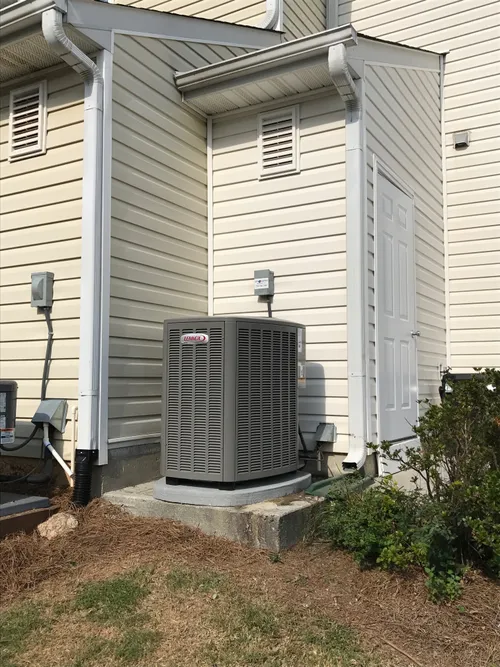
Innovative Mechanical, LLC
1700 Cumberland Point Dr Suite 17, Marietta, GA 30067
Innovative Mechanical, LLC is an HVAC company based in Atlanta, GA, offering a range of services including air conditioning repair, heat pump installation, geothermal heat pump systems, and indoor air quality improvements. They handle both residential and commercial HVAC needs, providing design, installation, and maintenance solutions. Their capabilities include working with geothermal heat pumps and air purifiers to enhance indoor air quality.
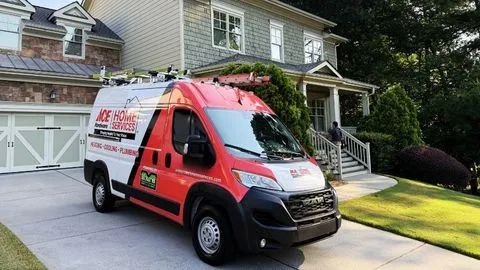
Moncrief Heating & Air Conditioning
935 Chattahoochee Ave NW, Atlanta, GA 30318
Moncrief Heating & Air Conditioning is a full-service HVAC and plumbing company serving Atlanta, GA. With over 125 years of experience, they provide installation, repair, and maintenance for heating, cooling, and plumbing systems. Their services include AC, furnace, heat pump, boiler, mini split, and geothermal heat pump installation and repair, along with HVAC tune-ups. Moncrief works closely with clients to create tailored solutions that fit individual home comfort and health needs.
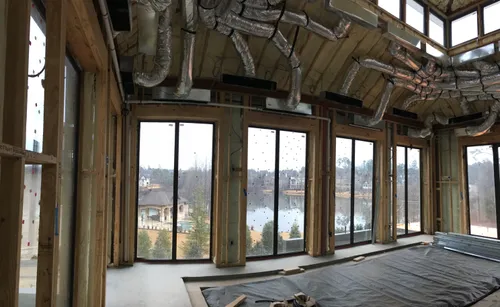
EcoMech Geothermal and Heating & Air
1100 Peachtree St NE STE 200, Atlanta, GA 30309
EcoMech Geothermal and Heating & Air is an HVAC company based in Atlanta, GA, specializing in geothermal heat pump installation and repair, as well as air conditioning and heating services for both residential and commercial clients. They focus on energy-efficient geothermal systems that use the earth's stable ground temperature to provide heating, cooling, and hot water. EcoMech also offers spray foam insulation to improve energy savings. Their expertise includes commercial and industrial geothermal system installations.
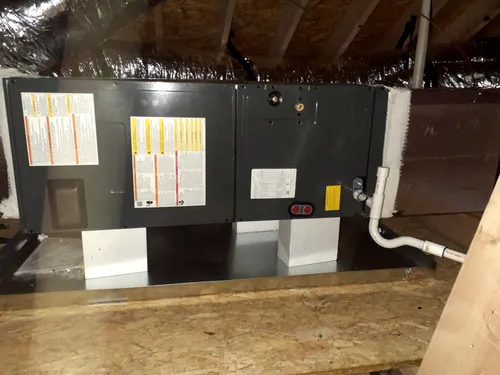
DiegoHVAC LLC
3241 Old Church Cove NE, Conyers, GA 30012
DiegoHVAC LLC is a family-owned HVAC company serving Atlanta, GA, and surrounding areas with over 15 years of experience. They provide a wide range of heating and cooling services including installation, maintenance, and repair of air conditioners, furnaces, heat pumps, boilers, mini-splits, and geothermal systems. Their offerings also include indoor air quality solutions such as duct cleaning, air purifiers, and custom ductwork. DiegoHVAC LLC is available 24/7 for emergency service, ensuring support whenever needed.
How a Geothermal System Works
At its core, a geothermal heating and cooling system doesn't create heat by burning fuel; it simply moves it. The Earth, just a few feet below the surface, maintains a relatively constant temperature year-round-warmer than the winter air and cooler than the summer air. A geothermal system, or ground-source heat pump (GSHP), capitalizes on this by circulating a water-based fluid through a loop of pipes buried in your yard, known as a ground loop.
In the winter, this fluid absorbs the Earth's natural warmth. The heat pump then concentrates this low-grade thermal energy and distributes warm air throughout your home via your existing ductwork. The process reverses in the summer: the system extracts heat from your home and transfers it into the cooler ground, providing air conditioning 1. This elegant exchange is what makes geothermal technology so efficient, moving 3 to 5 units of energy for every 1 unit of electricity it consumes.
Types of Ground Loops for Peachtree Corners Properties
The design of the buried ground loop is a critical decision in your geothermal installation. The right choice depends heavily on your property's characteristics. There are three primary configurations:
Horizontal Ground Loops This is often the most cost-effective method if you have sufficient land. Contractors dig a series of trenches, typically about 6 feet deep, and lay pipes in a horizontal configuration. While this requires a larger area of your yard, it generally involves lower installation costs than drilling and is well-suited for new construction where the land is already being excavated 2 3 4.
Vertical Ground Loops For properties in Peachtree Corners with limited yard space, such as smaller suburban lots, vertical loops are the ideal solution. Installers use a drilling rig to bore holes 150 to 400 feet deep. U-shaped pipes are inserted into these boreholes, which are then grouted. This method causes minimal disruption to your landscaping and is excellent for retrofitting an existing home, as it requires far less surface area 5.
Pond or Lake Loops If your property has access to a sufficiently large and deep pond or lake, this can be an efficient option. Coils of pipe are submerged at the bottom of the water body, which acts as a heat source and sink. This method avoids the need for extensive trenching or drilling, but its feasibility is entirely dependent on having a suitable water source nearby 6.
The Geothermal Installation Process: What to Expect
Installing a geothermal HVAC system is a significant project, but understanding the steps can help you prepare. A professional installer will manage this multi-phase process.
- Site Assessment and Design: The first step is a thorough evaluation of your property. A contractor will assess your soil composition, available land, and home's heating and cooling loads to determine the optimal loop type and size. This plan ensures your system is correctly sized for maximum efficiency.
- Loop Installation: This is the most visible phase. For a horizontal system, expect 1-3 days of trenching. For a vertical system, a drilling rig will be on-site for 3-5 days. The pipes are connected into a continuous loop and pressure-tested to ensure integrity before being buried.
- Indoor Unit Installation: The geothermal heat pump unit itself is installed inside your home, usually in a basement, utility room, or garage. It's connected to the ground loop and integrated with your home's ductwork or hydronic distribution system 7.
- System Startup and Restoration: Once everything is connected, the system is charged, tested, and activated. The outdoor crew will then backfill the trenches or boreholes, restore your yard, and typically reseed any disturbed grass, which will regrow within a season.
Why Geothermal is a Smart Choice for Georgia Homes
Peachtree Corners' climate is particularly well-suited for geothermal technology. Georgia experiences hot, humid summers and relatively mild winters. The ground temperature here remains an ideal medium for the heat exchange process, allowing a ground-source heat pump to work exceptionally efficiently year-round 8. When evaluating if it's right for you, consider these key local factors:
- Yard Space: This is the primary practical consideration. Do you have the space for horizontal trenches, or will your lot require the more compact vertical drilling?
- Soil Conditions: The thermal conductivity of your soil and rock affects loop design and efficiency. A professional assessment will cover this.
- Long-Term Outlook: Geothermal is an investment in your home's future efficiency and comfort. If you plan to stay in your home for many years, you'll fully realize the financial payback and benefits.
Find the perfect geothermal heat pump contractors for your needs
Get personalized recommendations and expert advice
Financial Benefits and Long-Term Value
The upfront cost of a geothermal heating and cooling system is higher than that of a traditional furnace and air conditioner. However, this initial investment is offset by substantial operational savings and long-term value.
- Dramatic Energy Savings: Homeowners can see reductions of up to 70% on heating costs and 50% on cooling costs9 10. By eliminating the need for fossil fuels like natural gas for heat and drastically reducing summer electricity use for air conditioning, annual savings can easily exceed $1,000 for many households 9 10.
- Payback Period: Through these utility savings, the incremental cost of a geothermal system is often recouped in 5 to 10 years11 12. Federal tax credits and potential local utility rebates can significantly shorten this payback timeline.
- Exceptional Lifespan and Low Maintenance: The indoor heat pump unit typically lasts 20 years or more, while the buried ground loop has a lifespan exceeding 50 years13. With fewer mechanical parts exposed to the elements, maintenance is generally simpler and less frequent than with traditional outdoor AC units and furnaces.
Environmental Impact and Comfort
Beyond the financials, a geothermal system offers profound environmental benefits. It uses renewable thermal energy from the ground, drastically reducing your home's carbon footprint. It also operates very quietly, with no loud outdoor condenser unit. Perhaps most importantly, it provides exceptional comfort. These systems deliver steady, even heating and cooling without the drafts and temperature swings associated with conventional forced-air systems, and many can be equipped to provide highly efficient domestic hot water as well.
Frequently asked questions
Sources
Footnotes
-
How Geothermal Heating and Cooling Systems Work | Belle Air - https://www.belleairservices.com/how-geothermal-heating-and-cooling-systems-work/ ↩
-
Geothermal Heat Pump Installation: What To Expect For Your ... - https://jomory.com/geothermal-heat-pump-installation-what-to-expect-for-your-property/ ↩
-
5 Things You Should Know about Geothermal Heat Pumps - https://www.energy.gov/cmei/articles/5-things-you-should-know-about-geothermal-heat-pumps ↩
-
Difference Between Horizontal and Vertical Geothermal Ground Loops - https://envirotechgeo.com/horizontal-and-vertical-geothermal-ground-loops/ ↩
-
Geothermal heating & cooling, heat pumps, heat exchange ... - https://aztechgeo.com/residential-geothermal/how-it-works/ ↩
-
How My Geothermal Heat Pump Really Performed (2 Years) - https://www.youtube.com/watch?v=DTb7TKJzr5g&vl=en ↩
-
Geothermal Heat Pumps | WBDG - https://www.wbdg.org/resources/geothermal-heat-pumps ↩
-
Best Geothermal Systems for Georgia Homes - https://toptechmech.com/best-geothermal-systems/ ↩
-
Geothermal Heating and Cooling - Open Energy Information - https://openei.org/wiki/GeoBridge/Heating_and_Cooling ↩ ↩2
-
How Geothermal HVAC Systems Work: Harnessing the Earth's ... - https://www.ecomech.net/2025/03/10/how-geothermal-hvac-systems-work-harnessing-the-earths-energy-year-round/ ↩ ↩2
-
Geothermal Heat Pumps - Department of Energy - https://www.energy.gov/energysaver/geothermal-heat-pumps ↩
-
Guide to Geothermal Heat Pumps - https://www.energy.gov/sites/prod/files/guide_to_geothermal_heat_pumps.pdf ↩
-
Guide to Geothermal Heat Pumps - https://www.energy.gov/sites/prod/files/guide_to_geothermal_heat_pumps.pdf ↩