
Find the Best Geothermal Heat Pump Contractors for Your Business
No obligation • Fast responses • Nationwide coverage

Why you can trust HVAC Firms
HVAC Firms is a leading United States resource for evaluating HVAC service providers. Our team researches companies, checks credentials, and reviews customer feedback to present clear, unbiased information. Listings and rankings are based on merit, and companies cannot pay to change our editorial content.
Search providers near you
Top Geothermal Heat Pump Contractors in Marietta, Georgia Ranked
Geothermal heat pumps, also known as ground-source heat pumps, are a highly efficient method for heating and cooling your home by leveraging the stable temperatures found underground. For homeowners in Marietta, this technology offers a way to significantly reduce energy bills while enjoying consistent indoor comfort year-round. This guide explains how these systems work, what installation entails, and how you can find qualified local professionals to assess your property.
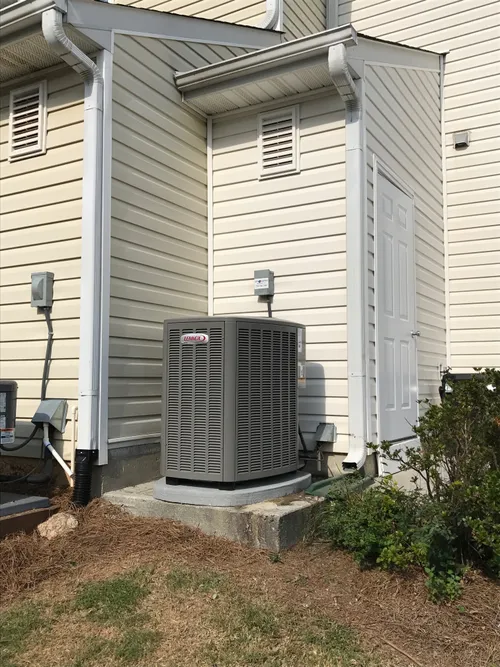
Innovative Mechanical, LLC
1700 Cumberland Point Dr Suite 17, Marietta, GA 30067
Innovative Mechanical, LLC is an HVAC company based in Atlanta, GA, offering a range of services including air conditioning repair, heat pump installation, geothermal heat pump systems, and indoor air quality improvements. They handle both residential and commercial HVAC needs, providing design, installation, and maintenance solutions. Their capabilities include working with geothermal heat pumps and air purifiers to enhance indoor air quality.
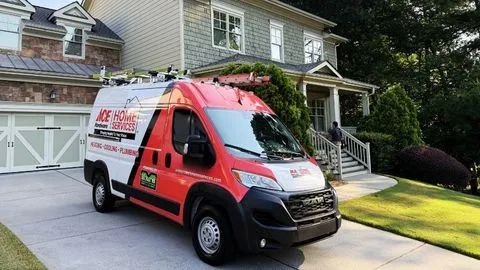
Moncrief Heating & Air Conditioning
935 Chattahoochee Ave NW, Atlanta, GA 30318
Moncrief Heating & Air Conditioning is a full-service HVAC and plumbing company serving Atlanta, GA. With over 125 years of experience, they provide installation, repair, and maintenance for heating, cooling, and plumbing systems. Their services include AC, furnace, heat pump, boiler, mini split, and geothermal heat pump installation and repair, along with HVAC tune-ups. Moncrief works closely with clients to create tailored solutions that fit individual home comfort and health needs.
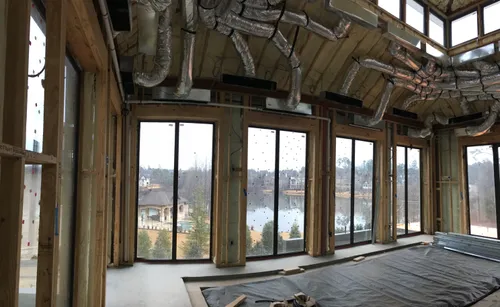
EcoMech Geothermal and Heating & Air
1100 Peachtree St NE STE 200, Atlanta, GA 30309
EcoMech Geothermal and Heating & Air is an HVAC company based in Atlanta, GA, specializing in geothermal heat pump installation and repair, as well as air conditioning and heating services for both residential and commercial clients. They focus on energy-efficient geothermal systems that use the earth's stable ground temperature to provide heating, cooling, and hot water. EcoMech also offers spray foam insulation to improve energy savings. Their expertise includes commercial and industrial geothermal system installations.
How Geothermal Systems Work: The Science of Stable Ground Temperatures
Unlike traditional furnaces and air conditioners that generate heat or fight against outdoor air temperatures, a geothermal system is a heat mover. It uses a network of buried pipes, called a ground loop, filled with a water-based solution. This loop circulates through the earth where temperatures remain a relatively constant 50-60 degrees Fahrenheit year-round, just a few feet below the surface.
In the winter, the fluid in the loop absorbs this mild, steady heat from the earth and carries it to the heat pump unit inside your home. The heat pump concentrates this low-grade thermal energy and distributes the resulting warmth through your existing ductwork or radiant floor system 1. During our hot Marietta summers, the process simply reverses: the system extracts heat from your home's air and transfers it into the cooler ground loop, effectively providing air conditioning 2. This elegant exchange with the earth's thermal battery is what delivers exceptional efficiency.
Types of Ground Loop Systems for Marietta Properties
The ground loop is the heart of the system, and its configuration depends heavily on your property's characteristics. There are three primary types of loops, each with advantages for different situations.
Horizontal Closed Loops This is often the most cost-effective option if you have sufficient land. Contractors dig trenches, typically 4 to 6 feet deep, and lay pipes in a series of parallel runs or slinky coils. While trenching costs less per foot than drilling, it requires a larger, clear plot of land-often several hundred feet in length 3 4.
Vertical Closed Loops For homes in Marietta with smaller or landscaped yards, vertical loops are the ideal solution. Contractors use a drilling rig to bore holes 150 to 450 feet deep. U-shaped pipe loops are inserted into each borehole, which are then grouted. This method minimizes surface disruption and is excellent for properties with limited space, though the drilling process itself is more expensive 5.
Pond/Lake Loops If your property has access to a sufficiently deep and large pond or lake, this can be an efficient option. Coils of pipe are submerged at the bottom of the water body, which also maintains stable temperatures. This method typically has the lowest installation cost if the water source is suitable and accessible 6.
The Geothermal Installation Process: What to Expect
Installing a ground-source heat pump is a significant project that requires careful planning and expert execution. Understanding the steps can help you prepare.
- Initial Site Assessment and Load Calculation: A qualified installer will first evaluate your property. This includes assessing soil composition (which affects heat transfer), available space, underground utilities, and the location of well and septic systems if present. They will also perform a detailed heat load calculation for your home to properly size the system.
- Loop Field Installation: This is the major excavation phase. For a horizontal system, a backhoe will dig the necessary trenches. For a vertical system, a drilling rig will be brought in to create the boreholes. The high-density polyethylene pipes are then placed, connected into a continuous loop, and pressure-tested 7.
- Indoor Unit Installation: The geothermal heat pump unit itself is installed inside your home, typically in a basement, utility closet, or garage. It resembles a traditional furnace or air handler. Your installer will connect it to your home's existing ductwork or hydronic distribution system.
- System Connection and Startup: The final steps involve connecting the indoor unit to the buried ground loop and to your home's electrical system. The entire system is filled with fluid, purged of air, and started up. The contractor will test and balance the system to ensure optimal performance 8.
Key Considerations for Marietta Homeowners
When exploring geothermal, several local factors come into play. Georgia's clay-heavy soil can impact heat transfer rates, which a professional will account for in the loop design. The density of many Marietta neighborhoods makes vertical drilling a very common choice due to lot size constraints. It's also crucial to check with your installer about any local permits required for drilling or major excavation 9.
Financially, while the upfront investment is higher than a conventional system-typically ranging from $20,000 to $40,000+ for a 2,000 sq ft home-the operational savings are substantial 10 11. Homeowners often see a reduction of 30% to 50% on their heating and cooling bills, with some reports of savings up to 65% 12 13. Furthermore, the ground loop itself has a lifespan of over 50 years, and the indoor heat pump unit often lasts 20 years or more, offering remarkable long-term value 10.
Find the perfect geothermal heat pump contractors for your needs
Get personalized recommendations and expert advice
Benefits Beyond Energy Savings
The advantages of installing a geothermal heating and cooling system extend well beyond a lower utility bill.
- Quiet Operation: With no noisy outdoor condenser unit (like a traditional air conditioner or air-source heat pump), the system runs very quietly. The main components are indoors or underground.
- Low Maintenance: The protected, buried loop has no moving parts and requires no maintenance. The indoor unit needs only basic periodic check-ups, similar to a furnace.
- Safety and Cleanliness: There is no combustion, meaning no risk of carbon monoxide poisoning, no flame, and no need to store fuel oil or propane on your property.
- Increased Home Value: Studies have shown that homes with geothermal systems often have higher resale values and can be more attractive to energy-conscious buyers.
- Environmental Impact: By using renewable thermal energy from the ground and electricity (which is increasingly green), these systems drastically reduce your home's carbon footprint associated with heating and cooling.
Finding the Right Local Professional
Success with geothermal technology hinges on proper design and installation. Look for contractors with specific experience in ground-source heat pumps, not just general HVAC. They should be able to explain the different loop options, provide a detailed manual J load calculation, and offer references from past geothermal projects in the Cobb County area. Certifications from organizations like the International Ground Source Heat Pump Association (IGSHPA) are a strong indicator of expertise.
Frequently asked questions
Sources
Footnotes
-
How Geothermal Heat Pumps Work - https://www.youtube.com/watch?v=XxlTnBukweI&t=37 ↩
-
Best Geothermal Systems for Georgia Homes - https://toptechmech.com/best-geothermal-systems/ ↩
-
Geothermal heat pumps: The ultimate guide to ground-source ... - https://termo-plus.com/blog/geothermal-ultimate-guide-to-ground-source-heat-pumps/ ↩
-
Geothermal Heat Pumps - Department of Energy - https://www.energy.gov/energysaver/geothermal-heat-pumps ↩
-
Geothermal heating & cooling, heat pumps, heat exchange ... - https://aztechgeo.com/residential-geothermal/how-it-works/ ↩
-
Is Geothermal Heating and Cooling Worth the Cost? Heat Pumps ... - https://www.youtube.com/watch?v=PI45yUhUWgk ↩
-
Geothermal (Ground Source) Heat Pumps - NY.gov - https://cleanheat.ny.gov/geothermal-heat-pumps/ ↩
-
FAQs • What types of ground-source heat pumps and configurat - https://concordma.gov/FAQ.aspx?QID=484 ↩
-
Geothermal Heat Pump Installation: What To Expect For Your ... - https://jomory.com/geothermal-heat-pump-installation-what-to-expect-for-your-property/ ↩
-
Geothermal Heat Pump Guide: Installation Costs, Types And Benefits - https://modernize.com/hvac/heating-repair-installation/heat-pump/geothermal ↩ ↩2
-
Guide to Geothermal Heat Pumps - https://www.energy.gov/sites/prod/files/guide_to_geothermal_heat_pumps.pdf ↩
-
All You Need to Know About Home Geothermal Heating & ... - https://dandelionenergy.com/all-you-need-to-know-about-home-geothermal-heating-cooling ↩
-
5 Things You Should Know about Geothermal Heat Pumps - https://www.energy.gov/cmei/articles/5-things-you-should-know-about-geothermal-heat-pumps ↩