
Find the Best Geothermal Heat Pump Contractors for Your Business
No obligation • Fast responses • Nationwide coverage

Why you can trust HVAC Firms
HVAC Firms is a leading United States resource for evaluating HVAC service providers. Our team researches companies, checks credentials, and reviews customer feedback to present clear, unbiased information. Listings and rankings are based on merit, and companies cannot pay to change our editorial content.
Search providers near you
Top Geothermal Heat Pump Contractors in Johns Creek, Georgia Ranked
A geothermal heat pump, also known as a ground-source heat pump, is a highly efficient heating and cooling system that leverages the earth's stable underground temperature. For homeowners in Johns Creek, this technology offers a powerful way to manage indoor climate while dramatically reducing energy consumption and utility bills. This guide explains how these systems work, their benefits, and how you can connect with qualified local professionals to explore this smart, sustainable investment for your home.
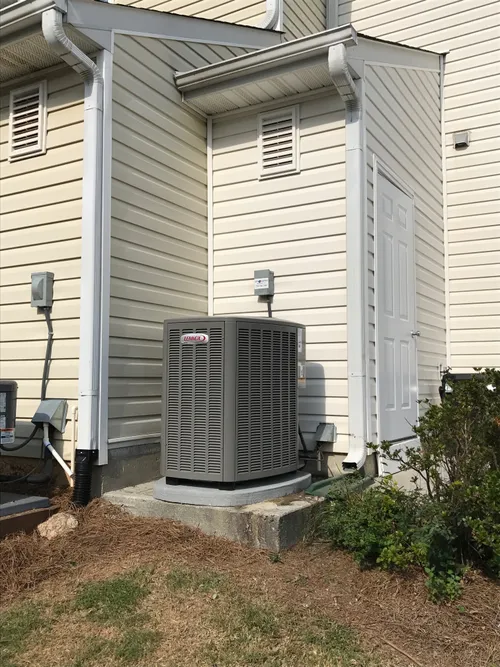
Innovative Mechanical, LLC
1700 Cumberland Point Dr Suite 17, Marietta, GA 30067
Innovative Mechanical, LLC is an HVAC company based in Atlanta, GA, offering a range of services including air conditioning repair, heat pump installation, geothermal heat pump systems, and indoor air quality improvements. They handle both residential and commercial HVAC needs, providing design, installation, and maintenance solutions. Their capabilities include working with geothermal heat pumps and air purifiers to enhance indoor air quality.
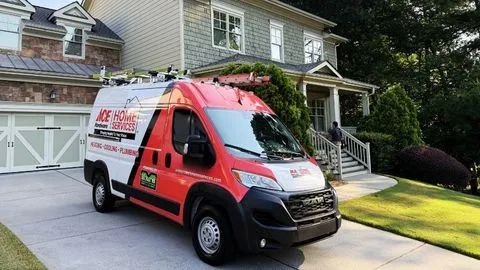
Moncrief Heating & Air Conditioning
935 Chattahoochee Ave NW, Atlanta, GA 30318
Moncrief Heating & Air Conditioning is a full-service HVAC and plumbing company serving Atlanta, GA. With over 125 years of experience, they provide installation, repair, and maintenance for heating, cooling, and plumbing systems. Their services include AC, furnace, heat pump, boiler, mini split, and geothermal heat pump installation and repair, along with HVAC tune-ups. Moncrief works closely with clients to create tailored solutions that fit individual home comfort and health needs.
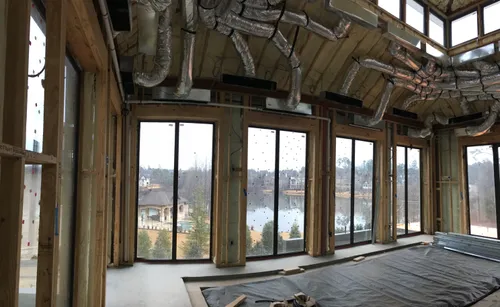
EcoMech Geothermal and Heating & Air
1100 Peachtree St NE STE 200, Atlanta, GA 30309
EcoMech Geothermal and Heating & Air is an HVAC company based in Atlanta, GA, specializing in geothermal heat pump installation and repair, as well as air conditioning and heating services for both residential and commercial clients. They focus on energy-efficient geothermal systems that use the earth's stable ground temperature to provide heating, cooling, and hot water. EcoMech also offers spray foam insulation to improve energy savings. Their expertise includes commercial and industrial geothermal system installations.
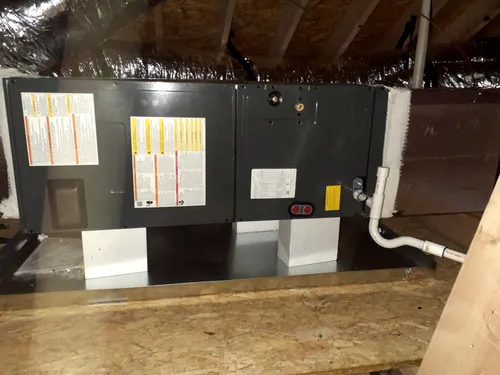
DiegoHVAC LLC
3241 Old Church Cove NE, Conyers, GA 30012
DiegoHVAC LLC is a family-owned HVAC company serving Atlanta, GA, and surrounding areas with over 15 years of experience. They provide a wide range of heating and cooling services including installation, maintenance, and repair of air conditioners, furnaces, heat pumps, boilers, mini-splits, and geothermal systems. Their offerings also include indoor air quality solutions such as duct cleaning, air purifiers, and custom ductwork. DiegoHVAC LLC is available 24/7 for emergency service, ensuring support whenever needed.
How Geothermal Systems Work in Johns Creek
Unlike traditional air-source heat pumps that exchange heat with the outside air, a geothermal or ground-source system uses the earth as a heat source in winter and a heat sink in summer. The key to its efficiency lies in the constant temperature of the soil. In Georgia, the earth just a few feet below the surface maintains a steady temperature of approximately 50-60°F year-round, regardless of the sweltering summer heat or occasional winter chill.
The process involves a closed-loop system of pipes, called a ground loop, buried in your yard. A water-based solution circulates through these pipes, absorbing the earth's warmth in the winter. This warmed fluid is brought back to an indoor heat pump unit, which concentrates the thermal energy and distributes it as warm air through your home's ductwork 1. In the cooling mode, the system reverses: it extracts heat from your home and transfers it into the cooler ground loop, effectively using the earth to dissipate unwanted heat 2.
Types of Ground Loop Systems
The design of the underground loop field is a critical component of any geothermal installation. The right type for your Johns Creek property depends on available land, soil composition, and local geology. The three primary configurations are:
- Horizontal Loops: This is often the most cost-effective option if you have sufficient yard space. Contractors dig trenches about five to ten feet deep and lay a series of pipes in a grid or coiled "slinky" pattern to maximize heat exchange in a smaller trench area. This method requires a larger plot of land but typically involves less drilling 3.
- Vertical Loops: For properties with limited space, such as many suburban lots in Johns Creek, vertical loops are the ideal solution. Using a drilling rig, boreholes are drilled 150 to 500 feet deep. U-shaped pipes are then inserted into each hole and grouted for stability and thermal conductivity. This system minimizes landscape disruption and is effective in most soil and rock types 4 5.
- Pond/Lake Loops: If you have a suitable, perennial body of water on your property, this can be an excellent option. Coils of pipe are submerged at the bottom of the pond or lake, where the water temperature remains relatively stable. This method can be very efficient and lower cost, as it avoids extensive trenching or drilling 6.
The Installation Process: What to Expect
Installing a geothermal heating and cooling system is a significant project that requires expert planning and execution. Understanding the steps can help you prepare.
- Site Assessment and Design: A qualified installer will begin with a thorough evaluation of your property, including soil conditions, available land, and your home's specific heating and cooling load requirements. This assessment is crucial for designing an appropriately sized and configured system.
- Ground Loop Installation: This is the most substantial phase. For a horizontal system, excavation equipment will dig the necessary trenches. For a vertical system, a drilling rig will be brought in to create the boreholes. The high-density polyethylene pipes are then laid or inserted and connected into a continuous loop 7 8.
- Indoor Unit and Connection: The indoor heat pump unit, which is typically compact and quiet, is installed in your basement, utility closet, or garage. The ground loops are connected to this unit, which is then integrated with your home's existing ductwork or a new air distribution system 9.
- System Startup and Testing: Once everything is connected, the loop is filled with fluid, purged of air, and pressurized. The installer will start the system, check all components, and balance the airflow to ensure optimal performance and efficiency.
Find the perfect geothermal heat pump contractors for your needs
Get personalized recommendations and expert advice
The Financial and Efficiency Benefits
The primary advantage of a geothermal heat pump is its remarkable efficiency, which translates directly into financial savings.
- Substantial Energy Savings: Geothermal systems can reduce energy consumption for heating and cooling by up to 70% compared to conventional systems like standard furnaces and air conditioners 10 11. This is because they move heat rather than generate it by burning fuel, delivering 3 to 5 units of energy for every 1 unit of electricity used to run the system 12.
- Long-Term Investment: While the upfront cost for a ground-source heat pump system is higher than for a traditional HVAC system, the payback period is often between 5 to 10 years thanks to the drastic reduction in monthly utility bills 13. Furthermore, homeowners may be eligible for federal tax credits and other incentives that can significantly offset the initial investment.
- Exceptional Durability and Low Maintenance: The underground loop system is incredibly durable, with a lifespan often exceeding 50 years. The indoor heat pump unit also lasts longer than a conventional air conditioner or furnace, typically around 24 to 25 years. With fewer mechanical parts exposed to the elements, these systems generally require less maintenance than traditional HVAC systems.
Is a Geothermal System Right for Your Home?
Geothermal technology is a smart choice for many Johns Creek residents, particularly those planning to stay in their homes long enough to realize the full return on investment. It's an excellent option for new construction, where the loop field can be integrated into the site plan from the beginning. It's also a viable retrofit for existing homes, especially during a major renovation or when replacing an aging, inefficient HVAC system. The consistent comfort, quiet operation, and reduced carbon footprint provide benefits that go beyond just the monthly bill.
Frequently asked questions
Sources
Footnotes
-
Geothermal (Ground Source) Heat Pumps - NY.gov - https://cleanheat.ny.gov/geothermal-heat-pumps/ ↩
-
Best Geothermal Systems for Georgia Homes - https://toptechmech.com/best-geothermal-systems/ ↩
-
Geothermal Heating and Cooling - Open Energy Information - https://openei.org/wiki/GeoBridge/Heating_and_Cooling ↩
-
Geothermal Heat Pumps | WBDG - https://www.wbdg.org/resources/geothermal-heat-pumps ↩
-
All You Need to Know About Home Geothermal Heating & ... - https://dandelionenergy.com/all-you-need-to-know-about-home-geothermal-heating-cooling ↩
-
How It Works: Ground Source Heat Pumps - Aztech Geothermal - https://aztechgeo.com/residential-geothermal/how-it-works/ ↩
-
How Does A Geothermal Heat Pump Work? Complete 2025 Guide - https://solartechonline.com/blog/how-does-geothermal-heat-pump-work/ ↩
-
How Geothermal Heat Pumps Work - https://www.youtube.com/watch?v=XxlTnBukweI&t=37 ↩
-
Geothermal Heat Pump Installation: What To Expect For Your ... - https://jomory.com/geothermal-heat-pump-installation-what-to-expect-for-your-property/ ↩
-
Geothermal Heat Pumps - Department of Energy - https://www.energy.gov/energysaver/geothermal-heat-pumps ↩
-
5 Things You Should Know about Geothermal Heat Pumps - https://www.energy.gov/cmei/articles/5-things-you-should-know-about-geothermal-heat-pumps ↩
-
Guide to Geothermal Heat Pumps - https://www.energy.gov/sites/prod/files/guide_to_geothermal_heat_pumps.pdf ↩
-
Geothermal Heat Pumps: How They Work and Benefits for Your ... - https://www.rbiva.com/resources/geothermal-heat-pumps-how-they-work-and-benefits/ ↩