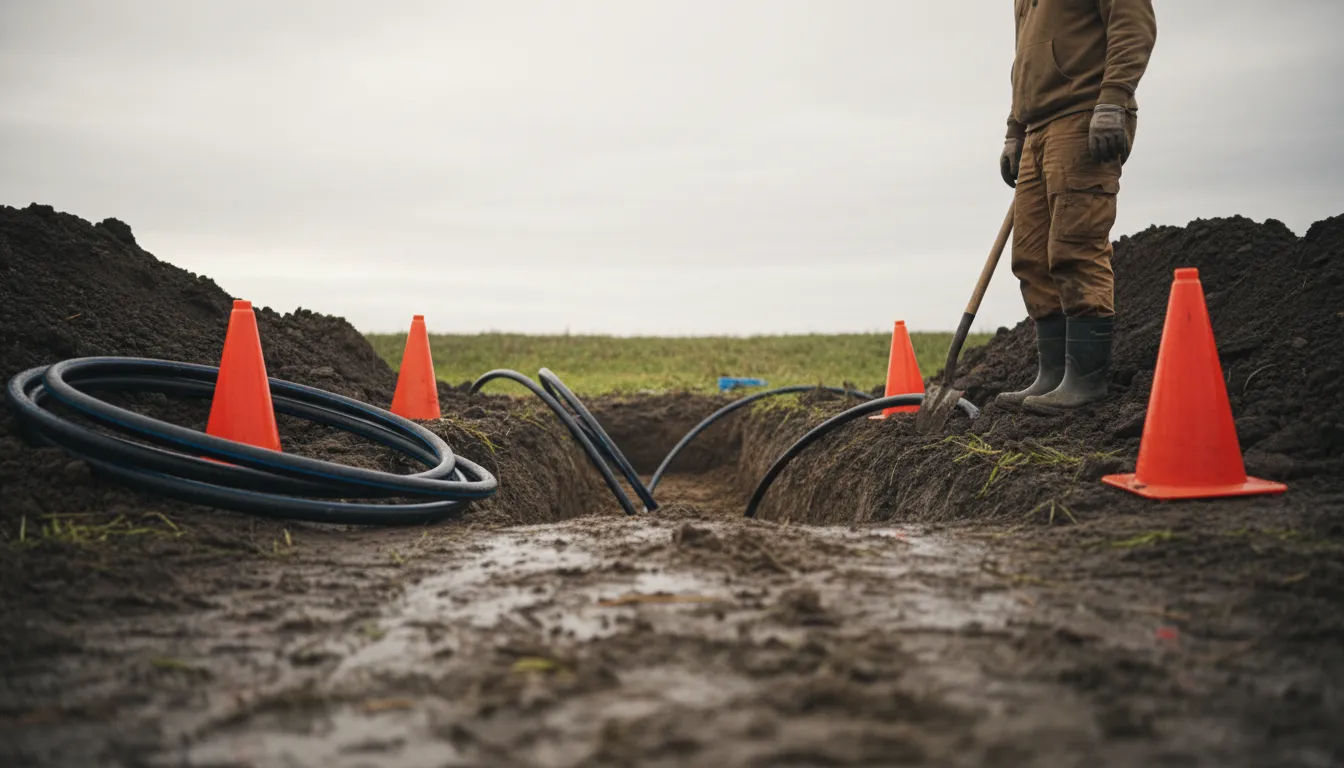
Find the Best Geothermal Heat Pump Contractors for Your Business
No obligation • Fast responses • Nationwide coverage

Why you can trust HVAC Firms
HVAC Firms is a leading United States resource for evaluating HVAC service providers. Our team researches companies, checks credentials, and reviews customer feedback to present clear, unbiased information. Listings and rankings are based on merit, and companies cannot pay to change our editorial content.
Search providers near you
Top Geothermal Heat Pump Contractors in Dunwoody, Georgia Ranked
Geothermal heat pumps, also known as ground-source heat pumps, are a highly efficient method for heating and cooling your home by leveraging the stable temperatures found underground. For Dunwoody residents, this technology offers a way to significantly reduce energy bills while enjoying consistent indoor comfort year-round. This guide explains how these systems work, what installation entails, and how you can find qualified local experts to assess your property for a geothermal solution.
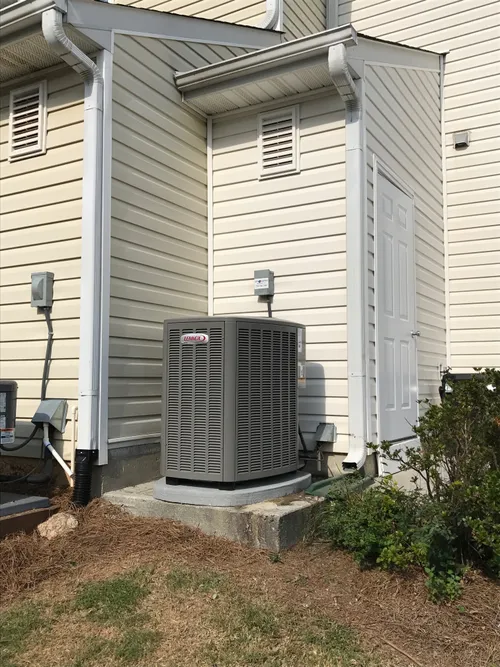
Innovative Mechanical, LLC
1700 Cumberland Point Dr Suite 17, Marietta, GA 30067
Innovative Mechanical, LLC is an HVAC company based in Atlanta, GA, offering a range of services including air conditioning repair, heat pump installation, geothermal heat pump systems, and indoor air quality improvements. They handle both residential and commercial HVAC needs, providing design, installation, and maintenance solutions. Their capabilities include working with geothermal heat pumps and air purifiers to enhance indoor air quality.
Moncrief Heating & Air Conditioning
935 Chattahoochee Ave NW, Atlanta, GA 30318
Moncrief Heating & Air Conditioning is a full-service HVAC and plumbing company serving Atlanta, GA. With over 125 years of experience, they provide installation, repair, and maintenance for heating, cooling, and plumbing systems. Their services include AC, furnace, heat pump, boiler, mini split, and geothermal heat pump installation and repair, along with HVAC tune-ups. Moncrief works closely with clients to create tailored solutions that fit individual home comfort and health needs.
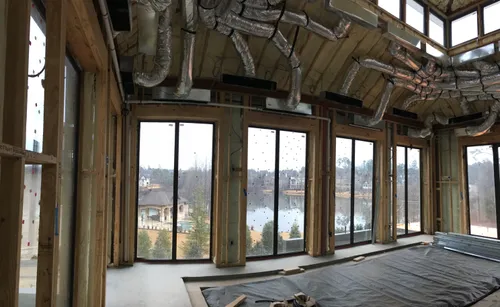
EcoMech Geothermal and Heating & Air
1100 Peachtree St NE STE 200, Atlanta, GA 30309
EcoMech Geothermal and Heating & Air is an HVAC company based in Atlanta, GA, specializing in geothermal heat pump installation and repair, as well as air conditioning and heating services for both residential and commercial clients. They focus on energy-efficient geothermal systems that use the earth's stable ground temperature to provide heating, cooling, and hot water. EcoMech also offers spray foam insulation to improve energy savings. Their expertise includes commercial and industrial geothermal system installations.
DiegoHVAC LLC
3241 Old Church Cove NE, Conyers, GA 30012
DiegoHVAC LLC is a family-owned HVAC company serving Atlanta, GA, and surrounding areas with over 15 years of experience. They provide a wide range of heating and cooling services including installation, maintenance, and repair of air conditioners, furnaces, heat pumps, boilers, mini-splits, and geothermal systems. Their offerings also include indoor air quality solutions such as duct cleaning, air purifiers, and custom ductwork. DiegoHVAC LLC is available 24/7 for emergency service, ensuring support whenever needed.
How Geothermal Systems Work in Dunwoody
A geothermal HVAC system doesn't create heat by burning fuel; instead, it moves existing heat. The core principle is heat exchange with the earth. Just a few feet below the surface, the ground maintains a nearly constant temperature between 50°F and 60°F throughout the year, regardless of Georgia's summer heat or occasional winter chill 1.
In the winter, a fluid (usually water mixed with antifreeze) circulates through a loop of pipes buried in your yard. This fluid absorbs the earth's natural warmth and carries it to a heat pump unit inside your home. The heat pump concentrates this low-grade thermal energy and distributes it as warm air through your existing ductwork or a hydronic radiant system.
During Dunwoody's humid summers, the process simply reverses. The system extracts heat and humidity from your home's air, transfers it to the fluid in the ground loop, and deposits it into the cooler earth. The result is efficient, dehumidified cooling without the need for a noisy outdoor condenser unit.
Types of Ground Loop Systems
The buried pipe network, or ground loop, is the heart of the system. The right type for your Dunwoody property depends on your lot size, soil composition, and local geology. There are three primary configurations:
Closed-Loop Horizontal Systems This is often the most cost-effective option if space allows. Contractors use excavation equipment to dig trenches, typically 4 to 6 feet deep, and lay pipes in a series of loops. This method requires a significant amount of open yard space, making it common for properties with larger lots.
Closed-Loop Vertical Systems For homes with smaller yards-common in many Dunwoody neighborhoods-a vertical ground loop is the standard solution. Installers use a drilling rig to bore holes 100 to 400 feet deep. U-shaped pipes are inserted into each borehole, which are then grouted. This method minimizes landscape disruption and is effective in most soil and rock types, though the drilling process increases the upfront cost.
Pond/Lake Loops If your property has access to a sufficient body of water, this can be a very efficient option. Coils of pipe are submerged at the bottom of the pond or lake, where the water temperature remains stable. This method often has lower installation costs since it avoids extensive digging or drilling, but it is entirely dependent on your property's specific features 2.
The Installation Process: What Dunwoody Homeowners Can Expect
Installing a geothermal heating and cooling system is a significant project that requires careful planning and professional execution. Here's a step-by-step overview of what the process typically involves for a residential installation in Dunwoody.
-
Site Assessment and Design: A qualified installer will first evaluate your property. They'll consider your home's heating and cooling loads, lot size, soil conditions, and local regulations to determine the optimal loop type (vertical drilling vs. horizontal trenching) and size the system correctly.
-
Loop Installation: This is the most substantial phase. For a vertical system, a drilling rig will create the necessary boreholes. For a horizontal system, an excavator will dig the trenches. The high-density polyethylene pipe is then laid, connected, and pressure-tested to ensure there are no leaks before the trenches or boreholes are backfilled 3.
-
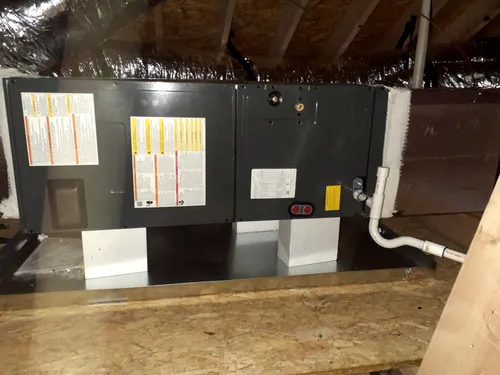
Indoor Unit Installation: The geothermal heat pump unit itself is installed inside your home, typically in a basement, utility closet, or garage. It connects to your existing ductwork or radiant heating system. This unit is compact and quiet, resembling a traditional furnace 4.
-
System Activation and Commissioning: The loop is filled with the heat-transfer fluid, and the entire system is connected. The installer will charge the system, test all components, and calibrate the controls to ensure optimal performance and efficiency 5.
Find the perfect geothermal heat pump contractors for your needs
Get personalized recommendations and expert advice
Trenching vs. Drilling: Key Considerations for Local Properties
The choice between horizontal trenching and vertical drilling is a major decision in your geothermal project. Each method has distinct advantages shaped by your property's characteristics.
Horizontal Trenching is generally less expensive per foot of pipe installed because it uses standard excavation equipment. However, it requires a large, clear area of land. If your Dunwoody lot is spacious, unobstructed, and has soil that is easy to excavate, this can be a great option.
Vertical Drilling is the go-to solution for smaller urban and suburban lots, rocky ground, or properties with extensive landscaping you wish to preserve. While the drilling cost per foot is higher, the total loop length needed is often less because the deep earth provides excellent heat transfer. This method causes minimal disruption to your yard's surface, making it a common sight in Dunwoody installations 6.
Long-Term Benefits and Cost Analysis
The appeal of a ground-source heat pump lies in its long-term performance and financial payback, despite a higher initial investment.
Substantial Energy Savings: Geothermal systems are remarkably efficient, moving three to five units of heat for every one unit of electricity used. Homeowners can expect to see a 30% to 60% reduction in heating costs and a 20% to 50% reduction in cooling costs compared to conventional systems 7 8. This translates to significantly lower monthly utility bills.
Understanding the Investment: A complete residential geothermal system installation in Dunwoody typically ranges from $20,000 to $40,000 or more. This wide range accounts for the chosen loop type, system size, and property-specific challenges. It's important to view this as a long-term investment in your home's infrastructure 9 10.
Payback and Longevity: The significant monthly savings on energy bills mean the system often pays for itself through lower operating costs within 5 to 10 years. Furthermore, the system components are incredibly durable. The underground piping is warranted for 50+ years and can last generations, while the indoor heat pump unit typically has a lifespan of 20 to 24 years-much longer than standard air conditioners or furnaces.
Environmental Impact: By using renewable thermal energy from the ground and electricity (which can be sourced from green power), a geothermal system drastically reduces your home's carbon footprint. It eliminates on-site combustion, making it a clean, safe, and sustainable choice for climate control.
Finding the Right Local Expertise
Selecting an experienced installer is critical for a successful geothermal project. Look for contractors who are specifically trained and certified in geothermal technology, not just general HVAC. They should conduct a detailed Manual J load calculation for your home and provide a comprehensive site evaluation. Be sure to check references, verify licensing and insurance, and review past installations. A reputable professional will transparently explain all costs, potential savings, available warranties, and any applicable local or federal tax incentives for renewable energy systems.
Frequently asked questions
Sources
Footnotes
-
How a Geothermal Heat Pump Works | This Old House - https://www.youtube.com/watch?v=d5Tbsx3R2T8 ↩
-
Unraveling the Mystery of Geothermal HVAC Systems - https://www.weathermastersga.com/geothermal-hvac-systems-a-clear-guide-to-sustainable-heating-and-cooling/ ↩
-
How Geothermal Heat Pumps Work - https://www.youtube.com/watch?v=XxlTnBukweI&t=37 ↩
-
All You Need to Know About Home Geothermal Heating & Cooling - Dandelion Energy - https://dandelionenergy.com/all-you-need-to-know-about-home-geothermal-heating-cooling ↩
-
Geothermal Heat Pumps | WBDG - https://www.wbdg.org/resources/geothermal-heat-pumps ↩
-
Geothermal heating & cooling, heat pumps, heat exchange ... - https://aztechgeo.com/residential-geothermal/how-it-works/ ↩
-
Geothermal Heat Pumps - Department of Energy - https://www.energy.gov/energysaver/geothermal-heat-pumps ↩
-
What's a Geothermal HVAC System and How Does It Work? - https://wallerhvac.com/article/what-geothermal-hvac-system-how-does-work ↩
-
Geothermal Heat Pump Guide: Installation Costs, Types And Benefits - https://modernize.com/hvac/heating-repair-installation/heat-pump/geothermal ↩
-
Guide to Geothermal Heat Pumps - https://www.energy.gov/sites/prod/files/guide_to_geothermal_heat_pumps.pdf ↩