Find the Best Geothermal Heat Pump Contractors for Your Business
No obligation • Fast responses • Nationwide coverage

Why you can trust HVAC Firms
HVAC Firms is a leading United States resource for evaluating HVAC service providers. Our team researches companies, checks credentials, and reviews customer feedback to present clear, unbiased information. Listings and rankings are based on merit, and companies cannot pay to change our editorial content.
Search providers near you
Top Geothermal Heat Pump Contractors in Peoria, Arizona Ranked
Geothermal heat pumps, also known as ground-source heat pumps, are a highly efficient method for heating and cooling your home by leveraging the stable temperature of the earth. In Peoria's climate, these systems can provide exceptional comfort and significant long-term savings on energy bills. This guide explains how geothermal technology works, the installation process, and how you can find qualified local experts to assess your property for a ground-source heating and cooling system.

One Hour Air Conditioning & Heating of Scottsdale
124 W Orion St STE F8, Tempe, AZ 85283
One Hour Air Conditioning & Heating of Scottsdale offers a wide range of HVAC services in Phoenix, AZ, including air conditioning repair and installation, furnace and boiler repair, heat pump maintenance, and indoor air quality solutions. They also specialize in geothermal system services, duct cleaning and repair, thermostat installation, and ductless mini-split systems. Their technicians use diagnostic tools and industry training to address issues such as refrigerant leaks, thermostat problems, and system failures. The company provides emergency HVAC repair services to restore comfort quickly when systems fail unexpectedly. With experience in handling complex heating and cooling systems suited for the desert climate, One Hour Air Conditioning & Heating of Scottsdale supports both routine maintenance and new installations. They emphasize clear communication and practical solutions to meet customer comfort needs.

Penguin Air, Plumbing & Electrical
3710 E University Dr # 1, Phoenix, AZ 85034
Penguin Air, Plumbing & Electrical is a full-service HVAC, plumbing, and electrical company based in Phoenix, AZ. They provide installation, repair, and tune-up services for air conditioners, furnaces, heat pumps, boilers, mini splits, and geothermal heat pumps. Serving the Phoenix Valley and surrounding areas, Penguin Air offers emergency HVAC services and convenient financing options to support their customers' needs.
Budget Cooling & Heating, LLC
2322 N 88th Ave, Phoenix, AZ 85037
Budget Cooling & Heating, LLC is a family-owned HVAC company based in Glendale, AZ. They provide full-service heating and cooling solutions including installation, maintenance, and repair for air conditioners, furnaces, heat pumps, boilers, mini splits, and geothermal heat pumps. The company is licensed in Arizona and focuses on treating customers' homes and businesses with care and respect.

Arctic Fox Air Conditioning & Heating
Glendale, AZ
Arctic Fox Air Conditioning & Heating is an HVAC company serving Glendale, AZ, and nearby areas including Peoria and Surprise. They offer a full range of services such as installation, repair, and maintenance for air conditioning units, furnaces, heat pumps, boilers, mini splits, and geothermal heat pumps. The company emphasizes integrity and customer satisfaction, charging by the job rather than by the hour to ensure thorough repairs without time pressure. Founded by Heath and Misti, Arctic Fox prioritizes honest pricing and does not pressure customers into unnecessary purchases. They provide after-hours emergency service upon request.
How Geothermal Heating and Cooling Works
The principle behind a geothermal system is elegant in its simplicity. It uses the earth as a renewable thermal battery. Just a few feet below the surface, the ground in Peoria maintains a relatively constant temperature year-round, typically between 50-60°F, regardless of the scorching summer heat or cooler winter nights. A geothermal heat pump system taps into this stable resource.
The process involves three key components:
- The Ground Loop: A network of durable, high-density polyethylene pipes buried in your yard. A water-based solution circulates through this sealed loop.
- The Heat Pump Unit: An indoor unit, similar in size to a traditional furnace, that contains a compressor and heat exchanger.
- The Distribution System: Your home's existing ductwork or a hydronic (water-based) system to deliver conditioned air or water.
In the winter, the fluid in the underground pipes absorbs the earth's natural heat. This warmed fluid is pumped to the indoor heat pump unit, which concentrates the heat and transfers it to air circulated through your ducts. In the summer, the process reverses: the system extracts heat from your home's air and transfers it into the cooler fluid in the ground loop, which then rejects the heat into the earth 1 2. This heat exchange process is what makes geothermal systems vastly more efficient than conventional air-source heat pumps or standard air conditioners.
Types of Ground Loop Systems for Peoria Homes
The underground pipe system, or ground loop, is the heart of the installation. The right type for your Peoria home depends on your lot size, soil composition, and budget. The most common configuration is a closed-loop system, where the fluid continuously circulates in a sealed circuit.
Horizontal Ground Loops
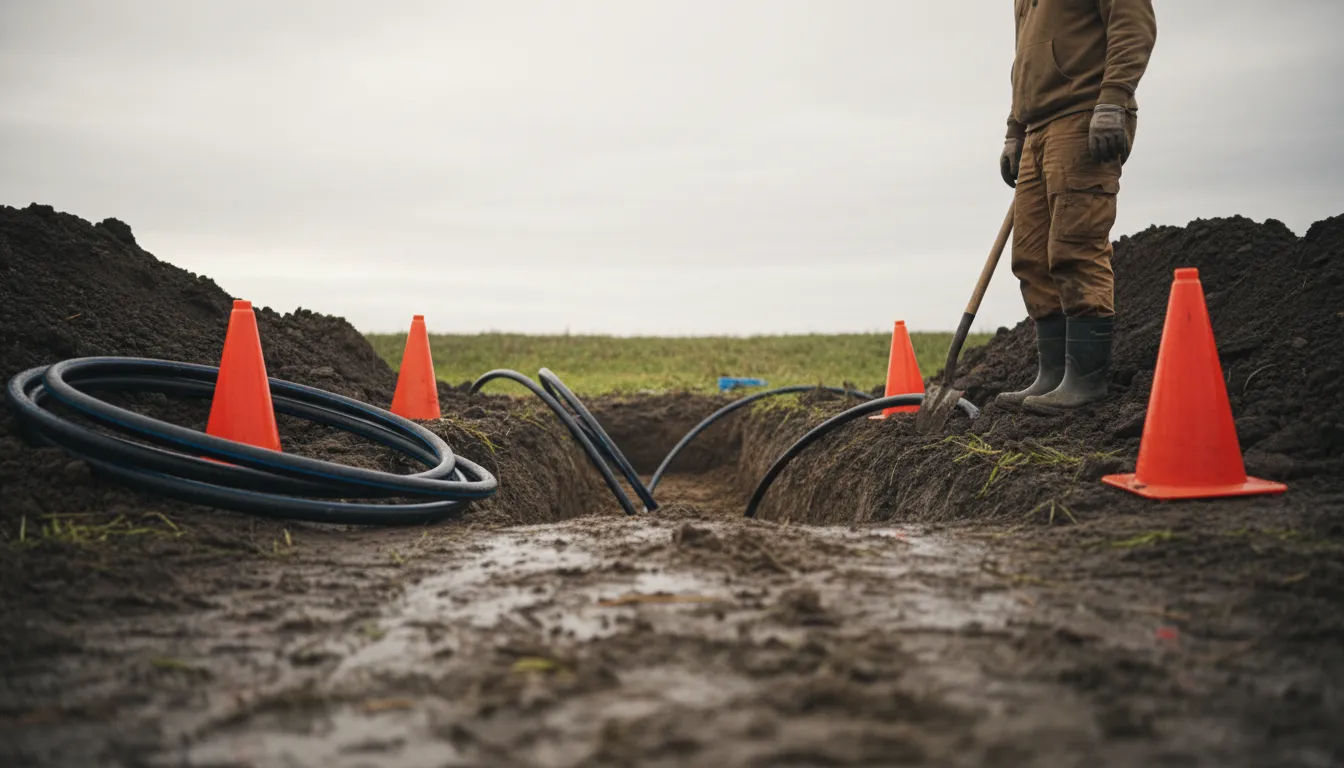
This is often the most cost-effective installation method if you have sufficient land available. Contractors use trenching machines to dig trenches four to six feet deep and several hundred feet long. Pipes are laid in these trenches before they are backfilled. A variation called a "Slinky" loop uses coiled, overlapping pipes to fit more heat exchange surface into a shorter trench, which can reduce excavation costs 3 4 5.
Vertical Ground Loops
For homes with smaller yards or where bedrock is close to the surface, vertical loops are the ideal solution. A drilling rig bores holes 150 to 450 feet deep. U-shaped pipes are inserted into each borehole, which are then grouted to ensure good thermal contact with the earth and to protect groundwater aquifers. Companies like Sunbelt Drilling specialize in this type of geothermal drilling in the Arizona region.
Pond/Lake Loops
If you have a sufficient body of water on your property, a loop can be submerged at the bottom. This is a rare but highly efficient option where available.
The Geothermal Installation Process: What to Expect
Installing a geothermal system is a significant project that requires specialized expertise. Working with a local installer familiar with Arizona's soil conditions and regulations is crucial for a successful, long-lasting system 6. The typical process involves several key stages:
- Site Assessment and Design: A qualified installer will evaluate your property, considering soil type, available space, and your home's heating and cooling load. This assessment determines the optimal loop type and size for maximum efficiency.
- Ground Loop Installation: For horizontal systems, trenches are excavated. For vertical systems, a drilling rig creates the boreholes. The HDPE pipe is then placed and connected into a continuous loop.
- Loop Connection and Grouting: The ends of the ground loop are brought to the house. For vertical bores, they are grouted with a special thermally enhanced material. The loop is pressure-tested to ensure it is completely sealed.
- Indoor Unit Installation: The geothermal heat pump unit is installed inside your home-often in a basement, utility closet, or garage. It is connected to the ground loop and to your home's ductwork or hydronic system.
- System Startup and Commissioning: The system is filled with fluid, purged of air, and started. The installer will calibrate the controls and ensure everything is operating at peak performance 7 8.
Find the perfect geothermal heat pump contractors for your needs
Get personalized recommendations and expert advice
Key Considerations for Peoria Homeowners
While the benefits are substantial, it's important to go into a geothermal project with a clear understanding of the considerations.
- Upfront Investment: The installation cost for a geothermal system, particularly the ground loop, is higher than that of a conventional HVAC system. This is due to the excavation, drilling, and specialized materials required. However, this initial cost is offset by dramatically lower operating costs and available incentives.
- Land Requirements: Horizontal loops require a sizable plot of land for the trench field. Vertical loops minimize surface disruption and are perfect for smaller lots, but involve deeper drilling.
- Long-Term Value Perspective: It's most accurate to view a geothermal system as a long-term investment in your home's efficiency and comfort. The significant reduction in monthly energy bills, combined with the system's exceptional durability, delivers value for decades.
The Compelling Benefits of Going Geothermal
The decision to install a ground-source heat pump in Peoria is driven by powerful advantages that impact your wallet, comfort, and environmental footprint.
- Substantial Energy Savings: Geothermal systems are remarkably efficient, typically using 40% to 70% less energy for heating and cooling compared to conventional systems with standard air conditioners and furnaces 9 10. This translates directly into lower monthly utility bills, a major advantage in Arizona's climate where cooling demands are high.
- Exceptional Lifespan and Reliability: The underground loop system is incredibly durable, often carrying warranties of 50 years and an expected lifespan even longer. The indoor heat pump unit typically lasts 20 to 25 years-about twice as long as the average outdoor air conditioner compressor because it's protected from the elements 11.
- Year-Round Comfort: These systems provide consistent, even heating and cooling without the drafts or hot/cold spots common with forced-air systems. They also excel at dehumidifying in the summer, enhancing indoor air comfort.
- Quiet Operation and Low Maintenance: With no loud outdoor condenser unit, geothermal systems operate very quietly. They also have fewer mechanical components exposed to weather, which generally means lower maintenance requirements and costs over time.
- Environmental Impact: By using renewable thermal energy from the ground and electricity (which can be sourced from solar), geothermal systems drastically reduce your home's carbon footprint associated with heating and cooling.
For Peoria residents, a geothermal heat pump represents a smart, forward-thinking upgrade. It pairs perfectly with the local climate, turning the stable earth beneath your home into a source of unparalleled efficiency, comfort, and long-term savings.
Frequently asked questions
Sources
Footnotes
-
5 Things You Should Know about Geothermal Heat Pumps - https://www.energy.gov/cmei/articles/5-things-you-should-know-about-geothermal-heat-pumps ↩
-
All You Need to Know About Home Geothermal Heating & Cooling - Dandelion Energy - https://dandelionenergy.com/all-you-need-to-know-about-home-geothermal-heating-cooling ↩
-
Geothermal heating & cooling, heat pumps, heat exchange ... - https://aztechgeo.com/residential-geothermal/how-it-works/ ↩
-
Ground-Source Heat Pumps | Building America Solution Center - https://basc.pnnl.gov/resource-guides/ground-source-heat-pumps ↩
-
Geothermal Ground Source Loops - https://ultrageothermal.com/what-is-geothermal/our-systems/ ↩
-
Geothermal Drilling Phoenix Arizona by Sunbelt Drilling - https://sunbeltdrilling.com/geothermal-drilling.htm ↩
-
Geothermal Heat Pumps: How They Work | AHRI - https://www.ahrinet.org/scholarships-education/education/homeowners/how-things-work/geothermal-heat-pumps-how-they-work ↩
-
FAQs • What types of ground-source heat pumps and configurat - https://concordma.gov/FAQ.aspx?QID=484 ↩
-
Geothermal Heat Pumps - EnergySmart CNY - https://www.energysmartcny.org/heat-pumps/geothermal/ ↩
-
How Does A Geothermal Heat Pump Work? Complete 2025 Guide - https://solartechonline.com/blog/how-does-geothermal-heat-pump-work/ ↩
-
How Do Geothermal Systems Work for Residential Homes? - https://www.davisheat.com/blog/how-do-geothermal-systems-work-for-residential-homes/ ↩