
Find the Best Geothermal Heat Pump Contractors for Your Business
No obligation • Fast responses • Nationwide coverage

Why you can trust HVAC Firms
HVAC Firms is a leading United States resource for evaluating HVAC service providers. Our team researches companies, checks credentials, and reviews customer feedback to present clear, unbiased information. Listings and rankings are based on merit, and companies cannot pay to change our editorial content.
Search providers near you
Top Geothermal Heat Pump Contractors in Glendale, Arizona Ranked
A geothermal heat pump is one of the most energy-efficient ways to heat and cool your home in Glendale. Unlike conventional systems that create heat or cold air, a ground-source heat pump simply moves existing thermal energy between your home and the stable temperatures underground. This guide explains how these systems work, the installation process, and the significant long-term savings they offer. You can use this information to understand your options and connect with qualified local professionals for your property.

One Hour Air Conditioning & Heating of Scottsdale
124 W Orion St STE F8, Tempe, AZ 85283
One Hour Air Conditioning & Heating of Scottsdale offers a wide range of HVAC services in Phoenix, AZ, including air conditioning repair and installation, furnace and boiler repair, heat pump maintenance, and indoor air quality solutions. They also specialize in geothermal system services, duct cleaning and repair, thermostat installation, and ductless mini-split systems. Their technicians use diagnostic tools and industry training to address issues such as refrigerant leaks, thermostat problems, and system failures. The company provides emergency HVAC repair services to restore comfort quickly when systems fail unexpectedly. With experience in handling complex heating and cooling systems suited for the desert climate, One Hour Air Conditioning & Heating of Scottsdale supports both routine maintenance and new installations. They emphasize clear communication and practical solutions to meet customer comfort needs.

Penguin Air, Plumbing & Electrical
3710 E University Dr # 1, Phoenix, AZ 85034
Penguin Air, Plumbing & Electrical is a full-service HVAC, plumbing, and electrical company based in Phoenix, AZ. They provide installation, repair, and tune-up services for air conditioners, furnaces, heat pumps, boilers, mini splits, and geothermal heat pumps. Serving the Phoenix Valley and surrounding areas, Penguin Air offers emergency HVAC services and convenient financing options to support their customers' needs.
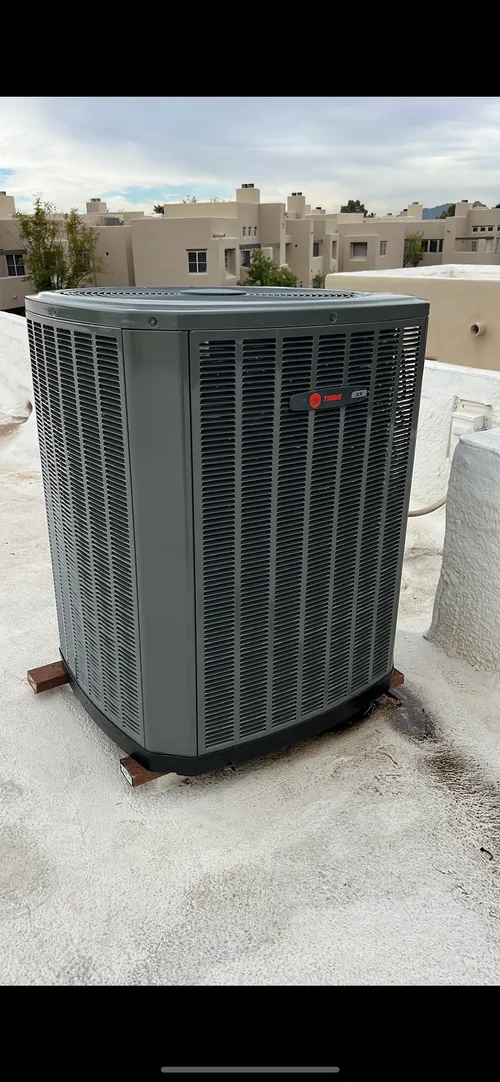
Budget Cooling & Heating, LLC
2322 N 88th Ave, Phoenix, AZ 85037
Budget Cooling & Heating, LLC is a family-owned HVAC company based in Glendale, AZ. They provide full-service heating and cooling solutions including installation, maintenance, and repair for air conditioners, furnaces, heat pumps, boilers, mini splits, and geothermal heat pumps. The company is licensed in Arizona and focuses on treating customers' homes and businesses with care and respect.

Arctic Fox Air Conditioning & Heating
Glendale, AZ
Arctic Fox Air Conditioning & Heating is an HVAC company serving Glendale, AZ, and nearby areas including Peoria and Surprise. They offer a full range of services such as installation, repair, and maintenance for air conditioning units, furnaces, heat pumps, boilers, mini splits, and geothermal heat pumps. The company emphasizes integrity and customer satisfaction, charging by the job rather than by the hour to ensure thorough repairs without time pressure. Founded by Heath and Misti, Arctic Fox prioritizes honest pricing and does not pressure customers into unnecessary purchases. They provide after-hours emergency service upon request.
How Geothermal Systems Work in the Arizona Climate
The core principle behind a geothermal system is remarkably simple: it uses the earth as a constant temperature battery. In Glendale, and across Arizona, the ground temperature below about 30 feet remains a relatively constant 70°F year-round, regardless of the scorching summer heat or mild winter chill above ground 1 2.
This stable temperature is the system's powerhouse. Here's the basic process:
- Heat Exchange: A loop of pipes, called a ground loop, is buried in your yard. A water-based fluid circulates through these pipes.
- Winter Heating: In heating mode, the fluid absorbs the 70°F heat from the earth. It is pumped to an indoor unit (the heat pump), which concentrates this warmth and distributes it through your home's ductwork.
- Summer Cooling: In cooling mode, the process reverses. The system extracts heat from your home's air, transfers it to the fluid in the loop, and deposits it into the cooler ground.
Because the system is moving heat rather than generating it through combustion or intense electrical resistance, it operates with exceptional efficiency. This fundamental difference is what leads to dramatic reductions in energy consumption.
Types of Ground Loop Systems
The underground loop is the heart of the geothermal installation. The right type for your Glendale home depends primarily on your lot size, soil composition, and local geology. There are three main configurations:
Vertical Closed Loops This is the most common choice for residential properties in Glendale, especially those with limited yard space, such as typical suburban lots. Contractors use a drilling rig to bore holes 150 to 450 feet deep. U-shaped pipes are inserted into each borehole, which are then grouted for optimal heat transfer. While the upfront drilling cost is higher, this method minimizes surface disruption and is excellent for retrofitting existing homes.
Horizontal Closed Loops If you have more available land, a horizontal loop can be a more cost-effective installation option. Trenches are dug about 4 to 6 feet deep and 100 to 300 feet long. Pipes can be laid in straight lines or a coiled "Slinky" pattern to fit more pipe in a shorter trench. This method generally has a lower installation cost than vertical drilling but requires a significant amount of open, unobstructed land.
Pond/Lake Loops This is the most economical option, but it requires a suitably sized and deep body of water on or adjacent to your property. Coils of pipe are submerged at the bottom of the pond or lake, which acts as the heat exchange medium. If your property has this resource available, it can significantly reduce the cost and complexity of the ground loop installation 3.
The Installation Process: What to Expect
Installing a geothermal heating and cooling system is a significant project that requires professional expertise. Understanding the steps can help you prepare.
- Site Assessment & Design: A qualified installer will evaluate your property, considering soil conditions, available space, and your home's heating and cooling loads. This assessment determines the optimal loop type and size for maximum efficiency.
- Loop Field Installation: This is the major outdoor work. For a horizontal system, a backhoe will dig the necessary trenches. For a vertical system, a drilling rig will be brought in. The high-density polyethylene pipes are laid or inserted, connected, and pressure-tested 4.
- Indoor Unit Installation: The geothermal heat pump unit itself is typically installed in a basement, utility closet, or garage. It's about the size of a traditional furnace. Your installer will connect it to your existing ductwork or air handler.
- System Connection & Commissioning: The ground loop is connected to the heat pump and filled with the heat transfer fluid. The entire system is then charged, tested, and balanced to ensure it operates quietly and efficiently 5.
Find the perfect geothermal heat pump contractors for your needs
Get personalized recommendations and expert advice
Comparing Trenching vs. Drilling
The choice between a trenched (horizontal) or drilled (vertical) loop is a key financial and logistical decision.
- Trenching (Horizontal Loops): This approach typically has a lower initial cost for the ground loop portion of the project. However, it requires more land area and involves extensive excavation, which can disrupt landscaping. It is often the best value for new construction on larger lots where trenches can be dug before final landscaping 6.
- Drilling (Vertical Loops): The upfront cost is higher due to the specialized equipment and labor involved. The major advantage is that it requires minimal surface space, making it ideal for smaller yards or existing homes with established landscaping. The deeper ground also can offer slightly more consistent temperatures 7 8 9.
Your installer will help you weigh these factors, including local permitting requirements which can sometimes be more involved for drilling projects, against your long-term property plans and budget.
Understanding Costs and Long-Term Savings
It's important to approach geothermal with a long-term perspective. The total installation cost for a geothermal system is higher than that of a conventional high-efficiency air conditioner and furnace. This premium covers the ground loop excavation/drilling and the specialized heat pump unit.
However, the operational savings are where geothermal shines. By leveraging the earth's stable temperature, these systems can achieve remarkable efficiency, leading to reductions in heating and cooling energy bills by 40% to 70% compared to conventional systems 10 11 12. For a typical Glendale home, this can translate to annual savings of over $1,000 on energy costs 10 13.
These savings mean the system often pays for itself over time. The return on investment (ROI) typically ranges from 4 to 15 years, depending on your local utility rates, the size of your home, and the installation cost. Furthermore, geothermal heat pumps are known for their durability. The underground piping often comes with warranties of 50 years or more, and the indoor heat pump unit can last 20 years or longer, providing decades of reliable, low-cost comfort 14.
Benefits Beyond the Monthly Bill
The advantages of a ground-source heat pump extend beyond just lowering your utility bill:
- Quiet Operation: With no noisy outdoor condenser unit (like a traditional AC), the system runs very quietly.
- Low Maintenance: The protected underground loop has no exposed external components, and the indoor unit has fewer mechanical parts than a furnace, leading to minimal maintenance needs.
- Comfort: Geothermal systems provide steady, even heating and cooling without the drafts and temperature swings associated with some forced-air systems.
- Environmental Impact: By drastically reducing electricity or natural gas consumption, you significantly lower your household's carbon footprint.
Is Geothermal Right for Your Home?
Geothermal heat pumps are an excellent investment for homeowners in Glendale who plan to stay in their homes long enough to realize the full financial savings. They are particularly well-suited for new construction, where the ground loop can be installed as part of the site work, but retrofits are also very common and successful. The first step is a professional consultation to assess your property's specific feasibility and provide a detailed cost-benefit analysis.
Frequently asked questions
Sources
Footnotes
-
5 Things You Should Know about Geothermal Heat Pumps - https://www.energy.gov/cmei/articles/5-things-you-should-know-about-geothermal-heat-pumps ↩
-
How a Geothermal Heat Pump Works | This Old House - https://www.youtube.com/watch?v=d5Tbsx3R2T8 ↩
-
Geothermal Heat Pumps - Department of Energy - https://www.energy.gov/energysaver/geothermal-heat-pumps ↩
-
Geothermal Heat Pumps | WBDG - https://www.wbdg.org/resources/geothermal-heat-pumps ↩
-
All You Need to Know About Home Geothermal Heating & ... - https://dandelionenergy.com/all-you-need-to-know-about-home-geothermal-heating-cooling ↩
-
Guide to Geothermal Heat Pumps - https://www.energy.gov/sites/prod/files/guide_to_geothermal_heat_pumps.pdf ↩
-
Geothermal heat pumps: The ultimate guide to ground-source ... - https://termo-plus.com/blog/geothermal-ultimate-guide-to-ground-source-heat-pumps/ ↩
-
Geothermal Explained - https://www.geo-inc.com/geothermal-explained ↩
-
Geothermal Heat Pumps: How They Work | AHRI - https://www.ahrinet.org/scholarships-education/education/homeowners/how-things-work/geothermal-heat-pumps-how-they-work ↩
-
How Does A Geothermal Heat Pump Work? Complete 2025 Guide - https://solartechonline.com/blog/how-does-geothermal-heat-pump-work/ ↩ ↩2
-
Geothermal Heat Pumps, Explained - Bosch Home Comfort - https://www.bosch-homecomfort.com/us/en/residential/connect/blog/geothermal-heat-pumps-go-green-save-green/ ↩
-
How Do Geothermal Systems Work for Residential Homes? - https://www.davisheat.com/blog/how-do-geothermal-systems-work-for-residential-homes/ ↩
-
Everything You Need to Know About Geothermal Heat Pumps - https://www.familyhandyman.com/article/everything-you-need-to-know-about-geothermal-heat-pumps/ ↩
-
Geothermal heating & cooling, heat pumps, heat exchange loops - How it works - https://aztechgeo.com/residential-geothermal/how-it-works/ ↩