
Find the Best Geothermal Heat Pump Contractors for Your Business
No obligation • Fast responses • Nationwide coverage

Why you can trust HVAC Firms
HVAC Firms is a leading United States resource for evaluating HVAC service providers. Our team researches companies, checks credentials, and reviews customer feedback to present clear, unbiased information. Listings and rankings are based on merit, and companies cannot pay to change our editorial content.
Search providers near you
Best Geothermal Heat Pump Contractors in Arizona Ranked
A geothermal heat pump (GHP), also known as a ground-source heat pump, is a highly efficient heating and cooling system that leverages the stable temperatures underground to regulate your home's climate. For Arizona homeowners, this technology offers a powerful solution to combat extreme heat while significantly reducing energy consumption and utility costs. This guide provides a detailed look at geothermal systems in the Grand Canyon State, covering suitability, costs, regulations, and the installation process to help you evaluate if this sustainable technology is right for your property.

One Hour Air Conditioning & Heating of Scottsdale
124 W Orion St STE F8, Tempe, AZ 85283
One Hour Air Conditioning & Heating of Scottsdale offers a wide range of HVAC services in Phoenix, AZ, including air conditioning repair and installation, furnace and boiler repair, heat pump maintenance, and indoor air quality solutions. They also specialize in geothermal system services, duct cleaning and repair, thermostat installation, and ductless mini-split systems. Their technicians use diagnostic tools and industry training to address issues such as refrigerant leaks, thermostat problems, and system failures. The company provides emergency HVAC repair services to restore comfort quickly when systems fail unexpectedly. With experience in handling complex heating and cooling systems suited for the desert climate, One Hour Air Conditioning & Heating of Scottsdale supports both routine maintenance and new installations. They emphasize clear communication and practical solutions to meet customer comfort needs.

Penguin Air, Plumbing & Electrical
3710 E University Dr # 1, Phoenix, AZ 85034
Penguin Air, Plumbing & Electrical is a full-service HVAC, plumbing, and electrical company based in Phoenix, AZ. They provide installation, repair, and tune-up services for air conditioners, furnaces, heat pumps, boilers, mini splits, and geothermal heat pumps. Serving the Phoenix Valley and surrounding areas, Penguin Air offers emergency HVAC services and convenient financing options to support their customers' needs.
Budget Cooling & Heating, LLC
2322 N 88th Ave, Phoenix, AZ 85037
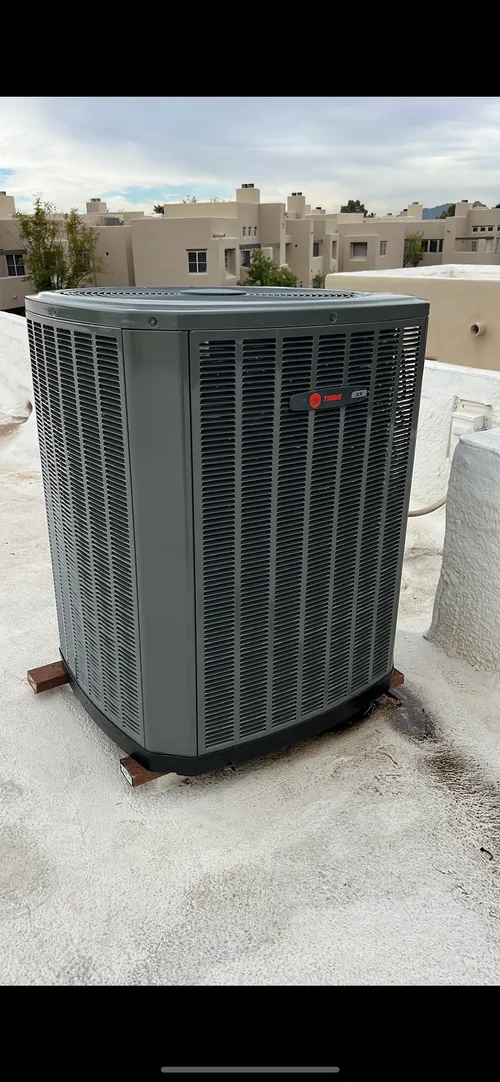
Budget Cooling & Heating, LLC is a family-owned HVAC company based in Glendale, AZ. They provide full-service heating and cooling solutions including installation, maintenance, and repair for air conditioners, furnaces, heat pumps, boilers, mini splits, and geothermal heat pumps. The company is licensed in Arizona and focuses on treating customers' homes and businesses with care and respect.

Arctic Fox Air Conditioning & Heating
Glendale, AZ
Arctic Fox Air Conditioning & Heating is an HVAC company serving Glendale, AZ, and nearby areas including Peoria and Surprise. They offer a full range of services such as installation, repair, and maintenance for air conditioning units, furnaces, heat pumps, boilers, mini splits, and geothermal heat pumps. The company emphasizes integrity and customer satisfaction, charging by the job rather than by the hour to ensure thorough repairs without time pressure. Founded by Heath and Misti, Arctic Fox prioritizes honest pricing and does not pressure customers into unnecessary purchases. They provide after-hours emergency service upon request.
Sunbelt Drilling
1341 E Old West Hwy, Apache Junction, AZ 85119
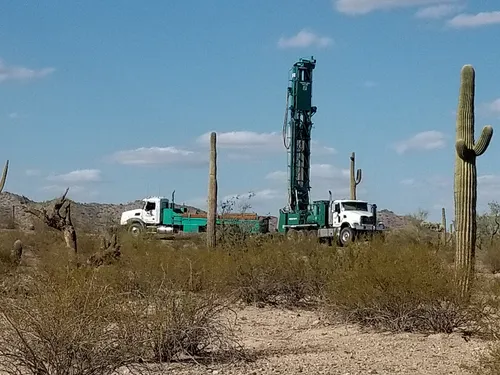
Sunbelt Drilling is a geothermal heat pump contractor based in Phoenix, AZ, serving all of Arizona. The company specializes in water well drilling and ground source heat pump installations, offering services such as air rotary, mud rotary, reverse rotary drilling, and casing hammer techniques. Established in 2001 and backed by over 40 years of industry experience from its owner, Sunbelt Drilling is IGSHPA certified and equipped with modern drilling technology to handle both residential and commercial projects. Safety is a key focus throughout their operations.
How Geothermal Systems Work in Arizona's Climate
Unlike traditional air-source heat pumps that exchange heat with the outside air, a geothermal system uses a network of underground pipes, called a ground loop, to exchange heat with the earth. Beneath the surface, temperatures remain a relatively constant 50-70°F year-round, even as Arizona's desert air soars above 100°F in summer or dips at night in winter.
The system circulates a water-based solution through these buried loops. In the summer, the fluid absorbs heat from your home and carries it into the cooler ground. In the winter, the process reverses, extracting heat from the earth and concentrating it to warm your home. This process is vastly more efficient because the system is working against a moderate ground temperature rather than extreme air temperatures 1.
Arizona's hot, dry climate presents unique considerations. To access sufficiently cool ground temperatures, installers often recommend placing horizontal loops deeper than in other regions, typically 6 to 8 feet down, or using vertical boreholes. Some systems designed for arid climates, like Direct Expansion (DX) systems, may be recommended for optimal performance.
Evaluating Your Property's Suitability
Not every Arizona home is an ideal candidate for a ground-source heat pump. A proper site assessment by a qualified installer is essential, but you can consider these key factors first:
- Land Availability: Horizontal loop systems require a significant amount of open land for trenching. If your property is small or heavily landscaped, a vertical loop system with deep boreholes might be the only option, though it can be more expensive.
- Soil Composition: Soil type directly impacts thermal conductivity. Clay soils, found in parts of Arizona, transfer heat better than sandy soils 2. Moist soil also improves efficiency. In very dry, sandy soils, some installers may incorporate drip irrigation around the loop field to maintain moisture levels and system performance 2 3.
- Existing HVAC System: The installation involves connecting to your home's existing ductwork or installing a ductless system. The condition and design of your current ducts will be evaluated.
- Water Rights Considerations: Arizona has complex water rights laws. If a closed-loop system requires water for initial filling or make-up water, you may need to navigate state permits for groundwater or surface water use 4. A knowledgeable installer will help address this.
Understanding Costs and Financial Incentives
The upfront investment for a geothermal heat pump is higher than for a conventional HVAC system, but significant incentives and long-term savings improve the financial picture.
Installation Costs: For a typical Arizona home, a complete geothermal heating and cooling system installation can range from $20,000 to over $50,000 5. The final price depends heavily on:
- Home size and heating/cooling load.
- Loop type (horizontal trenching vs. vertical drilling).
- Soil conditions and drilling difficulty.
- The specific indoor unit and equipment chosen.
Major Federal Incentive: The most impactful financial benefit is the Federal Residential Energy Clean Energy Tax Credit (ITC). This allows homeowners to claim 30% of the total installation cost as a credit against their federal income taxes 6. For a $30,000 system, this translates to a $9,000 tax credit. There is no upper limit on the credit amount for qualifying systems 6.
Long-Term Savings: The primary payoff comes from dramatically lower utility bills. Geothermal heat pumps can reduce energy consumption for heating and cooling by 40% to 60% compared to conventional systems 7 8. Given Arizona's high cooling demands, these savings can be substantial, leading to a typical payback period of 10 to 15 years 7. Furthermore, these systems have long lifespans: the indoor components last 20-25 years, while the underground ground loops can last 50 years or more 9 10.
Find the perfect geothermal heat pump contractors for your needs
Get personalized recommendations and expert advice
The Installation Process: Steps and Permits
Installing a geothermal system is a major project that requires careful planning and professional execution. Here's what the process generally entails:
- Initial Consultation and Site Survey: A certified installer will assess your home's energy needs, evaluate your property for loop field placement, and perform a soil analysis.
- System Design and Permitting: The installer designs the system and obtains necessary permits. This is a critical step in Arizona and may include:
- Ground Loop Installation: This is the most intensive phase. Crews will either excavate long trenches for horizontal loops or use a drilling rig to create deep boreholes for vertical loops.
- Indoor Unit Installation: The heat pump unit (which resembles a traditional furnace) is installed in your garage, basement, or mechanical closet and connected to your ductwork.
- Connection and Testing: The ground loops are connected to the indoor unit, the system is filled and pressurized, and thorough testing is performed to ensure efficiency and safety.
- Final Inspections: Local building officials will inspect the installation before the system is officially activated.
Maintenance and Repairs
One of the advantages of geothermal technology is its minimal maintenance requirements. With no exposed outdoor compressor unit subject to Arizona's dust and extreme heat, the system is protected from the elements.
Routine maintenance is straightforward:
- Filter Changes: Replace or clean air filters regularly, just as you would with any forced-air system.
- Annual Check-ups: Have a qualified technician perform an annual inspection of the indoor components, refrigerant levels, and electrical connections.
- Loop System: The buried ground loop is essentially maintenance-free. The circulating fluid is typically a non-toxic solution checked during the annual service.
Repairs are infrequent but can involve components like the compressor, fan motor, or controls. It is crucial to work with a technician specifically trained in geothermal heat pump repair.
Finding the Right Professional in Arizona
Selecting an experienced, certified installer is the single most important decision you will make. Look for contractors who:
- Are licensed, insured, and bonded in Arizona.
- Have specific certifications from organizations like the International Ground Source Heat Pump Association (IGSHPA).
- Can provide references from past geothermal installations in the state.
- Have experience navigating Arizona's specific permitting and water rights landscape.
- Conduct a detailed Manual J load calculation to properly size your system.
Be sure to get multiple detailed quotes that break down equipment, loop installation, permitting, and other costs.
Frequently asked questions
Sources
Footnotes
-
Geothermal FAQs - Department of Energy - https://www.energy.gov/eere/geothermal/geothermal-faqs ↩
-
The Complete Guide To Geothermal Heat Pump Installation - https://ultrageothermal.com/the-complete-guide-to-geothermal-heat-pump-installation/ ↩ ↩2
-
Geothermal in Arizona - GreenBuildingTalk - Geothermal Heat Pumps - https://www.greenbuildingtalk.com/Forums/tabid/53/aff/13/aft/32306/afv/topic/Default.aspx ↩
-
Coupling Geothermal Heat Pumps (GHP) with Underground ... - https://s3.us-gov-west-1.amazonaws.com/sepub-demo-0001-124733793621-us-gov-west-1/s3fs-public/2024-02%2FEW18-5316%20Guidance%20Document_1.pdf ↩
-
Geothermal Heat Pump Costs: Your Complete Pricing Guide - ZNFU - https://znfu.com/geothermal-heat-pump-costs/ ↩
-
Federal Tax Credit for Heat Pumps in Arizona: Ultimate Guide - https://aristotleair.com/federal-tax-credit-for-heat-pumps-in-arizona/ ↩ ↩2
-
Geothermal Heat Pumps: Cost and Installation - https://www.energyhomes.org/renewable-technology/geoinstallation.html ↩ ↩2
-
Geothermal Heat Pump Guide: Installation Costs, Types And Benefits - https://modernize.com/hvac/heating-repair-installation/heat-pump/geothermal ↩
-
Ground Source Heat Pump Cost: How Much Will You Pay in 2025? - https://www.energysage.com/heat-pumps/costs-benefits-geothermal-heat-pumps/ ↩
-
Installation ... - Geothermal Heat Pump Repair Arizona (AZ) - https://geothermalheatpumprepairs.netlify.app/az/ ↩
-
State, Federal Incentives Heat Up Geothermal Projects - https://www.hollandhart.com/state-federal-incentives-heat-up-geothermal-projects ↩
-
How Does A Geothermal Heat Pump Work? Complete 2025 ... - https://solartechonline.com/blog/how-does-geothermal-heat-pump-work/ ↩