Find the Best Geothermal Heat Pump Contractors for Your Business
No obligation • Fast responses • Nationwide coverage

Why you can trust HVAC Firms
HVAC Firms is a leading United States resource for evaluating HVAC service providers. Our team researches companies, checks credentials, and reviews customer feedback to present clear, unbiased information. Listings and rankings are based on merit, and companies cannot pay to change our editorial content.
Search providers near you
Top Geothermal Heat Pump Contractors in Maricopa, Arizona Ranked
Geothermal heat pumps, also known as ground-source heat pumps, offer a remarkably efficient way to heat and cool your home by tapping into the earth's stable underground temperature. For Maricopa residents, this technology is particularly compelling, as it can drastically reduce energy bills in our hot climate while providing reliable comfort year-round. This guide explains how these systems work, their benefits, and how you can connect with qualified local professionals for installation and service.

Penguin Air, Plumbing & Electrical
3710 E University Dr # 1, Phoenix, AZ 85034
Penguin Air, Plumbing & Electrical is a full-service HVAC, plumbing, and electrical company based in Phoenix, AZ. They provide installation, repair, and tune-up services for air conditioners, furnaces, heat pumps, boilers, mini splits, and geothermal heat pumps. Serving the Phoenix Valley and surrounding areas, Penguin Air offers emergency HVAC services and convenient financing options to support their customers' needs.
Budget Cooling & Heating, LLC
2322 N 88th Ave, Phoenix, AZ 85037
Budget Cooling & Heating, LLC is a family-owned HVAC company based in Glendale, AZ. They provide full-service heating and cooling solutions including installation, maintenance, and repair for air conditioners, furnaces, heat pumps, boilers, mini splits, and geothermal heat pumps. The company is licensed in Arizona and focuses on treating customers' homes and businesses with care and respect.

Arctic Fox Air Conditioning & Heating
Glendale, AZ
Arctic Fox Air Conditioning & Heating is an HVAC company serving Glendale, AZ, and nearby areas including Peoria and Surprise. They offer a full range of services such as installation, repair, and maintenance for air conditioning units, furnaces, heat pumps, boilers, mini splits, and geothermal heat pumps. The company emphasizes integrity and customer satisfaction, charging by the job rather than by the hour to ensure thorough repairs without time pressure. Founded by Heath and Misti, Arctic Fox prioritizes honest pricing and does not pressure customers into unnecessary purchases. They provide after-hours emergency service upon request.
How Geothermal Systems Work in the Arizona Desert
At its core, a geothermal heating and cooling system is a heat pump connected to a series of underground pipes, called a ground loop. Unlike traditional air-source heat pumps that exchange heat with the outside air, a geothermal system uses the earth as its heat source in winter and its heat sink in summer. The secret to its efficiency lies in the ground's consistent temperature. In Maricopa, just a few feet below the surface, the earth maintains a relatively stable temperature of around 60-70°F year-round, regardless of the scorching summer heat or occasional winter chill.
Heating Mode (Winter): During cooler months, a fluid (typically a water and antifreeze mixture) circulates through the underground loops, absorbing the earth's stored warmth. This warmed fluid is brought back to the indoor heat pump unit. The unit then concentrates this low-grade heat and transfers it to the air, which is distributed throughout your home via your existing ductwork.
Cooling Mode (Summer): The process reverses for air conditioning. The system extracts heat and humidity from your indoor air. This unwanted heat is transferred to the fluid in the loops, which then travels underground. The earth, being significantly cooler than the summer air, readily absorbs this heat, effectively and efficiently cooling your home. This elegant exchange makes a geothermal heat pump one of the most energy-efficient HVAC solutions available.
Types of Ground Loop Systems
The underground portion of the system, the ground loop, can be configured in several ways. The right choice for your Maricopa property depends on your land availability, soil composition, and budget. A professional site assessment is crucial for determining the optimal loop type.
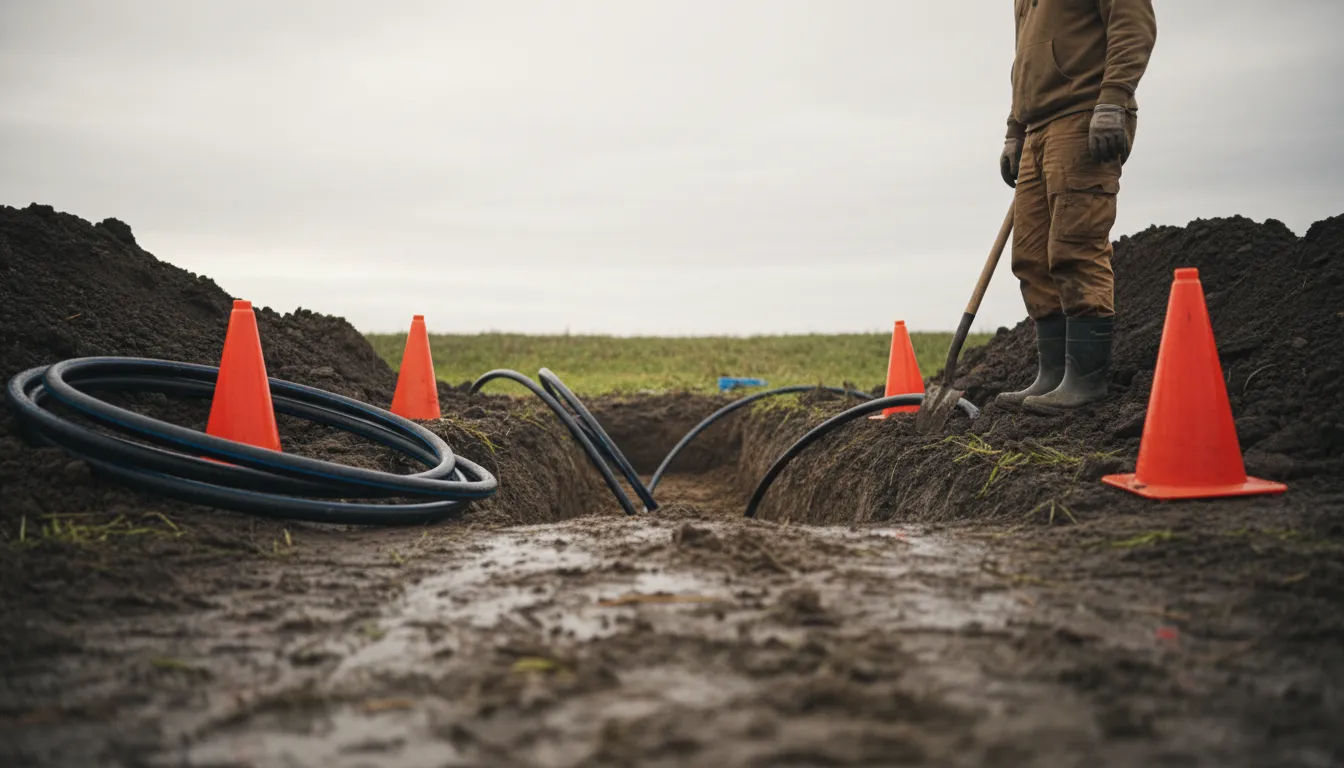
- Horizontal Ground Loops: This is often the most cost-effective installation method if space allows. Contractors excavate long, shallow trenches (typically 4 to 6 feet deep) and lay pipes in a series of parallel lines or slinky coils. This approach requires a substantial amount of open land but avoids the need for deep drilling 1.
- Vertical Ground Loops: For homes with smaller lots-common in many Maricopa subdivisions-vertical loops are the ideal solution. Contractors use a drilling rig to bore deep holes, usually between 150 to 450 feet deep. U-shaped pipes are inserted into these boreholes and connected at the surface. While the drilling cost is higher, vertical loops require minimal surface area and offer excellent performance due to stable temperatures at depth 2 3 4.
- Pond/Lake Loops: If you have access to a sufficiently large and deep pond or lake on your property, this can be a very low-cost loop option. Coils of pipe are submerged at the bottom of the water body, where temperatures remain stable. This method eliminates the need for extensive trenching or drilling.
The Installation Process: What to Expect
Installing a geothermal system is a significant project that requires specialized expertise and equipment. Understanding the steps involved can help you prepare.
- Site Evaluation and Design: A qualified installer will assess your property, considering lot size, soil and rock conditions, and your home's heating and cooling loads. They will design the loop field and specify the correct indoor heat pump unit.
- Permitting: Before any digging or drilling begins, your contractor will typically need to secure permits from local authorities in Maricopa and Pinal County, especially for drilling water wells or boreholes 5.
- Loop Field Installation: This is the major earthwork phase. For a vertical system, a drilling rig will create the necessary boreholes. For a horizontal system, a backhoe or trencher will excavate the required trenches. High-density polyethylene (HDPE) pipe, known for its durability and corrosion resistance, is then placed in the holes or trenches.
- Loop Connection and Testing: The individual pipe runs are connected to form a continuous loop. The system is pressure-tested for leaks, then filled with the heat transfer fluid. The trenches are carefully backfilled to protect the pipes 6.
- Indoor Unit Installation: The geothermal heat pump unit is installed inside your home, often in place of your old furnace or air handler. It is connected to the ground loop and your home's ductwork and electrical system.
- Commissioning and Startup: The installer will start the system, check all components, balance the airflow, and ensure everything is operating at peak efficiency before handing it over to you.
Find the perfect geothermal heat pump contractors for your needs
Get personalized recommendations and expert advice
Benefits for Maricopa Homeowners
Investing in a geothermal system in our desert climate comes with a powerful set of advantages that go beyond simple temperature control.
- Exceptional Energy Savings: This is the most significant benefit. By leveraging the earth's stable temperature instead of fighting the extreme outdoor air, geothermal heat pumps can reduce your energy consumption for heating and cooling by up to 65% compared to traditional systems like standard air conditioners and electric furnaces 7. For a home in Maricopa with high summer cooling costs, these savings translate directly to lower monthly bills.
- Long-Term Financial Payback: While the upfront installation cost for a geothermal system is higher than for a conventional HVAC system-typically ranging from $10,000 to $40,000 depending on system size and loop type-the dramatic reduction in operating costs means the system often pays for itself over time. The payback period typically ranges from 4 to 15 years, after which you enjoy significantly lower energy costs for the life of the system, which can exceed 25 years for the ground loops and 15+ years for the indoor unit 8 9.
- Superior Comfort and Reliability: Geothermal systems provide consistent, even heating and cooling without the drafts and temperature swings common with forced-air systems. They also operate very quietly, with the noisy compressor and fan located indoors. Furthermore, the protected underground loops have a long lifespan and are not exposed to the weather, reducing maintenance needs 10.
- Environmental Leadership: Choosing a ground-source heat pump is a green decision. These systems use renewable thermal energy from the earth and electricity to move heat, producing virtually no on-site greenhouse gas emissions. Their high efficiency also means they reduce the overall demand on the power grid, especially during peak summer hours in Arizona 11 12.
Is a Geothermal System Right for Your Home?
Geothermal technology is an excellent fit for many, but not all, properties in the Maricopa area. Consider these factors:
- Available Land or Depth: You need either sufficient horizontal land area for trenches or the subsurface conditions that allow for vertical drilling. A professional assessment is key.
- Existing Ductwork: Most geothermal systems use forced-air delivery, so having functional ductwork is a major advantage. Homes without ducts can use geothermal to heat water for hydronic (radiant floor) systems.
- Long-Term Perspective: The greatest financial benefit is realized if you plan to stay in your home long enough to reach the payback period and enjoy the subsequent years of low operating costs.
- Upfront Investment: Explore available incentives, such as federal tax credits, which can significantly offset the initial cost of a qualifying geothermal installation 13.
Frequently asked questions
Sources
Footnotes
-
All You Need to Know About Home Geothermal Heating & ... - https://dandelionenergy.com/all-you-need-to-know-about-home-geothermal-heating-cooling ↩
-
Geothermal heat pumps: The ultimate guide to ground-source ... - https://termo-plus.com/blog/geothermal-ultimate-guide-to-ground-source-heat-pumps/ ↩
-
Geothermal Heat Pumps: How They Work | AHRI - https://www.ahrinet.org/scholarships-education/education/homeowners/how-things-work/geothermal-heat-pumps-how-they-work ↩
-
Geothermal heating & cooling, heat pumps, heat exchange ... - https://aztechgeo.com/residential-geothermal/how-it-works/ ↩
-
Geothermal Drilling Phoenix Arizona by Sunbelt Drilling - https://sunbeltdrilling.com/geothermal-drilling.htm ↩
-
Clean Energy 101: Geothermal Heat Pumps - RMI - https://rmi.org/clean-energy-101-geothermal-heat-pumps/ ↩
-
5 Things You Should Know about Geothermal Heat Pumps - https://www.energy.gov/cmei/articles/5-things-you-should-know-about-geothermal-heat-pumps ↩
-
How Does A Geothermal Heat Pump Work? Complete 2025 ... - https://solartechonline.com/blog/how-does-geothermal-heat-pump-work/ ↩
-
Everything You Need to Know About Geothermal Heat Pumps - https://www.familyhandyman.com/article/everything-you-need-to-know-about-geothermal-heat-pumps/ ↩
-
How Do Geothermal Systems Work for Residential Homes? - https://www.davisheat.com/blog/how-do-geothermal-systems-work-for-residential-homes/ ↩
-
Geothermal Heating & Cooling - Department of Energy - https://www.energy.gov/eere/geothermal/geothermal-heating-cooling ↩
-
Geothermal Heating and Cooling - https://geothermal.colorado.gov/geothermal-heating-and-cooling ↩
-
Geothermal Heat Pumps - Department of Energy - https://www.energy.gov/energysaver/geothermal-heat-pumps ↩