Find the Best Geothermal Heat Pump Contractors for Your Business
No obligation • Fast responses • Nationwide coverage

Why you can trust HVAC Firms
HVAC Firms is a leading United States resource for evaluating HVAC service providers. Our team researches companies, checks credentials, and reviews customer feedback to present clear, unbiased information. Listings and rankings are based on merit, and companies cannot pay to change our editorial content.
Search providers near you
Top Geothermal Heat Pump Contractors in Gilbert, Arizona Ranked
Geothermal heat pumps, also known as ground-source heat pumps, are a highly efficient method for heating and cooling your home by leveraging the Earth's stable underground temperature. This technology is particularly valuable in Gilbert's climate, offering year-round comfort while significantly reducing energy consumption and utility bills. This resource is designed to help you understand how these systems work, their benefits, and how to connect with qualified local specialists for installation and service.

One Hour Air Conditioning & Heating of Scottsdale
124 W Orion St STE F8, Tempe, AZ 85283
One Hour Air Conditioning & Heating of Scottsdale offers a wide range of HVAC services in Phoenix, AZ, including air conditioning repair and installation, furnace and boiler repair, heat pump maintenance, and indoor air quality solutions. They also specialize in geothermal system services, duct cleaning and repair, thermostat installation, and ductless mini-split systems. Their technicians use diagnostic tools and industry training to address issues such as refrigerant leaks, thermostat problems, and system failures. The company provides emergency HVAC repair services to restore comfort quickly when systems fail unexpectedly. With experience in handling complex heating and cooling systems suited for the desert climate, One Hour Air Conditioning & Heating of Scottsdale supports both routine maintenance and new installations. They emphasize clear communication and practical solutions to meet customer comfort needs.

Penguin Air, Plumbing & Electrical
3710 E University Dr # 1, Phoenix, AZ 85034
Penguin Air, Plumbing & Electrical is a full-service HVAC, plumbing, and electrical company based in Phoenix, AZ. They provide installation, repair, and tune-up services for air conditioners, furnaces, heat pumps, boilers, mini splits, and geothermal heat pumps. Serving the Phoenix Valley and surrounding areas, Penguin Air offers emergency HVAC services and convenient financing options to support their customers' needs.
Budget Cooling & Heating, LLC
2322 N 88th Ave, Phoenix, AZ 85037
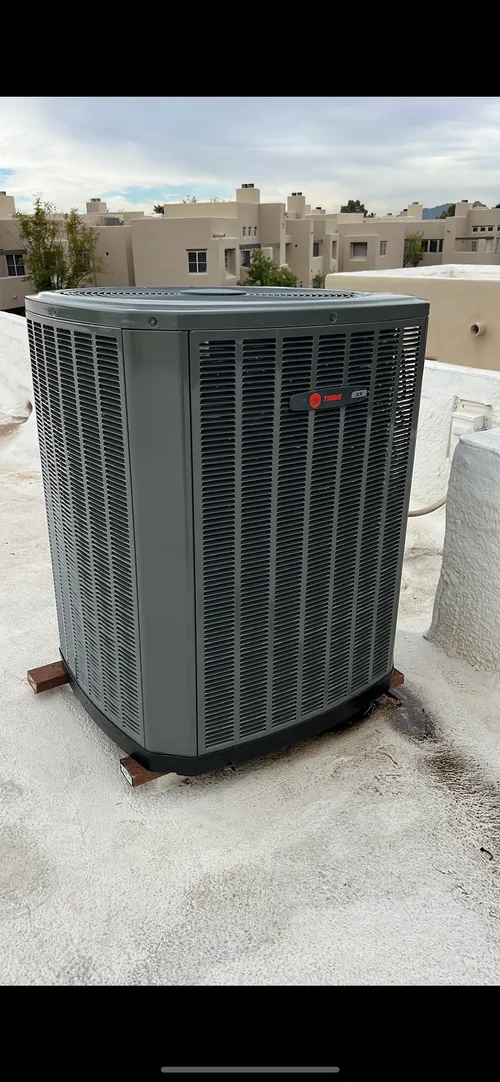
Budget Cooling & Heating, LLC is a family-owned HVAC company based in Glendale, AZ. They provide full-service heating and cooling solutions including installation, maintenance, and repair for air conditioners, furnaces, heat pumps, boilers, mini splits, and geothermal heat pumps. The company is licensed in Arizona and focuses on treating customers' homes and businesses with care and respect.
Sunbelt Drilling
1341 E Old West Hwy, Apache Junction, AZ 85119
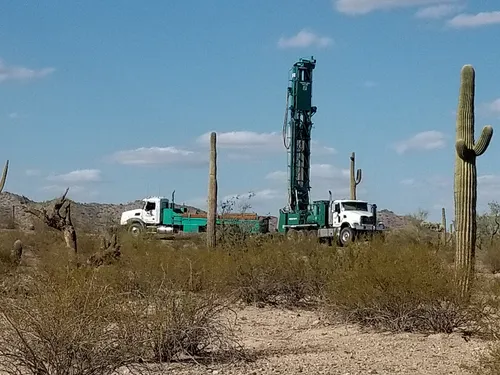
Sunbelt Drilling is a geothermal heat pump contractor based in Phoenix, AZ, serving all of Arizona. The company specializes in water well drilling and ground source heat pump installations, offering services such as air rotary, mud rotary, reverse rotary drilling, and casing hammer techniques. Established in 2001 and backed by over 40 years of industry experience from its owner, Sunbelt Drilling is IGSHPA certified and equipped with modern drilling technology to handle both residential and commercial projects. Safety is a key focus throughout their operations.
How Geothermal Systems Work in the Arizona Desert
At first glance, using the ground for cooling in a hot climate like Gilbert's seems counterintuitive. However, just a few feet below the surface, the Earth maintains a remarkably stable temperature, typically between 60°F and 70°F year-round, regardless of the scorching summer heat or mild winter chill above 1. A geothermal heating and cooling system capitalizes on this constant temperature to provide efficient climate control.
The process revolves around a closed-loop system of pipes, called a ground loop, buried in your yard. A water-based solution circulates through these pipes, acting as a medium for heat exchange with the earth.
- For Heating (Winter): The fluid in the pipes absorbs the Earth's natural warmth. This warmed fluid is carried to an indoor heat pump unit, which concentrates the heat and distributes it as warm air through your home's ductwork 2.
- For Cooling (Summer): The system reverses. The indoor heat pump extracts heat and humidity from your home's air. This unwanted heat is transferred into the circulating fluid, which then travels through the underground loop where it is dissipated into the cooler earth 3. This process is exceptionally efficient because the system is rejecting heat into a 70°F environment instead of 100°F+ summer air.
This elegant exchange makes geothermal systems one of the most energy-efficient heating and cooling technologies available, moving 3 to 5 units of energy for every 1 unit of electrical energy they consume.
Types of Ground Loop Systems for Gilbert Properties
The design of the underground loop field is a critical component of any geothermal installation. The right choice depends heavily on your property's characteristics, such as lot size, soil composition, and landscape.
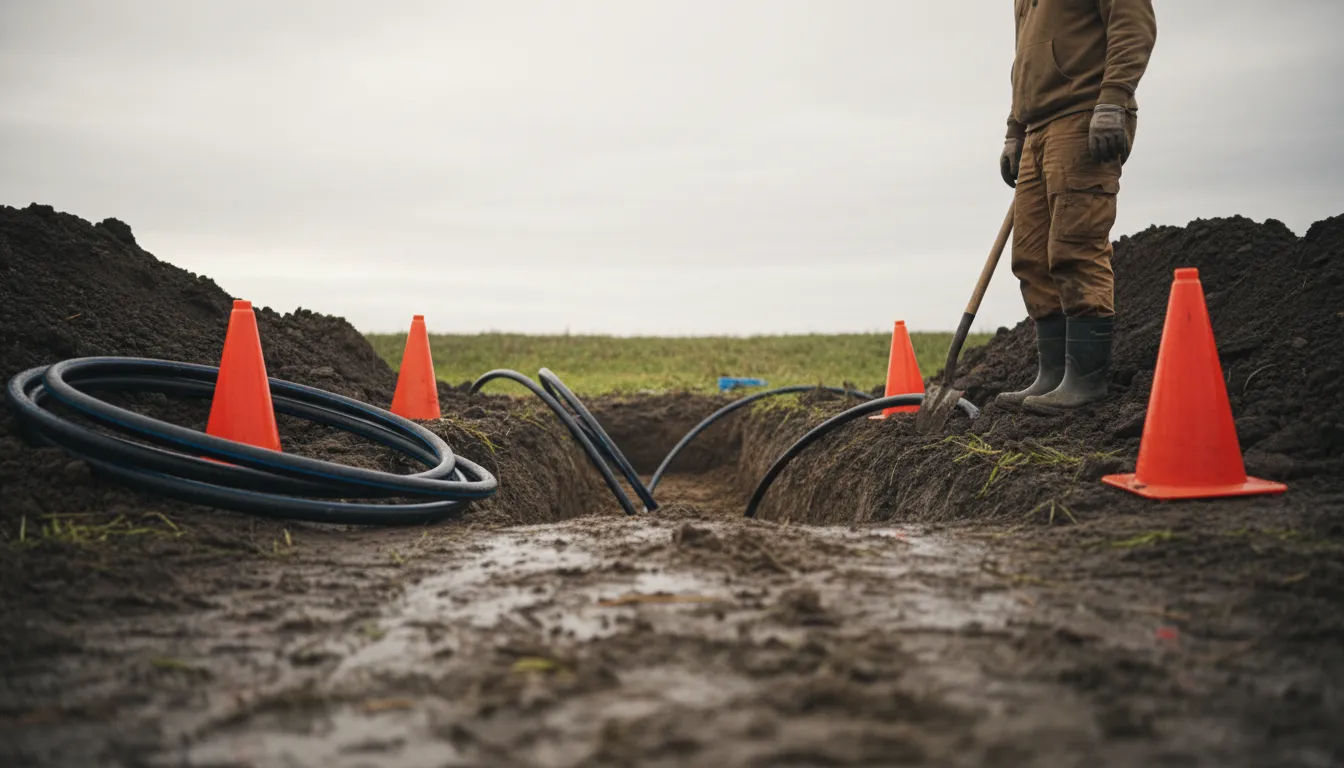
Horizontal Closed Loops This is often the most cost-effective installation method where space allows. Trenches are dug approximately 5 to 10 feet deep and hundreds of feet long in a series of parallel lines or slinky coils 4 5. High-density polyethylene (HDPE) pipes are laid in these trenches before they are backfilled. This approach requires a larger amount of usable land but generally involves lower excavation costs than vertical drilling.
Vertical Closed Loops For properties with limited yard space, such as many in Gilbert's established neighborhoods, vertical loops are the preferred solution. Using a drilling rig, boreholes are drilled straight down to depths between 150 and 400 feet 6. U-shaped pipe loops are inserted into each borehole, which are then grouted to ensure good thermal contact with the earth. While the drilling process is more expensive, a vertical loop system uses a minimal footprint, making it ideal for smaller lots or retrofits where preserving landscaping is a priority 7.
The installation process involves careful planning, the drilling or trenching work, laying and pressure-testing the loop piping, connecting it to the indoor heat pump unit (often located in a garage or closet), and integrating it with your home's existing or new ductwork.
Key Benefits for Gilbert Homeowners
Investing in a geothermal heat pump system offers a compelling set of advantages tailored to the Arizona environment and long-term home ownership.
- Substantial Energy Savings: This is the most significant benefit. By using the Earth's consistent temperature instead of outside air, geothermal systems operate with extreme efficiency. Homeowners can see reductions of 30% to over 60% on their heating and cooling energy bills compared to conventional systems 8 9 10. In Gilbert's climate, where HVAC runs for much of the year, these savings quickly add up.
- Long-Term Reliability and Durability: The components of a geothermal system are built to last. The indoor heat pump unit typically has a lifespan of 20-25 years, similar to high-quality conventional systems. The buried ground loop, however, is incredibly durable, often carrying warranties of 50 years and is expected to last for generations with no maintenance 11. This longevity provides exceptional long-term value.
- Year-Round Comfort: Geothermal systems provide consistent, even heating and cooling without the dramatic temperature swings or blasts of dry air sometimes associated with traditional systems. They also operate very quietly, with the noisiest component (the indoor fan) located inside your home, not in an outdoor condenser unit.
- Environmental Friendliness: By drastically reducing electricity or natural gas consumption for climate control, a geothermal system lowers your home's carbon footprint. It's a clean, renewable technology that uses the planet's natural thermal energy.
Find the perfect geothermal heat pump contractors for your needs
Get personalized recommendations and expert advice
Important Considerations Before Installation
While the benefits are strong, a successful geothermal project requires careful evaluation.
- Upfront Investment: The initial cost for a complete geothermal system, including ground loop installation, is higher than that of a standard air-source HVAC system. Prices can range significantly based on system size, loop type, and property conditions. It's essential to view this as a long-term investment in your home's efficiency, comfort, and value, with payback achieved through dramatically lower operating costs over time.
- Property Suitability: A qualified installer will conduct a detailed site assessment. This evaluation determines whether a horizontal or vertical loop is feasible, examines soil and rock conditions for thermal conductivity, and ensures there is adequate space for the loop field without interfering with utilities, septic systems, or property lines 12.
- Home Efficiency: To maximize the savings and performance of any high-efficiency system, your home should be well-sealed and insulated. Addressing air leaks and ensuring proper attic insulation allows your geothermal heat pump to work at its peak efficiency.
Understanding Efficiency and Savings
The efficiency of geothermal heat pumps is measured by two coefficients:
- Coefficient of Performance (COP) for heating: A higher COP indicates greater heating efficiency. Quality geothermal systems often have COPs between 3.0 and 5.0, meaning they deliver 3 to 5 units of heat for every unit of electricity used 13 14.
- Energy Efficiency Ratio (EER) for cooling: Similarly, a higher EER indicates better cooling efficiency.
Your actual savings will depend on the efficiency of your installed system, your home's characteristics, and local electricity rates. The consistent ground temperature in Arizona provides an excellent source for heat exchange, allowing these systems to maintain high efficiency even during peak summer and winter conditions, unlike air-source heat pumps which lose efficiency in extreme outdoor temperatures 15.
In essence, a geothermal system offers a reliable, quiet, and supremely efficient solution for year-round comfort by leveraging the Earth's stable thermal energy, making it a smart, sustainable choice for Gilbert homeowners focused on long-term savings and environmental impact 16.
Frequently asked questions
Sources
Footnotes
-
How Do Geothermal Systems Work for Residential Homes? - https://www.davisheat.com/blog/how-do-geothermal-systems-work-for-residential-homes/ ↩
-
Geothermal Heat Pumps | WBDG - Whole Building Design Guide - https://www.wbdg.org/resources/geothermal-heat-pumps ↩
-
How a Geothermal Heat Pump Works | This Old House - https://www.youtube.com/watch?v=d5Tbsx3R2T8 ↩
-
Geothermal heating & cooling, heat pumps, heat exchange loops - How it works - https://aztechgeo.com/residential-geothermal/how-it-works/ ↩
-
All You Need to Know About Home Geothermal Heating & ... - https://dandelionenergy.com/all-you-need-to-know-about-home-geothermal-heating-cooling ↩
-
Geothermal Ground Loop FAQs - Dandelion Energy - https://dandelionenergy.com/geothermal-ground-loop-frequently-asked-questions ↩
-
FAQs • What types of ground-source heat pumps and configurat - https://concordma.gov/FAQ.aspx?QID=484 ↩
-
5 Things You Should Know about Geothermal Heat Pumps - https://www.energy.gov/cmei/articles/5-things-you-should-know-about-geothermal-heat-pumps ↩
-
Geothermal Heat Pump Guide: Installation Costs, Types And Benefits - https://modernize.com/hvac/heating-repair-installation/heat-pump/geothermal ↩
-
Geothermal Heat Pumps: How They Work and Benefits for Your ... - https://www.rbiva.com/resources/geothermal-heat-pumps-how-they-work-and-benefits/ ↩
-
Geothermal Heating & Cooling - Department of Energy - https://www.energy.gov/eere/geothermal/geothermal-heating-cooling ↩
-
Geothermal Heat Pumps: How They Work | AHRI - https://www.ahrinet.org/scholarships-education/education/homeowners/how-things-work/geothermal-heat-pumps-how-they-work ↩
-
Guide to Geothermal Heat Pumps - https://www.energy.gov/sites/prod/files/guide_to_geothermal_heat_pumps.pdf ↩
-
Heat exchanger technology and applications: ground source heat pump system for buildings heating and cooling - https://medcraveonline.com/MOJABB/heat-exchanger-technology-and-applications-ground-source-heat-pump-system-for-buildings-heating-and-cooling.html ↩
-
Ground-Source Heat Pumps: Overview of Market Status, Barriers to Adoption, and Options for Overcoming Barriers-Final Report - https://www.osti.gov/servlets/purl/1219308 ↩
-
Geothermal Heating and Cooling - https://geothermal.colorado.gov/geothermal-heating-and-cooling ↩