Find the Best Geothermal Heat Pump Contractors for Your Business
No obligation • Fast responses • Nationwide coverage

Why you can trust HVAC Firms
HVAC Firms is a leading United States resource for evaluating HVAC service providers. Our team researches companies, checks credentials, and reviews customer feedback to present clear, unbiased information. Listings and rankings are based on merit, and companies cannot pay to change our editorial content.
Search providers near you
Top Geothermal Heat Pump Contractors in Chandler, Arizona Ranked
Geothermal heat pumps, also known as ground-source heat pumps, are a highly efficient method for heating and cooling your home by leveraging the Earth's stable underground temperature. This technology can significantly reduce energy bills and environmental impact, making it a smart long-term investment for Chandler homeowners. This guide will help you understand how these systems work, what installation entails, and how to connect with qualified local professionals for your project.

One Hour Air Conditioning & Heating of Scottsdale
124 W Orion St STE F8, Tempe, AZ 85283
One Hour Air Conditioning & Heating of Scottsdale offers a wide range of HVAC services in Phoenix, AZ, including air conditioning repair and installation, furnace and boiler repair, heat pump maintenance, and indoor air quality solutions. They also specialize in geothermal system services, duct cleaning and repair, thermostat installation, and ductless mini-split systems. Their technicians use diagnostic tools and industry training to address issues such as refrigerant leaks, thermostat problems, and system failures. The company provides emergency HVAC repair services to restore comfort quickly when systems fail unexpectedly. With experience in handling complex heating and cooling systems suited for the desert climate, One Hour Air Conditioning & Heating of Scottsdale supports both routine maintenance and new installations. They emphasize clear communication and practical solutions to meet customer comfort needs.

Penguin Air, Plumbing & Electrical
3710 E University Dr # 1, Phoenix, AZ 85034
Penguin Air, Plumbing & Electrical is a full-service HVAC, plumbing, and electrical company based in Phoenix, AZ. They provide installation, repair, and tune-up services for air conditioners, furnaces, heat pumps, boilers, mini splits, and geothermal heat pumps. Serving the Phoenix Valley and surrounding areas, Penguin Air offers emergency HVAC services and convenient financing options to support their customers' needs.
Budget Cooling & Heating, LLC
2322 N 88th Ave, Phoenix, AZ 85037
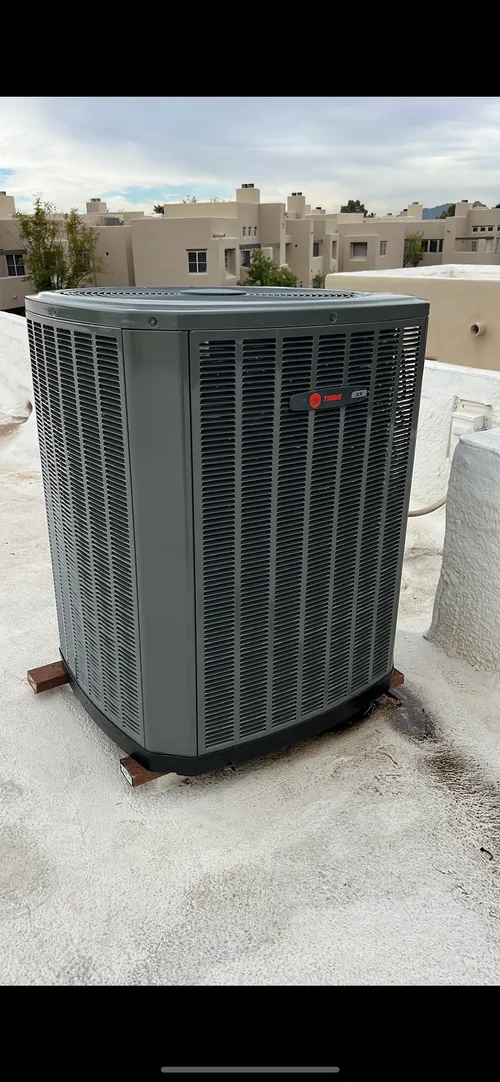
Budget Cooling & Heating, LLC is a family-owned HVAC company based in Glendale, AZ. They provide full-service heating and cooling solutions including installation, maintenance, and repair for air conditioners, furnaces, heat pumps, boilers, mini splits, and geothermal heat pumps. The company is licensed in Arizona and focuses on treating customers' homes and businesses with care and respect.
Sunbelt Drilling
1341 E Old West Hwy, Apache Junction, AZ 85119
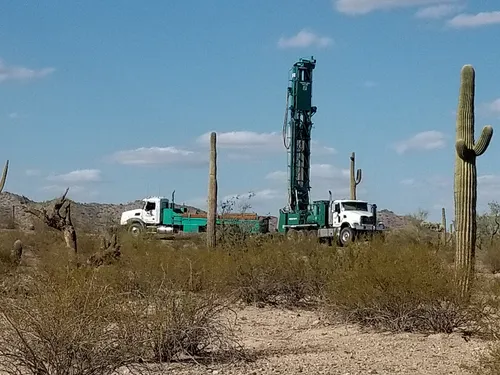
Sunbelt Drilling is a geothermal heat pump contractor based in Phoenix, AZ, serving all of Arizona. The company specializes in water well drilling and ground source heat pump installations, offering services such as air rotary, mud rotary, reverse rotary drilling, and casing hammer techniques. Established in 2001 and backed by over 40 years of industry experience from its owner, Sunbelt Drilling is IGSHPA certified and equipped with modern drilling technology to handle both residential and commercial projects. Safety is a key focus throughout their operations.
How Geothermal Systems Work: A Constant Source of Comfort
Unlike traditional air-source heat pumps that battle Arizona's extreme outdoor temperatures, a geothermal system uses the earth's consistent thermal energy. Just a few feet below the surface, the ground maintains a relatively stable temperature of around 60-70°F year-round. A geothermal heat pump capitalizes on this by circulating a water-based solution through a loop of pipes buried in your yard.
In the winter, the fluid absorbs the earth's warmth and carries it to the indoor unit. The heat pump then concentrates this thermal energy and distributes it as warm air through your ducts. During Chandler's long cooling season, the process simply reverses: the system extracts heat from your home and transfers it into the cooler ground 1 2. This exchange process is what makes ground-source heating and cooling remarkably efficient, as it moves existing heat rather than generating it through combustion or intense electrical resistance.
Types of Ground Loop Systems
The buried pipe network, or ground loop, is the heart of the system. The right configuration for your Chandler property depends on soil conditions, available land, and budget. Local installers are experts at conducting the necessary site assessments to determine the optimal approach.
Horizontal Closed Loops
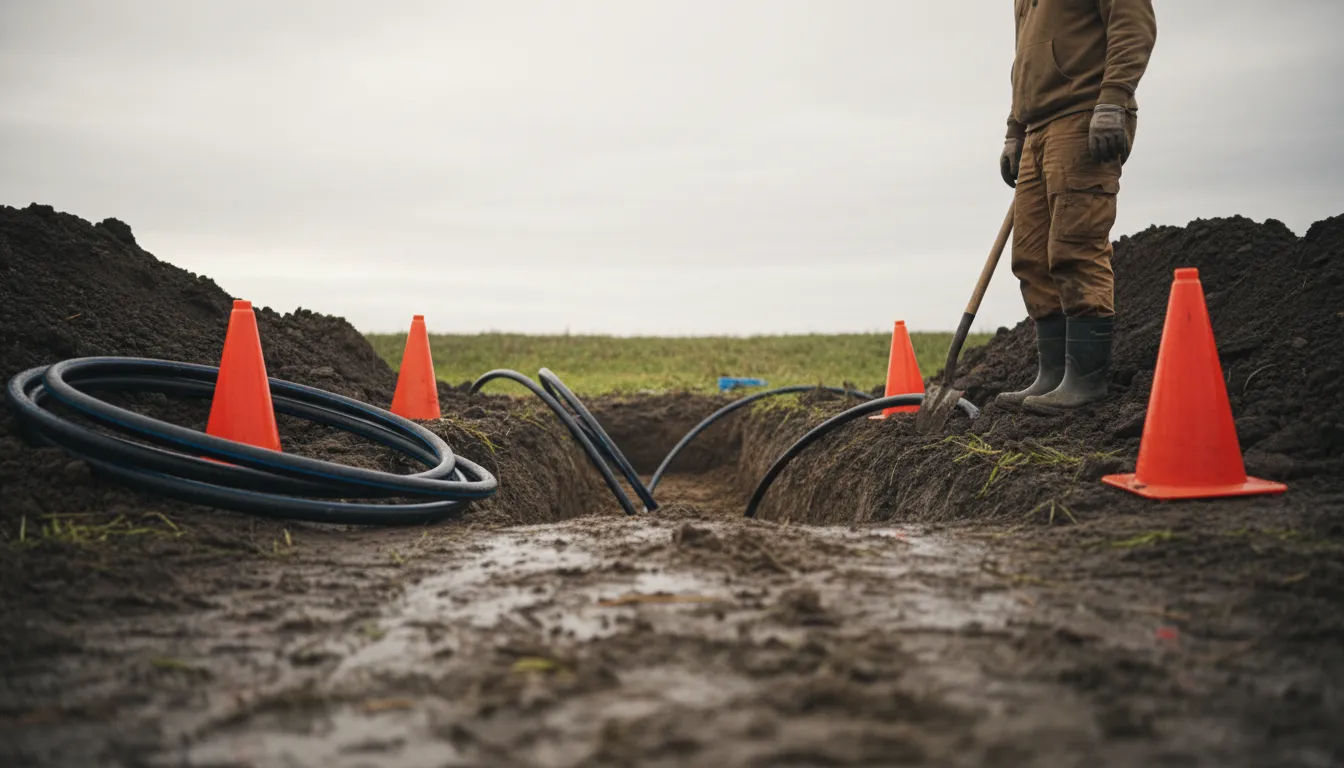
This is often the most cost-effective option if you have sufficient yard space. Trenches are dug about four to six feet deep, typically 100 to 300 feet long, and high-density polyethylene (HDPE) pipes are laid in them before the trenches are backfilled 3. This method requires more land area but generally involves lower excavation costs than deep drilling.
Vertical Closed Loops
For homes with smaller lots, which is common in many Chandler neighborhoods, vertical loops are the ideal solution. Boreholes are drilled 150 to 450 feet deep, and U-shaped loops of pipe are inserted into each hole 4 5. While drilling costs are higher, vertical loops require minimal surface area and can be very effective in various soil and rock conditions.
Pond/Lake Loops (If Available)
If your property has access to a sufficiently large and deep pond or lake, a loop can be submerged at the bottom. This can be one of the least expensive options to install, as it avoids major excavation or drilling, but it requires a specific water source that not all homeowners have 6.
Directional Drilled Loops
This advanced method uses directional drilling equipment to steer boreholes horizontally underground, often beneath driveways, landscaping, or other surface obstacles. It's an excellent choice for retrofitting a system into an existing property with minimal surface disruption.
The Installation Process for Chandler Homes
Installing a geothermal HVAC system is a significant project that requires professional expertise. Understanding the steps involved can help you prepare for the process.
- Comprehensive Site Evaluation: A qualified installer will assess your property's soil composition, lot size, and layout. They will perform a Manual J load calculation to determine your home's precise heating and cooling needs, which dictates the required loop length and system capacity.
- Loop Field Installation: For a horizontal system, a backhoe will dig the necessary trenches. For a vertical system, a drilling rig will create the boreholes. The HDPE pipe is then placed, all connections are pressure-tested for leaks, and the trenches or holes are backfilled with a special grout to ensure good thermal conductivity 7.
- Indoor Unit Setup: The geothermal heat pump unit itself is installed inside your home, often in a garage, basement, or closet. It is typically quieter and more compact than a traditional furnace and air conditioner combo.
- Connection and Distribution: The indoor unit is connected to the ground loops and to your home's distribution system. For most homes, this means connecting to existing ductwork. For homes with radiant floor heating or other hydronic systems, the geothermal unit can heat water for distribution 8.
Find the perfect geothermal heat pump contractors for your needs
Get personalized recommendations and expert advice
Key Considerations for Arizona's Climate
Chandler's desert climate presents unique factors for geothermal system design and performance.
- Cooling-Dominant Load: Arizona homes have a much higher demand for cooling than heating. This means the ground loop must be expertly sized to effectively reject your home's heat into the earth throughout the long summer. An undersized loop will lead to reduced efficiency and comfort.
- Soil Thermal Properties: The composition of your soil-whether it's sandy, clay-rich, or rocky-affects how well it transfers heat. This influences the required loop length and the method of installation. Local professionals have experience with the soils in the Chandler area and can design accordingly 9.
Benefits and Long-Term Value
The decision to install a geothermal system is an investment in long-term savings, comfort, and sustainability.
- Substantial Energy Savings: By using the earth's free thermal energy, geothermal heat pumps are exceptionally efficient. Homeowners can see savings of up to 65% on heating and cooling costs compared to conventional systems 10 11. This is especially valuable in a climate like Chandler's, where HVAC usage is high.
- Longevity and Reliability: The underground loop system is incredibly durable, with a lifespan often exceeding 50 years. The indoor heat pump unit typically lasts 20 to 25 years, which is longer than standard air conditioners. This longevity adds to the system's overall value.
- Quiet Operation and Comfort: With no noisy outdoor condenser unit, operation is very quiet. These systems also provide more consistent temperatures and better humidity control than forced-air systems that cycle on and off frequently 12 13.
- Reduced Environmental Impact: Geothermal systems use electricity to move heat, not to create it by burning fossil fuels on-site. When paired with renewable electricity, they can provide nearly carbon-free heating and cooling 14.
Understanding Costs and Incentives
The upfront cost for a complete geothermal heating and cooling system is higher than that of a traditional HVAC system, often ranging from $20,000 to $40,000 or more, depending on the home's size and loop type 15 16. However, this is offset by dramatically lower operating costs.
The payback period-the time it takes for energy savings to equal the initial investment-can vary from a few years to over a decade. It depends on your current utility rates, the efficiency of your old system, and available financial incentives 17. It's crucial to research current federal tax credits, as well as any potential rebates from local utilities, which can significantly reduce the net installed cost.
Frequently asked questions
Sources
Footnotes
-
Geothermal (Ground Source) Heat Pumps : NYS Clean Heat - NY.Gov - https://cleanheat.ny.gov/geothermal-heat-pumps/ ↩
-
Ground Source Heat Pumps Make Heating Easy - Belmont Citizens Forum - https://www.belmontcitizensforum.org/2019/09/16/ground-source-heat-pumps-make-heating-easy/ ↩
-
Geothermal Heat Pumps: How They Work | AHRI - https://www.ahrinet.org/scholarships-education/education/homeowners/how-things-work/geothermal-heat-pumps-how-they-work ↩
-
Geothermal heating & cooling, heat pumps, heat exchange loops - How it works - https://aztechgeo.com/residential-geothermal/how-it-works/ ↩
-
Geothermal Explained - https://www.geo-inc.com/geothermal-explained ↩
-
Geothermal Heat Pumps - Department of Energy - https://www.energy.gov/energysaver/geothermal-heat-pumps ↩
-
FAQs • What types of ground-source heat pumps and configurat - https://concordma.gov/FAQ.aspx?QID=484 ↩
-
All You Need to Know About Home Geothermal Heating & ... - https://dandelionenergy.com/all-you-need-to-know-about-home-geothermal-heating-cooling ↩
-
Basics of Geothermal - https://www.goloopwi.com/blog/basics-of-geothermal ↩
-
How Geothermal Heating and Cooling Systems Work | Belle Air - https://www.belleairservices.com/how-geothermal-heating-and-cooling-systems-work/ ↩
-
5 Things You Should Know about Geothermal Heat Pumps - https://www.energy.gov/cmei/articles/5-things-you-should-know-about-geothermal-heat-pumps ↩
-
Understanding Geothermal Heating & Cooling Systems - https://www.tchvac.net/news/geothermal-heating-and-cooling-explained ↩
-
Why Geothermal HVAC is the Best Investment for Oklahoma Homeowners - http://comfort.works/geothermal-hvac-investment-for-homeowners/ ↩
-
Geothermal Heating & Cooling - Department of Energy - https://www.energy.gov/eere/geothermal/geothermal-heating-cooling ↩
-
Everything You Need to Know About Geothermal Heat Pumps - https://www.familyhandyman.com/article/everything-you-need-to-know-about-geothermal-heat-pumps/ ↩
-
Mechanical's Efficient Geothermal HVAC in NJ - https://connmechanical.com/services/geothermal/ ↩
-
How Do Geothermal Systems Work for Residential Homes? - https://www.davisheat.com/blog/how-do-geothermal-systems-work-for-residential-homes/ ↩