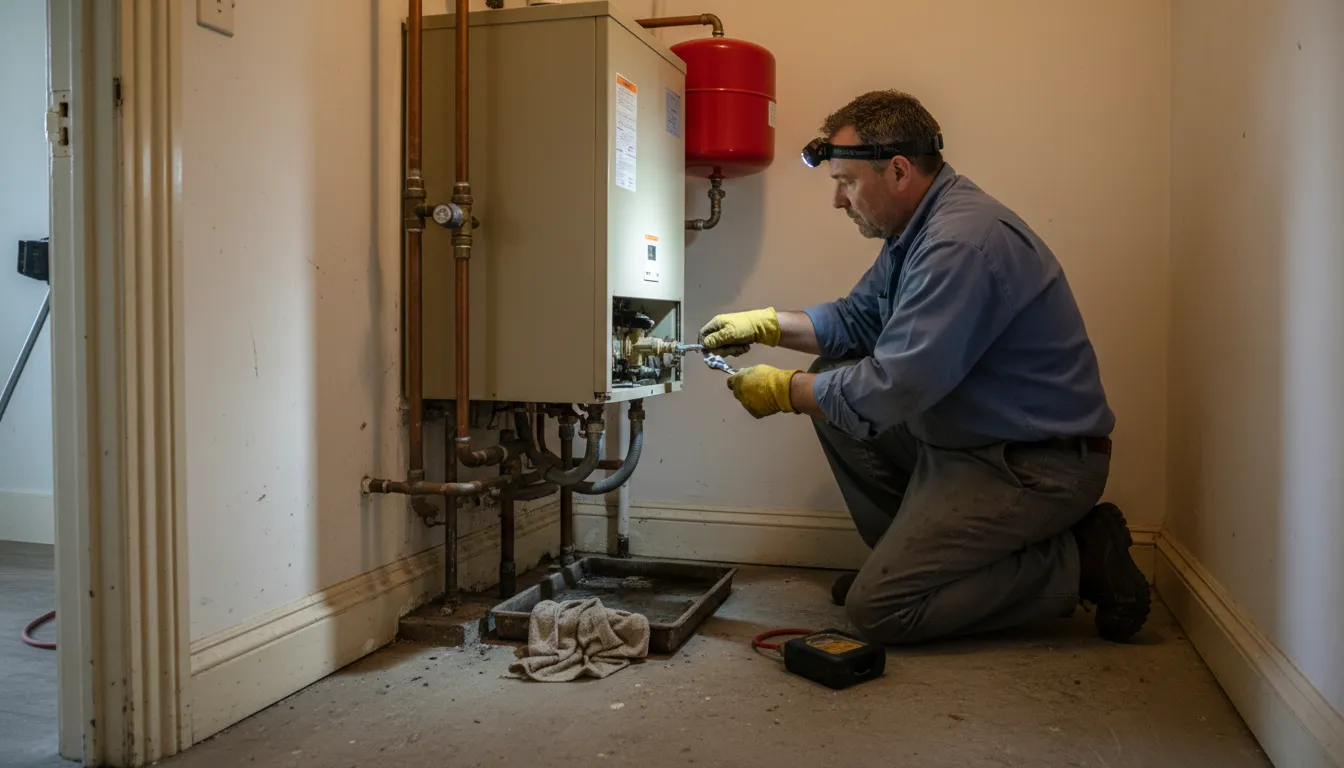
Find the Best Boiler Repair Contractors for Your Business
No obligation • Fast responses • Nationwide coverage

Why you can trust HVAC Firms
HVAC Firms is a leading United States resource for evaluating HVAC service providers. Our team researches companies, checks credentials, and reviews customer feedback to present clear, unbiased information. Listings and rankings are based on merit, and companies cannot pay to change our editorial content.
Search providers near you
Top Boiler Repair Contractors in Greenville, North Carolina Ranked
When your hydronic heating system falters, it's more than an inconvenience-it's a disruption to your home's comfort and efficiency. In Greenville's humid subtropical climate, a well-maintained boiler is essential for reliable warmth through radiators, baseboard heaters, or radiant floors. This guide helps you understand your system, navigate repair versus replacement decisions, and connect with local expertise to ensure your home heating operates smoothly and economically.
Understanding Your Hydronic Heating System
Hydronic heating, often powered by a gas or oil boiler, is a popular and efficient method for warming homes in the Greenville area. Unlike forced-air systems that blow heated air, these systems use hot water circulated through a network of pipes to deliver heat. This water travels to endpoints like traditional radiators, sleek baseboard units, or tubing embedded within floors for radiant heat.
The core advantages of this heating method include consistent, even warmth without the drafts or noise associated with ductwork, and the potential for precise temperature control in different zones of your home 1. However, the system's performance is entirely dependent on the boiler's health and the integrity of the piping network.
Why Greenville's Climate Demands Attention
Our local weather plays a significant role in your system's longevity. Greenville's high humidity can accelerate corrosion and stress components within your boiler and pipes. Moisture in the air can contribute to internal rust and scale buildup, which reduces efficiency and can lead to premature failure. This makes proactive, climate-aware maintenance not just a recommendation but a necessity for protecting your investment.
Essential Maintenance for Longevity
To combat the effects of our climate and ensure reliable operation, an annual professional inspection is crucial. A qualified technician will perform several key services:
- System Flushing: Over time, sediment, minerals, and corrosion byproducts can accumulate in the pipes and heat exchanger. A professional flush removes this debris, which improves heat transfer, boosts efficiency, and prevents clogs that can strain the boiler 2.
- Leak Detection: The technician will check all valves, joints, and the boiler itself for signs of weeping or leakage, which are common failure points.
- Component Check: This includes testing the pressure relief valve, inspecting the burner and heat exchanger for soot or cracks, and verifying that all controls and the circulator pump are functioning correctly.
This preventative approach is far more cost-effective than emergency repairs and can significantly extend the life of your entire hydronic system.
Navigating Repair vs. Replacement
Facing a boiler breakdown presents a critical decision: fix the existing unit or invest in a new one. Here's a framework to help you decide, based on common industry guidance.
When Repair is the Right Choice
Opting for boiler repair is typically best under these conditions:
- The system is relatively new, generally under 10-15 years old.
- The problem is isolated and minor, such as a faulty thermostat, a small leak at a valve, or a worn-out circulator pump.
- The repair cost is reasonable compared to the value and expected remaining life of the boiler.
A timely repair can restore full function and add years of service without the major expense and disruption of a full replacement.
When Replacement Should Be Considered
There comes a point when pouring money into an old boiler is no longer economical. Consider replacement if:
- The boiler is over 20 years old. Efficiency drops dramatically with age.
- You face frequent breakdowns. If you're calling for service multiple times a season, it's a sign of systemic failure.
- Repair costs are high. A good rule of thumb is if the repair estimate approaches or exceeds 50% of the cost of a new, high-efficiency unit, replacement often makes more financial sense.
- The system is inefficient. Older boilers may have Annual Fuel Utilization Efficiency (AFUE) ratings as low as 70% or less. Modern condensing boilers can achieve AFUE ratings over 95%, translating to potential energy savings of 20-40% on your heating bills 3 4.
- Your heating needs have changed. You may want to add a new zone, switch fuel sources, or integrate with a solar thermal system.
Find the perfect boiler repair contractors for your needs
Get personalized recommendations and expert advice
Cost Considerations and Local Financial Support
Understanding the potential costs involved helps in planning. Prices can vary widely based on the boiler type, labor, and complexity of your existing system (e.g., number of zones).
- Minor Repairs: Common fixes like replacing a valve or thermostat typically range from $200 to $500.
- Full Boiler Replacement: Installing a new standard-efficiency boiler can cost between $3,000 and $7,000, while high-efficiency models or complex installations can reach $10,000 or more5.
- New System Installation: Adding a completely new hydronic system, such as radiant floor heating, is a major project with costs often starting above $10,000.
Thankfully, Greenville residents have access to local resources that can help manage these expenses:
- Greenville Utilities Commission (GUC): Your local utility may offer rebates or incentives for upgrading to high-efficiency heating equipment. It's always worth checking their website or contacting them directly for current programs that promote energy conservation 6.
- North Carolina Weatherization Assistance Program (NC WAP): For income-eligible households, this state program provides free energy efficiency upgrades. While it primarily focuses on insulation and air sealing, certain heating system improvements may qualify. This program is designed to reduce energy burdens and improve home safety 7.
Choosing a Service Provider in Greenville
Selecting the right professional is key. Look for a licensed, insured contractor with specific experience in hydronic systems. They should be able to explain your options clearly, provide a detailed written estimate, and check for available rebates. A reputable technician will perform a full load calculation for your home if recommending a new boiler, ensuring it is properly sized-not too large or too small-for optimal efficiency and comfort.
By prioritizing annual maintenance, making informed repair-or-replace decisions, and leveraging local support programs, you can ensure your Greenville home remains comfortably warm for many winters to come.
Frequently asked questions
Sources
Footnotes
-
Pros and Cons of Hydronic Heating | First Supply - https://www.firstsupply.com/Knowledge-Center/pros-and-cons-of-hydronic-heating ↩
-
Should Hydronic Heating Systems Be Flushed? - Fante's HVAC - https://fantesphvac.com/should-hydronic-heating-systems-be-flushed/ ↩
-
The Pros and Cons of Boiler Replacement vs. Repair - AN Heating - https://anheating.co.uk/the-pros-and-cons-of-boiler-replacement-vs-repair/ ↩
-
Hydronic Heating vs Forced-Air Heating: Complete 2025 Guide - https://dynamicheatandcool.ca/hydronic-heating-vs-forced-air-heating-complete-2025-guide/ ↩
-
What Is The Average Cost Of A Boiler Replacement? | Expert Insights ... - https://www.youtube.com/watch?v=OOoOkZCXA08 ↩
-
advertisement for re-bids - Greenville Utilities - https://www.guc.com/sites/default/files/uploads/bids/25-28-rfb-for-installation-of-hvac-upgrade-for-admin-building-05.08.2025-2pm-final.pdf ↩
-
North Carolina Weatherization Installation Standard Work ... - https://files.nc.gov/ncdeq/Energy%20Mineral%20and%20Land%20Resources/Energy/WAP%20Back%20Office%20Documents/NCWAP%20Installation%20SWS%20Final%2007202015.pdf ↩