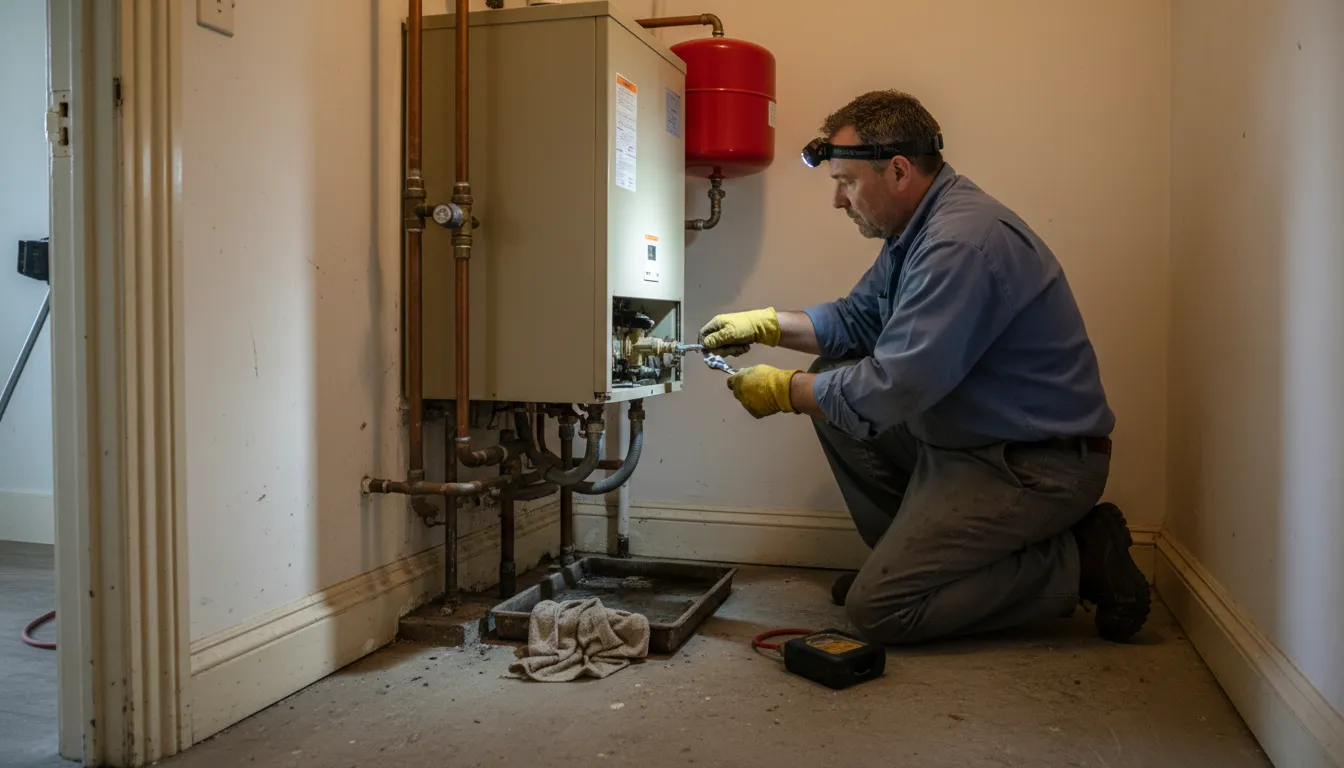
Find the Best Boiler Repair Contractors for Your Business
No obligation • Fast responses • Nationwide coverage

Why you can trust HVAC Firms
HVAC Firms is a leading United States resource for evaluating HVAC service providers. Our team researches companies, checks credentials, and reviews customer feedback to present clear, unbiased information. Listings and rankings are based on merit, and companies cannot pay to change our editorial content.
Search providers near you
Top Boiler Repair Contractors in Greensboro, North Carolina Ranked
A boiler is the heart of a hydronic heating system, providing quiet, consistent warmth to your home through radiators, baseboards, or radiant floors. When your boiler malfunctions, it disrupts your comfort and can lead to more significant issues. This guide explains how boiler systems work in Greensboro, helps you decide between repair and replacement, and connects you with local expertise to restore reliable heat to your home.

Aire Serv of Liberty
Greensboro, NC
Aire Serv of Liberty is a heating and air conditioning company serving Greensboro, NC. They provide a range of HVAC services including repair, installation, and maintenance for air conditioners, furnaces, heat pumps, and boilers. The company also offers indoor air quality improvements with air purification systems. Aire Serv of Liberty is known for its skilled professionals and commitment to customer satisfaction, backed by the Neighborly Done Right Promise®. They provide 24/7 customer service to ensure heating and cooling systems remain operational at all times.
Fire and Ice Heating and Cooling
4626C W Market St Unit 195, Greensboro, NC 27407
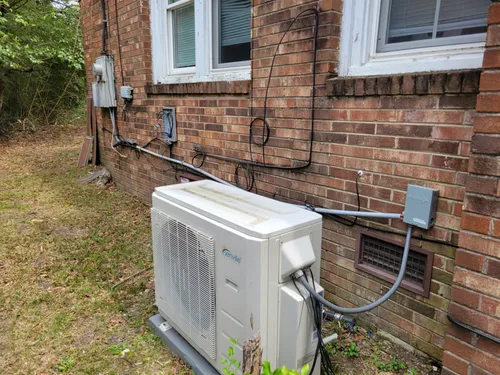
Fire and Ice Heating and Cooling is an HVAC contractor serving Greensboro, NC, and surrounding areas. They provide a range of services including air conditioning and furnace repair, installation of heat pumps and thermostats, duct cleaning, indoor air quality improvements, and gas line installation. The company is experienced in handling both routine maintenance and emergency repairs, with 24/7 availability for heating emergencies. Established in 2008, Fire and Ice Heating and Cooling offers expertise in refrigerant checks, duct sealing, and boiler repairs, ensuring systems are efficient and safe throughout seasonal changes.
Thomas Cooling & Heating, LLC
Winston Salem, NC
Thomas Cooling & Heating, LLC is a licensed HVAC company based in Winston Salem, NC. They provide a range of services including installation, repair, and maintenance for air conditioning, furnaces, heat pumps, boilers, and full HVAC systems. Their technicians bring years of experience to each job and offer individualized HVAC solutions to fit customer needs and budgets. The company also provides a one-year labor warranty alongside manufacturer warranties, emphasizing quality parts and equipment in their work.
Lloyd Heating & Cooling, LLC
Greensboro, NC
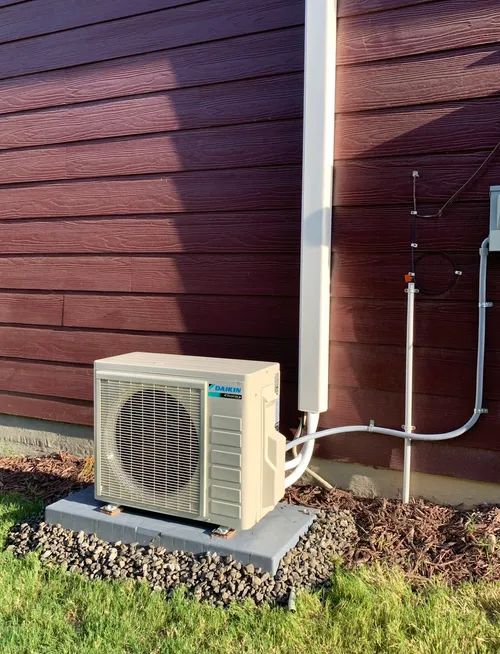
Lloyd Heating & Cooling, LLC is a family-owned HVAC contractor based in Greensboro, NC. With nearly two decades of experience, the company provides a range of services including repair and installation of air conditioning units, furnaces, heat pumps, boilers, mini splits, and full HVAC systems. Lloyd Heating & Cooling handles projects of all sizes, from minor repairs to large-scale installations, serving clients throughout the North Carolina area.
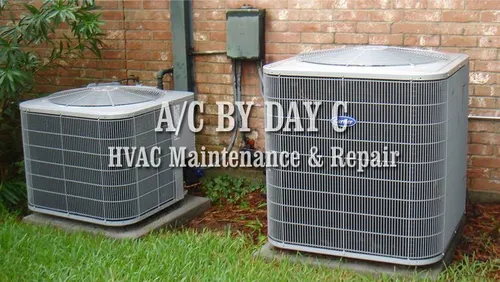
Ac by Day C
Greensboro, NC
Ac by Day C is a female-owned HVAC contractor based in Greensboro, NC, offering residential and commercial heating and cooling services. The company provides installation, repair, diagnostics, and seasonal maintenance for air conditioners, furnaces, heat pumps, boilers, and other HVAC equipment. With 15 years of experience, Ac by Day C emphasizes quality craftsmanship and transparency while promoting inclusion in the skilled trades. They serve the Greensboro area and the surrounding Triad region, providing access to major HVAC brands and specialized equipment like cranes for rooftop system installations.
Understanding Your Hydronic Heating System
In Greensboro, many homes are heated by hydronic systems, which use hot water to distribute warmth. Unlike forced-air furnaces that blow heated air through ducts, a boiler heats water that is then circulated through a network of pipes to various heat emitters in your home 1.
Key components of a typical system include:
- The Boiler Unit: The appliance that heats the water, typically using natural gas as a fuel source, though oil-fired models also exist.
- Circulator Pumps: These move the hot water from the boiler through the piping system.
- Pipes & Heat Emitters: A closed-loop network of pipes delivers the hot water to radiators, baseboard heaters, or tubing embedded in floors for radiant heat 2 3.
This method of heating is prized for its even temperatures, lack of blowing air (and allergens), and quiet operation.
Greensboro's Climate and Boiler Efficiency
The Piedmont Triad area, including Greensboro, experiences relatively mild winters compared to northern states. This doesn't mean your heating system is less important-it means a well-maintained, efficient boiler can provide exceptional comfort without excessive energy use.
High-efficiency condensing boilers are an excellent choice for our region. They extract more heat from the combustion gases, converting water vapor into latent heat, which results in significant energy savings. Even with our less extreme cold snaps, upgrading to a modern, efficient boiler can reduce your annual heating bills and provide more consistent comfort 4.
Common Boiler Problems in Residential Homes
Recognizing the signs of a failing boiler can help you address issues before they leave you in the cold. Common symptoms include:
- No Heat or Inconsistent Heat: This could stem from a faulty thermostat, a broken circulator pump, low water pressure, or issues with the ignition system.
- Strange Noises: Banging, whistling, or gurgling sounds often indicate air in the lines, kettling (mineral buildup causing overheating), or a failing pump.
- Leaks: Any sign of water around the boiler or pipes requires immediate attention, as it can lead to water damage and system pressure loss.
- Pilot Light or Ignition Problems: If the pilot light won't stay lit or the electronic ignition fails, the boiler cannot produce heat.
- Rising Energy Bills: A gradual increase in costs, without increased usage, often signals declining boiler efficiency.
Find the perfect boiler repair contractors for your needs
Get personalized recommendations and expert advice
Repair vs. Replacement: Making the Right Choice
When your boiler acts up, the critical decision is whether to fix the existing unit or invest in a new one. Here's a framework to help you decide, based on insights from local HVAC professionals.
When Repair is the Best Path:
- Age of System: Your boiler is less than 15 years old.
- Nature of the Problem: The issue is isolated and repairable, such as a single faulty component like a circulator pump, pressure relief valve, or thermostat.
- Cost-Effectiveness: The repair estimate is reasonable and doesn't approach a significant fraction of the cost of a new unit.
- Efficiency History: The unit has been reliably efficient, and this is its first major repair.
When Replacement Should Be Considered:
- Advanced Age: Most boilers have a lifespan of 15-25 years. If yours is over 20, replacement is often more economical than another major repair.
- Frequent Breakdowns: You are calling for service multiple times a season. This is a sign of systemic failure.
- Major Component Failure: If the heat exchanger-the core component-is cracked or leaking, replacement is almost always recommended.
- Low Efficiency: An older, non-condensing boiler operates at much lower efficiency (often 70-80% AFUE) compared to modern units that can exceed 95% AFUE. Upgrading saves money on fuel long-term.
- Rust or Significant Corrosion: This indicates the system is deteriorating from the inside out.
What to Expect: Service and Investment
Professional boiler service in Greensboro typically involves a thorough inspection, diagnosis, and clear communication about your options. Reputable technicians will check system pressure, inspect the heat exchanger for cracks, test safety controls, and assess the condition of pumps and valves.
Understanding Costs: Costs can vary based on the job's complexity, the parts required, and the unit's type. Based on industry estimates for the region 5 6:
- Repairs: Minor repairs or component replacements (e.g., a circulator pump or valve) might range from $300 to $800+.
- Full Replacement: Installing a new boiler is a more significant investment, typically ranging from $4,000 to $10,000+. The final price depends on the unit's size, efficiency rating (standard vs. condensing), fuel type, and the complexity of integrating it with your existing hydronic system and venting.
Maximizing Your Investment: When installing a new system, inquire about ENERGY STAR® certified models to ensure top efficiency. Additionally, check for available rebates or tax credits. Local utilities like Duke Energy may offer incentives, and federal energy efficiency tax credits can help offset the cost of qualifying high-efficiency equipment 7.
Finding Local Boiler Service Expertise
For repairs, maintenance, or a new installation, working with a local, licensed HVAC contractor is essential. Companies familiar with Greensboro and the Triad area understand the specific needs of homes here. They can provide accurate estimates, perform safe gas line work if needed, and ensure your system is correctly sized and installed for optimal performance and longevity 8 9.
Frequently asked questions
Sources
Footnotes
-
4 Different Types of Heating Systems | Martel Plumbing and Heating - https://www.martelplumbingri.com/blog/4-different-types-of-heating-systems/ ↩
-
Learn Hydronic System Fundamentals - https://www.bluegrasshydronics.com/post/mastering-the-basics-of-hydronic-systems ↩
-
What Are The Different Types Of Heating Systems? - https://jerrykelly.com/blog/what-are-the-different-types-of-heating-systems/ ↩
-
The Difference Between Boilers and Furnaces, Explained - https://reimerhvac.com/difference-between-boilers-and-furnaces/ ↩
-
Heating Repair | Greensboro, NC - Total Heating & Cooling, Inc. - https://www.thandc.com/services/heating/heating-repair ↩
-
Who Do You Call to Fix a Boiler? - One Hour Heating & Air Conditioning - https://www.onehourheatandair.com/charleston/about-us/blog/2024/september/fix-a-boiler/ ↩
-
Why Heat With Hydronics? - Velocity Boiler Works - https://www.velocityboilerworks.com/support/educational-resources/why-heat-with-hydronics/ ↩
-
Heating Repair in Greensboro - https://www.johnsplumbinghvac.com/services/hvac/heating/heating-repair/ ↩
-
Boiler Service & Repair for The Triad- Complete - https://webbhvac.com/heating/boilers/ ↩