Find the Best Mini-Split Installers for Your Business
No obligation • Fast responses • Nationwide coverage

Why you can trust HVAC Firms
HVAC Firms is a leading United States resource for evaluating HVAC service providers. Our team researches companies, checks credentials, and reviews customer feedback to present clear, unbiased information. Listings and rankings are based on merit, and companies cannot pay to change our editorial content.
Search providers near you
Top Mini-Split Installers in Waukesha, Wisconsin Ranked
A ductless mini-split system is a versatile heating and cooling solution that provides targeted comfort without the need for extensive ductwork. For homeowners in Waukesha, these systems are an excellent choice for adding climate control to new additions, solving hot or cold spots, or efficiently managing the temperature in specific zones of your home. This guide will help you understand the process, benefits, and key considerations for installing a mini-split, empowering you to find the right local expertise for your project.

Professional Services Heating, AC & Electric Repair
113 Riverview Dr, Thiensville, WI 53092
Professional Services Heating, AC & Electric Repair is an HVAC company serving Milwaukee, WI, and the surrounding Ozaukee and Washington counties. They provide a range of heating and cooling services including furnace, heat pump, boiler, and geothermal system repair and installation. The company is equipped to handle both standard and high-efficiency furnaces, as well as ductless split systems. They emphasize practical advice and offer warranties on parts and labor. Professional Services also offers 24/7 emergency service to address urgent heating and cooling needs.
Absolute Comfort HVAC LLC
W220N1560 Jericho Ct, Waukesha, WI 53186
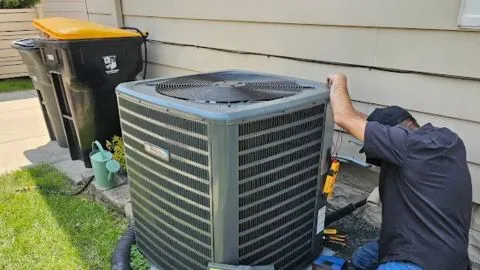
Absolute Comfort HVAC LLC provides heating, cooling, and ventilation services in Milwaukee, WI. They offer maintenance, repair, and installation for air conditioners, furnaces, boilers, mini splits, and indoor air quality systems. The company serves residential, commercial, light commercial, and new construction clients across multiple nearby communities. Their capabilities include HVAC tune-ups and installation of inverter and rooftop units. Absolute Comfort HVAC LLC covers a wide service area including Waterford, Waukesha, Brookfield, and surrounding locations.
Burkhardt Heating, Cooling, Plumbing & Electric
405 N Calhoun Rd, Brookfield, WI 53005
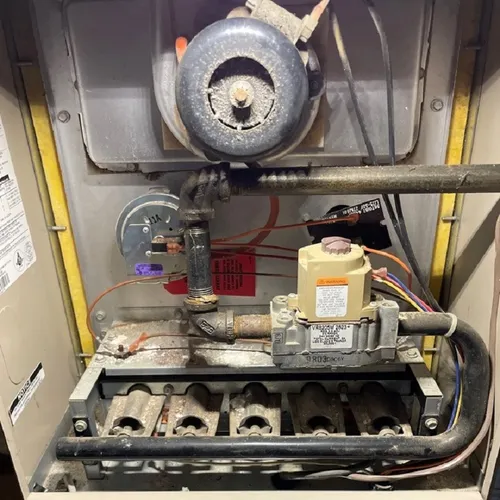
Burkhardt Heating, Cooling, Plumbing & Electric serves Milwaukee, WI, offering comprehensive HVAC services including installation, repair, and maintenance of air conditioners, furnaces, boilers, heat pumps, and mini-split systems. They provide tailored heating and cooling solutions with capabilities such as advanced zoning systems and smart thermostat integration to enhance home comfort and energy efficiency. With over 60 years of experience, Burkhardt focuses on customized service to meet unique home needs throughout the year.
Thielmann Heating, Cooling & Plumbing
11512 N Port Washington Rd Suite 201K, Mequon, WI 53092
Thielmann Heating, Cooling & Plumbing is a well-established HVAC and plumbing company serving Milwaukee, WI, and the surrounding Southeast Wisconsin area. With nearly a century of experience since 1929, they provide a wide range of services including furnace and air conditioning repair, installation of heat pumps and mini-split systems, and routine HVAC tune-ups. Their team is licensed, insured, and NATE-certified, offering same-day and emergency services to ensure year-round home comfort. Thielmann also provides plumbing solutions, addressing issues from slow drains to water heater installations with a focus on lasting workmanship.
Gregg Heating & Air Conditioning
2165 S 170th St, New Berlin, WI 53151
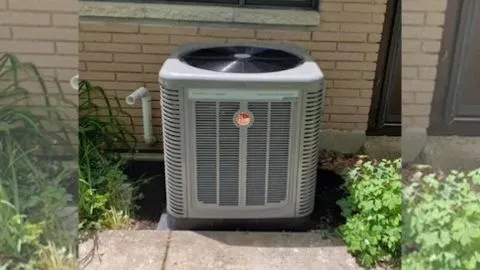
Gregg Heating & Air Conditioning is an HVAC company serving Milwaukee, WI, and surrounding areas. Established in 1974, the company offers a range of services including air conditioning, heating, heat pump, boiler, and ductless system installation and repair, as well as indoor air quality solutions. They provide maintenance plans and emergency service on weekends. With decades of experience, Gregg Heating & Air Conditioning emphasizes doing the job right the first time and standing behind their work.
What is a Ductless Mini-Split System?
A ductless mini-split, often simply called a ductless system or mini-split, consists of two main components: a compact outdoor condenser/compressor unit and one or more sleek indoor air-handling units. These components are connected by a small conduit that houses refrigerant lines, power cables, and a condensate drain, which is run through a small hole in your wall. This design eliminates the need for the bulky, invasive ductwork required by traditional forced-air systems, making it a clean and flexible option for many homes.
The core appeal of a ductless air conditioner or heat pump lies in its zoning capability. Unlike a central system that treats your entire house as one zone, a mini-split allows you to control the temperature independently in each room where an indoor unit is installed. This means you can cool a sun-drenched home office without wasting energy cooling an empty guest room, leading to significant comfort and efficiency gains.
Common Applications in Waukesha Homes
Ductless technology is particularly well-suited to the architectural needs and seasonal demands of the Waukesha area. Here are the most frequent applications:
- Home Additions and Renovations: When you build a new sunroom, convert an attic into a bedroom, or finish a basement, extending your existing ductwork can be prohibitively expensive and structurally challenging. A mini-split provides a perfect, self-contained climate solution for these new spaces.
- Supplementing Central Systems: Many homes have that one room that's always too hot in summer or too cold in winter. Installing a single-zone mini-split in that problem area-like a master bedroom over the garage or a kitchen with large windows-can resolve discomfort without overhauling your entire HVAC system.
- Whole-Home Zoning: For homes without any existing ductwork, such as older historic properties or those with radiant heat, a multi-zone ductless installation can provide comprehensive, efficient heating and cooling. This approach allows for personalized comfort in living rooms, bedrooms, and home offices from a single, streamlined system.
Understanding Zoning: Single-Zone vs. Multi-Zone
Choosing between a single-zone and multi-zone setup is a fundamental decision in planning your installation.
- Single-Zone Systems: This is the simplest configuration, consisting of one outdoor unit connected to one indoor unit. It's an ideal and cost-effective solution for conditioning a single specific space, like a garage workshop, home addition, or primary bedroom 1.
- Multi-Zone Systems: A single outdoor condenser can be connected to multiple indoor units (typically 2 to 5, depending on the model). Each indoor unit operates independently, allowing you to set different temperatures in the living room, kitchen, and bedrooms simultaneously. This provides whole-home comfort with exceptional energy efficiency, as the system modulates its output to match the combined demand of all zones 2.
Choosing and Placing Your Indoor Units
The indoor air handlers come in several styles to blend with your home's decor and layout. Proper placement is critical for performance, comfort, and aesthetics.
- Wall-Mounted Units: The most common and economical type. They are mounted high on an interior wall, similar to a picture frame. For optimal airflow and comfort, installers typically place them about 8-9 feet from the floor, ensuring at least 6-8 inches of clearance from the ceiling and walls on all sides 3.
- Floor-Mounted Units: An excellent choice for rooms with limited wall space, such as those with extensive windows or glass doors. These low-profile units are installed near the floor and direct air upward, providing effective circulation without the need for high-wall mounting.
- Ceiling Cassette Units: These are recessed into the ceiling, with only a decorative grille visible. They distribute air in four directions for wide, even coverage and are a popular choice for finished basements, main living areas, or commercial spaces where a discreet appearance is desired.
- Concealed Ducted Units: These allow for a completely hidden installation within a ceiling or closet, with air distributed through short duct runs to vents. They offer the aesthetic benefits of central air with the zoning efficiency of a mini-split 4.
Outdoor Unit Placement and Requirements
The outdoor condenser must be placed with care to ensure longevity, efficiency, and minimal noise disruption.
- Stable Foundation: The unit must be placed on a stable, level surface. This is typically a poured concrete pad or specially designed mounting brackets attached to the side of the home.
- Adequate Clearance: Like the indoor units, the outdoor condenser requires ample space for airflow. It should be positioned away from shrubs, fences, or walls that could restrict air intake or exhaust. Most manufacturers specify minimum clearance distances (often 12-24 inches on all sides) that a professional installer will follow 5.
- Consideration for Neighbors and Aesthetics: Thoughtful placement considers the unit's line of sight from main living areas and neighboring properties to minimize visual and noise impact. Local Waukesha codes may also dictate minimum setback distances from property lines.
The Professional Installation Process
While DIY kits exist, professional installation is strongly recommended to ensure warranty protection, system efficiency, and safety. A certified technician will manage the entire process:
- Site Assessment & Planning: The technician will evaluate your home's layout, insulation, electrical service, and cooling/heating needs to design an effective system.
- Mounting: Secure brackets are anchored to wall studs for indoor units, and the pad or brackets are prepared for the outdoor unit.
- Drilling the Line Set Hole: A small, clean hole (approximately 3 inches in diameter) is drilled through the exterior wall to connect the indoor and outdoor units.
- Running Connections: The copper refrigerant lines, condensate drain tube, and electrical wiring (housed within a line-set cover) are run through the wall and connected.
- Electrical Work: A dedicated electrical circuit is often required from your main panel to the outdoor unit. This is a critical step that must meet local electrical codes 6.
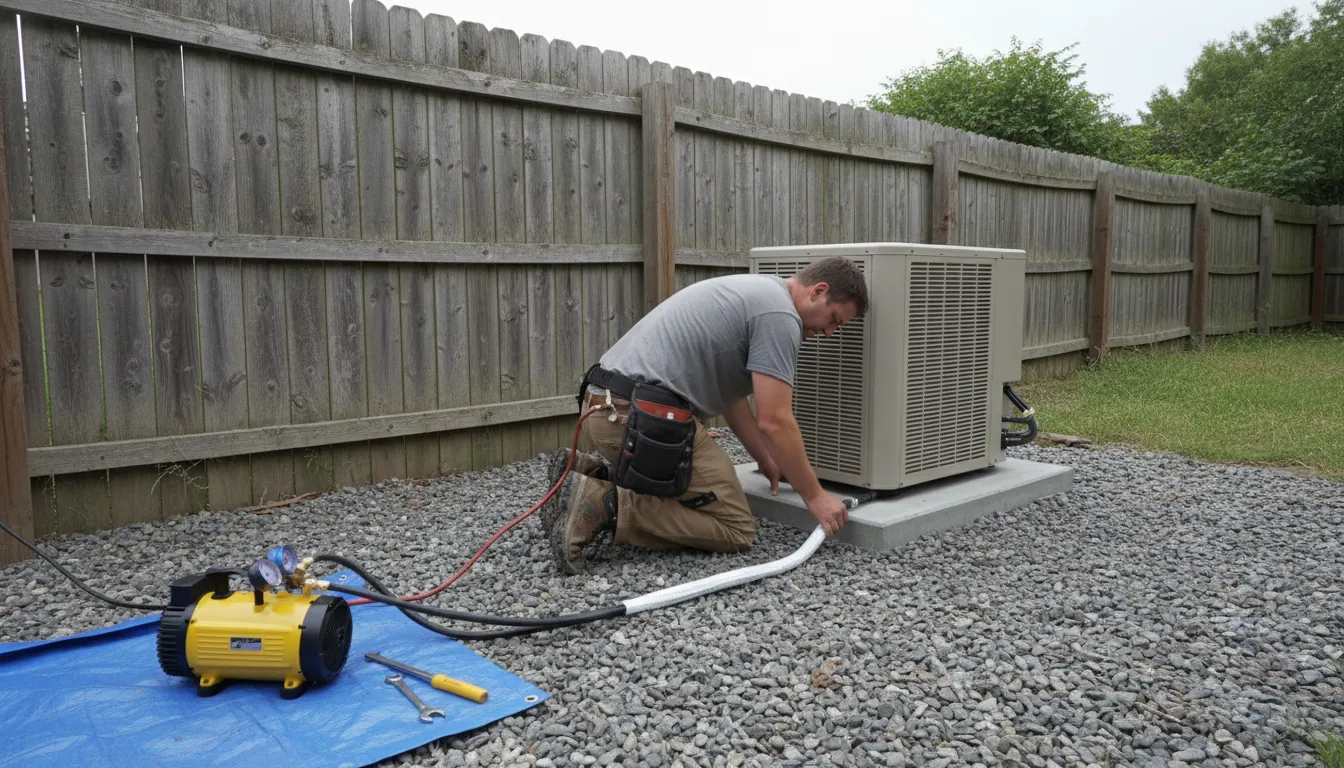
- Evacuation and Charging: The refrigerant lines are connected, and a powerful vacuum pump is used to remove all air and moisture from the system-a vital step for performance and longevity. The system is then charged with refrigerant 7 8.
- Testing & Commissioning: The system is powered on and tested in both heating and cooling modes. The technician will verify proper operation, check for leaks, and often demonstrate the thermostat controls for the homeowner.
Find the perfect mini-split installers for your needs
Get personalized recommendations and expert advice
Understanding Mini-Split Installation Costs in Waukesha
The total investment for a ductless mini-split installation can vary widely based on several key factors. It's important to view this as a long-term investment in your home's comfort and energy efficiency.
Primary Cost Factors:
- Number of Zones: A single-zone system is the entry point, while each additional indoor unit adds to the material and labor cost.
- System Capacity and Brand: Higher BTU capacities for larger spaces and units from premium manufacturers (like Mitsubishi, Daikin, or Fujitsu) command a higher price.
- Installation Complexity: The difficulty of running lines (e.g., through finished walls, across attics, or to a far side of the house), the need for significant electrical upgrades, and the type of indoor units selected all impact labor time.
- Permits and Local Codes: The city of Waukesha requires permits for HVAC work, and these fees are part of the project cost.
Typical Cost Ranges: Based on regional data, homeowners can expect the following broad ranges (note that these are estimates and precise quotes require a home evaluation):
- Single-Zone System: $2,500 - $4,500+
- Multi-Zone System (3-4 zones): $6,500 - $12,000+
These totals generally encompass equipment, professional labor, basic electrical connections, the pad or brackets, and permit fees. Additional costs may arise if your electrical panel needs an upgrade to support the new circuit or if complex structural work is needed for line-set routing 9 10 11.
Long-Term Benefits and Efficiency
The initial cost of a ductless system is often offset by its operational savings and added home value.
- High Efficiency: Modern mini-splits are heat pumps, providing both heating and cooling with remarkable efficiency (measured by SEER for cooling and HSPF for heating). They transfer heat rather than generate it through combustion, leading to lower utility bills, especially during Wisconsin's mild spring and fall seasons 12.
- Zoned Savings: By conditioning only the rooms you're using, you avoid the energy waste associated with cooling or heating an entire house. This targeted operation can lead to substantial energy savings 13 14.
- Improved Indoor Air Quality: Since there are no ducts to accumulate dust, pollen, and allergens, ductless systems can provide cleaner air. Many indoor units also feature multi-stage filtration to remove particulates from the room air 15.
Frequently asked questions
Sources
Footnotes
-
Mini-Split Systems, What Are They and Are They Worth It? - Cardinal Heating, Cooling, Plumbing & Electric - https://www.cardinalhvac.com/press-releases/mini-split-systems-what-are-they-and-are-they-worth-it/ ↩
-
2025 Mini-Split Air Conditioner Costs - Modernize - https://modernize.com/hvac/central-air-conditioner-installation/ductless-ac/mini-split ↩
-
How Much Does a Mini Split Installation Cost? (2026) - HomeGuide - https://homeguide.com/costs/ductless-mini-split-ac-cost ↩
-
The Different Types of Mini Splits - https://www.pioneerminisplit.com/blogs/news/the-different-types-of-mini-splits ↩
-
Ductless mini-split installation: Cool 2025 Guide - Southern Air - https://www.southern-air.com/blog/ductless-mini-split-installation ↩
-
How to Install a Mini Split - https://www.homedepot.com/c/ah/how-to-install-a-mini-split/9ba683603be9fa5395fab90c887a9dd ↩
-
DIY Mini Split Install - All the Things Nobody Shows You - https://www.youtube.com/watch?v=2mKwCmaR5Qg&t=16 ↩
-
Ductless Mini Split Setup: An Ultimate Guide - Airflow Heating & Air - https://www.goairflow.com/blog/ductless-mini-split-installation/ ↩
-
Ductless Mini-Split Installation Cost in 2025: Full Breakdown - https://osborneheatingncooling.com/ductless-mini-split-installation-cost/ ↩
-
Cost to Install Mini Split AC System in 2025 - https://dellahome.com/blogs/della-blog/cost-to-install-mini-split-ac-system ↩
-
How Much Does a Mini-Split Installation Cost? - Taskrabbit Blog - https://www.taskrabbit.com/blog/mini-split-installation-cost/ ↩
-
Mini Split Heat Pump Buying Guide: Everything You Need To Know - https://johnsonsheating.com/mini-split-heat-pump/ ↩
-
Installation & Maintenance of HVAC Services in Waukesha - https://westallisheating.com/waukesha/ ↩
-
Expert Ductless Mini Split Installation for Ultimate Comfort - https://www.northwestexpertheating.com/expert-ductless-mini-split-installation/ ↩
-
Ductless Mini Split Systems | Waukesha & Germantown, WI - https://interstateheating.com/residential/ductless-systems/ ↩