Find the Best Mini-Split Installers for Your Business
No obligation • Fast responses • Nationwide coverage

Why you can trust HVAC Firms
HVAC Firms is a leading United States resource for evaluating HVAC service providers. Our team researches companies, checks credentials, and reviews customer feedback to present clear, unbiased information. Listings and rankings are based on merit, and companies cannot pay to change our editorial content.
Search providers near you
Top Mini-Split Installers in Milwaukee, Wisconsin Ranked
Adding a ductless mini-split system is a smart, efficient way to heat and cool your Milwaukee home. These systems provide targeted comfort control, making them perfect for room additions, historic properties, or any space without existing ductwork. This guide will help you understand the process, benefits, and key considerations for finding a qualified professional to handle your installation.

Professional Services Heating, AC & Electric Repair
113 Riverview Dr, Thiensville, WI 53092
Professional Services Heating, AC & Electric Repair is an HVAC company serving Milwaukee, WI, and the surrounding Ozaukee and Washington counties. They provide a range of heating and cooling services including furnace, heat pump, boiler, and geothermal system repair and installation. The company is equipped to handle both standard and high-efficiency furnaces, as well as ductless split systems. They emphasize practical advice and offer warranties on parts and labor. Professional Services also offers 24/7 emergency service to address urgent heating and cooling needs.
Absolute Comfort HVAC LLC
W220N1560 Jericho Ct, Waukesha, WI 53186
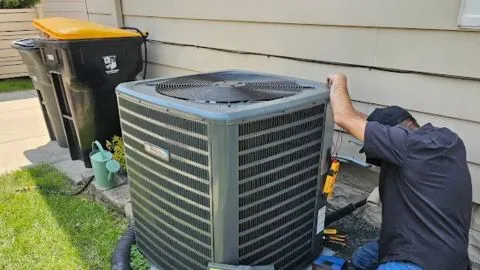
Absolute Comfort HVAC LLC provides heating, cooling, and ventilation services in Milwaukee, WI. They offer maintenance, repair, and installation for air conditioners, furnaces, boilers, mini splits, and indoor air quality systems. The company serves residential, commercial, light commercial, and new construction clients across multiple nearby communities. Their capabilities include HVAC tune-ups and installation of inverter and rooftop units. Absolute Comfort HVAC LLC covers a wide service area including Waterford, Waukesha, Brookfield, and surrounding locations.
Burkhardt Heating, Cooling, Plumbing & Electric
405 N Calhoun Rd, Brookfield, WI 53005
Burkhardt Heating, Cooling, Plumbing & Electric serves Milwaukee, WI, offering comprehensive HVAC services including installation, repair, and maintenance of air conditioners, furnaces, boilers, heat pumps, and mini-split systems. They provide tailored heating and cooling solutions with capabilities such as advanced zoning systems and smart thermostat integration to enhance home comfort and energy efficiency. With over 60 years of experience, Burkhardt focuses on customized service to meet unique home needs throughout the year.
Thielmann Heating, Cooling & Plumbing
11512 N Port Washington Rd Suite 201K, Mequon, WI 53092
Thielmann Heating, Cooling & Plumbing is a well-established HVAC and plumbing company serving Milwaukee, WI, and the surrounding Southeast Wisconsin area. With nearly a century of experience since 1929, they provide a wide range of services including furnace and air conditioning repair, installation of heat pumps and mini-split systems, and routine HVAC tune-ups. Their team is licensed, insured, and NATE-certified, offering same-day and emergency services to ensure year-round home comfort. Thielmann also provides plumbing solutions, addressing issues from slow drains to water heater installations with a focus on lasting workmanship.
Gregg Heating & Air Conditioning
2165 S 170th St, New Berlin, WI 53151
Gregg Heating & Air Conditioning is an HVAC company serving Milwaukee, WI, and surrounding areas. Established in 1974, the company offers a range of services including air conditioning, heating, heat pump, boiler, and ductless system installation and repair, as well as indoor air quality solutions. They provide maintenance plans and emergency service on weekends. With decades of experience, Gregg Heating & Air Conditioning emphasizes doing the job right the first time and standing behind their work.
Why Choose a Ductless System for Your Milwaukee Home?
Ductless mini-splits, often called ductless heat pumps or zone control systems, are an increasingly popular choice in Milwaukee. Their primary advantage is providing independent temperature control for specific zones or rooms in your house. This is ideal for managing comfort in areas that are used less frequently or have different heating and cooling needs than the rest of the home.
For many of Milwaukee's charming bungalows, older homes, and condos, installing traditional ductwork can be expensive, invasive, or simply impractical. A ductless system bypasses this need entirely, using a small conduit to connect an outdoor unit to one or more sleek indoor air handlers. This makes them a perfect solution for finished basements, sunrooms, attic conversions, or historic homes where preserving architectural integrity is a priority.
Ideal Applications and Zoning Benefits
Understanding where a ductless air conditioner and heater excels can help you decide if it's the right fit.
- Home Additions & Renovations: Adding a room or finishing a basement? A mini-split is often the most cost-effective way to add climate control without extending your existing HVAC system.
- Homes Without Ductwork: If your Milwaukee home was built without a central forced-air system, installing ducts can be a major project. Ductless systems offer a whole-home comfort solution without the construction mess 1.
- Supplemental Heating & Cooling: Does your master bedroom get too hot in summer? Is your sunroom chilly in winter? A single-zone mini-split can solve these problems efficiently, supplementing your primary system and improving overall comfort.
- Enhanced Energy Efficiency: With zoning, you only condition the spaces you're using. There's no energy wasted heating or cooling empty rooms, which can lead to noticeable savings on your utility bills, especially during Wisconsin's extreme seasons.
Planning Your Installation: Indoor Unit Placement
Successful installation starts with careful planning for the indoor air handlers. Proper placement is crucial for performance, comfort, and aesthetics.
Choosing the Type: The most common indoor unit is the wall-mounted type, which is installed high on an exterior wall. For a more discreet look, ceiling cassette models can be recessed into the ceiling, distributing air in four directions.
Location Guidelines: The unit should be placed on a wall that allows for unrestricted airflow. Avoid locations directly above large furniture, beds, or televisions, as the direct airflow can be uncomfortable. The typical mounting height is between 6 to 9 feet from the floor 2.
Critical Clearances: To operate efficiently and prevent recirculating air, wall-mounted units require adequate clearance. Installers typically ensure about 6 inches of space above the unit and to the sides, and at least 3 feet of unobstructed space in front for proper air intake and discharge 3. Using the manufacturer's provided template to mark the exact location for the mounting bracket and the hole for the line set is a standard professional practice.
Find the perfect mini-split installers for your needs
Get personalized recommendations and expert advice
Outdoor Unit Considerations for Milwaukee's Climate
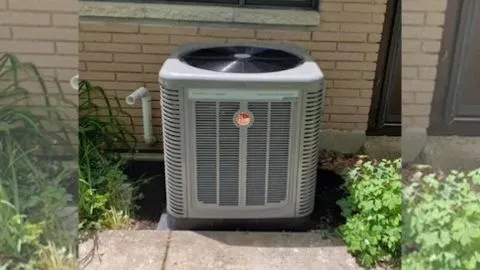
The outdoor condenser/compressor unit requires thoughtful placement to ensure longevity and performance through Milwaukee's freeze-thaw cycles, hot summers, and snowy winters.
Distance Limitations: The refrigerant lines connecting the indoor and outdoor units can typically run up to 50 feet, though shorter runs are more efficient. This gives you flexibility in placing the outdoor unit on a side of the house, in the backyard, or on a flat roof area.
Ventilation and Access: The outdoor unit needs plenty of space for airflow. Maintain clearances as specified by the manufacturer (often 1-2 feet on all sides) and keep it free from debris, snow drifts, and overgrown plants 4 5. It should also be placed in a location that allows service technicians easy access for maintenance and repairs.
Mounting: The unit must be placed on a stable, level pad, typically made of concrete or a composite material. Proper leveling is essential for the unit's operation and drainage. In snowy areas, some homeowners opt for a wall-mounted bracket or a raised stand to keep the unit above typical snow accumulation levels.
The Professional Installation Process
While DIY videos exist, professional installation is strongly recommended to ensure system efficiency, reliability, and the validity of the manufacturer's warranty. Here's what a certified technician will do:
- Site Assessment & Load Calculation: A pro will first determine the correct size (in BTUs) needed for your space. An oversized or undersized unit will lead to poor performance and higher costs.
- Mounting the Indoor Bracket: The mounting bracket for the indoor unit is securely anchored to wall studs for stability.
- Drilling the Line Set Hole: A small hole (usually 3 inches in diameter) is drilled through the exterior wall at a slight downward angle to the outside to prevent water ingress. This hole carries the refrigerant lines, condensate drain, and electrical wiring.
- Connecting & Mounting the Indoor Unit: The refrigerant lines and drains are connected to the indoor unit, which is then hung on the secured bracket.
- Setting the Outdoor Unit: The condenser is placed on its pad, leveled, and secured. The refrigerant lines from inside are connected, and the electrical connections are made by a licensed electrician, which is often a required part of the job 6 7 8.
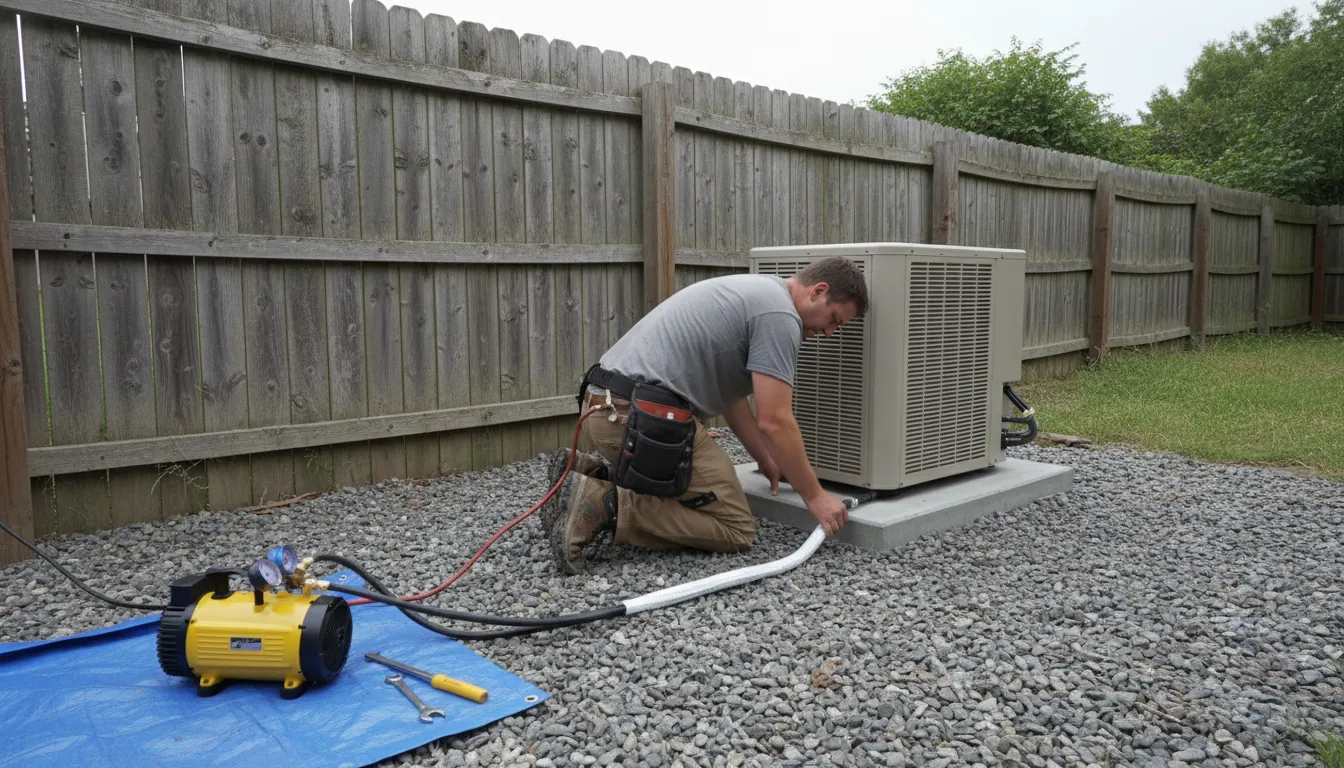
- Vacuum & Charge: The system is evacuated of air and moisture using a vacuum pump, then charged with the precise amount of refrigerant. This is a critical step that only a professional with the right tools can perform correctly.
- Testing & Commissioning: The system is started, tested for proper operation in both heating and cooling modes, and the homeowner is shown how to use the remote controls and programmable settings.
Understanding Costs and Available Incentives
The investment for a ductless mini-split installation in Milwaukee varies based on several factors.
- Single-Zone System: For cooling and heating one room, costs generally range from approximately $2,000 to over $8,000, depending on the system's capacity and features 9.
- Multi-Zone Systems: For whole-home comfort with multiple indoor heads connected to one outdoor unit, prices can range from about $5,000 to $15,000 or more 10 11. The final price is influenced by the number of indoor units, the brand and efficiency rating of the equipment, the complexity of the installation (e.g., electrical upgrades, long line set runs), and the contractor's expertise.
Financial Incentives: The good news for Wisconsin homeowners is that there are opportunities to reduce the net cost. Many local utility companies offer rebates for installing high-efficiency ductless heat pumps. Additionally, federal tax credits may be available for qualifying energy-efficient systems. A knowledgeable local installer can help you identify and apply for all relevant incentives.
Frequently asked questions
Sources
Footnotes
-
Mini-Split Installation Milwaukee, WI - Expert - https://www.alianceheatandcool.com/mini-split/mini-split-installation-milwaukee-wi ↩
-
How Much Does a Mini-Split Installation Cost? - Taskrabbit Blog - https://www.taskrabbit.com/blog/mini-split-installation-cost/ ↩
-
DIY MULTI-ZONE Ductless MINI SPLIT Installation in New ... - https://www.youtube.com/watch?v=KD2GM0fg8eU&t=104 ↩
-
Ductless Mini Split Installation & Repair in Milwaukee, WI - https://www.capitalhvac.com/mini-splits/ ↩
-
Ductless Mini-Split Systems in Milwaukee, WI - https://www.buranthtg.com/heat-pump-installation/ductless-mini-splits/ ↩
-
Ductless mini-split installation: Cool 2025 Guide - Southern Air - https://www.southern-air.com/blog/ductless-mini-split-installation ↩
-
How to Install a Ductless Mini Split - https://www.youtube.com/watch?v=_9znmIendu8&t=130 ↩
-
DIY Mini Split Install - All the Things Nobody Shows You - https://www.youtube.com/watch?v=2mKwCmaR5Qg&t=16 ↩
-
Ductless Mini Split Installation Costs in 2026 - Carrier - https://www.carrier.com/residential/fr/ca/products/ductless-mini-splits/ductless-mini-split-installation-cost/ ↩
-
Mini-Split Systems: FAQs for Wisconsin Homeowners - https://martensheating.com/mini-split-systems-faqs-wisconsin/ ↩
-
Ductless Mini-Splits: A Complete Guide To Cost, Benefits, And ... - https://petermanhvac.com/about-us/blog/mini-splits-complete-guide/ ↩