Find the Best Mini-Split Installers for Your Business
No obligation • Fast responses • Nationwide coverage

Why you can trust HVAC Firms
HVAC Firms is a leading United States resource for evaluating HVAC service providers. Our team researches companies, checks credentials, and reviews customer feedback to present clear, unbiased information. Listings and rankings are based on merit, and companies cannot pay to change our editorial content.
Search providers near you
Top Mini-Split Installers in Racine, Wisconsin Ranked
Ductless mini-split systems provide an efficient, flexible solution for heating and cooling specific areas of your Racine home. These systems are ideal for creating comfortable zones in spaces where extending traditional ductwork is impractical or too costly, such as room additions, converted garages, or older homes. This guide will help you understand the process, benefits, and key considerations for installing a mini-split, empowering you to find a qualified local specialist for your project.
Burkhardt Heating, Cooling, Plumbing & Electric
405 N Calhoun Rd, Brookfield, WI 53005
Burkhardt Heating, Cooling, Plumbing & Electric serves Milwaukee, WI, offering comprehensive HVAC services including installation, repair, and maintenance of air conditioners, furnaces, boilers, heat pumps, and mini-split systems. They provide tailored heating and cooling solutions with capabilities such as advanced zoning systems and smart thermostat integration to enhance home comfort and energy efficiency. With over 60 years of experience, Burkhardt focuses on customized service to meet unique home needs throughout the year.
Gregg Heating & Air Conditioning
2165 S 170th St, New Berlin, WI 53151
Gregg Heating & Air Conditioning is an HVAC company serving Milwaukee, WI, and surrounding areas. Established in 1974, the company offers a range of services including air conditioning, heating, heat pump, boiler, and ductless system installation and repair, as well as indoor air quality solutions. They provide maintenance plans and emergency service on weekends. With decades of experience, Gregg Heating & Air Conditioning emphasizes doing the job right the first time and standing behind their work.
Donovan & Jorgenson
16935 W Greenfield Ave, New Berlin, WI 53151
Donovan & Jorgenson is an HVAC company serving Milwaukee, WI, and the surrounding Southeastern Wisconsin area. They provide a range of heating and cooling services including repair, installation, and maintenance for furnaces, boilers, air conditioners, heat pumps, mini splits, and thermostats. The company also offers duct cleaning and indoor air quality services. Donovan & Jorgenson is known for installing energy-efficient HVAC systems and offers 24/7 emergency heating repair services to ensure comfort year-round.
Baquero's Heating & Cooling
1606 E Menlo Blvd, Shorewood, WI 53211
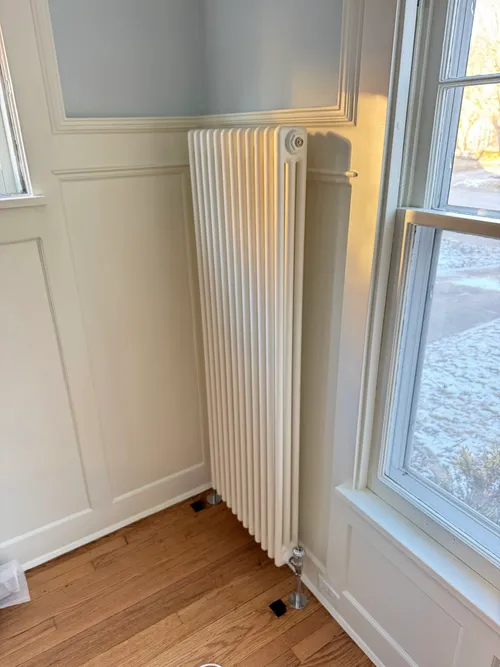
Baquero's Heating & Cooling is an HVAC company serving Milwaukee, WI, and nearby areas including Shorewood and Wauwatosa. They provide repair and installation services for air conditioning, furnaces, and mini split systems. The company handles a variety of heating and cooling system needs with licensed and insured technicians.
Icy Hot Heating & Cooling
523 W Madison St, Milwaukee, WI 53204
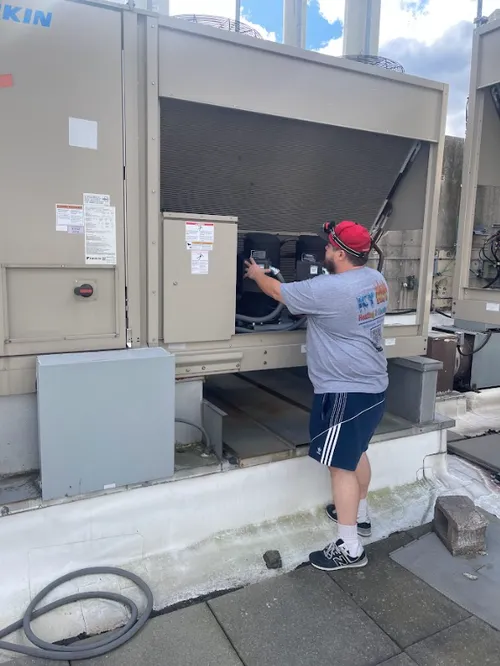
Icy Hot Heating & Cooling is an HVAC company serving Milwaukee, WI, and surrounding areas. They provide a wide range of heating and cooling services for both residential and commercial properties, including air conditioning and furnace installation, repair, and maintenance. Their expertise also covers mini split AC units and indoor air quality services such as duct cleaning and humidifier installation. With decades of experience, they offer 24/7 availability to address emergency HVAC needs promptly.
What is a Ductless Mini-Split System?
A ductless mini-split, or simply a ductless system, consists of one or more indoor air-handling units connected by refrigerant lines to an outdoor compressor/condenser. Unlike central HVAC, it doesn't require ductwork, making it a perfect retrofit option. The primary appeal is zoned comfort-you can independently control the temperature in different rooms, improving energy efficiency and personal comfort.
Ideal Applications for Mini-Splits in Racine Homes
Mini-split installations are particularly well-suited for specific scenarios in the Racine area:
- Additions and Converted Spaces: If you've added a sunroom, finished a basement, or converted an attic or garage, a ductless unit provides targeted climate control without the expense and disruption of extending your existing ducts.
- Older Homes: Many historic or older homes in Racine were built without any ductwork. Installing a ductless system is often the most cost-effective way to add modern, efficient heating and cooling 1.
- Problem Rooms: Do you have a room that's always too hot in summer or too cold in winter? A mini-split can solve these comfort issues by providing direct, adjustable conditioning to that specific zone.
- Supplemental Heating/Cooling: They can efficiently heat or cool a primary living area, allowing you to adjust your main system for savings.
Types of Mini-Split Systems and Indoor Units
Choosing the right configuration is crucial for performance and aesthetics.
System Types:
- Single-Zone Systems: This setup includes one indoor unit connected to one outdoor unit. It's the most common and cost-effective choice for conditioning a single room, like a living room or master bedroom addition 2.
- Multi-Zone Systems: One outdoor compressor can connect to multiple indoor air handlers (e.g., two, three, or four). This allows you to control the temperature in several different rooms (like a bedroom, office, and living room) independently from a single outdoor unit, which is often more efficient and aesthetically pleasing than multiple outdoor units.
Indoor Unit Styles:
- Wall-Mounted: The most popular and economical option. These slim units are mounted high on an interior wall and are relatively straightforward to install 3.
- Ceiling Cassette: These units are recessed into the ceiling, with only a sleek vent panel visible. They offer a more discreet, built-in look and distribute air in four directions, but installation is more complex and costly 4 5.
- Floor-Mounted: Installed low on a wall, these are an excellent choice for rooms with sloped ceilings (like attics) or where wall space is limited. They are also easier to service 6.
Key Installation Considerations
Professional installation is critical for performance, efficiency, and warranty validity. Here's what a quality installer will manage:
- Sizing (Load Calculation): An installer will perform a Manual J calculation to determine the precise heating and cooling capacity (measured in BTUs) needed for your space. An oversized or undersized unit will lead to poor performance, higher costs, and reduced comfort.
- Location Planning: The indoor unit should be placed on an exterior wall for shorter line runs to the outdoor unit. It requires proper clearances (typically at least 6 inches from walls and ceilings) for optimal airflow. The outdoor unit needs a stable, level base (like a concrete pad or mounting brackets) and adequate clearance (often several feet) from walls, shrubs, or fences to ensure proper airflow and service access.
- Electrical Requirements: Most systems require a dedicated electrical circuit. Your installer will assess your home's electrical panel and handle any necessary upgrades.
- Refrigerant Line Routing: A small hole (about 3 inches) is drilled through the wall to connect the indoor and outdoor units via insulated copper refrigerant lines and a condensate drain line. These linesets are often run through decorative conduit for a clean look.
- Permits: Reputable installers will pull all required local Racine or Wisconsin building permits, ensuring the work is inspected and meets code.
Find the perfect mini-split installers for your needs
Get personalized recommendations and expert advice
Understanding Mini-Split Installation Costs in Racine
Costs for ductless air conditioner installation can vary widely based on system complexity, efficiency, and your home's specific needs. Here's a general breakdown for the Racine area 7 8 9:
- Single-Zone System: Installing one indoor unit with one outdoor compressor typically ranges from $2,000 to $5,000.
- Multi-Zone Systems:
- 2-3 Zones: Installing a system with two or three indoor handlers generally costs between $5,500 and $8,500.
- 4+ Zones: For whole-home or large-area coverage with four or more indoor units, costs often range from $8,000 to $15,000 or more.
Factors Influencing Cost:
- Number of Zones & Capacity: More indoor units and a larger outdoor compressor increase the price.
- Equipment Efficiency: Systems with higher SEER2 (Seasonal Energy Efficiency Ratio) ratings for cooling and HSPF (Heating Seasonal Performance Factor) for heat pumps cost more upfront but save significantly on utility bills.
- Indoor Unit Style: Ceiling cassettes are more expensive than standard wall-mounted units.
- Installation Complexity: Long refrigerant line runs, difficult wall penetrations (like brick), new electrical circuit installation, and attic or crawlspace work add labor time and cost.
- Brand & Features: Premium brands and units with advanced features (Wi-Fi controls, advanced filtration) command higher prices.
Potential Savings: Tax Credits and Rebates
A significant advantage of installing a high-efficiency ductless mini-split heat pump is access to financial incentives that can offset a portion of the upfront cost.
- Federal Tax Credits: The Residential Clean Energy Credit (IRS Form 5695) allows you to claim 30% of the project cost, including installation, for a qualifying system. There is a lifetime cap, and the system must meet specific efficiency standards 10 11.
- Utility Rebates: Always check with We Energies for any available rebates on energy-efficient equipment installations. These rebates are often direct discounts applied by your contractor.
The Professional Installation Process
A proper installation by a certified technician follows a meticulous process:
- Site Assessment & Planning: The technician evaluates your space, performs load calculations, and plans optimal unit placement and line routing.
- Mounting: The indoor wall bracket or ceiling opening is prepared and secured. The outdoor unit is placed on its stable pad or brackets.
- Line Set Connection: A hole is drilled, and the refrigerant lines, drain line, and electrical wiring are connected between the indoor and outdoor units.
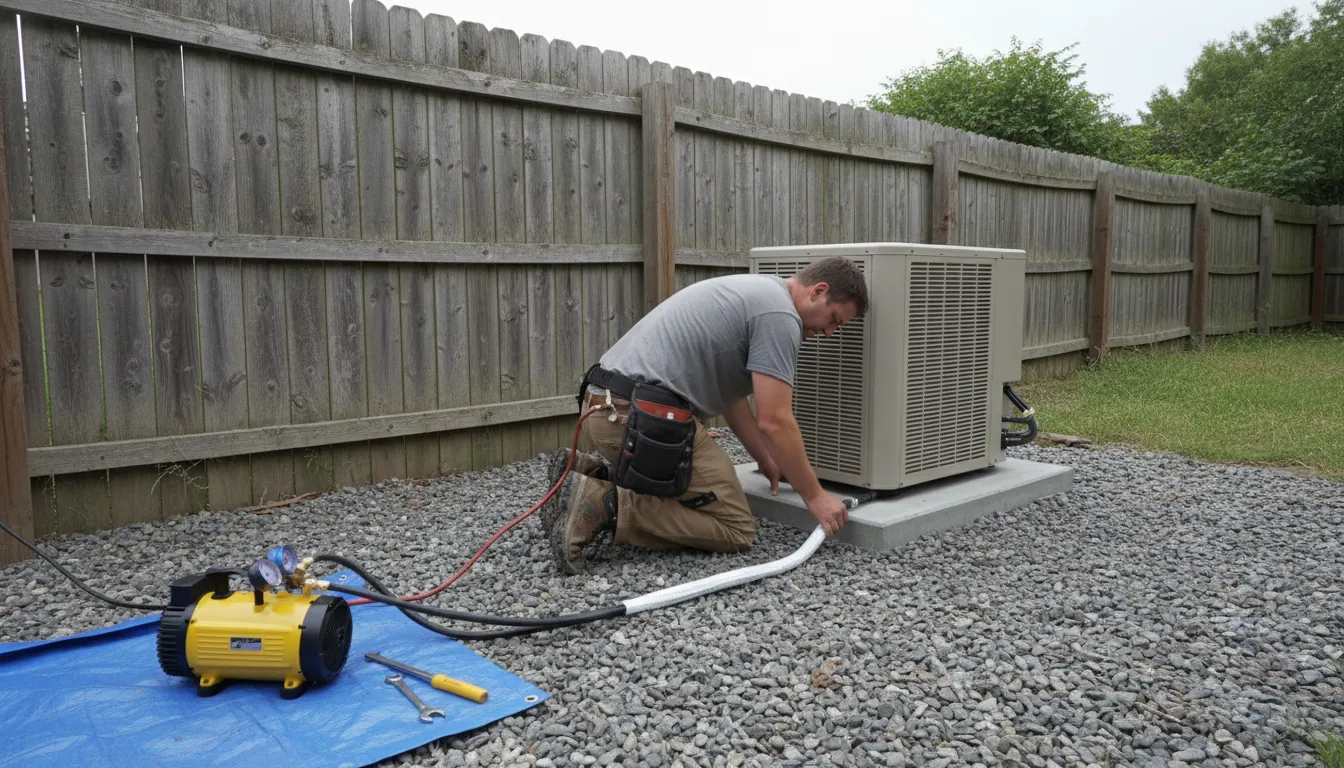
- Vacuum and Charge: The system is evacuated of air and moisture using a powerful vacuum pump, a critical step for longevity and efficiency. The system is then charged with the precise amount of refrigerant.
- Testing & Commissioning: The system is powered on and tested in both heating and cooling modes. The technician will ensure all functions work, check for leaks, and show you how to use the controls.
Frequently asked questions
Sources
Footnotes
-
How To Install a Ductless Mini Split AC - Carrier - https://www.carrier.com/residential/en/us/products/ductless-mini-splits/install-ductless-ac/ ↩
-
What Is a 3-Zone Mini Split & Installation Cost Guide For 2026 - https://www.budgetheating.com/what-is-a-3-zone-mini-split-installation-cost-guid/ ↩
-
How Much Does It Cost to Install a Mini-Split? [2026 Data] | Angi - https://www.angi.com/articles/how-much-does-it-cost-install-ductless-mini-split-ac.htm ↩
-
Ductless Mini Split Setup: An Ultimate Guide - Airflow Heating & Air - https://www.goairflow.com/blog/ductless-mini-split-installation/ ↩
-
How Much Does a Mini-Split Installation Cost? - Taskrabbit Blog - https://www.taskrabbit.com/blog/mini-split-installation-cost/ ↩
-
How Much Does a Mini Split Installation Cost? (2026) - HomeGuide - https://homeguide.com/costs/ductless-mini-split-ac-cost ↩
-
Ductless Mini-Split Installation Cost in 2025: Full Breakdown - https://osborneheatingncooling.com/ductless-mini-split-installation-cost/ ↩
-
Ductless Mini Split Installation Costs in 2026 - Carrier - https://www.carrier.com/residential/en/us/products/ductless-mini-splits/ductless-mini-split-installation-cost/ ↩
-
How Much Does It Cost to Install a Mini Split in 2025? - AC Direct - https://www.acdirect.com/blog/how-much-does-it-cost-to-install-a-mini-split-in-2025/ ↩
-
Mini-Split Systems: FAQs for Wisconsin Homeowners - https://martensheating.com/mini-split-systems-faqs-wisconsin/ ↩
-
How to Install a Mini Split - The Home Depot - https://www.homedepot.com/c/ah/how-to-install-a-mini-split/9ba683603be9fa5395fab90c887a9dd ↩