Find the Best Mini-Split Installers for Your Business
No obligation • Fast responses • Nationwide coverage

Why you can trust HVAC Firms
HVAC Firms is a leading United States resource for evaluating HVAC service providers. Our team researches companies, checks credentials, and reviews customer feedback to present clear, unbiased information. Listings and rankings are based on merit, and companies cannot pay to change our editorial content.
Search providers near you
Top Mini-Split Installers in Kenosha, Wisconsin Ranked
A ductless mini-split system is a versatile heating and cooling solution that provides targeted comfort without the need for extensive ductwork. For Kenosha homeowners, this technology is particularly valuable for managing Wisconsin's distinct seasons, offering efficient zoned climate control. This guide explains what mini-split installation involves, its ideal applications, and how you can find qualified local experts to assess your home's specific needs.
Blue Star Heating and Cooling
1840 Industrial Dr Ste 280, Libertyville, IL 60048
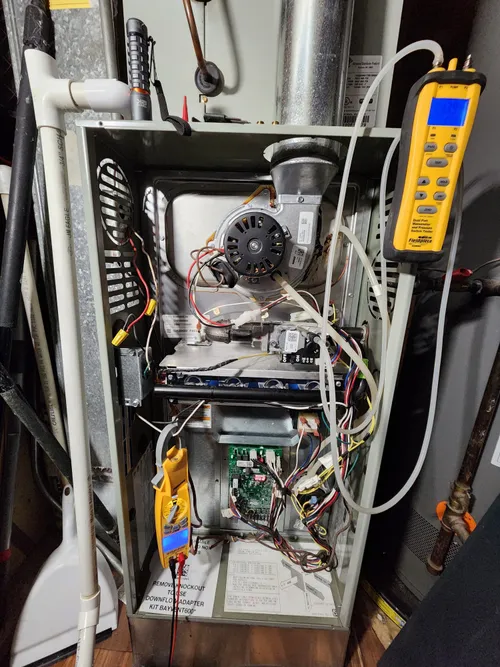
Blue Star Heating and Cooling is an HVAC company serving Chicago, IL, and nearby communities including Grayslake, Round Lake, and Libertyville. They provide a range of services such as air conditioning repair and installation, furnace and boiler repair, and mini split installation. The company has over 20 years of experience and employs a fully in-house team of NATE certified technicians. Blue Star Heating and Cooling offers 24/7 availability for heating and cooling emergencies to ensure customer comfort and safety.
Stramowski Heating Inc
6508 S Howell Ave Ste 101, Oak Creek, WI 53154
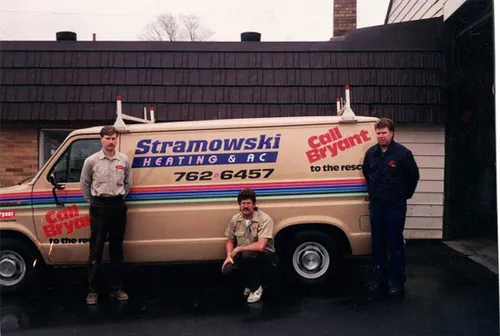
Stramowski Heating Inc is an HVAC company serving Milwaukee, WI, and the surrounding southeast Wisconsin area. They provide repair, installation, and maintenance services for furnaces, air conditioners, heat pumps, boilers, and ductless mini-split systems. The company also offers indoor air quality solutions such as purification, filtration, humidifiers, and dehumidifiers. Founded in 1977, Stramowski Heating Inc has decades of experience in heating and cooling services. Their Oak Creek office supports residential and business customers in Milwaukee and nearby communities including Franklin, Muskego, and Waukesha.
Burant Heating & Air Conditioning LLC
9525 S 60th St, Franklin, WI 53132
Burant Heating & Air Conditioning LLC is an HVAC company based in Milwaukee, WI, offering heating, cooling, and indoor air quality services. They provide installation, repair, and maintenance for air conditioners, furnaces, boilers, mini splits, and thermostats. With over 20 years of experience, the company serves Milwaukee and the surrounding southeastern Wisconsin area. They specialize in HVAC system evaluations, local permitting compliance, and energy-efficient solutions tailored to Milwaukee's climate. Burant Heating & Air Conditioning LLC is available 24/7 for heating and cooling services, ensuring year-round comfort for residential and commercial customers.
Mr. Gimenez LLC
2809 S 44th St, Milwaukee, WI 53219
Mr. Gimenez LLC is an HVAC company based in Milwaukee, WI, offering a range of heating and cooling services. Their bilingual staff provides installation, repair, and maintenance for air conditioners, furnaces, mini splits, and ductwork. The company is EPA certified and focuses on energy-efficient solutions to help reduce environmental impact. They have experience working with top brands to ensure durable and efficient systems. Mr. Gimenez LLC also offers 24/7 emergency HVAC services to address urgent needs at any time.
What is a Ductless Mini-Split System?
A ductless mini-split system consists of two main components: a quiet outdoor condenser unit and one or more indoor air handlers. These are connected by a small conduit that houses refrigerant lines, power cables, and a condensate drain, which is run through a small hole in your exterior wall. Unlike central forced-air systems, ductless units deliver conditioned air directly into the room where they are installed, eliminating energy losses associated with ductwork. This makes them exceptionally efficient for both heating and cooling.
The core appeal of a ductless air conditioner or heat pump is its zoning capability. Each indoor unit operates independently, allowing you to heat or cool only the rooms you are using. This can lead to significant energy savings compared to running a whole-house system, especially in older homes or additions where extending existing ducts is impractical or too costly 1 2.
Ideal Applications for Mini-Splits in Kenosha Homes
Ductless technology is not a one-size-fits-all replacement for central HVAC, but it excels in specific scenarios common in our area. Understanding these can help you decide if it's the right solution for your space.
- Home Additions and Renovations: Adding a sunroom, garage conversion, or new bedroom? Installing ductwork to service a new addition can be disruptive and expensive. A mini-split provides a dedicated, efficient climate control system for the new space without impacting your existing HVAC.
- Older and Historic Homes: Many charming Kenosha homes lack central air conditioning or have outdated, inefficient heating systems. Installing ducts in these structures can damage historic finishes or be architecturally impossible. A ductless system offers a modern comfort solution with minimal structural impact.
- Supplemental and Zoned Comfort: Do you have a room that's always too hot or too cold? A single-zone mini-split can solve that problem. For open-concept homes, multiple indoor units can provide balanced, zoned comfort that a single thermostat often fails to achieve.
- Garages and Workshops: Creating a comfortable, year-round workspace in your garage is a popular project. A garage mini-split is an ideal solution, providing both heating and cooling to make the space usable in all seasons 3.
Types of Mini-Split Systems: Single-Zone vs. Multi-Zone
The first major decision in planning your installation is choosing between a single-zone or multi-zone configuration.
- Single-Zone Systems: This setup involves one outdoor condenser connected to one indoor air handler. It's perfect for conditioning a single space, such as a master bedroom suite, home office, or addition. It's typically the most straightforward and cost-effective option for targeted comfort.
- Multi-Zone Systems: One outdoor unit can connect to multiple indoor air handlers (commonly 2, 3, or 4). This allows you to create custom temperature zones throughout your home-cooling the living room while warming a bedroom, for example. Multi-zone systems are excellent for whole-home comfort in houses without ducts or for significantly upgrading comfort in key areas.
Planning Your Installation: Placement is Key
Proper placement of both the indoor and outdoor units is critical for performance, efficiency, and aesthetics. A professional installer will conduct a load calculation and site survey to make these determinations.
Indoor Air Handler Placement:
- High on a Wall: This is the most common and often recommended location. Mounting the unit high on an interior wall promotes better air distribution as cool air falls and warm air rises 4.
- Central Location: The unit should be placed in a central area of the room it serves, away from direct sunlight or heat sources, to ensure even temperature sensing and airflow.
- Clear Airflow: Maintain at least 6-8 feet of clear space in front of the unit and ensure it is not obstructed by furniture, curtains, or cabinetry. There should also be several inches of clearance above the unit for proper ventilation 5.
Outdoor Condenser Placement:
- Clear Space for Airflow: The outdoor unit requires adequate clearance-typically 1-2 feet on the sides and 4-5 feet above-for unimpeded airflow and service access. It should not be tucked into an alcove or crowded by plants 6.
- Stable, Level Mounting: The condenser is mounted on a dedicated concrete pad or a sturdy wall bracket. The location should be level, stable, and able to handle the unit's weight and vibration.
- Proximity Considerations: While the conduit can run a significant distance, placing the outdoor unit relatively close to the indoor unit (within 50 feet is common) helps maintain efficiency and can reduce installation complexity.
Find the perfect mini-split installers for your needs
Get personalized recommendations and expert advice
The Professional Installation Process
A proper ductless mini-split installation is a technical job that involves electrical work, refrigerant handling, and precise calibration. Here's what a professional installation by a certified Kenosha technician typically entails:
- Site Evaluation & Load Calculation: The technician assesses your home's insulation, room sizes, and sun exposure to determine the correct system capacity (measured in BTUs).
- Mounting the Units: The indoor air handler bracket is securely mounted to wall studs. Outside, the condenser pad or wall bracket is leveled and installed.
- Drilling the Line Set Hole: A small, clean hole (typically 3 inches or less) is drilled through the exterior wall at the designated spot.
- Running the Line Set: The pre-charged refrigerant lines, condensate drain, and electrical wiring are fed through the wall hole and connected between the two units.
- Electrical Connections: A dedicated electrical circuit is run from your home's main panel to the outdoor unit, a task that usually requires a licensed electrician to ensure code compliance 7.
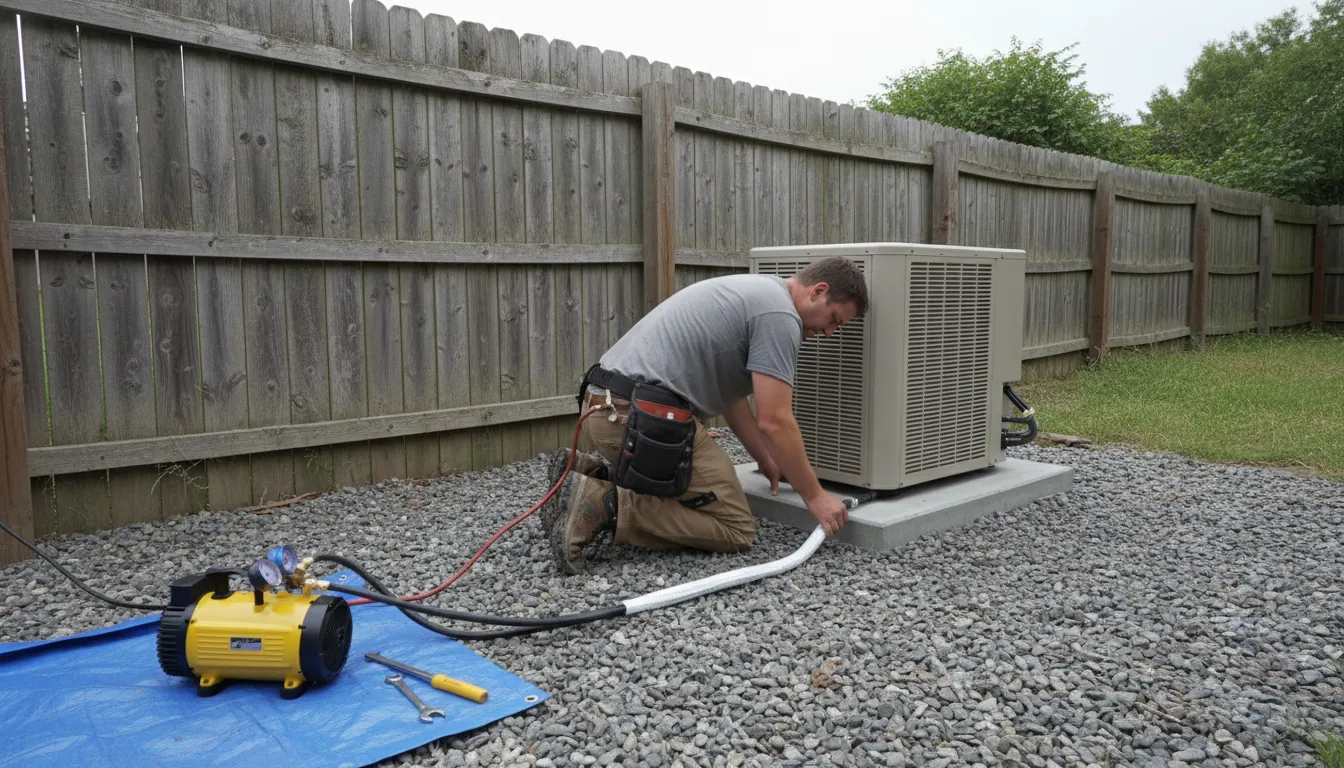
- Vacuum and Charge: The refrigerant lines are evacuated of air and moisture using a vacuum pump before the system is charged with refrigerant to the manufacturer's exact specifications.
- System Test & Commissioning: The technician powers on the system, tests all modes (cooling, heating, fan), checks for leaks, verifies drainage, and shows you how to use the remote controls and features 8 9.
Understanding Mini-Split Installation Costs in Kenosha
The total cost for a ductless mini-split installation varies based on system type, capacity, brand, and labor. Here is a general cost breakdown for our area 10 11 12 13:
- Single-Zone System: $2,500 - $5,000
- Two-Zone System: $4,500 - $8,000
- Three-Zone System: $6,000 - $10,000+
Key factors influencing cost include:
- Number of Zones & Indoor Units: Each additional indoor air handler increases material and labor costs.
- System Capacity and Efficiency: Higher BTU capacity and higher SEER2 (Seasonal Energy Efficiency Ratio) ratings for cooling and HSPF (Heating Seasonal Performance Factor) for heating command a higher price but offer greater long-term savings.
- Brand and Features: Premium brands and units with advanced features like Wi-Fi controls or ultra-quiet operation may cost more.
- Installation Complexity: Difficult access, long refrigerant line runs, or the need for new electrical service can add to the project cost.
Financial Incentives: Wisconsin homeowners should check for available rebates, such as those from Focus on Energy, and federal tax credits for energy-efficient home improvements, which can significantly offset the upfront investment in a high-efficiency ductless heat pump 14.
Professional Installation vs. DIY
While DIY mini-split kits are available, professional installation is strongly recommended. Certified technicians have the training to properly handle refrigerants, perform critical electrical work, and ensure the system is installed to code and manufacturer specifications. A professional installation protects your equipment warranty and ensures optimal efficiency and safety 15. An improper DIY installation can lead to poor performance, refrigerant leaks, electrical hazards, and voided warranties, ultimately costing more to fix.
Frequently asked questions
Sources
Footnotes
-
Ductless mini-split installation: Cool 2025 Guide - Southern Air - https://www.southern-air.com/blog/ductless-mini-split-installation ↩
-
Mini-Split Placement Guide: Best and Worst Spots for Installation - https://gulfshorecooling.com/mini-split-placement-guide/ ↩
-
Why is a Garage Mini Split the Ideal Heating and Cooling Solution? - https://www.bryant.com/en/us/products/ductless-systems/garage-mini-split/ ↩
-
Best Place to Install a Ductless Mini Split System - https://jacobsheating.com/blog/mini-split-placement/ ↩
-
How Much Does a Mini Split Installation Cost? (2026) - HomeGuide - https://homeguide.com/costs/ductless-mini-split-ac-cost ↩
-
How Far Should Condensing Unit Be from House - https://www.kendallcool.com/blog-post/how-far-should-condensing-unit-be-from-house.html ↩
-
How to Install a Mini Split - The Home Depot - https://www.homedepot.com/c/ah/how-to-install-a-mini-split/9ba683603be9fa5395fab90c887a9dd ↩
-
Ductless Mini Split Setup: An Ultimate Guide - Airflow Heating & Air - https://www.goairflow.com/blog/ductless-mini-split-installation/ ↩
-
Installing a Mini-Split System | Finken - https://finkens.com/blog/installing-a-mini-split-system ↩
-
How Much Does It Cost to Install a Mini Split System? - https://elementairco.com/how-much-does-it-cost-to-install-a-mini-split-system/ ↩
-
Understanding mini split installation costs: A quick guide - Homeaglow - https://www.homeaglow.com/hub/content/mini-split-installation-cost ↩
-
Ductless Mini-Split Installation Cost in 2025: Full Breakdown - https://osborneheatingncooling.com/ductless-mini-split-installation-cost/ ↩
-
Cost to Install Mini Split AC System in 2025 - https://dellahome.com/blogs/della-blog/cost-to-install-mini-split-ac-system ↩
-
Ductless Mini Split Installation Costs in 2026 - Carrier - https://www.carrier.com/residential/en/us/products/ductless-mini-splits/ductless-mini-split-installation-cost/ ↩
-
Is a Ductless Mini-Split Installation a DIY Project A Complete Guide - https://www.heating-ac.com/blog/is-a-ductless-mini-split-installation-a-diy-project-a-complete-guide ↩