Find the Best Mini-Split Installers for Your Business
No obligation • Fast responses • Nationwide coverage

Why you can trust HVAC Firms
HVAC Firms is a leading United States resource for evaluating HVAC service providers. Our team researches companies, checks credentials, and reviews customer feedback to present clear, unbiased information. Listings and rankings are based on merit, and companies cannot pay to change our editorial content.
Search providers near you
Top Mini-Split Installers in Ypsilanti, Michigan Ranked
A ductless mini-split system is an efficient heating and cooling solution that provides zoned comfort for specific areas of your home. This type of installation is particularly valuable for older Michigan homes without existing ductwork, room additions, or spaces that are difficult to keep at a comfortable temperature. Finding a qualified local professional for your ductless AC or heat pump project ensures proper sizing, installation, and long-term performance for your Ypsilanti home.
Warm or Breezy Heating & Cooling
220 S Main St #430, Royal Oak, MI 48067
Warm or Breezy Heating & Cooling is an HVAC contractor based in Detroit, MI, providing heating and cooling services including repair, installation, and maintenance. They serve residential and commercial customers with furnace, boiler, air conditioning, and mini split system services. Their technicians offer energy efficiency diagnostics and city safety inspections, along with installation of Wi-Fi thermostats and tankless water heaters. With over 20 years of experience in heater repair, Warm or Breezy emphasizes fair pricing and uses durable American-made replacement parts. The company operates seven days a week to support customers throughout the heating season.
Quality Air Control Heating & Cooling
18421 Valleyview St, Riverview, MI 48193
Quality Air Control Heating & Cooling is an HVAC company based in Detroit, MI, serving Downriver, Wayne County, and nearby areas. They offer a full range of heating and cooling services including AC repair and installation, furnace repair and installation, heat pump repair, mini split installation, duct cleaning, and indoor air quality solutions. With over 20 years of experience, the company handles both residential and commercial projects and is licensed, insured, and EPA certified.

MOTOWN HEATING, COOLING, REFRIGERATION
Detroit, MI
MOTOWN HEATING, COOLING, REFRIGERATION is a family-owned HVAC company serving Detroit, MI. They provide residential, commercial, and industrial heating, cooling, and refrigeration services including installation, repair, and preventative maintenance. With over 25 years of experience since 1979, they handle a wide range of systems such as air conditioners, furnaces, boilers, and mini splits. Their team is equipped to manage commercial plumbing and boiler services as well. Customers can reach them 24/7 for assistance.

All Weather Comfort Solutions
26531 King Rd, Brownstown Township, MI 48174
All Weather Comfort Solutions is an HVAC company serving Detroit, MI, and nearby areas including Wayne and Washtenaw County. Since 2014, they have provided heating and cooling services such as furnace repair, AC installation, heat pump and boiler installation, and indoor air quality solutions. The company specializes in energy-efficient systems, including Mitsubishi ductless mini-splits and Trane HVAC products, and offers maintenance plans to ensure year-round system performance. They also provide eco-friendly insulation services to improve home comfort and energy savings.
Harris Heating & Air Conditioning Service Inc
6555 Malden Rd #9, Windsor, ON N9H 1T5, Canada
Harris Heating & Air Conditioning Service Inc is a heating and cooling company based near Detroit, MI, serving Windsor and Essex County. They offer installation and repair services for furnaces, air conditioners, ductless systems, and hot water heaters, along with indoor air quality solutions. Their licensed technicians handle furnace installations, ductwork, gas appliance hookups, and provide 24/7 emergency furnace repairs. The company also offers preventative maintenance plans and hot water tank rentals to support year-round home comfort.
Why Choose a Ductless Mini-Split for Your Ypsilanti Home?
Ductless systems, often called mini-splits, are an ideal climate control solution for many local residences. Their primary advantage is providing zoned comfort, allowing you to heat or cool only the rooms you are using, which can lead to significant energy savings. This makes them perfect for several common Michigan home scenarios:
- Home Additions or Converted Spaces: Adding a sunroom, home office, or finishing a basement? Extending existing ductwork can be complex and costly. A mini-split offers a dedicated, efficient system for the new space without the need for major renovation 1.
- Problem Rooms: Does your upstairs bedroom stay hot in summer while the main floor is cool? A single-zone mini-split can target that specific area, solving comfort issues without overcooling or overheating the entire house.
- Homes Without Ductwork: Many charming older homes in Ypsilanti were built without central air ducts. Installing a ductless system is a far less invasive and often more efficient alternative to adding all-new ductwork throughout the home.
Understanding System Types: Single-Zone vs. Multi-Zone
The first major decision in planning your installation is choosing between a single-zone or multi-zone system. This choice dictates the system's capacity, layout, and cost.
- Single-Zone Systems: This setup consists of one outdoor condenser unit connected to one indoor air-handling unit. It's designed to condition a single room or open area, like a master bedroom, garage workshop, or living room. It's the most straightforward and typically least expensive option to install.
- Multi-Zone Systems: A multi-zone system uses one outdoor unit that connects to two, three, four, or even more indoor units. Each indoor head can be controlled independently, allowing for different temperatures in the bedroom, home office, and living room simultaneously. This is an excellent solution for whole-home comfort in a ductless property or for adding climate control to multiple specific zones 2.
The Installation Process: A Step-by-Step Overview
Professional installation is crucial for the efficiency, longevity, and warranty of your ductless mini-split. A proper installation by a certified technician follows a meticulous process.
- Site Assessment and Preparation: The technician will evaluate your home to determine the optimal placement for both indoor and outdoor units, plan the path for the connecting lines, and locate wall studs. A small hole, typically 3 to 4 inches in diameter, is drilled through the exterior wall to run the necessary lines.
- Mounting the Units: The indoor air handler is mounted high on an interior wall using a sturdy bracket, usually positioned about 8 to 9 feet from the floor to allow for optimal air circulation. It requires several inches of clearance above and to the sides for proper airflow. The outdoor condenser is placed on a stable, level concrete pad or a specially designed wall bracket in a location with ample ventilation.
- Connecting the System: Refrigerant linesets and electrical wiring are run through the wall hole, connected between the indoor and outdoor units, and carefully insulated. All electrical connections are made according to local code.
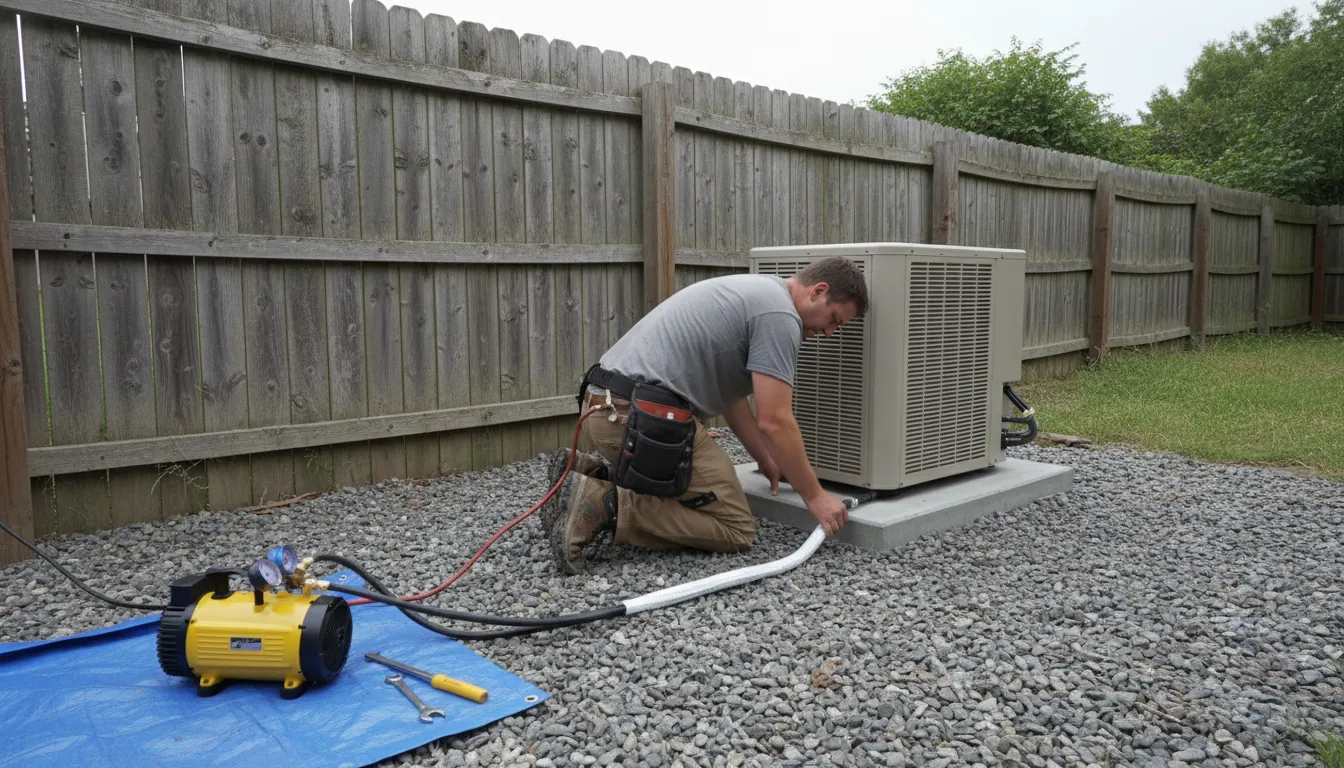
- System Evacuation and Testing: A critical step involves using a vacuum pump to remove all air and moisture from the refrigerant lines. The system is then pressure-tested to ensure there are no leaks before refrigerant is released 3 4.
- Startup and Homeowner Orientation: Finally, the system is powered on and calibrated. A good technician will walk you through the operation of the remote control or thermostat, explain basic maintenance, and ensure the area is clean 5.
Find the perfect mini-split installers for your needs
Get personalized recommendations and expert advice
What Determines the Cost of Installation in Ypsilanti?
The total investment for a ductless mini-split installation can vary widely based on your specific project's requirements. Understanding the key cost factors can help you budget effectively.
- System Type and Capacity: A single-zone system for one room generally represents a lower initial investment, with typical installation costs ranging from $2,500 to $5,000 6 7. A multi-zone system for cooling or heating several rooms will cost more; for example, a common 3-zone installation often falls in the range of $6,500 to $9,500 or more 8 9.
- Equipment Brand and Features: Premium brands with higher efficiency ratings (SEER and HSPF), advanced filtration, or smart Wi-Fi controls will have a higher equipment cost.
- Installation Complexity: Factors that increase labor time and cost include longer refrigerant line runs between units, the need for new electrical circuits or service upgrades, difficult access for the outdoor unit (e.g., second-floor bracket mounting), and local permit fees 10.
- Local Labor Rates: As with any skilled trade, labor costs in the Ypsilanti and Southeast Michigan area will influence the final price. Always get detailed, written estimates that break down equipment and labor.
Key Considerations for Placement and Performance
Where you place the components of your ductless system has a direct impact on its efficiency, noise level, and your comfort.
- Indoor Air Handler Placement: The unit should be mounted on a wall where its airflow is not obstructed by furniture or curtains. Avoid placing it directly above a bed or sofa where conditioned air might blow directly on occupants. Installing it high on the wall allows cool air to mix evenly in the room 11.
- Outdoor Condenser Placement: Choose a location with good airflow and clearances as specified by the manufacturer. The unit needs space to exhaust heat. Consider noise: place it away from bedroom windows or neighboring property lines if possible. The pad or bracket must be perfectly level to prevent vibration and ensure proper drainage 12 13.
- Line-Hide Considerations: The copper refrigerant lines and drain tube are bundled together and insulated. While some of this "lineset" will be hidden inside the wall, the segment running along the exterior of the house can be concealed with a decorative plastic channel for a cleaner look.
Maintaining Your Ductless System
Once installed, regular maintenance is simple but essential. The most important task is cleaning the reusable filters in the indoor air handlers every few weeks during peak season. This prevents dust buildup that can restrict airflow, reduce efficiency, and impact indoor air quality. Keeping the outdoor unit clear of leaves, grass clippings, and snow will also ensure it operates correctly. While homeowners can handle basic cleaning, scheduling an annual professional check-up is recommended to inspect refrigerant levels, electrical components, and overall system health.
Frequently asked questions
Sources
Footnotes
-
Install a Mini Split in Your Michigan Home for Zoned Cooling - https://harrimanheating.com/install-a-mini-split-in-your-michigan-home-for-zoned-cooling/ ↩
-
How Many Rooms Can A Ductless AC Cool? - https://acmeac.com/air-conditioning/ductless/how-many-rooms-can-a-ductless-ac-cool/ ↩
-
Full Installation of Mini Split Ductless Unit, Step by Step! - https://www.youtube.com/watch?v=JQkth-AM5CE&t=156 ↩
-
How to Install a Mini Split - The Home Depot - https://www.homedepot.com/c/ah/how-to-install-a-mini-split/9ba683603be9fa5395fab90c887a9dd ↩
-
Key Steps for Effective Mini Split Installation in Your Home - https://www.staffordhomeservice.com/blog/effective-mini-split-installation-steps ↩
-
Understanding mini split installation costs: A quick guide - Homeaglow - https://www.homeaglow.com/hub/content/mini-split-installation-cost ↩
-
Cost to Install Mini Split AC System in 2025 - https://dellahome.com/blogs/della-blog/cost-to-install-mini-split-ac-system ↩
-
Ductless Mini Split Installation Costs in 2026 - Carrier - https://www.carrier.com/residential/en/us/products/ductless-mini-splits/ductless-mini-split-installation-cost/ ↩
-
What Is a 3-Zone Mini Split & Installation Cost Guide For 2026 - https://www.budgetheating.com/what-is-a-3-zone-mini-split-installation-cost-guid/ ↩
-
Ductless Mini-Split Installation Cost in 2025: Full Breakdown - https://osborneheatingncooling.com/ductless-mini-split-installation-cost/ ↩
-
Ductless Mini Split Setup: An Ultimate Guide - Airflow Heating & Air - https://www.goairflow.com/blog/ductless-mini-split-installation/ ↩
-
Mini Split Installation Guide | Process, Costs & Benefits - Bryant - https://www.bryant.com/en/us/products/ductless-systems/mini-split-installation/ ↩
-
DIY Mini Split Install - All the Things Nobody Shows You - https://www.youtube.com/watch?v=2mKwCmaR5Qg&t=16 ↩