Find the Best Mini-Split Installers for Your Business
No obligation • Fast responses • Nationwide coverage

Why you can trust HVAC Firms
HVAC Firms is a leading United States resource for evaluating HVAC service providers. Our team researches companies, checks credentials, and reviews customer feedback to present clear, unbiased information. Listings and rankings are based on merit, and companies cannot pay to change our editorial content.
Search providers near you
Top Mini-Split Installers in Detroit, Michigan Ranked
A ductless mini-split system is a versatile heating and cooling solution that provides targeted comfort without the need for extensive ductwork. It consists of an outdoor compressor unit connected to one or more indoor air handlers via a small conduit, allowing for independent temperature control in specific zones of your home. This technology is particularly valuable in Detroit for adding climate control to additions, solving persistent hot or cold spots, and providing efficient whole-home comfort in older properties lacking ducts. The following information will help you understand your options, what to expect from the process, and how to find qualified local specialists for your project.

Warm or Breezy Heating & Cooling
220 S Main St #430, Royal Oak, MI 48067
Warm or Breezy Heating & Cooling is an HVAC contractor based in Detroit, MI, providing heating and cooling services including repair, installation, and maintenance. They serve residential and commercial customers with furnace, boiler, air conditioning, and mini split system services. Their technicians offer energy efficiency diagnostics and city safety inspections, along with installation of Wi-Fi thermostats and tankless water heaters. With over 20 years of experience in heater repair, Warm or Breezy emphasizes fair pricing and uses durable American-made replacement parts. The company operates seven days a week to support customers throughout the heating season.
Quality Air Control Heating & Cooling
18421 Valleyview St, Riverview, MI 48193
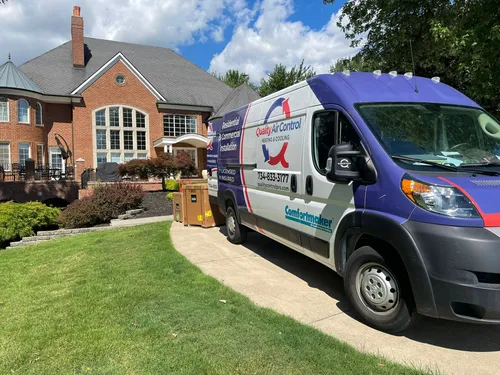
Quality Air Control Heating & Cooling is an HVAC company based in Detroit, MI, serving Downriver, Wayne County, and nearby areas. They offer a full range of heating and cooling services including AC repair and installation, furnace repair and installation, heat pump repair, mini split installation, duct cleaning, and indoor air quality solutions. With over 20 years of experience, the company handles both residential and commercial projects and is licensed, insured, and EPA certified.
Moore Than Perfect Heating & Air Conditioning LLC
Detroit, MI
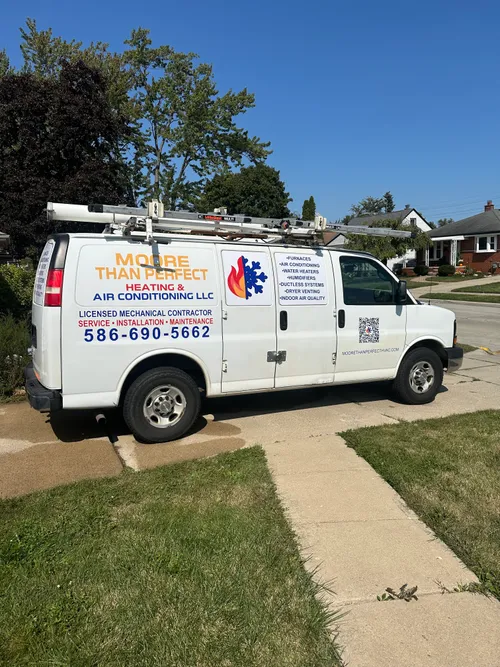
Moore Than Perfect Heating & Air Conditioning LLC is an HVAC company based in Detroit, MI, offering a range of heating and cooling services. They provide air conditioning installation and repair, furnace repair, mini-split installation, duct cleaning, indoor air quality solutions, and HVAC maintenance. The company serves all brands and models, focusing on energy-efficient and affordable heating and cooling solutions. With over 10 years of experience in the HVAC industry, Moore Than Perfect emphasizes careful workmanship and customer priority.

MOTOWN HEATING, COOLING, REFRIGERATION
Detroit, MI
MOTOWN HEATING, COOLING, REFRIGERATION is a family-owned HVAC company serving Detroit, MI. They provide residential, commercial, and industrial heating, cooling, and refrigeration services including installation, repair, and preventative maintenance. With over 25 years of experience since 1979, they handle a wide range of systems such as air conditioners, furnaces, boilers, and mini splits. Their team is equipped to manage commercial plumbing and boiler services as well. Customers can reach them 24/7 for assistance.
Detroit Furnace LLC
31313 Kendall, Fraser, MI 48026
Detroit Furnace LLC provides heating, cooling, and plumbing services in Detroit, MI. They offer repair, installation, and maintenance for furnaces, air conditioners, heat pumps, boilers, and mini-split systems. Their team services all brands and models and is equipped to handle plumbing needs such as water heater installation, leak repairs, and drain cleaning. Detroit Furnace LLC offers 24/7 emergency service to address urgent issues promptly. They serve the Detroit Metro area and surrounding communities, ensuring comprehensive home comfort solutions.
Why Consider a Ductless System in Detroit?
Detroit's housing stock and climate present unique challenges that ductless mini-splits are well-suited to address. Many historic and older homes in the city were built without central air ductwork, making traditional HVAC upgrades invasive and expensive. A ductless installation offers a powerful alternative. Furthermore, Michigan's distinct seasons demand a system that can efficiently handle both summer cooling and winter heating. Modern mini-splits excel at this, providing year-round comfort with high energy efficiency ratings (SEER2 and HSPF), which can lead to significant savings on utility bills compared to older window units or inefficient space heaters.
The concept of zoned comfort is another major advantage. Instead of cooling or heating your entire home to one temperature, a multi-zone mini-split system allows you to set different temperatures for different rooms or "zones." This means you can keep frequently used spaces like the living room comfortable while setting back the temperature in unused bedrooms, avoiding wasted energy. This targeted approach is ideal for managing problem areas, such as rooms with large windows, sloped ceilings, or that are distant from your main HVAC system.
Ideal Applications for Mini-Split Systems
Ductless technology isn't a one-size-fits-all solution, but it's perfect for specific scenarios common in the Detroit area.
- Home Additions & Converted Spaces: Adding a sunroom, converting a garage into a living space, or finishing a basement often runs into the problem of extending existing ductwork. A mini-split provides a dedicated, efficient climate control system for these new areas without the complexity and cost of duct installation 1.
- Solving Problem Rooms: Does your home have a room that's always too hot in summer or too cold in winter? A single-zone mini-split can be installed to directly address these comfort issues, providing powerful, quiet heating and cooling exactly where it's needed 2.
- Older Homes Without Ducts: For charming bungalows, historic colonials, and other Detroit homes that never had central air, a multi-zone ductless system can be a whole-home solution. It avoids the major renovation required to install ducts, preserving your home's character while delivering modern comfort.
- Supplemental & Zoned Control: Even homes with a central furnace and AC can benefit. Installing a mini-split in a remote master suite or a busy kitchen can provide supplemental cooling and heating, reducing strain on the main system and allowing for personalized comfort settings 3.
Understanding System Types and Indoor Unit Styles
The first step in planning is understanding the configuration and the different styles of indoor units available.
System Configuration:
- Single-Zone Systems: This is the most basic setup, consisting of one outdoor unit connected to one indoor air handler. It's designed to condition a single room or open area, like a garage workshop or a new great room addition.
- Multi-Zone Systems: A single outdoor compressor can be connected to multiple indoor units (typically 2 to 5+). This allows you to control the temperature in several separate rooms independently from one outdoor unit, making it a cost-effective solution for whole-home comfort or multi-room applications 4.
Indoor Unit Styles: The indoor unit, or "head," comes in several forms to suit different room layouts and aesthetic preferences.
- Wall-Mounted: This is the most common and generally most affordable type. It is mounted high on an interior wall, distributing air across the room. It's a great all-purpose choice for most bedrooms, living rooms, and offices.
- Ceiling Cassette: These units are recessed into the ceiling, with only a sleek vent panel visible. They provide four-way air discharge for even circulation and are ideal for rooms with low walls or where a minimalist look is desired. Installation is more complex and typically costs more than a wall-mounted unit 5 6.
- Floor-Mounted: Installed low on a wall or along a baseboard, these units are perfect for rooms with sloped ceilings, knee walls (like in finished attics), or where wall space is limited by windows. They are also a good option for commercial spaces.
Key Installation Considerations and Site Preparation
Professional installation is critical not only for performance but also to maintain the manufacturer's warranty. A proper installation starts with a detailed site assessment. The technician will evaluate the best locations for both indoor and outdoor units to ensure optimal airflow, drainage, and aesthetic integration.
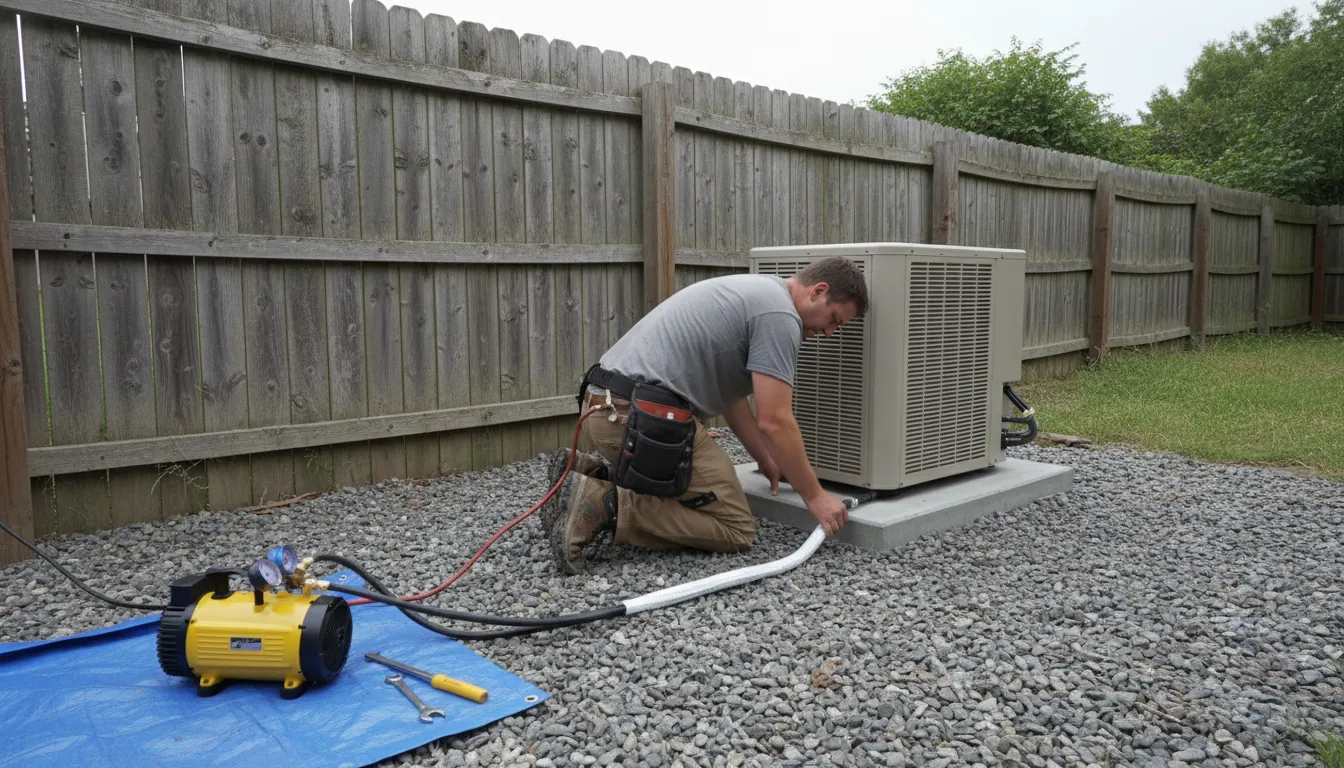
Outdoor Unit Placement: The condenser must be placed on a stable, level pad (often concrete) with ample clearance on all sides-typically at least 1-2 feet-for proper airflow and service access 7. It should be positioned away from bedroom windows or patios to minimize noise disturbance and in a location that allows for relatively short, straight refrigerant line runs to the indoor units, which helps with efficiency and cost.
Indoor Unit Placement: For wall-mounted units, a high location on an interior wall is standard, avoiding direct airflow over seating or beds. The installer will need to run a small 3-inch conduit through the wall, which houses the refrigerant lines, electrical wiring, and a condensate drain. This requires careful planning to avoid structural elements and to ensure a clean, sealed penetration.
Electrical Requirements: A dedicated electrical circuit from your home's main panel to the outdoor unit is almost always required. Your installer will determine the correct circuit amperage and handle this connection, which is a task for a licensed professional.
Find the perfect mini-split installers for your needs
Get personalized recommendations and expert advice
Investment and Cost Factors for Detroit Homes
The cost of a ductless mini-split installation in Detroit varies widely based on the system's scope and specifications. It's an investment in long-term comfort and efficiency.
- Single-Zone System (One Room): For a basic, high-quality system to condition a single room like a sunroom or garage, homeowners can expect a general range of $3,000 to $5,000, including professional installation.
- Multi-Zone System (2-3 Rooms): Installing one outdoor unit with two or three indoor heads to cover multiple bedrooms or a main living area typically falls in the range of $5,500 to $8,500 or more 8.
- Whole-Home Solution (4+ Zones): For a comprehensive system designed to heat and cool an entire home without ducts, costs often start around $8,000 and can reach $15,000+, depending on the home's size and layout 9 10.
Key factors influencing the final price include:
- Number of Zones & Indoor Units: More zones and more indoor heads increase the equipment and labor costs.
- Equipment Brand and Efficiency: Premium brands like Mitsubishi and Fujitsu often command a higher price but may offer advanced features and reliability. Higher SEER2 ratings indicate greater cooling efficiency and usually come at a higher upfront cost.
- Installation Complexity: The labor cost is affected by the length of refrigerant line sets, the difficulty of running electrical wiring, and the structural challenges of mounting indoor and outdoor units. A simple wall-mount in a first-floor room will cost less than installing a ceiling cassette on a second floor with difficult access.
- Additional Electrical Work: If your home's electrical panel needs an upgrade or a new sub-panel to support the system, this will add to the overall project cost.
The Professional Installation Process
A successful ductless installation follows a structured process carried out by certified technicians.
- Consultation and Load Calculation: A reputable provider will perform a Manual J load calculation to determine the precise heating and cooling capacity (measured in BTUs) needed for each space, ensuring your system is correctly sized-not too large or too small.
- System Design and Proposal: Based on the assessment, the contractor will design a system layout, select appropriate equipment, and provide a detailed written proposal outlining costs, timeline, and equipment specifications.
- Installation Day: The crew will mount the indoor and outdoor units, drill a small hole for the conduit, connect the refrigerant lines with a flaring tool (critical for a leak-free system), run electrical wiring, and set up the condensate drain line.
- Vacuum and Charge: The system is then evacuated of air and moisture using a high-powered vacuum pump before the precise amount of refrigerant is charged. This step is essential for efficiency and longevity.
- Testing and Demonstration: Finally, the system is powered on and tested in both heating and cooling modes. The technician should demonstrate how to use the remote controls and Wi-Fi thermostat (if applicable) and explain basic maintenance 11.
Frequently asked questions
Sources
Footnotes
-
What Are Ductless Air Conditioning Options in Michigan Homes - https://www.callhoover.com/blog/what-are-ductless-air-conditioning-options-in-michigan-homes/ ↩
-
Install a Mini Split in Your Michigan Home for Zoned Cooling - https://harrimanheating.com/install-a-mini-split-in-your-michigan-home-for-zoned-cooling/ ↩
-
How Much Does It Cost To Install A Ductless Mini Split? - https://northwindsusa.com/how-much-does-it-cost-to-install-a-ductless-mini-split/ ↩
-
Ductless Mini Splits: The Flexible HVAC Upgrade for Michigan ... - https://mooremech.net/what-is-a-mini-split/ ↩
-
How Much Does a Mini-Split Installation Cost? - Taskrabbit Blog - https://www.taskrabbit.com/blog/mini-split-installation-cost/ ↩
-
How Much Does a Mini Split Installation Cost? (2026) - HomeGuide - https://homeguide.com/costs/ductless-mini-split-ac-cost ↩
-
Preparing Your Home for Ductless Mini Split Installation - https://rrmechanicalsvs.com/cooling/preparing-your-home-for-ductless-mini-split-installation/ ↩
-
How much to install mini split? - https://mrgoodguyhvac.com/how-much-to-install-mini-split/ ↩
-
Ductless Mini-Split Installation Cost in 2025: Full Breakdown - https://osborneheatingncooling.com/ductless-mini-split-installation-cost/ ↩
-
Ductless Mini-Splits: A Comprehensive Cost Breakdown | Fire & Ice - https://indoortemp.com/resources/cost-of-mini-split-ductless-system ↩
-
Ductless mini-split installation: Cool 2025 Guide - Southern Air - https://www.southern-air.com/blog/ductless-mini-split-installation ↩