Find the Best Mini-Split Installers for Your Business
No obligation • Fast responses • Nationwide coverage

Why you can trust HVAC Firms
HVAC Firms is a leading United States resource for evaluating HVAC service providers. Our team researches companies, checks credentials, and reviews customer feedback to present clear, unbiased information. Listings and rankings are based on merit, and companies cannot pay to change our editorial content.
Search providers near you
Top Mini-Split Installers in Royal Oak, Michigan Ranked
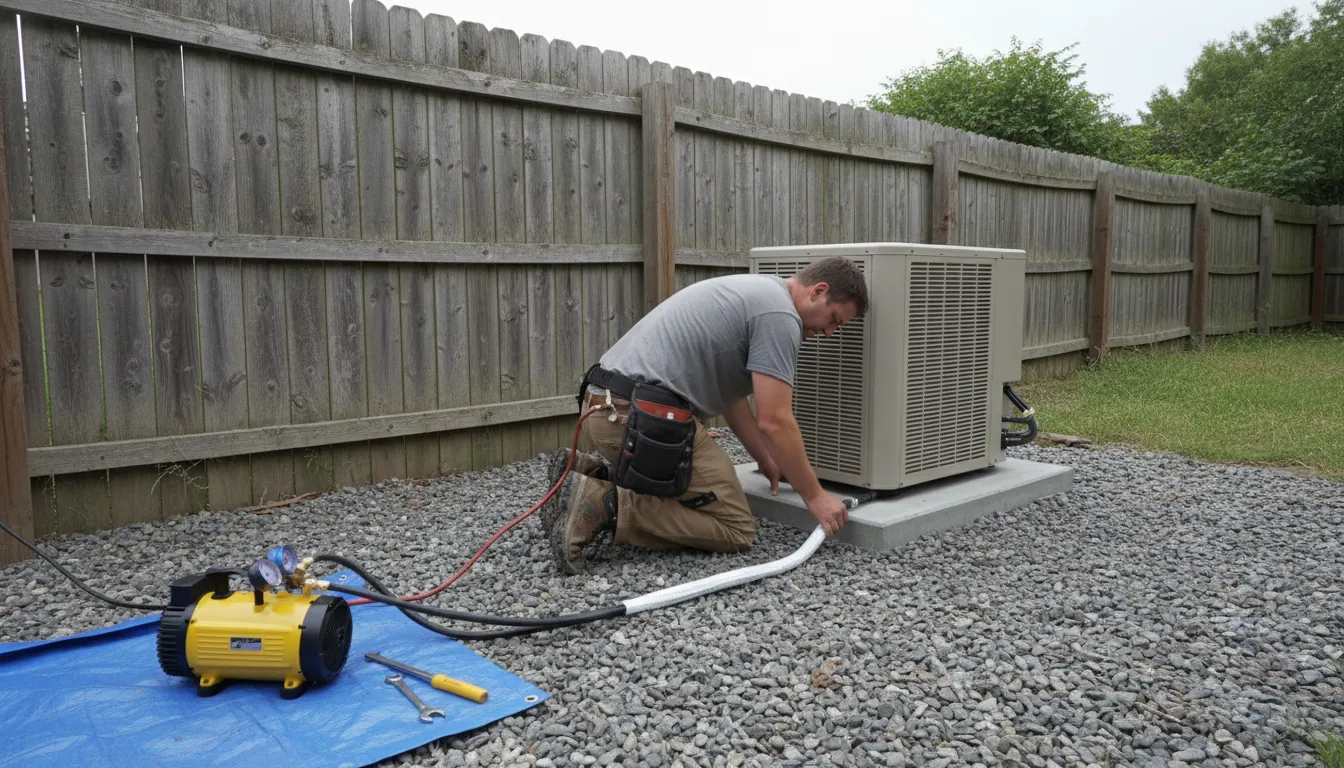
A ductless mini-split system is a versatile heating and cooling solution that provides efficient, zoned comfort without the need for extensive ductwork. For Royal Oak homeowners, these systems are particularly valuable for updating historic homes, adding climate control to new additions, or solving stubborn hot or cold spots. This guide will help you understand the process, benefits, and considerations for installing a mini-split in your home, connecting you with the information needed to find qualified local professionals.

Warm or Breezy Heating & Cooling
220 S Main St #430, Royal Oak, MI 48067
Warm or Breezy Heating & Cooling is an HVAC contractor based in Detroit, MI, providing heating and cooling services including repair, installation, and maintenance. They serve residential and commercial customers with furnace, boiler, air conditioning, and mini split system services. Their technicians offer energy efficiency diagnostics and city safety inspections, along with installation of Wi-Fi thermostats and tankless water heaters. With over 20 years of experience in heater repair, Warm or Breezy emphasizes fair pricing and uses durable American-made replacement parts. The company operates seven days a week to support customers throughout the heating season.
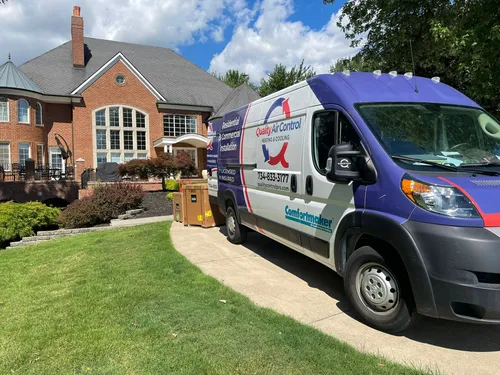
Quality Air Control Heating & Cooling
18421 Valleyview St, Riverview, MI 48193
Quality Air Control Heating & Cooling is an HVAC company based in Detroit, MI, serving Downriver, Wayne County, and nearby areas. They offer a full range of heating and cooling services including AC repair and installation, furnace repair and installation, heat pump repair, mini split installation, duct cleaning, and indoor air quality solutions. With over 20 years of experience, the company handles both residential and commercial projects and is licensed, insured, and EPA certified.
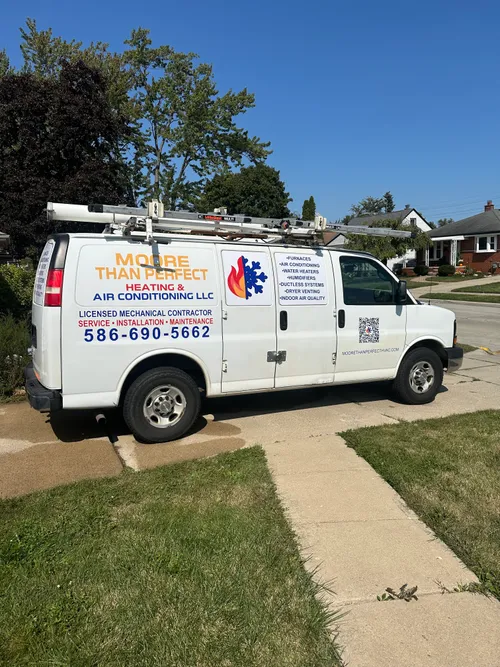
Moore Than Perfect Heating & Air Conditioning LLC
Detroit, MI
Moore Than Perfect Heating & Air Conditioning LLC is an HVAC company based in Detroit, MI, offering a range of heating and cooling services. They provide air conditioning installation and repair, furnace repair, mini-split installation, duct cleaning, indoor air quality solutions, and HVAC maintenance. The company serves all brands and models, focusing on energy-efficient and affordable heating and cooling solutions. With over 10 years of experience in the HVAC industry, Moore Than Perfect emphasizes careful workmanship and customer priority.

MOTOWN HEATING, COOLING, REFRIGERATION
Detroit, MI
MOTOWN HEATING, COOLING, REFRIGERATION is a family-owned HVAC company serving Detroit, MI. They provide residential, commercial, and industrial heating, cooling, and refrigeration services including installation, repair, and preventative maintenance. With over 25 years of experience since 1979, they handle a wide range of systems such as air conditioners, furnaces, boilers, and mini splits. Their team is equipped to manage commercial plumbing and boiler services as well. Customers can reach them 24/7 for assistance.
Detroit Furnace LLC
31313 Kendall, Fraser, MI 48026
Detroit Furnace LLC provides heating, cooling, and plumbing services in Detroit, MI. They offer repair, installation, and maintenance for furnaces, air conditioners, heat pumps, boilers, and mini-split systems. Their team services all brands and models and is equipped to handle plumbing needs such as water heater installation, leak repairs, and drain cleaning. Detroit Furnace LLC offers 24/7 emergency service to address urgent issues promptly. They serve the Detroit Metro area and surrounding communities, ensuring comprehensive home comfort solutions.
Why Choose a Ductless Mini-Split in Royal Oak?
Ductless systems, often called mini-splits, are an ideal HVAC upgrade for many Royal Oak properties. Their primary advantage is providing zoned comfort, allowing you to set different temperatures in individual rooms or areas. This not only enhances personal comfort but also leads to significant energy savings by only conditioning the spaces you're using.
Two common scenarios in Royal Oak where these systems shine are in older homes and for room additions. Many of the city's charming historic homes lack existing ductwork, making traditional central air a costly and invasive renovation project. A ductless installation offers a modern heating and cooling solution without tearing into walls or ceilings. Similarly, if you've added a sunroom, finished a garage, or built an in-law suite, a mini-split is a perfect way to deliver targeted comfort to that new space without overtaxing your existing HVAC system 1 2.
Understanding the Components: Indoor and Outdoor Units
A ductless mini-split system consists of two main parts connected by a small conduit housing refrigerant lines, power cables, and a drain tube.
Indoor Air Handlers: These are the units mounted inside your home. The most common and affordable type is the wall-mounted unit, which is installed high on a wall for optimal air circulation. For a sleeker look that blends with the ceiling, ceiling cassette units are available, though they tend to be more expensive and require more involved installation. In rooms with limited wall space, such as those with extensive windows, a floor-mounted unit (which resembles a slender baseboard heater) can be an effective alternative.
Outdoor Condenser: This single compressor unit is installed outside your home on a stable, level surface, typically a concrete pad. It must be sized correctly (measured in BTUs) for the total heating and cooling load of all connected indoor units. Crucially, it requires adequate clearances on all sides for proper ventilation and airflow, which your installer will carefully plan for.
The Installation Process: What to Expect
A professional installation is key to system performance and longevity. The general process involves several key steps:
- Mounting Indoor Units: The installer will securely mount the indoor air handler(s) on an interior wall or ceiling, choosing locations that provide even air distribution and are near an exterior wall for line set access.
- Drilling the Line Set Hole: A small, typically 3-inch hole is drilled through the exterior wall to connect each indoor unit to the outdoor condenser. This is far less invasive than installing ductwork.
- Connecting the System: The refrigerant lines, electrical wiring, and condensate drain line are run through the conduit, connected between the indoor and outdoor units, and then vacuum-sealed to ensure purity and efficiency 3.
- Managing Condensate and Electrical: The condensate from cooling mode must be drained properly, either via gravity or with a condensate pump if the drain line can't slope downward. The system will also need a dedicated electrical circuit from your home's main panel 4 5.
Find the perfect mini-split installers for your needs
Get personalized recommendations and expert advice
Key Planning Considerations for Your Project
Successful mini-split installation hinges on thoughtful planning. Zoning is the core concept: each indoor unit operates independently, controlling the temperature in its designated "zone." This allows a family member to cool a home office while another heats a bedroom, optimizing both comfort and energy use 6.
Indoor unit placement is critical. Installers consider airflow patterns, the location of heat sources (like windows), and the practical need to route the condensate drain line. Outdoor unit placement requires a location with sufficient clearance for airflow, acceptable noise levels relative to neighbors, and accessibility for future service 7 8.
Cost Factors for Ductless Installation
The total cost for a ductless mini-split installation in Royal Oak can vary widely, generally ranging from $3,000 to over $15,000 for multi-zone systems 9 10. A basic single-zone system for one room often falls in the $3,000 to $5,000 range. Each additional indoor head (zone) typically adds $2,000 to $4,000 to the project cost 11.
Several factors influence the final price:
- System Size and Capacity: Larger BTU units for bigger spaces cost more.
- Efficiency (SEER2 Rating): Higher-efficiency models with superior SEER2 ratings have a higher upfront cost but lower operating expenses.
- Number of Zones: More indoor units mean more equipment and labor.
- Equipment Type: Ceiling cassettes are generally more expensive than wall-mounted units.
- Labor and Complexity: Installations requiring long refrigerant line runs, complex electrical work, or condensate pumps will increase labor time and cost.
- Brand and Features: Premium brands and units with advanced features (like Wi-Fi controls) command higher prices.
- Permits: Local Royal Oak building permits may be required and add to the cost.
Investing in a professional installation ensures your system is correctly sized, charged, and configured for maximum efficiency and reliability, protecting your investment for years to come.
Frequently asked questions
Sources
Footnotes
-
Whole House Ductless Mini Split Walk Through - https://www.youtube.com/watch?v=lDwutt_ywsA&t=2 ↩
-
Install a Mini Split in Your Michigan Home for Zoned Cooling - https://harrimanheating.com/install-a-mini-split-in-your-michigan-home-for-zoned-cooling/ ↩
-
How to Install a Ductless Mini-Split Air Conditioner | This Old ... - https://www.youtube.com/watch?v=ozaw9QhxkQU&t=25 ↩
-
What Are Ductless Air Conditioning Options in Michigan Homes - https://www.callhoover.com/blog/what-are-ductless-air-conditioning-options-in-michigan-homes/ ↩
-
How Much Does a Mini-Split Installation Cost? - Taskrabbit Blog - https://www.taskrabbit.com/blog/mini-split-installation-cost/ ↩
-
Ductless Mini Splits: The Flexible HVAC Upgrade for Michigan ... - https://mooremech.net/what-is-a-mini-split/ ↩
-
How Much Does It Cost to Install a Mini-Split? [2026 Data] | Angi - https://www.angi.com/articles/how-much-does-it-cost-install-ductless-mini-split-ac.htm ↩
-
Ductless Mini-Splits: A Comprehensive Cost Breakdown - https://www.myfivestarhomeservices.com/ductless-mini-splits-a-comprehensive-cost-breakdown/ ↩
-
Ductless Mini Split Installation Costs in 2026 - Carrier - https://www.carrier.com/residential/en/us/products/ductless-mini-splits/ductless-mini-split-installation-cost/ ↩
-
Ductless Mini-Split Installation Cost in 2025: Full Breakdown - https://osborneheatingncooling.com/ductless-mini-split-installation-cost/ ↩
-
What Is a 3-Zone Mini Split & Installation Cost Guide For 2026 - https://www.budgetheating.com/what-is-a-3-zone-mini-split-installation-cost-guid/ ↩