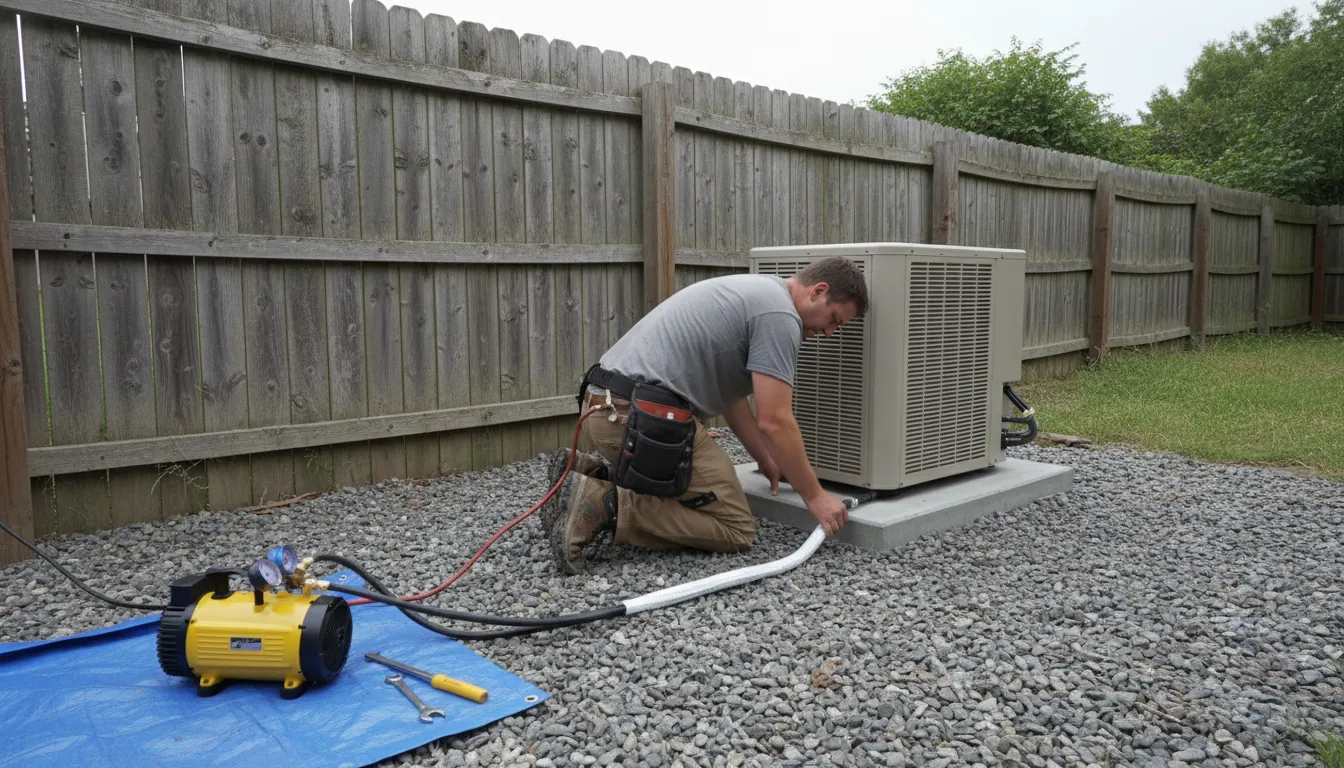
Find the Best Mini-Split Installers for Your Business
No obligation • Fast responses • Nationwide coverage

Why you can trust HVAC Firms
HVAC Firms is a leading United States resource for evaluating HVAC service providers. Our team researches companies, checks credentials, and reviews customer feedback to present clear, unbiased information. Listings and rankings are based on merit, and companies cannot pay to change our editorial content.
Search providers near you
Top Mini-Split Installers in Indianapolis, Indiana Ranked
Ductless mini-split systems are a versatile and efficient solution for heating and cooling homes and businesses in Indianapolis. These systems provide targeted, zoned comfort without the need for extensive ductwork, making them perfect for room additions, older homes, or spaces where extending central air is impractical or too costly. This guide will help you understand the options, costs, and considerations for installing a ductless system, empowering you to find the right local expertise for your project.
King of Comfort Heating & Cooling
7009 E 56th St, Indianapolis, IN 46226
King of Comfort Heating & Cooling is an HVAC company based in Indianapolis, IN, offering a wide range of heating and cooling services. Their team provides installation, repair, and maintenance for air conditioners, furnaces, heat pumps, boilers, mini splits, geothermal heat pumps, and thermostats. They emphasize comprehensive service and staying current with industry developments to meet diverse HVAC needs. The company also offers 24/7 emergency repair services to ensure reliable heating and cooling during extreme weather conditions. Their technicians handle everything from routine tune-ups to complex repairs, including cracked heat exchangers and faulty thermostats.

Mowery Heating, Cooling & Plumbing
710 E Main St, Brownsburg, IN 46112
Mowery Heating, Cooling & Plumbing is a full-service HVAC and plumbing company serving Indianapolis, IN. They offer a wide range of services including air conditioning, furnace, heat pump, mini split, and geothermal heat pump installation and repair, as well as HVAC tune-ups and thermostat installation. The company is equipped to handle complex tasks such as compressor and condenser coil checks, refrigerant management, and electrical component diagnostics. With over 20 years of experience, Mowery is known for comprehensive maintenance plans and skilled technicians who provide detailed system assessments. They also provide emergency plumbing services and have a strong focus on customer education and safety.
Williams Comfort Air - Heating Cooling Plumbing Electrical
310 West Main Street Suite 202, Greenwood, IN 46142
Williams Comfort Air - Heating Cooling Plumbing Electrical is a full-service HVAC and plumbing company serving Indianapolis, IN. They offer a wide range of services including air conditioning, furnace, heat pump, boiler, and geothermal HVAC repair and installation, as well as duct cleaning and indoor air quality solutions. The company is a Carrier Factory Authorized Dealer and employs NATE-certified technicians who provide comprehensive diagnostics and repairs. Established in 1966, Williams Comfort Air has decades of experience and provides 24/7 emergency HVAC service to ensure customers are never left without heating or cooling when they need it most.
Williams Comfort Air - Heating Cooling Plumbing Electrical
114 S Center St, Plainfield, IN 46168
Williams Comfort Air - Heating Cooling Plumbing Electrical is a full-service HVAC and plumbing company serving Indianapolis, IN. They offer a wide range of services including air conditioner, furnace, heat pump, boiler, and geothermal heat pump repair and installation, as well as duct cleaning and indoor air quality services. The company is a Carrier Factory Authorized Dealer and employs NATE-certified technicians who handle repairs, maintenance, and replacements for various heating and cooling systems. Williams Comfort Air provides 24/7 emergency HVAC service to address urgent heating and cooling needs at any time.
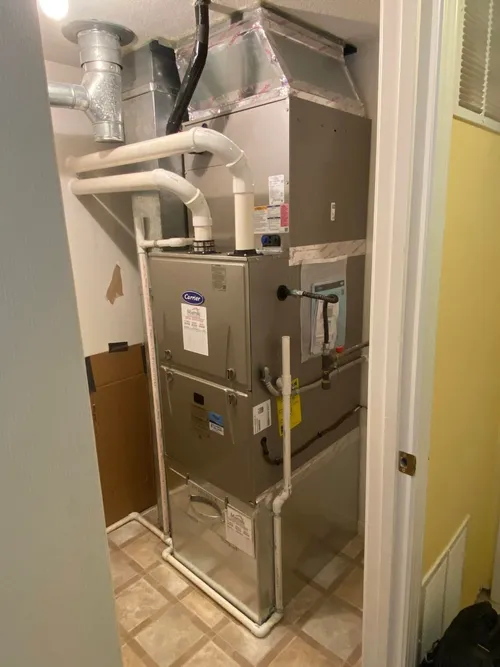
Masters Heating & Cooling
8450 W Washington St, Indianapolis, IN 46231
Masters Heating & Cooling is an HVAC and plumbing service provider based in Indianapolis, IN, serving Indiana, Michigan, and Ohio. With over 40 years of experience since 1980, they offer installation, repair, replacement, and maintenance for air conditioners, furnaces, boilers, heat pumps, ductless mini-splits, and geothermal systems. Their services also include plumbing repairs, water heaters, repiping, and sump pumps. Masters Heating & Cooling has certified technicians who provide honest quotes and work to resolve heating, cooling, and plumbing issues efficiently.
Understanding Ductless Mini-Split Systems
A ductless mini-split system consists of one or more indoor air-handling units connected to a single outdoor condenser. Refrigerant lines, electrical wiring, and a condensate drain run through a small, three-inch hole in the wall, linking the two components 1 2. This setup eliminates the energy losses associated with ductwork, which can account for more than 30% of energy consumption in a central air system, especially if the ducts are in an unconditioned space like an attic. For Indianapolis homeowners, this means a ductless air conditioner or heat pump can offer significant energy savings and precise temperature control for specific areas of your home.
Common Applications in Indianapolis Homes
Ductless technology is not a one-size-fits-all solution; it excels in specific scenarios common in the Indy area.
- Room Additions and Renovations: Adding a sunroom, converting a garage, or finishing a basement often presents a ductwork challenge. Extending existing HVAC ducts can be prohibitively expensive and disruptive. A mini-split is an ideal, self-contained system for these new spaces 3.
- Whole-Home Comfort: For homes without any existing ductwork-such as many older historic properties, radiant heat homes, or those with hydronic heating-a multi-zone ductless system can serve as the primary heating and cooling solution for the entire house.
- Zoned Temperature Control: Do you have a room that's always too hot or too cold? Ductless systems are the ultimate zoning tool. You can independently control the temperature in a home office, master bedroom, or upstairs nursery, eliminating family disputes over the thermostat and avoiding conditioning empty rooms 4.
Types of Indoor Units
Choosing the right style of indoor unit is key to both performance and aesthetics. The main options include:
- Wall-Mounted: This is the most common and typically most affordable type. These sleek, rectangular units are mounted high on an interior wall, providing excellent air throw across the room.
- Ceiling Cassette: These units are recessed into the ceiling, with only a decorative grill visible. They distribute air in four directions for very even coverage and are a popular choice for rooms with low wall space or a desire for a minimalist look, though installation is often more complex and costly 5 6.
- Floor-Mounted: Designed to be installed low on a wall, similar to a traditional radiator. This is an excellent option for rooms with high ceilings, large windows, or where wall space near the ceiling is unavailable. They are also a practical choice for some older home constructions.
- Ducted Air Handlers: A less common but useful option, these compact units can be installed in a soffit or small attic space and connect to short, hidden duct runs to serve multiple small rooms or areas.
Planning Your Mini-Split Installation: Placement is Key
Proper placement of both the indoor and outdoor units is critical for efficiency, comfort, and system longevity.
Indoor Unit Placement:
- High and Central: For wall-mounted units, a high, central location on the longest wall typically provides the most even air distribution throughout the space.
- Avoid Obstructions: Ensure there is at least 6-8 feet of clear space in front of the unit's airflow path. Do not install it behind doors or where furniture, curtains, or shelves will block the air discharge.
- Proximity to Exterior Wall: While the flexible line sets can run some distance, placing the indoor unit on an exterior wall simplifies installation by minimizing the length of the lines that must be run inside the home.
Outdoor Unit (Condenser) Placement:
- Adequate Clearance: The condenser needs ample space for airflow and future service. Most manufacturers recommend 12 to 24 inches of clearance on all sides and above the unit, and 3 to 6 feet of clearance in front where the fan exhausts hot air 7.
- Level, Stable Surface: The unit must be placed on a level concrete pad or mounted securely on a wall bracket designed for its weight.
- Consider Your Neighbors: Be mindful of noise and hot exhaust air. Avoid pointing the exhaust directly at a neighbor's patio, window, or property line. Local codes in Indianapolis may dictate how close a condenser can be to a property line, often requiring a minimum of 3 feet 8.
Find the perfect mini-split installers for your needs
Get personalized recommendations and expert advice
Cost Breakdown for Indianapolis Installations
The cost of a ductless mini-split installation in Indianapolis varies widely based on system capacity, brand, and project complexity. Here's a general breakdown to help you budget:
- Single-Zone System (One Indoor Unit): The cost for a basic one-room system typically ranges from $3,000 to $5,000+. This covers the equipment and standard installation for a single air handler 9 10.
- Multi-Zone System (2-3 Indoor Units): Installing a system with two or three zones generally falls between $5,500 and $8,500+. This involves a more capable outdoor condenser and multiple indoor installations 11 12.
- Whole-Home System (4+ Zones): For a comprehensive ductless solution covering an entire home, homeowners can expect costs ranging from $8,000 to $15,000 or more, depending on the home's size and layout 13 14.
Factors Influencing Final Cost:
- Equipment Brand and Efficiency: High-efficiency models with superior SEER2 ratings for cooling and HSPF ratings for heating command a higher price but offer lower operating costs.
- Installation Complexity: Costs increase if the job requires significant new electrical work (like a new dedicated circuit), extensive carpentry for ceiling cassettes, or navigating difficult access points.
- Local Permits: Most municipalities in the Indianapolis area require permits for HVAC work, which add to the project cost but ensure the installation meets safety and building codes.
Choosing the Right Professional
Installing a mini-split is not a typical DIY project. It requires HVAC expertise, knowledge of refrigerant handling, and understanding of local electrical codes. A qualified professional will:
- Perform a detailed load calculation to correctly size the system for your space.
- Help you select the optimal unit types and placements.
- Handle all permitting with the local building department.
- Perform a pressure test and vacuum on the refrigerant lines to ensure a leak-free, efficient system.
- Commission the system and explain its operation and maintenance to you.
Frequently asked questions
Sources
Footnotes
-
Indianapolis, Indiana Ductless Mini-Splits Installation - Armor Air - https://www.armorair.com/service/ductless-mini-splits/installation/ ↩
-
DIY MULTI-ZONE Ductless MINI SPLIT Installation in New ... - https://www.youtube.com/watch?v=KD2GM0fg8eU&t=18 ↩
-
How Much Does It Cost To Install A Ductless Mini Split? | IN - https://jlanderson.net/how-much-does-it-cost-to-install-ductless-mini-split/ ↩
-
Ductless Mini-Splits - Armor Air - https://www.armorair.com/service/ductless-mini-splits/ ↩
-
Mini-Split Dimensions and Placement: A Homeowner's Guide - https://airquip.com/mini-split-dimensions-and-placement-guide/ ↩
-
Ductless Mini-Splits: A Comprehensive Cost Breakdown - https://www.myfivestarhomeservices.com/ductless-mini-splits-a-comprehensive-cost-breakdown/ ↩
-
Where to Install and Not Install a Mini Split? - https://dellahome.com/blogs/della-blog/where-to-install-and-not-install-a-mini-split ↩
-
How Close Can an Air Conditioner Be to Property Line? - https://greenwoodheating.com/blog/how-close-can-an-air-conditioner-be-to-property-line/ ↩
-
Ductless Mini-Split Installation Cost in 2025: Full Breakdown - https://osborneheatingncooling.com/ductless-mini-split-installation-cost/ ↩
-
How Much Does It Cost to Install a Mini-Split? [2026 Data] | Angi - https://www.angi.com/articles/how-much-does-it-cost-install-ductless-mini-split-ac.htm ↩
-
Ductless Mini Split Setup: An Ultimate Guide - Airflow Heating & Air - https://www.goairflow.com/blog/ductless-mini-split-installation/ ↩
-
How Much Does It Cost to Install a Mini Split System? - https://elementairco.com/how-much-does-it-cost-to-install-a-mini-split-system/ ↩
-
Indianapolis Mini-Split Installation: Cost Breakdown - Armor Air - https://www.armorair.com/blog/ductless-mini-split-installation-cost/ ↩
-
Ductless Mini Split Installation Costs in 2026 - Carrier - https://www.carrier.com/residential/en/us/products/ductless-mini-splits/ductless-mini-split-installation-cost/ ↩