Find the Best Mini-Split Installers for Your Business
No obligation • Fast responses • Nationwide coverage

Why you can trust HVAC Firms
HVAC Firms is a leading United States resource for evaluating HVAC service providers. Our team researches companies, checks credentials, and reviews customer feedback to present clear, unbiased information. Listings and rankings are based on merit, and companies cannot pay to change our editorial content.
Search providers near you
Top Mini-Split Installers in Aurora, Colorado Ranked
A ductless mini-split system is a versatile and efficient solution for heating and cooling specific areas of your home. This type of installation is particularly valuable for creating comfortable zones without the need for extensive ductwork. For Aurora homeowners, finding a qualified professional to handle the setup is crucial for ensuring optimal performance, energy savings, and warranty protection. The following guide will help you understand the process, benefits, and considerations for installing a mini-split system in your home.

True Heating & Cooling
1351 W 121st Ave, Westminster, CO 80234
True Heating & Cooling is an HVAC company based in Denver, CO, offering heating, air conditioning, and indoor air quality services. They serve Westminster and nearby areas including Broomfield and Boulder. Their services include installation, repair, and maintenance of furnaces, boilers, air conditioners, heat pumps, ductless mini-split systems, and thermostats. As NATE-certified technicians and official Lennox dealers, they provide skilled work with access to quality equipment. True Heating & Cooling has 24/7 emergency availability to address urgent HVAC needs.

The Weather Changers Heating and Air Conditioning
10525 E 40th Ave #203, Denver, CO 80239
The Weather Changers Heating and Air Conditioning is an HVAC company based in Denver, CO, offering a full range of heating, cooling, and indoor air quality services. They provide installation, repair, and maintenance for air conditioners, furnaces, heat pumps, ductless systems, and thermostats. The company is a Bryant Factory Authorized Dealer and emphasizes proper sizing and installation to optimize system efficiency and longevity. They serve Denver and surrounding areas including Aurora, Centennial, and Parker. Their expertise includes indoor air quality solutions such as humidifier installation and duct cleaning. The Weather Changers has over 15 years of experience serving multiple properties and offers a 100% satisfaction guarantee.

Efficient Comfort: Heating, Cooling & Mechanical
10835 N Dover St #100, Westminster, CO 80021
Efficient Comfort: Heating, Cooling & Mechanical is a family owned and operated HVAC company serving Aurora, CO, and the surrounding Denver metro areas. Founded in 2007, the company offers a wide range of heating and cooling services including installation, repair, and maintenance of furnaces, air conditioners, heat pumps, boilers, and ductless mini splits. As Bryant Factory Authorized Dealers, they provide expertise in managing indoor air quality with accessories like air cleaners, humidifiers, ventilators, and UV lights. The company emphasizes ethical business practices and community involvement.
Comfort Pros Heating and Air Conditioning
7270 Gilpin Way #220, Denver, CO 80229
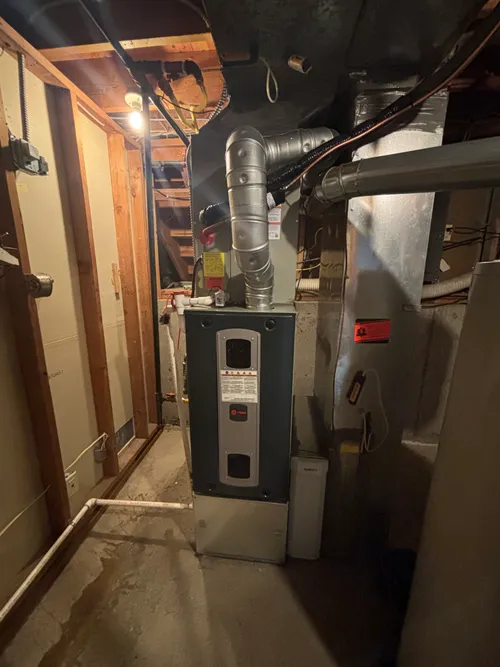
Comfort Pros Heating and Air Conditioning is a family-owned HVAC company serving Denver, CO, with over 15 years of experience. They specialize in the installation, repair, and maintenance of heat pumps, furnaces, air conditioners, boilers, and mini-split systems. Comfort Pros is known for working with high-quality manufacturers and providing thorough system analyses to help customers understand their options. Their team emphasizes clear communication and detailed explanations throughout each project.

Emporia Home Services
7901 Shaffer Pkwy STE 100, Littleton, CO 80127
Emporia Home Services is a family-owned HVAC company serving Denver, CO. They provide installation, repair, and maintenance for furnaces, air conditioners, heat pumps, and mini split systems. Their services include HVAC tune-ups and comprehensive heating and cooling solutions designed to improve indoor comfort throughout the year. The company emphasizes a customer-focused approach and offers financing options through trusted lenders. Emporia Home Services is led by experienced technicians dedicated to ensuring efficient system performance and customer satisfaction.
Understanding Ductless Mini-Split Systems
A ductless mini-split, often simply called a ductless system, consists of two main components: an outdoor compressor/condenser unit and one or more indoor air handlers. These are connected by a small conduit that houses refrigerant lines, power cables, and a condensate drain, which is run through a small hole in your exterior wall. This design eliminates the need for the bulky ductwork required by traditional central air systems, making it an ideal retrofit for older Aurora homes, room additions, or spaces where extending ducts is impractical or too expensive.
The core appeal of a ductless installation is its ability to provide zoned comfort. Each indoor unit operates independently, allowing you to set different temperatures in different rooms. This means you can cool a sunroom addition without overcooling the entire house, or heat a finished basement only when it's in use. This targeted approach is a significant energy saver, as you're not conditioning unoccupied spaces.
Ideal Applications for Aurora Homes
Ductless mini-split installations are not a one-size-fits-all solution, but they are perfect for specific scenarios common in the Aurora area. Identifying if your home is a good candidate is the first step.
- Homes Without Existing Ductwork: This is the most common reason for choosing a ductless system. If you live in an older home that was never equipped with central air, a mini-split provides a modern, efficient heating and cooling solution without the massive renovation required to install ducts.
- Room Additions and Finished Spaces: Adding a ductless unit to a new sunroom, garage conversion, attic apartment, or finished basement is often more cost-effective and less disruptive than extending your existing HVAC ductwork to the new space 1 2.
- Addressing Problematic Areas: Do you have a room that's always too hot in the summer or too cold in the winter? A mini-split can solve these hot and cold spots by providing dedicated, powerful climate control to that specific zone 3.
- Supplemental Heating and Cooling: For homes with a primary system that struggles to keep up, a strategically placed ductless unit can provide supplemental capacity exactly where it's needed, improving overall home comfort.
Types of Indoor Air Handlers
One of the advantages of a ductless system is the flexibility in how the indoor component is installed. The style you choose depends on your room's layout and your aesthetic preferences.
- Wall-Mounted Units: This is the most common and typically most affordable type of indoor air handler. It is mounted high on an interior wall, similar to a flat-panel TV, which allows for efficient circulation of conditioned air throughout the room.
- Ceiling Cassette Units: For a sleek, unobtrusive look, a ceiling cassette is recessed into the ceiling with only a decorative grille visible. This type is more expensive and complex to install, as it requires space between ceiling joists, but it's ideal for rooms where wall space is limited or a minimalist appearance is desired.
- Floor-Mounted Units: These units are installed low on a wall, near the floor, functioning similarly to a traditional baseboard heater. They are a good option for rooms with slanted ceilings (like in an attic conversion) or where wall mounting is not feasible.
Critical Installation Considerations: Placement and Requirements
Professional installation is paramount for a ductless system's longevity, efficiency, and warranty validity. A key part of this process is the proper placement of both the indoor and outdoor units.
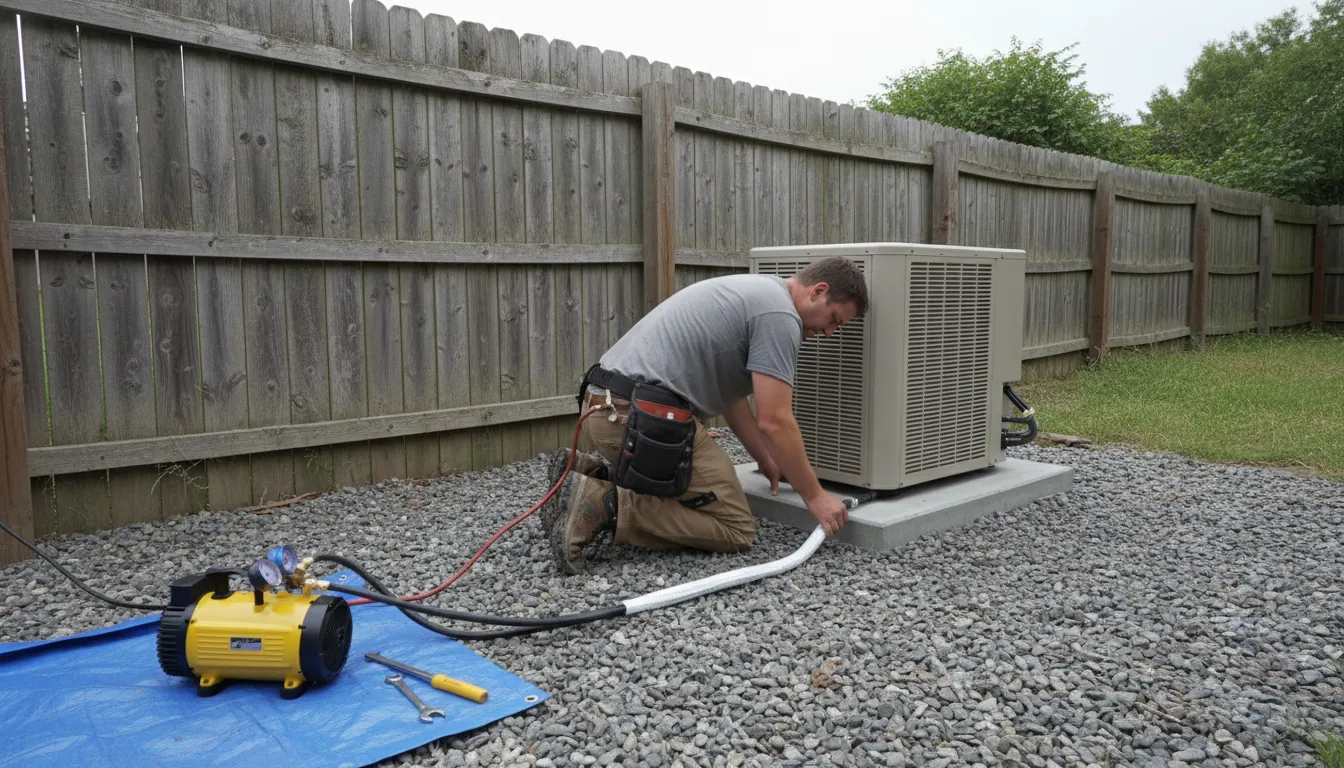
Outdoor Unit Placement: The outdoor compressor must be installed on a stable, level surface, such as a concrete pad or a dedicated wall bracket 4. Perhaps more importantly, it requires adequate clearance on all sides-typically several feet-to ensure proper airflow for heat exchange. Installers will position it away from shrubs, fences, or other obstructions that could block vents and reduce efficiency or cause the system to overheat 5.
Indoor Unit Placement: The location of the indoor air handler affects both performance and comfort. It should be placed on a wall that allows for even air distribution across the room, avoiding direct airflow over seating areas or beds. The installer must also plan the path for the connecting conduit from the indoor unit to the outdoor location, which involves drilling a precise 2-3 inch hole through the exterior wall 6.
Find the perfect mini-split installers for your needs
Get personalized recommendations and expert advice
Understanding the Cost of Installation
The cost of a ductless mini-split installation in Aurora varies based on several factors. While prices can fluctuate, understanding the components of the estimate will help you make an informed decision.
- Single-Zone System: For cooling and heating one room, a basic single-zone system installation typically ranges from $3,000 to over $5,000 7. This includes one outdoor unit and one indoor air handler.
- Multi-Zone System: If you need to condition two or three rooms with individual controls, a multi-zone system is required. Costs for a 2-3 zone installation generally range from $5,500 to $8,500 or more 8. This uses one outdoor unit connected to multiple indoor handlers.
- Key Cost Factors:
- System Size and Capacity: Measured in tons or BTUs, the required capacity is based on the size and insulation of the space being conditioned.
- Energy Efficiency: Systems with higher SEER2 ratings for cooling and HSPF ratings for heating are more efficient but have a higher upfront cost.
- Brand and Features: Premium brands and units with advanced features (like Wi-Fi controls, advanced filtration, or ultra-quiet operation) will increase the price.
- Installation Complexity: Labor typically accounts for 30-50% of the total cost 9 10. Factors like the distance between indoor and outdoor units, the difficulty of running electrical lines, and the need for a new dedicated electrical circuit all impact labor time and cost.
The Professional Installation Process
A proper ductless mini-split installation is a technical job that should always be performed by a licensed HVAC professional. The general process includes:
- Site Evaluation and Load Calculation: A technician will assess your home to determine the correct system size and optimal placement for both units.
- Mounting the Units: The indoor air handler is securely mounted on the interior wall, ceiling, or floor. The outdoor unit is placed on its stable base with proper clearances.
- Running the Conduit: A small hole is drilled through the exterior wall. The line set (containing refrigerant lines, drain tube, and electrical wiring) is run through the conduit connecting the two units.
- Electrical Connections: Power is supplied to the outdoor unit, often requiring a new dedicated circuit from your electrical panel.
- System Evacuation and Charging: The refrigerant lines are evacuated of air and moisture using a vacuum pump before the precise amount of refrigerant is charged into the system. This step is critical for efficiency and longevity.
- Testing and Commissioning: The system is started up, tested for proper operation in both heating and cooling modes, and the homeowner is instructed on how to use the controls.
Investing in a professional installation ensures the system operates at peak efficiency, maintains its manufacturer's warranty, and provides reliable comfort for years to come 11.
Frequently asked questions
Sources
Footnotes
-
Ductless Mini Split Service in Addison, IL - A-Perfect Climate Inc. - https://aperfectclimateinc.com/air-conditioning/ductless-mini-split/ ↩
-
Zoned HVAC vs Ductless Mini-Split Which Is Better in Illinois - https://www.trusttiger.com/blog/zoned-hvac-vs-ductless-mini-split/ ↩
-
Ductless Mini Splits | Aurora, Il - https://www.aurorailhvacservice.com/ductless-mini-splits/ ↩
-
Mini-Split vs. Central Air: How are they Different? - https://www.alpinehomeair.com/learning-center/ductless-mini-split-systems/mini-split-vs-central-air ↩
-
How Much Does a Mini-Split Installation Cost? - Taskrabbit Blog - https://www.taskrabbit.com/blog/mini-split-installation-cost/ ↩
-
Ductless Mini Split Setup: An Ultimate Guide - Airflow Heating & Air - https://www.goairflow.com/blog/ductless-mini-split-installation/ ↩
-
Cost of Ductless Mini Split Installation in Palos Hills, IL - https://a-guy.com/cost-ductless-mini-split-installation-palos-hills-il/ ↩
-
Mini Split Install Cost Aurora, CO | Ductless AC Pricing - https://www.servicebyveteran.com/blog/mini-split-installation-cost ↩
-
Ductless Mini-Split Installation Cost in 2025: Full Breakdown - https://osborneheatingncooling.com/ductless-mini-split-installation-cost/ ↩
-
How Much Does It Cost to Install a Mini Split System? - https://elementairco.com/how-much-does-it-cost-to-install-a-mini-split-system/ ↩
-
Ductless mini-split installation: Cool 2025 Guide - Southern Air - https://www.southern-air.com/blog/ductless-mini-split-installation ↩