Find the Best Mini-Split Installers for Your Business
No obligation • Fast responses • Nationwide coverage

Why you can trust HVAC Firms
HVAC Firms is a leading United States resource for evaluating HVAC service providers. Our team researches companies, checks credentials, and reviews customer feedback to present clear, unbiased information. Listings and rankings are based on merit, and companies cannot pay to change our editorial content.
Search providers near you
Top Mini-Split Installers in Anchorage, Alaska Ranked
Ductless mini-split systems offer a modern solution for heating and cooling homes in Anchorage, providing targeted comfort without the need for extensive ductwork. This makes them an ideal choice for room additions, older homes, or any space where installing traditional ducts is impractical or too costly. This guide will help you understand the key considerations for a ductless system installation, from selecting the right type of unit to planning for optimal placement and budgeting for the project, so you can find the right local expertise for your needs.
Diamond Heating & AirTemp Alaska
5406 Lake Otis Pkwy, Anchorage, AK 99507
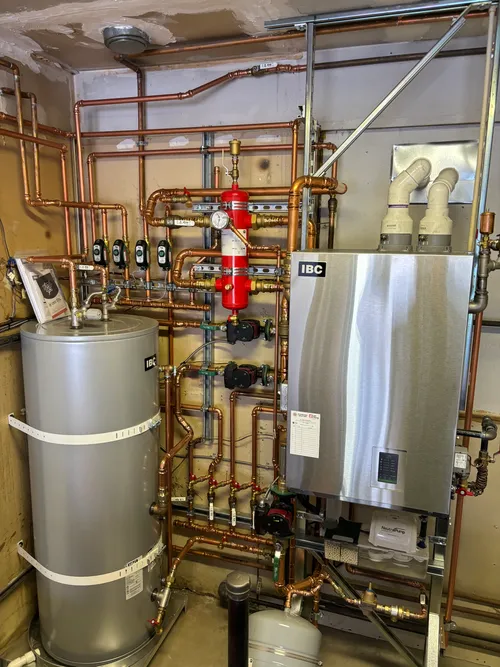
Diamond Heating & AirTemp Alaska is an HVAC company based in Anchorage, AK, offering installation, repair, and maintenance services for heating and cooling systems. Their services include furnaces, boilers, heat pumps, mini-splits, water heaters, indoor air quality solutions, and thermostat installations. With over 25 years of experience, they provide high-efficiency and reliable heating products suited for the Alaskan climate. The company also offers smart thermostats and zoning controls to enhance system performance and comfort.
Knik Heating, LLC
4051 Lamont Way, Wasilla, AK 99623
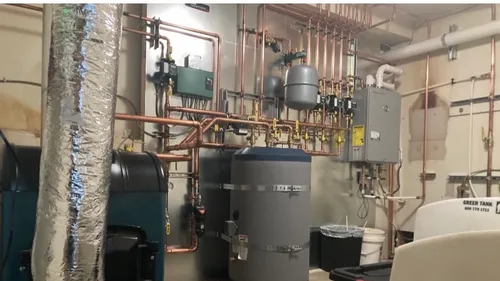
Knik Heating, LLC is a veteran-owned HVAC company based in Wasilla, AK, serving Anchorage and the surrounding Mat-Su Valley, including Eagle River and Talkeetna. They offer a full range of heating and cooling services such as furnace, boiler, heat pump, and air conditioning repair and installation, along with duct cleaning and indoor air quality solutions. With over 30 years of experience, Knik Heating provides specialized services including hydronic heating system installation and maintenance. They are available 24/7 for emergency heating and cooling repairs to ensure year-round comfort in Alaska's challenging climate.
Air Source Alaska
1900 E 3rd Ave, Anchorage, AK 99501
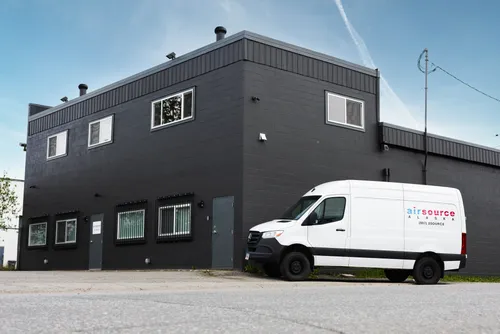
Air Source Alaska is a commercial mechanical and electrical contractor based in Anchorage, AK. They specialize in service, repair, and installation of commercial HVAC/R systems, including VRF heat-recovery, heat pumps, chillers, building controls, and modulating/condensing boilers. The company also offers design-build construction services from engineering to system commissioning. Established in 2017, Air Source Alaska is 100% employee owned and serves Anchorage and surrounding areas.
Understanding Ductless Mini-Split Systems
A ductless mini-split, often simply called a ductless system or mini-split, consists of two main components: a compact outdoor condenser/compressor and one or more quiet, wall-mounted indoor air-handling units. These components are connected by a small conduit that houses refrigerant lines, power cables, and a condensate drain, requiring only a small hole in the wall. This setup is fundamentally different from central forced-air systems, as it delivers conditioned air directly into a room, eliminating the energy losses associated with ductwork, which can account for more than 30% of energy consumption in a typical home with ducts1.
The core appeal of a ductless air conditioner and heat pump in a climate like Anchorage's is its versatility and efficiency. These systems provide both heating and cooling, and their inverter-driven technology allows them to modulate their output, running at lower speeds to maintain a set temperature rather than constantly cycling on and off. This results in significant energy savings and more consistent comfort. For homeowners looking to add climate control to a finished garage, sunroom, or basement apartment, a mini-split installation is often the most practical and effective option available.
Ideal Applications for Anchorage Homes
Ductless technology solves specific comfort challenges common in the Anchorage area. Here are the primary scenarios where a mini-split is an excellent fit:
- Homes Without Existing Ductwork: This is the most common application. Many older homes, historic properties, apartments, and condos in Anchorage were built without a central ducted system. Installing ducts can be prohibitively expensive and invasive, involving cutting into walls and ceilings. A ductless system bypasses this issue entirely.
- Room Additions and Finished Spaces: When you add a new room or finish an attic or basement, extending your existing HVAC system can strain its capacity and be technically difficult. Installing a dedicated single-zone mini-split for the new space is an efficient way to ensure it is comfortably heated and cooled without overburdening your old system.
- Targeted Zoned Comfort: Even in a home with a central system, you might have a room that's always too hot or too cold. A ductless unit can supplement your existing HVAC, providing precise temperature control for that problematic room, such as a home office or master bedroom, improving overall home comfort and potentially allowing you to adjust the main system for savings.
- Improving Energy Efficiency: For energy-conscious homeowners, replacing inefficient electric baseboard heaters or window AC units with a modern ductless heat pump can lead to substantial reductions in energy bills. The superior efficiency of inverter-driven mini-splits makes them a cost-effective upgrade for year-round comfort.
Types of Mini-Split Systems: Single-Zone vs. Multi-Zone
Choosing between a single-zone and multi-zone configuration is one of the first and most important decisions in your planning.
Single-Zone Systems A single-zone system consists of one outdoor condenser connected to one indoor air handler. It is designed to control the climate in one specific area, like a great room, garage, or addition. This is typically the most straightforward and affordable installation option, perfect for addressing a single comfort problem or adding conditioning to an isolated space.
Multi-Zone Systems A multi-zone system uses a single, more powerful outdoor condenser that connects to two, three, or even more indoor units. These indoor units can be a mix of different styles (e.g., a wall-mounted unit in the living room and a ceiling cassette in the bedroom) and can be controlled independently. This allows you to create custom temperature zones throughout your home, providing whole-home comfort without ductwork. While the upfront cost is higher than a single-zone, it can be more cost-effective than installing multiple separate outdoor units.
Planning Your Installation: Indoor Unit Placement
The performance and comfort provided by your mini-split are heavily influenced by where you place the indoor air handler. Proper placement ensures efficient airflow, even temperature distribution, and quiet operation.
- High Wall Mount: This is the most common and generally recommended placement. Installing the unit high on an interior wall, about 6-8 inches from the ceiling, allows for the best air circulation across the room. The discharged air can travel along the ceiling and down the walls, minimizing drafts and creating a more even temperature.
- Ceiling Cassette: For a more discreet, built-in look, a ceiling-recessed cassette is an excellent option. These units are flush with the ceiling and distribute air in four directions, offering very even coverage. They are ideal for rooms with low wall space or where a minimalist aesthetic is desired.
- Floor-Mounted Unit: In rooms with large windows or limited clear wall space (like a room with extensive cabinetry or glass), a floor-mounted unit installed low on the wall can be effective. This placement is also sometimes considered for accessibility reasons.
Critical Placement Guidelines: Regardless of style, follow these rules for optimal performance:
- Place the unit on an interior wall to minimize the length of the refrigerant lines running to the outdoor unit.
- Ensure there is at least 6-8 feet of clear space in front of the unit's airflow path. Avoid placing it behind furniture, curtains, or televisions.
- Keep the unit away from direct sources of heat or steam, such as kitchens, fireplaces, or bathrooms, as the temperature sensor can be affected.
- Choose a central location in the room for the most balanced air distribution 2.
Find the perfect mini-split installers for your needs
Get personalized recommendations and expert advice
Outdoor Unit Location and Requirements
The outdoor condenser is the heart of the system and requires careful siting for efficiency, longevity, and minimal disturbance.
- Stable Foundation: The unit must be placed on a stable, level platform. This is typically a poured concrete pad or a dedicated wall-mounted bracket that keeps it securely off the ground. This prevents vibration, reduces noise, and protects the unit from ground moisture and snow accumulation, a key consideration for Anchorage winters.
- Adequate Clearance: Perhaps the most critical factor is providing sufficient clearance for airflow. The condenser needs to "breathe." Manufacturers specify minimum clearances (often 1-3 feet), but more space is always better. Ensure there are no obstructions like shrubs, fences, or walls too close to the sides or top of the unit. Proper clearance ensures efficient heat exchange and prevents the system from overworking or failing prematurely.
- Consideration for Noise and Access: Position the unit away from bedroom windows and neighboring property lines to minimize noise disturbance. Also, ensure installers have clear access for the initial installation and future maintenance or repair work. The location should allow for easy routing of the conduit through the wall to the indoor unit.
Understanding Costs in Anchorage
The cost of a ductless mini-split installation in Anchorage varies widely based on system capacity, complexity, and the specific challenges of your home. Here is a general breakdown to help you budget:
- Single-Zone System: For a basic, single-zone installation with one indoor head, homeowners can expect costs to start in the range of $2,000 to $5,000+. This includes the equipment (heat pump and air handler) and professional installation. The final price depends on the brand, BTU capacity needed for the space, and the complexity of the install (e.g., electrical work required, permit fees) 3 4 5.
- Multi-Zone System: Installing a system with one outdoor unit and two or more indoor heads is a larger investment. Costs for a multi-zone setup typically range from $6,000 to over $12,000+. The price increases with the number of zones, the type of indoor units selected (ceiling cassettes are often more expensive than wall mounts), and the overall system size6 7 8.
- Key Cost Factors:
- System Size and Brand: Higher BTU capacity and premium brands (like Mitsubishi, Daikin, Fujitsu) command a higher price.
- Installation Complexity: The cost is affected by the difficulty of running the conduit (through walls, between floors), the need for new electrical circuits, and local Anchorage permit costs.
- Labor Rates: Professional installation is not a DIY project for most, as it involves handling refrigerant, precise electrical work, and vacuuming the lines. Labor rates in Anchorage will influence the total project cost 9.
It's important to note that while the upfront cost can be significant, the energy savings from a ductless system, especially when replacing electric resistance heat, can lead to a favorable payback period over time.
The Professional Installation Process
A proper ductless mini-split installation is a job for certified HVAC professionals. The process generally follows these steps:
- Site Assessment and Load Calculation: A technician will evaluate your space to determine the correct BTU capacity needed, assess the best locations for indoor and outdoor units, and identify any electrical upgrades required.
- Mounting the Units: The indoor air handler bracket and outdoor condenser pad or bracket are securely installed.
- Drilling and Running the Line Set: A small, precise hole (typically 3 inches) is drilled through the wall. The copper refrigerant lines, condensate drain, and electrical wiring are run through the protective conduit from the outdoor unit to the indoor unit.
- Electrical Connections: A dedicated electrical circuit is run from your home's panel to the outdoor disconnect box and then to the condenser.
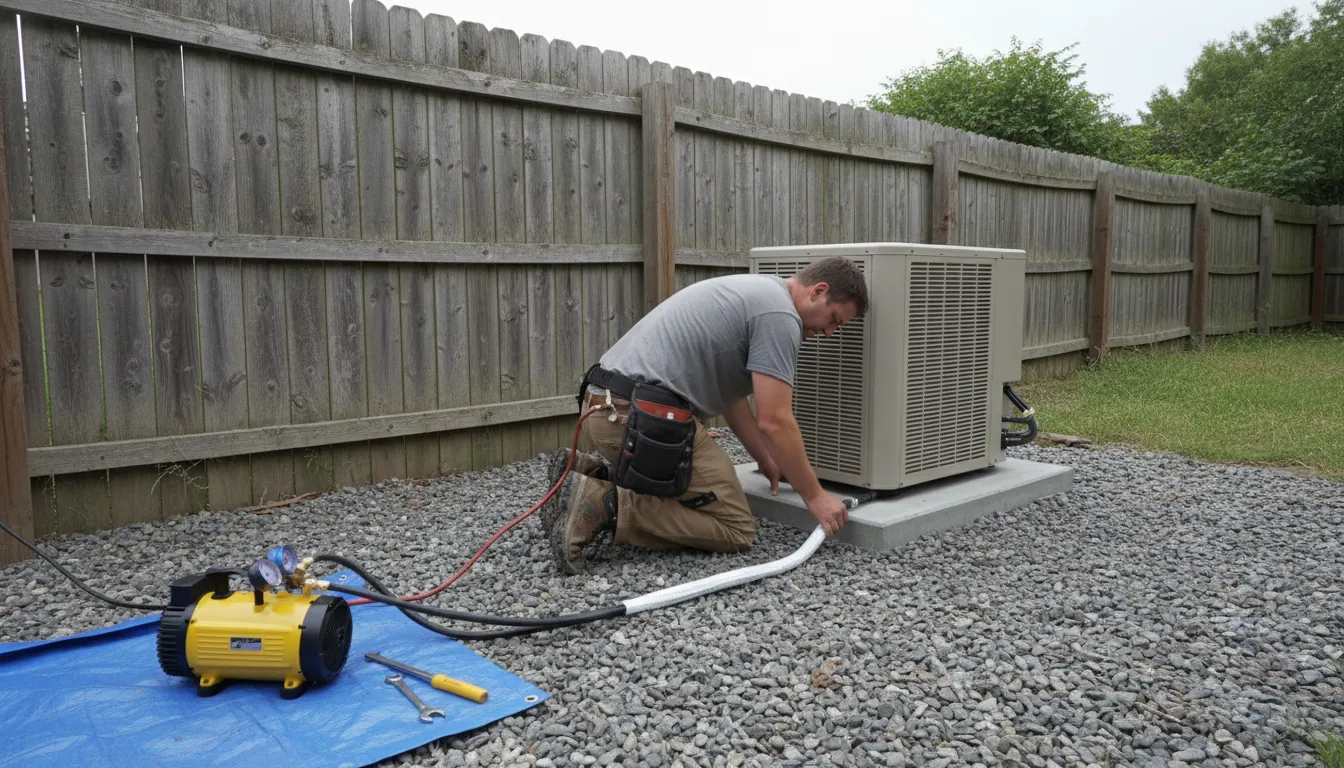
- System Evacuation and Charging: This is a critical step. The refrigerant lines are pressurized with nitrogen to check for leaks, then a deep vacuum is pulled to remove all moisture and air from the system before the precise amount of refrigerant is charged.
- Testing and Commissioning: The system is powered on and tested in both heating and cooling modes. The technician will ensure all functions work correctly, check for proper condensate drainage, and explain the remote control or thermostat operation to the homeowner10 11.
Frequently asked questions
Sources
Footnotes
-
Ductless Mini-Split Services in Anchorage - https://www.discountmechanical.net/ductless-mini-split/ ↩
-
Best Mini Split AC Installation Location - Carrier - https://www.carrier.com/residential/en/us/products/ductless-mini-splits/install-ductless-ac/best-mini-split-placement/ ↩
-
How Much Does it Cost to Install a Ductless Mini Split? | AL - https://southeasterncooling.com/how-much-does-it-cost-to-install-a-ductless-mini-split/ ↩
-
Is a Ductless Mini-Split Installation a DIY Project A Complete Guide - https://www.heating-ac.com/blog/is-a-ductless-mini-split-installation-a-diy-project-a-complete-guide ↩
-
How Much Does a Mini Split Installation Cost? (2026) - HomeGuide - https://homeguide.com/costs/ductless-mini-split-ac-cost ↩
-
Ductless Mini Split Installation Costs in 2026 - Carrier - https://www.carrier.com/residential/en/us/products/ductless-mini-splits/ductless-mini-split-installation-cost/ ↩
-
How Much Does a Mini-Split Cost in 2025? - EnergySage - https://www.energysage.com/heat-pumps/how-much-does-a-mini-split-cost/ ↩
-
Ductless Mini-Split Installation Cost in 2025: Full Breakdown - https://osborneheatingncooling.com/ductless-mini-split-installation-cost/ ↩
-
Cost to install split system air conditioner in Anchorage, AK - https://www.handoff.ai/construction-costs/install-split-system-air-conditioner/anchorage-ak ↩
-
Ductless Mini Split Setup: An Ultimate Guide - Airflow Heating & Air - https://www.goairflow.com/blog/ductless-mini-split-installation/ ↩
-
Ductless mini-split installation: Cool 2025 Guide - Southern Air - https://www.southern-air.com/blog/ductless-mini-split-installation ↩