Find the Best Indoor Air Quality Service Providers for Your Business
No obligation • Fast responses • Nationwide coverage

Why you can trust HVAC Firms
HVAC Firms is a leading United States resource for evaluating HVAC service providers. Our team researches companies, checks credentials, and reviews customer feedback to present clear, unbiased information. Listings and rankings are based on merit, and companies cannot pay to change our editorial content.
Search providers near you
Top Indoor Air Quality Service Providers in Vineland, New Jersey Ranked
The air you breathe inside your home or workplace in Vineland has a direct impact on your health, comfort, and productivity. Indoor Air Quality (IAQ) refers to the condition of the air within and around buildings, particularly as it relates to the health and well-being of occupants. In Vineland, local environmental factors and common building pollutants make proactive IAQ management essential. This guide explains the unique air quality challenges in the area and outlines practical strategies for testing and improving your indoor environment, helping you connect with qualified local professionals who can assess and address your specific needs.
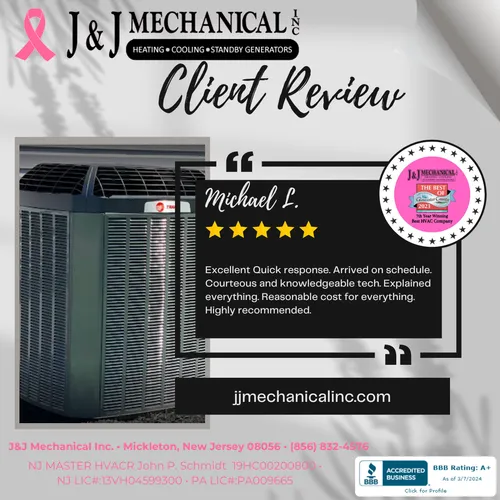
J&J Mechanical Inc.
200 Grove Rd, Paulsboro, NJ 08066
J&J Mechanical Inc. is a family-owned HVAC and generator service provider serving Philadelphia, PA, and the surrounding South Jersey and Southeastern Pennsylvania areas. They offer a wide range of services including air conditioning and heating installation, repair, maintenance, and indoor air quality solutions. Their N.A.T.E certified technicians provide reliable system tune-ups and emergency repairs, along with energy-efficient and environmentally friendly options such as high-efficiency HVAC systems and backup generators. With over two decades of experience, J&J Mechanical Inc. is committed to transparent pricing and community involvement.
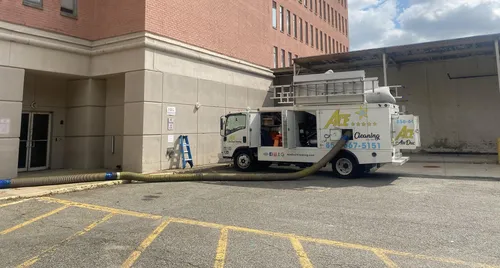
Ace Duct Cleaning Inc
423 Commerce Ln UNIT 1, West Berlin, NJ 08091
Ace Duct Cleaning Inc is a family-owned company serving Philadelphia, PA, and nearby areas with air duct cleaning and indoor air quality services. Since 1992, they have provided thorough cleaning of HVAC systems using advanced power vacuum trucks and NADCA Certified technicians. Their services cover residential, commercial, and industrial properties, focusing on removing dust, allergens, mold, and other contaminants to improve air quality and HVAC efficiency. The company offers 24/7 availability, including emergency services, to support heating and air needs at any time.
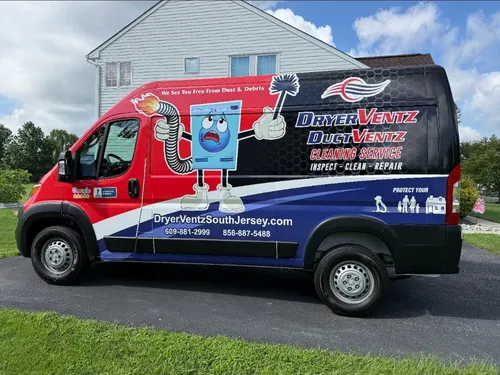
DryerVentz Duct and Dryer Cleaning Service of South Jersey
836 Middlesborough Way, Mickleton, NJ 08056
DryerVentz Duct and Dryer Cleaning Service of South Jersey provides duct cleaning and indoor air quality services in Philadelphia, PA. The company specializes in dryer vent and air duct maintenance to help prevent issues such as poor indoor air quality, house fires, and carbon monoxide leaks. Their technicians follow manufacturer and US Fire Administration maintenance recommendations and use certified original parts. Owner-managed with same-day service availability, DryerVentz aims to ensure safe and efficient home ventilation systems.

Harris Plumbing, Heating, Air & Electrical
38 Cooper St #204, Woodbury, NJ 08096
Harris Plumbing, Heating, Air & Electrical serves Philadelphia, PA, and the surrounding counties with a wide range of home services. They specialize in HVAC installation and repair, including air conditioning, furnaces, heat pumps, and mini-splits, as well as duct cleaning and indoor air quality services. Their capabilities include trenchless sewer line repairs and sewer camera inspections to diagnose pipe issues without extensive digging. Established in 1986, Harris offers comprehensive plumbing, heating, air, and electrical solutions across New Jersey, Delaware, and Pennsylvania.

Atmostemp Service Experts
215 Old Egg Harbor Rd Ste B, West Berlin, NJ 08091
Atmostemp Service Experts is a home services company based near Philadelphia, PA, specializing in HVAC repair, installation, and maintenance. They offer services including air conditioning, furnace, and heat pump repair and installation, as well as duct cleaning and indoor air quality solutions. Serving Philadelphia and a wide range of communities in New Jersey, Atmostemp has been locally managed since 1978, combining local expertise with national brand support. Their team is licensed, bonded, and ACE-certified, providing 24/7 availability for emergency repairs and routine maintenance. One notable capability is their comprehensive HVAC system installations and tune-ups, ensuring systems operate safely and efficiently.
Understanding Vineland's Indoor Air Quality Landscape
Vineland's indoor air is influenced by a combination of South Jersey's regional climate and common sources of pollution found in homes and commercial buildings. Research indicates Vineland experiences a moderate risk of poor air quality days, often exceeding 63% of other New Jersey cities for certain pollutants 1 2 3. This external air can infiltrate buildings, but often the most significant threats originate indoors. Common local concerns include biological contaminants like mold, invisible gases like radon and volatile organic compounds (VOCs), and combustion byproducts from household appliances 1 4 5.
Common Pollutants in Vineland Homes and Businesses
Being aware of the specific contaminants prevalent in the region is the first step toward cleaner air.
- Mold and Excess Humidity: South Jersey's humid climate creates ideal conditions for mold growth, especially in areas with poor air circulation like basements, bathrooms, and crawl spaces. Controlling indoor humidity is a critical defense.
- Radon Gas: This naturally occurring radioactive gas results from the decay of uranium in soil and rock. It can seep into buildings through cracks in foundations and is a serious health risk. Radon testing is highly recommended for all Vineland properties.
- Volatile Organic Compounds (VOCs): These are emitted as gases from a wide array of everyday products, including paints, varnishes, cleaning supplies, adhesives, and even new furniture and building materials. Indoor levels can be consistently higher than outdoors 6.
- Combustion Pollutants: Sources like gas stoves, fireplaces, wood stoves, furnaces, and water heaters can produce carbon monoxide (CO), nitrogen dioxide (NO2), and particulate matter if not properly vented.
- Particulate Matter (PM2.5/PM10): These tiny particles can come from outdoor sources like vehicle emissions or indoor activities like cooking, burning candles, or dust. They are small enough to inhale deeply into the lungs.
- Vapor Intrusion: In areas near historical industrial sites, chemicals from contaminated groundwater can volatilize and migrate into buildings through foundation slabs, affecting indoor air.
How to Assess Your Indoor Air
Before implementing solutions, it's wise to understand the specific pollutants and their concentrations in your space. This can be done through a combination of self-monitoring and professional assessment.
Professional Indoor Air Quality Testing
Hiring a certified professional provides the most comprehensive analysis. These experts conduct detailed surveys, which may include visual inspections, air sampling, and surface testing. They can accurately identify issues like hidden mold, elevated radon, asbestos, or off-gassing from materials.
- What It Involves: A professional assessment typically tests for a suite of pollutants based on your concerns, such as mold spores, radon levels, VOC concentrations, formaldehyde, carbon monoxide, and humidity.
- Typical Cost: In New Jersey, a comprehensive professional indoor air quality assessment averages around $437, with a typical range of $292 to $584 depending on the size of the property and number of pollutants tested 7. Specific tests for a single pollutant like radon or mold may start lower.
DIY Monitoring and Devices
For ongoing awareness, several effective consumer-grade monitors are available. These devices provide real-time data on key parameters, helping you track trends and identify potential problems.
- Popular Options: Devices like the Airthings View Plus (approx. $300-$330) or the IQAir AirVisual Pro (approx. $330) can monitor a range of factors including particulate matter (PM2.5), carbon dioxide (CO2), VOCs, radon, temperature, and humidity 8 9.
- Best Use: These are excellent for continuous monitoring and validating the effectiveness of improvements, but they are not a substitute for a certified professional diagnosis when a serious issue is suspected.
Find the perfect indoor air quality service providers for your needs
Get personalized recommendations and expert advice
Strategies for Improving Indoor Air in Vineland
Improving your building's air quality revolves around three core principles: removing sources of pollution, diluting polluted air with fresh air, and cleaning the air that remains 10 11.
1. Source Control
The most effective way to improve IAQ is to eliminate or reduce the emissions from individual sources.
- Address Moisture: Fix leaks promptly, use dehumidifiers in damp areas like basements, and ensure proper ventilation in kitchens and bathrooms to combat mold growth.
- Choose Low-VOC Products: Select paints, cleaners, adhesives, and building materials labeled as low-VOC or zero-VOC.
- Maintain Combustion Appliances: Have furnaces, water heaters, and chimneys inspected and serviced annually to prevent carbon monoxide leaks. Ensure gas stoves are used with exhaust hoods vented to the outside.
- Seal Entry Points: For pollutants like radon or vapor intrusion, professional sealing of foundation cracks and installation of specialized mitigation systems (e.g., sub-slab depressurization for radon) is necessary 12.
2. Ventilation Improvement
Increasing the amount of outdoor air coming indoors helps dilute and remove airborne contaminants.
- Natural Ventilation: Open windows and doors when weather and outdoor air quality permit.
- Mechanical Ventilation: Use bathroom and kitchen exhaust fans that vent outdoors. For whole-home solutions, consider installing an Energy Recovery Ventilator (ERV) or Heat Recovery Ventilator (HRV), which exchange stale indoor air for fresh outdoor air while conserving energy. Installation for these systems typically ranges from $3,000 to $5,000+ 13.
- HVAC Maintenance: Ensure your central HVAC system is properly maintained. Have air ducts inspected and cleaned if necessary, a service that typically costs between $300 and $1,000 in New Jersey depending on home size 14.
3. Air Cleaning and Filtration
After source control and ventilation, air cleaners can capture pollutants that remain circulating.
- Upgrade HVAC Filters: Use high-efficiency particulate air (HEPA) filters or high-MERV-rated filters in your forced-air system, changing them regularly.
- Use Portable Air Purifiers: Select HEPA air purifiers appropriate for the room size, especially for bedrooms or common areas. Some models also include activated carbon filters to help with gases and odors.
- Consider Professional Remediation: For confirmed issues like widespread mold, professional remediation is crucial. In New Jersey, mold remediation costs average around $2,500, with a range of $500 to $6,000 based on the extent of the problem 15. Radon mitigation system installation generally costs between $700 and $1,200+ 16.
Commercial and School IAQ Considerations
Businesses, schools, and public buildings in Vineland have additional responsibilities. The New Jersey Public Employees Occupational Safety and Health (PEOSH) program has standards for indoor air quality in public sector workplaces, which many private institutions use as a guideline 17 18. Regular monitoring, proper HVAC maintenance, and prompt response to occupant complaints are essential for compliance and occupant health.
Frequently asked questions
Sources
Footnotes
-
https://www.lung.org/media/press-releases/state-of-the-air-new-jersey ↩
-
https://nmtracking.doh.nm.gov/environment/air/IndoorQuality.html ↩
-
https://www.angi.com/articles/how-much-does-indoor-air-quality-testing-cost.htm ↩
-
https://www.google.com/search?q=product&prds=pvt:hg,productid:12731750861393503074,catalogid:16835460390359639346,gpcid:10152811169155146236,mid:576462399365726378&ibp=oshop ↩
-
https://www.google.com/search?q=product&prds=pvt:hg,productid:6072329373947128373,catalogid:7712427545849036561,gpcid:4854218481369443652,mid:576462731890981916&ibp=oshop ↩
-
https://stradaservices.com/about-us/blog/how-to-improve-indoor-air-quality/ ↩
-
https://airquip.com/three-basic-strategies-to-improve-indoor-air-quality/ ↩
-
https://dep.nj.gov/srp/guidance/vapor-intrusion/indoor-air/ ↩
-
https://www.callmattioni.com/blog/t-indoor-air-quality-systems-cost/ ↩
-
https://jdfamilyventcleaning.com/air-vent-cleaning-cost-nj/ ↩
-
https://www.puroclean.com/ridgewood-nj/blog/how-much-does-mold-remediation-cost-in-nj/ ↩
-
https://www.airpf.com/how-much-does-a-home-indoor-air-quality-testing-cost/ ↩
-
https://www.nj.gov/health/workplacehealthandsafety/peosh/peosh-health-standards/iaq.shtml ↩
-
https://esmcorp.com/indoor-air-quality-testing-in-schools-in-new-jersey/ ↩