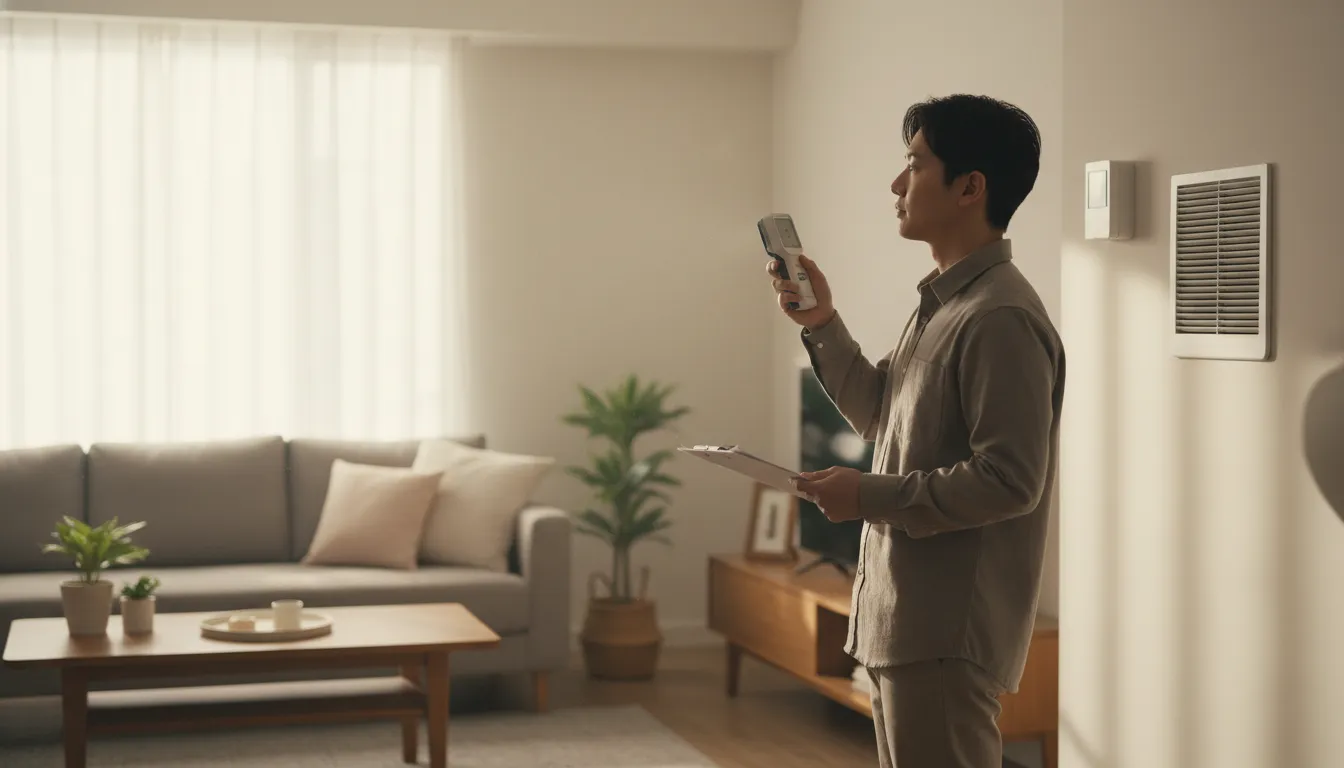
Find the Best Indoor Air Quality Service Providers for Your Business
No obligation • Fast responses • Nationwide coverage

Why you can trust HVAC Firms
HVAC Firms is a leading United States resource for evaluating HVAC service providers. Our team researches companies, checks credentials, and reviews customer feedback to present clear, unbiased information. Listings and rankings are based on merit, and companies cannot pay to change our editorial content.
Search providers near you
Top Indoor Air Quality Service Providers in Hoboken, New Jersey Ranked
The air you breathe inside your home or office has a direct impact on your health, comfort, and productivity. In a dense, historic city like Hoboken, managing indoor air quality (IAQ) is a critical concern due to factors like older building construction, coastal humidity, and urban pollutants. This guide explains the common indoor air contaminants found locally, details the professional assessment process, and outlines potential solutions. You can use this information to identify issues and connect with qualified specialists who can test your environment and recommend effective improvements.
Cool Clean Services
97 Gilmore Blvd, Floral Park, NY 11001
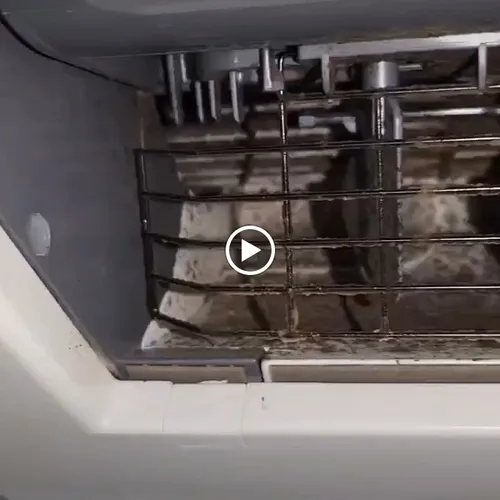
Cool Clean Services is a veteran-owned company based in New York, NY, specializing in ductless mini split cleaning and indoor air quality services. They focus on thorough cleaning and maintenance of ductless mini-split systems for both residential and commercial properties, using EPA-certified products and custom tools designed for this specific work. Their services help remove dust, allergens, odors, and mold to improve air quality and system efficiency. In addition to mini split cleaning, they offer dryer vent cleaning, air duct cleaning, and sanitizing services to support overall indoor air quality. Cool Clean Services is licensed, insured, and BBB A+ rated, serving the New York area with flexible scheduling options.
J R Air Duct Cleaning
215 Gates Rd # D, Little Ferry, NJ 07643
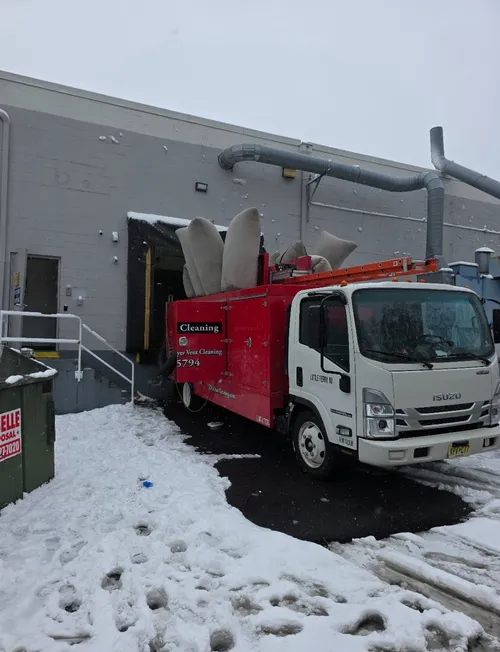
J R Air Duct Cleaning is a duct cleaning company serving New York, NY, and nearby North Jersey areas. Since 2011, they have provided residential and commercial air duct, dryer vent, and mini split air conditioner cleaning services. Their work includes thorough cleaning of HVAC system components such as air filters, coils, and registers to improve indoor air quality and system efficiency. They also offer dryer vent repairs and install bird guards to prevent blockages. Additionally, they provide UV light purifier installation to reduce airborne pollutants, benefiting those with allergies or asthma.
All Seasons Air Duct Cleaning
232 Fulton Terrace, Cliffside Park, NJ 07010
All Seasons Air Duct Cleaning is a NADCA certified company specializing in air duct and dryer vent cleaning. Based near New York, NY, they serve New Jersey areas including Hudson, Bergen, and Essex counties. Their services focus on improving indoor air quality, reducing fire risks, and enhancing HVAC efficiency through professional duct and vent cleaning. With over 20 years of experience, this family-owned business follows industry standards to ensure thorough and reliable service.
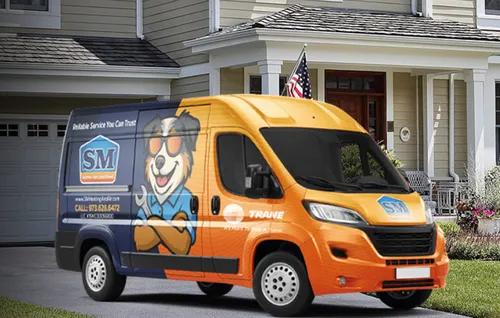
SM Heating and Air Conditioning Inc.
94 Wanaque Ave #1, Pompton Lakes, NJ 07442
SM Heating and Air Conditioning Inc. offers heating and air conditioning services in New York, NY, and the surrounding New Jersey areas including Pequannock and Morris County. The company provides a range of HVAC services such as air conditioner and furnace repair, installation, maintenance, and indoor air quality solutions. With over 25 years of experience, they handle everything from preventive maintenance to full system replacements and offer same-day service to address urgent needs promptly.
Aeromark Mechanical Inc
153 Morgan St, Jersey City, NJ 07302
Aeromark Mechanical Inc provides residential and commercial HVAC services in New York, NY, and the surrounding Northern New Jersey area. They specialize in heating and air conditioning repair, installation, and maintenance, including heat pumps, ductless HVAC systems, and indoor air quality solutions. With over 15 years of experience, Aeromark Mechanical offers seasonal maintenance plans and has expertise in installing advanced systems like VRF and high-velocity HVAC. Their certified technicians also handle smart thermostat installations and duct repair services.
Understanding Hoboken's Indoor Air Challenges
Hoboken's unique urban and coastal environment creates a specific set of challenges for maintaining healthy indoor air. The high concentration of older buildings, combined with New Jersey's humidity and the city's density, means residents and business owners often face a complex mix of pollutants.
Moisture and Mold: A Persistent Problem
Due to New Jersey's coastal climate, frequent rain, and the prevalence of structures with basements or crawlspaces, moisture accumulation is a primary driver of poor air quality. This damp environment is ideal for mold growth, which can occur in bathrooms, basements, around windows, and within wall cavities. Mold releases spores and microbial volatile organic compounds (mVOCs) into the air, which can trigger allergic reactions, asthma attacks, and other respiratory issues 1.
Volatile Organic Compounds (VOCs) from Urban Living
Hoboken's vibrant urban life means homes and offices are frequently updated and furnished. Paints, adhesives, new furniture, flooring, and common cleaning products can off-gas VOCs like formaldehyde and benzene. These chemicals can cause short-term symptoms like headaches and eye irritation, and some are linked to long-term health effects. Renovations in older buildings can particularly stir up and release these compounds.
Combustion Gases and Carbon Monoxide
Many Hoboken buildings use gas appliances for cooking, heating, and hot water. Furnaces, water heaters, stoves, and fireplaces can produce dangerous combustion byproducts, including carbon monoxide (CO) and nitrogen dioxide (NO₂). These colorless, odorless gases are especially concerning during colder months when windows are sealed tight, posing serious health risks if appliances are not properly vented or maintained.
Allergens and Particulate Matter
Common allergens like dust mites, pet dander, and cockroach debris are present in many indoor environments. Additionally, outdoor pollutants such as pollen, diesel exhaust from traffic, and smoke from regional wildfires can easily infiltrate indoor spaces. This particulate matter (PM2.5) can penetrate deep into the lungs, aggravating allergies, asthma, and cardiovascular conditions.
Radon: A Silent Threat
New Jersey has areas with elevated radon potential, and Hoboken is no exception. Radon is a naturally occurring radioactive gas that seeps from the soil into buildings through cracks in foundations and basement floors. It is the second leading cause of lung cancer and requires specific testing to detect, as it is undetectable by human senses.
The Ventilation Dilemma in Older Buildings
To conserve energy, many of Hoboken's older buildings have been sealed up or rely on outdated HVAC systems that do not provide adequate fresh air exchange. This can lead to a buildup of carbon dioxide (CO₂) from occupants and a concentration of all the pollutants mentioned above, resulting in stagnant, unhealthy air often associated with "sick building syndrome" 2 3.
The Professional Indoor Air Quality Assessment Process
When air quality concerns arise, a professional evaluation is the most reliable way to identify specific problems and their sources. Certified environmental specialists or HVAC professionals with IAQ expertise follow a systematic process.
Initial Consultation and Site Inspection: The process begins with a discussion of your concerns, such as persistent odors, health symptoms among occupants, or visible mold. The specialist then conducts a thorough visual inspection of the property, looking for signs of water damage, mold growth, improper ventilation, and potential pollutant sources like stored chemicals or aging appliances.
Air and Surface Sampling: Using specialized equipment, technicians collect air samples to measure the concentration of mold spores, pollen, dust, and other particulates. They may also use canisters or sensors to capture and measure levels of specific VOCs or gases like formaldehyde and carbon monoxide. Surface samples from suspected mold growth may be taken for laboratory identification 4.
Measuring Environmental Parameters: Beyond specific contaminants, professionals measure key indicators of air health. This includes temperature, relative humidity (a critical factor for mold growth), and levels of carbon dioxide (CO₂). High CO₂ levels are a direct indicator of insufficient ventilation and can cause drowsiness and poor concentration 5.
Laboratory Analysis and Detailed Reporting: Collected samples are sent to an accredited laboratory for analysis. The specialist then compiles all findings-from visual observations, real-time measurements, and lab results-into a comprehensive report. This document outlines the identified issues, their likely sources, and, most importantly, provides a clear set of recommendations for mitigation or remediation 6 7.
Find the perfect indoor air quality service providers for your needs
Get personalized recommendations and expert advice
Solutions for Healthier Indoor Air in Hoboken
Once an assessment pinpoints the issues, there are several effective strategies to improve your indoor environment. The right solution depends on the specific contaminants and the design of your building.
Source Control: The most effective way to improve air quality is to remove or reduce the source of pollution. This can include fixing water leaks immediately, choosing low-VOC paints and building materials, ensuring gas appliances are properly vented and maintained, and using exhaust fans in kitchens and bathrooms 8.
Ventilation Improvements: Bringing in fresh, filtered outdoor air is crucial. For many Hoboken homes, this means upgrading beyond simply opening windows. Installing a balanced whole-home ventilation system, such as an Energy Recovery Ventilator (ERV) or Heat Recovery Ventilator (HRV), can continuously exchange stale indoor air for fresh outdoor air while conserving energy by transferring heat and moisture. Professional installation of such a system can be a significant investment but provides a foundational improvement.
Air Cleaning and Purification: Air purifiers can remove particles and gases that ventilation alone cannot. Options range from portable HEPA filter units for single rooms to whole-house air purification systems integrated directly into your existing HVAC ductwork. These systems can include advanced filtration, UV-C lights to neutralize biological contaminants, and technologies like bipolar ionization or photocatalytic oxidation to reduce VOCs and odors.
Moisture and Humidity Management: Controlling humidity is key to preventing mold. For chronic dampness, especially in basements, a whole-home dehumidifier integrated with your HVAC system may be recommended. These systems are more effective and efficient than portable units for maintaining an ideal humidity level (between 30-50%) throughout an entire residence 9.
HVAC Maintenance and Duct Cleaning: Your heating and cooling system is the lungs of your home. Regular maintenance, including changing filters, and occasional professional duct cleaning can prevent the circulation of accumulated dust, debris, and microbial growth throughout your living spaces 10.
Understanding the Investment in Clean Air
Improving indoor air quality is an investment in health and comfort. Costs vary widely based on the scope of the problem and the solutions chosen.
- Professional IAQ Testing: A basic assessment in Hoboken generally starts around $550, with prices typically ranging from $250 to $1,000+ depending on the number of samples and pollutants analyzed. A comprehensive investigation for a multi-unit building or a detailed toxin screen can cost $1,200 or more 11 12.
- Whole-Home Ventilation Systems: Installing a system like an ERV to provide continuous fresh air is a larger project, with costs often around $5,000 or more, depending on the home's size and complexity 13.
- Whole-Home Dehumidifiers: To systematically combat mold-causing moisture, a professionally installed whole-home dehumidifier unit typically costs between $3,000 and $4,300 14.
- Air Purification: Integrated whole-house air cleaners can range from a few hundred dollars for advanced filtration media to several thousand for systems with UV and gas-phase filtration capabilities.
For specific pricing and to find a qualified provider, Hoboken residents and businesses can consult with local environmental testing firms and HVAC specialists who offer indoor air quality services 15 16.
Frequently asked questions
Sources
Footnotes
-
7 Reasons Why Clean Indoor Air Should Be a Public Health ... - https://theridgewoodblog.net/7-reasons-why-clean-indoor-air-should-be-a-public-health-priority-in-new-jersey/ ↩
-
airquality - https://www.hcdnnj.org/airquality ↩
-
New Jersey Indoor Air Quality (IAQ) Surveys in High-Rise ... - https://www.atlenv.com/new-jersey-indoor-air-quality-iaq-surveys-in-high-rise-commercial-residential-buildings ↩
-
Indoor Air Quality Testing & VOC Monitoring in NJ - https://esmcorp.com/indoor-air-quality-testing-services/ ↩
-
Indoor Air Quality Investigations - ABS Environmental Group - https://www.absenvironmentalgroupllc.com/indoor-air-quality-investigations ↩
-
What Is An Indoor Air Quality Assessment In New Jersey? - https://cleanairtechnologiesnj.com/what-is-indoor-air-quality-assessment/ ↩
-
Residential Indoor Air Quality Testing & Mold Sampling, Inspection, ... - https://esmcorp.com/residential-indoor-air-quality/ ↩
-
Common Indoor Air Contaminants in New Jersey Homes and ... - https://www.getmapleair.com/blog-post/common-indoor-air-contaminants-in-new-jersey-homes ↩
-
Improve Indoor Air Quality NJ - NJR Home Services - https://www.njrhomeservices.com/indoor-air-quality/ ↩
-
Indoor Air Quality Services Hoboken, NJ - Aeromark Mechanical Inc - https://aeromarknj.com/about-us/service-area/hoboken-nj/indoor-air-quality-services-hoboken-nj/ ↩
-
How Much Does Professional Home Indoor Air Quality Testing Cost? - https://www.airpf.com/how-much-does-a-home-indoor-air-quality-testing-cost/ ↩
-
How Much Does Indoor Air Quality Testing Cost in NJ? (2026) - https://cleanairtechnologiesnj.com/how-much-does-indoor-air-quality-testing-cost/ ↩
-
How Much Do Indoor Air Quality Systems Cost? - https://www.callmattioni.com/blog/t-indoor-air-quality-systems-cost/ ↩
-
New Jersey Indoor Air Quality Testing Services - https://paulsakson.com/indoor-air-quality-testing/ ↩
-
THE BEST 10 Indoor Air Quality Testing in Hoboken, NJ - Yelp - https://m.yelp.com/search?find_desc=Indoor+Air+Quality+Testing&find_loc=Hoboken%2C+NJ ↩
-
HUDSON COUNTY 2022 Hoboken City - NJ.gov - https://www.nj.gov/health/hcpnj/documents/county-reports/HCPNJ_fullreports/HUDSON_HOBOKEN%20CITY.pdf ↩