Find the Best Indoor Air Quality Service Providers for Your Business
No obligation • Fast responses • Nationwide coverage

Why you can trust HVAC Firms
HVAC Firms is a leading United States resource for evaluating HVAC service providers. Our team researches companies, checks credentials, and reviews customer feedback to present clear, unbiased information. Listings and rankings are based on merit, and companies cannot pay to change our editorial content.
Search providers near you
Top Indoor Air Quality Service Providers in Eden Prairie, Minnesota Ranked
The air inside your home or business in Eden Prairie directly impacts your health, comfort, and well-being. Indoor air quality (IAQ) services focus on identifying and mitigating pollutants, allergens, and imbalances in your indoor environment. This is especially critical in Minnesota, where energy-efficient, tightly sealed homes can trap contaminants and where seasonal extremes bring unique challenges like radon, humidity, and wildfire smoke. This guide will help you understand local air quality concerns and connect with professionals who can provide testing, monitoring, and solutions tailored to the Eden Prairie climate.

HepaVac Duct Cleaning
1708 Fillmore St NE, Minneapolis, MN 55413
HepaVac Duct Cleaning is a duct cleaning and indoor air quality service provider based in Minneapolis, MN. They specialize in thorough cleaning of HVAC systems, including ducts, trunks, air handlers, and furnaces, using powerful truck-mounted equipment and HEPA air scrubbers to improve air quality during the cleaning process. HepaVac serves both residential and commercial clients with a focus on detailed, no-compromise cleaning. Their team is experienced and equipped to handle projects of various sizes with precision. The company emphasizes transparent pricing and a commitment to clean air, having been recognized by local readers for their service.
Hurlburt Heating & Plumbing
1000 County Rd E Suite 115, Shoreview, MN 55126
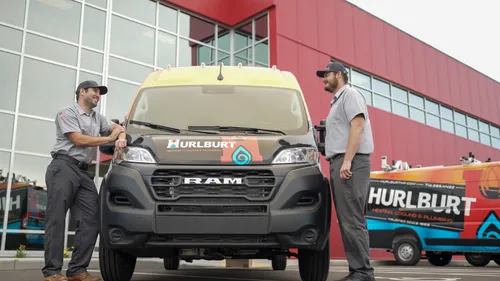
Hurlburt Heating & Plumbing is a family-owned home services provider serving Minneapolis, MN, and surrounding areas. Since 1959, they have offered a wide range of services including HVAC installation and repair, plumbing, and electrical work. Their HVAC services cover air conditioner and furnace repair, heat pump and mini split installation, indoor air quality solutions, and HVAC tune-ups. Hurlburt also provides whole-home air scrubbers, purifiers, humidifiers, and dehumidifiers to improve indoor air quality. With over six decades of experience, they combine modern technology with personalized service to address customer needs.
Mountain Duct Cleaning
Minneapolis, MN
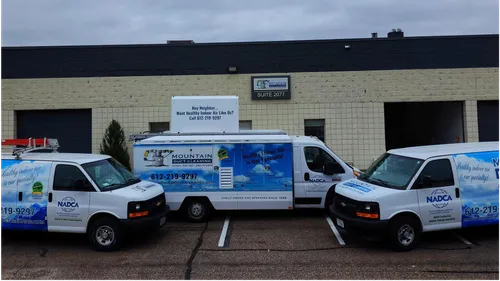
Mountain Duct Cleaning is a specialized duct cleaning company based in Minneapolis, MN, focusing exclusively on air duct and dryer vent cleaning along with indoor air quality solutions. Serving the Minneapolis St. Paul Twin Cities area, the company offers residential and commercial services including air handler cleaning, airflow diagnostics, and air purification products. With expertise in HVAC cleaning and restoration, Mountain Duct Cleaning uses advanced equipment to remove contaminants and improve air quality. Established in early 1998 as a second-generation family business, the company follows NADCA standards and employs full-time trained technicians, ensuring consistent quality and professionalism.

Nice Heating & Air
24 Onville Rd suite 101-9, Stafford, VA 22556
Nice Heating & Air is an HVAC company serving Minneapolis, MN, specializing in air conditioning, heating, and indoor air quality services. They provide installation, repair, and maintenance for systems including ductless mini splits, heat pumps, furnaces, and water heaters. The company has many years of experience and focuses on delivering high-quality products and services with a commitment to customer satisfaction. Their capabilities include HVAC tune-ups and indoor air quality improvements such as air purifier installation and ventilation services.
Furnace Doctors
102 County Rd C West, Little Canada, MN 55117
Furnace Doctors is an HVAC company based in Minneapolis, MN, offering a range of heating and cooling services. Their expertise includes furnace repair and replacement, air conditioner repair and installation, ductless system installation, and indoor air quality solutions such as air filtration and humidity control systems. The company emphasizes maximizing HVAC system performance and has installers with over 25 years of experience. Furnace Doctors also provides annual maintenance plans to help keep systems running efficiently.
Why Eden Prairie Homes Face Unique Air Quality Challenges
Modern building practices in the Twin Cities metro prioritize energy efficiency, creating homes that are exceptionally airtight. While this saves on heating and cooling costs, it also means that pollutants generated indoors have no natural escape route, leading to concentrated exposure. This is compounded by Minnesota's distinct seasons, each presenting its own set of indoor environmental hazards. From the dry, static-filled winters to the humid, mold-prone summers, and the increasing threat of seasonal wildfire smoke, Eden Prairie residents must be proactive about the air they breathe indoors 1 2.
Common Pollutants in Local Homes and Buildings
Understanding what's in your air is the first step toward improving it. Common contaminants in Eden Prairie include:
- Radon: This odorless, radioactive gas seeps from the soil and is the leading environmental cause of lung cancer in Minnesota. Testing is essential for every home.
- Biological Contaminants: High humidity and moisture, particularly in basements, create ideal conditions for mold, mildew, and dust mites.
- Volatile Organic Compounds (VOCs): These gases are emitted from common household sources like cleaning products, air fresheners, paints, new furniture, and building materials such as formaldehyde-laden pressed wood 3.
- Particulate Matter (PM2.5): Fine particles from cooking, candles, fireplaces, and most notably, outdoor wildfire smoke that infiltrates indoors. During smoke events, indoor air can become two to five times more polluted than outdoor air.
- Combustion Byproducts: These can come from gas stoves, furnaces, water heaters, and vehicles idling in attached garages.
Professional Assessment and Testing Strategies
You can't manage what you don't measure. A professional indoor air quality assessment provides a clear picture of your home's specific issues.
What a Professional Inspection Involves: Local IAQ experts conduct comprehensive on-site evaluations. This can include measuring radon levels over 48 hours, checking for visible mold and moisture, assessing ventilation rates, and using specialized equipment to detect levels of particulates, VOCs, carbon dioxide, and humidity 4 5. For example, a thorough air quality consultation in the area may start around $600 4.
Key Tests for Eden Prairie Homes:
- Radon Testing: Strongly recommended by the Minnesota Department of Health. Both short-term and long-term test kits are available, but professional testing ensures accurate results and proper placement.
- Mold Inspection: If you see visible growth or smell a musty odor, a professional can identify the mold type and moisture source, which is crucial for effective remediation.
- Continuous Monitoring: Many homeowners now use smart air quality monitors (like PurpleAir sensors) to track PM2.5, VOCs, and humidity in real-time, providing valuable data between professional visits 6.
Effective Solutions for Cleaner Indoor Air
Once pollutants are identified, a combination of strategies is typically employed to create a healthier environment. The most effective approach follows a hierarchy: control the source, then ventilate, and finally, filter the remaining air.
1. Source Control: Eliminate Pollutants at the Origin
This is the most cost-effective strategy. Actions include:
- Using natural cleaning products and storing chemicals in sealed containers or detached sheds.
- Prohibiting smoking indoors.
- Ensuring gas appliances are properly vented and maintained.
- Using a dehumidifier in damp basements to keep humidity between 30% and 50% and prevent mold growth.
- Sealing cracks in foundation floors and walls to reduce radon entry 7.
2. Ventilation: Dilute Stale Air with Fresh Air
Modern, tight homes require mechanical assistance to bring in fresh air without wasting energy.
- Energy/Heat Recovery Ventilators (ERVs/HRVs): These systems are highly recommended for Minnesota climates. They exhaust stale, polluted indoor air while bringing in fresh outdoor air, transferring heat (and in the case of ERVs, moisture) between the two streams to maintain comfort and efficiency. Installation for a whole-home system typically ranges from $1,500 to $3,000+ 8 9.
- Spot Ventilation: Always use exhaust fans in bathrooms and kitchens during and after use.
3. Filtration and Purification: Capture Remaining Contaminants
When source control and ventilation aren't enough, filtration is key.
- HVAC Filter Upgrades: The simplest step is upgrading the filter in your furnace and air conditioner. Aim for a Minimum Efficiency Reporting Value (MERV) of 8 to 13 for optimal particle capture without overly restricting airflow 10.
- Whole-Home Air Purifiers: These units are installed directly into your home's ductwork, providing silent, whole-house cleaning. They often use a combination of high-efficiency particulate air (HEPA) filters and ultraviolet (UV) light to neutralize biological contaminants. Installed costs generally range from $500 to over $2,500 depending on the technology and system size 11.
- Standalone Air Cleaners: Effective for single rooms, especially bedrooms or home offices.
Find the perfect indoor air quality service providers for your needs
Get personalized recommendations and expert advice
Addressing Specific Local Concerns
Radon Mitigation in Eden Prairie
Given the high prevalence of radon in Minnesota, mitigation is a common and vital service. If testing reveals elevated levels (4 pCi/L or higher), a professional will typically install a radon mitigation system. This involves piping and a fan to actively draw radon gas from beneath the home's foundation and vent it safely above the roofline. These systems are highly effective and installation costs in the area often fall between $1,000 and $2,000 12.
Managing Humidity and Preventing Mold
Minnesota's summer humidity can quickly lead to condensation and mold. Solutions include:
- Properly sizing and using air conditioners, which dehumidify as they cool.
- Installing a standalone dehumidifier, particularly for finished basements.
- Ensuring your home's gutters and downspouts direct water away from the foundation.
- Repairing plumbing leaks promptly.
- For existing mold, professional remediation is necessary to safely remove the growth and address the underlying moisture problem 13 14.
Protecting Against Wildfire Smoke and Particulates
With wildfire seasons becoming more impactful, having a plan for clean indoor air is crucial.
- Keep windows and doors closed during smoke events.
- Run your HVAC fan continuously with a high-MERV filter (MERV 13 or higher) to capture fine particles.
- Use a portable air cleaner with a HEPA filter in the room where you spend the most time.
- Consider upgrading to a whole-home air purifier with a high-capacity filter designed for smoke.
The Role of Duct Cleaning
While not a cure-all for air quality, duct cleaning can be beneficial if there is substantial visible mold growth in the ducts, vermin infestation, or excessive dust and debris being released from supply registers. For a standard residential system, professional duct cleaning services in Eden Prairie can range from $300 to over $1,000 15. It should be viewed as part of a comprehensive system maintenance plan, not a standalone solution.
Maintaining Your Indoor Environment
Good indoor air quality is an ongoing process. Regular maintenance habits ensure your systems work effectively:
- Change HVAC filters every 1-3 months, or as recommended.
- Have your heating and cooling system professionally serviced annually.
- Clean humidifier plates and ERV/HRV cores according to manufacturer instructions.
- Test for radon at least every two years, or after any major renovation.
For personalized guidance, the Minnesota Department of Health Indoor Air Program is an excellent resource for residents 16. For testing, system design, and installation, consulting with a licensed local HVAC professional who specializes in indoor environmental quality is the best path forward.
Frequently asked questions
Sources
Footnotes
-
Air Pollution in Minnesota - Fresh Energy - https://fresh-energy.org/air-pollution-minnesota ↩
-
Air quality and health | Minnesota Pollution Control Agency - https://www.pca.state.mn.us/air-water-land-climate/air-quality-and-health ↩
-
Indoor air pollutants pose health risks - The Minnesota Daily - https://mndaily.com/uncategorized/indoor-air-pollutants-pose-health-risks/02/24/1998/ ↩
-
Green Home Solutions of The Twin Cities (MN) - https://www.google.com/viewer/place?mid=/g/11hzhf71nf ↩ ↩2
-
Indoor Air Quality Services in Eden Prairie | BWS HVAC - https://bwsheatingandair.com/indoor-air-quality/ ↩
-
Air Quality - MN Dept. of Health - https://www.health.state.mn.us/communities/environment/air/index.html ↩
-
Indoor Air Quality - NM-Tracking - https://nmtracking.doh.nm.gov/environment/air/IndoorQuality.html ↩
-
ENVIROWORLD USA - https://www.google.com/viewer/place?mid=/g/11j5vpj3f0 ↩
-
The Path to Better Indoor Air Quality-- Improved Monitoring for CO2 Ventilation and More - https://ohsonline.com/articles/2021/10/01/the-path-to-better-indoor-air-quality.aspx ↩
-
State of Minnesota Guidelines for Managing Indoor Air Quality - https://mn.gov/admin/assets/Minnesota_Guide_for_Managing_Indoor_Air_Quality_tcm36-207630.pdf ↩
-
Cleaner Air Solutions - https://www.google.com/viewer/place?mid=/g/11b8z1hj7h ↩
-
Indoor Air Quality Services Chanhassen MN - https://www.peakheatingandcooling.com/indoor-air-quality ↩
-
Testing For Mold - MN Dept. of Health - https://www.health.state.mn.us/communities/environment/air/mold/moldtest.html ↩
-
Mold Inspection & Testing Eden Prairie Minnesota - https://moldinspectionandtest.com/eden-prairie-mn ↩
-
Eden Prairie, MN I Indoor Air Quality Pros - https://call4heatcool.com/indoor-air-quality/eden-prairie-mn/ ↩
-
Air Quality Contacts - MN Dept. of Health - https://www.health.state.mn.us/communities/environment/air/contact.htm ↩