Find the Best Indoor Air Quality Service Providers for Your Business
No obligation • Fast responses • Nationwide coverage

Why you can trust HVAC Firms
HVAC Firms is a leading United States resource for evaluating HVAC service providers. Our team researches companies, checks credentials, and reviews customer feedback to present clear, unbiased information. Listings and rankings are based on merit, and companies cannot pay to change our editorial content.
Search providers near you
Best Indoor Air Quality Service Providers in Minnesota Ranked
Maintaining healthy indoor air is a critical concern for Minnesota homeowners and businesses, especially given the state's long, cold winters. The focus on energy efficiency has led to tighter building envelopes, which can inadvertently trap pollutants and moisture indoors. This makes understanding and managing your indoor environment essential for comfort, health, and the longevity of your property. This guide explains the unique challenges and solutions for air quality in Minnesota, helping you identify common pollutants, understand state-specific ventilation requirements, and learn what steps to take to find qualified local professionals for assessment and improvement.

HepaVac Duct Cleaning
1708 Fillmore St NE, Minneapolis, MN 55413
HepaVac Duct Cleaning is a duct cleaning and indoor air quality service provider based in Minneapolis, MN. They specialize in thorough cleaning of HVAC systems, including ducts, trunks, air handlers, and furnaces, using powerful truck-mounted equipment and HEPA air scrubbers to improve air quality during the cleaning process. HepaVac serves both residential and commercial clients with a focus on detailed, no-compromise cleaning. Their team is experienced and equipped to handle projects of various sizes with precision. The company emphasizes transparent pricing and a commitment to clean air, having been recognized by local readers for their service.
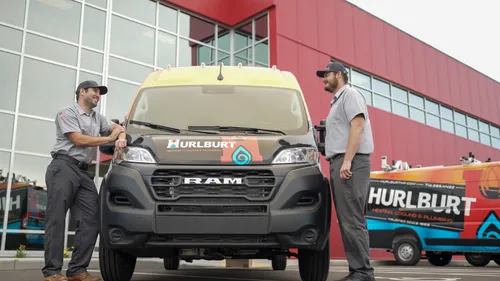
Hurlburt Heating & Plumbing
1000 County Rd E Suite 115, Shoreview, MN 55126
Hurlburt Heating & Plumbing is a family-owned home services provider serving Minneapolis, MN, and surrounding areas. Since 1959, they have offered a wide range of services including HVAC installation and repair, plumbing, and electrical work. Their HVAC services cover air conditioner and furnace repair, heat pump and mini split installation, indoor air quality solutions, and HVAC tune-ups. Hurlburt also provides whole-home air scrubbers, purifiers, humidifiers, and dehumidifiers to improve indoor air quality. With over six decades of experience, they combine modern technology with personalized service to address customer needs.
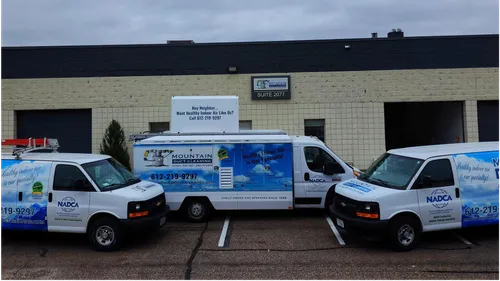
Mountain Duct Cleaning
Minneapolis, MN
Mountain Duct Cleaning is a specialized duct cleaning company based in Minneapolis, MN, focusing exclusively on air duct and dryer vent cleaning along with indoor air quality solutions. Serving the Minneapolis St. Paul Twin Cities area, the company offers residential and commercial services including air handler cleaning, airflow diagnostics, and air purification products. With expertise in HVAC cleaning and restoration, Mountain Duct Cleaning uses advanced equipment to remove contaminants and improve air quality. Established in early 1998 as a second-generation family business, the company follows NADCA standards and employs full-time trained technicians, ensuring consistent quality and professionalism.

Nice Heating & Air
24 Onville Rd suite 101-9, Stafford, VA 22556
Nice Heating & Air is an HVAC company serving Minneapolis, MN, specializing in air conditioning, heating, and indoor air quality services. They provide installation, repair, and maintenance for systems including ductless mini splits, heat pumps, furnaces, and water heaters. The company has many years of experience and focuses on delivering high-quality products and services with a commitment to customer satisfaction. Their capabilities include HVAC tune-ups and indoor air quality improvements such as air purifier installation and ventilation services.
Furnace Doctors
102 County Rd C West, Little Canada, MN 55117
Furnace Doctors is an HVAC company based in Minneapolis, MN, offering a range of heating and cooling services. Their expertise includes furnace repair and replacement, air conditioner repair and installation, ductless system installation, and indoor air quality solutions such as air filtration and humidity control systems. The company emphasizes maximizing HVAC system performance and has installers with over 25 years of experience. Furnace Doctors also provides annual maintenance plans to help keep systems running efficiently.
Why Minnesota Homes Face Unique Air Quality Challenges
Minnesota's climate and building practices create a specific set of conditions that impact the air you breathe indoors. The primary driver is the need for energy efficiency during harsh winters. To reduce heating costs, modern homes and many retrofitted older homes are built "tight" to prevent warm air from escaping 1. While this saves energy, it also significantly reduces the natural exchange of indoor and outdoor air. Without deliberate, controlled ventilation, pollutants from everyday activities-cooking, cleaning, and simply living-can accumulate to unhealthy levels. This phenomenon is often referred to as "tight building syndrome".
The state's guidelines emphasize the principle of building "tight" but then ventilating "right" to ensure a supply of fresh air. Furthermore, Minnesota's geology contributes to a high risk of radon gas infiltration, a serious health hazard. Combined with extended periods spent indoors during winter, these factors make proactive indoor air quality management not just a matter of comfort, but of public health.
Common Indoor Air Pollutants in Minnesota
Knowing what you're up against is the first step toward cleaner air. The main culprits affecting Minnesota homes include:
- Radon: This odorless, radioactive gas is a leading environmental cause of lung cancer nationwide and is particularly prevalent in Minnesota due to the state's geology. Testing for radon should be a top priority for every homeowner.
- Combustion Gases: Appliances like gas stoves, furnaces, water heaters, and wood-burning fireplaces can emit carbon monoxide, nitrogen oxides, and formaldehyde 2. In an overly tight home, exhaust fans can sometimes pull these dangerous gases back into the living space, a process known as backdrafting.
- Biological Contaminants: Mold, mildew, pet dander, dust mites, and pollen thrive in environments with excess moisture. Minnesota's humidity in summer and condensation issues in winter can promote mold growth, which can trigger allergies and asthma.
- Volatile Organic Compounds (VOCs): These are gases emitted from a wide array of household products, including paints, varnishes, cleaning supplies, air fresheners, and even some building materials and furnishings.
- Particulate Matter: Fine particles from dust, smoke (from fireplaces or candles), and outdoor pollution that seeps indoors can irritate the lungs and exacerbate respiratory conditions 3 4.
Minnesota's Ventilation Standards and Solutions
To combat the challenges of tight construction, Minnesota has implemented specific ventilation requirements, particularly for new homes built under the state's energy code.
The "Built Tight, Ventilate Right" Model The goal for a healthy home is to achieve approximately 0.35 air changes per hour (ACH). For continuous ventilation, this often translates to a system providing a base rate of 15 cubic feet per minute (cfm) per bedroom, plus an additional 15 cfm.
Balanced Mechanical Ventilation The 2015 Minnesota Residential Energy Code and beyond typically require new homes to have a balanced, mechanical ventilation system 5. The gold standard for this is a Heat Recovery Ventilator (HRV) or Energy Recovery Ventilator (ERV). These systems use a core to transfer heat (and in the case of ERVs, moisture) between the outgoing stale air and the incoming fresh air. This provides continuous ventilation without the massive energy penalty of bringing in freezing winter air directly 5.
Point Source Exhaust Code also mandates that moisture-generating areas like bathrooms and kitchens be vented directly to the outdoors via exhaust fans. These should be used during activities like showering or cooking and for 15-20 minutes afterward to effectively remove humidity and pollutants at the source.
Makeup Air for High-Power Exhaust A critical consideration in tight Minnesota homes is makeup air. When a powerful kitchen range hood (over 250 cfm) or multiple exhaust fans run, they can depressurize the home. This can lead to backdrafting of combustion appliances 6 7. Solutions include dedicated makeup air systems or HRVs/ERVs designed to handle the imbalance, ensuring safety and effectiveness.
Find the perfect indoor air quality service providers for your needs
Get personalized recommendations and expert advice
Assessment and Improvement Costs
Understanding potential costs can help you budget for air quality services. Prices vary based on home size, the scope of testing, and the complexity of solutions required.
- Basic Indoor Air Quality Assessment: A professional evaluation of your home's ventilation, humidity, and pollutant sources typically ranges from $292 to $585, averaging around $438 8 9.
- Targeted Testing:
- Radon Testing: Professional-grade testing can cost between $150 and $800.
- Mold/Moisture Inspection: A specialized inspection to identify mold growth and moisture sources may range from $300 to $1,000.
- VOC/Formaldehyde Testing: Specific testing for chemical pollutants generally costs $200 to $400.
- Improvement & Remediation:
- Radon Mitigation System: Installing a system to vent radon gas from beneath your home typically costs $800 to $1,300 in Minnesota.
- Mold Remediation: The cost to safely remove mold depends on the extent of the problem, often ranging from $1,200 to $3,800 10.
- HRV/ERV Installation: Installing a balanced ventilation system is a significant investment that varies widely with your home's layout and existing ductwork, but it is often considered essential for retrofitting older, tight Minnesota homes.
Practical Steps for Healthier Indoor Air
You can take several proactive measures to improve your home's environment:
- Test for Radon First: Given the high risk in Minnesota, start with a certified radon test. It's a simple, potentially life-saving step.
- Prioritize Balanced Ventilation: If your home feels stuffy or has condensation issues, consider evaluating your ventilation. An HRV or ERV is often more effective and energy-efficient than exhaust-only fans.
- Control Moisture: Use exhaust fans diligently, fix leaks promptly, and use a dehumidifier in the summer to keep indoor relative humidity between the recommended 30% and 50% to inhibit mold growth 11 12.
- Practice Source Control: Reduce the use of aerosol sprays, scented candles, and harsh chemical cleaners. Opt for low-VOC paints and materials when renovating.
- Maintain Your HVAC System: Change furnace and air conditioner filters regularly (every 1-3 months). Have your ductwork inspected for leaks or debris that can circulate pollutants 13.
Frequently asked questions
Sources
Footnotes
-
The Basics of Winter Indoor Air Quality | Blaine, MN - https://arcticmn.com/the-basics-of-winter-indoor-air-quality/ ↩
-
Understand the impacts of gas stoves in your Minnesota home - https://sahanjournal.com/climate-environment/minnesota-gas-stove-health-risk-solutions/ ↩
-
Air quality and health | Minnesota Pollution Control Agency - https://www.pca.state.mn.us/air-water-land-climate/air-quality-and-health ↩
-
Air Pollution in Minnesota - Fresh Energy - https://fresh-energy.org/air-pollution-minnesota ↩
-
Residential Mechanical Ventilation - The Minnesota Solution - https://epsalesinc.com/residential-mechanical-ventilation-minnesota-solution/ ↩ ↩2
-
Point Source Ventilation | MN.gov - https://mn.gov/commerce-stat/pdfs/point-source-ventilation.pdf ↩
-
IndoorVent 7-05 - https://rscpa.coop/sites/default/files/documents/indoor_ventilation.pdf ↩
-
Save On Indoor Air Quality Service In Monticello, MN - https://www.djcares.com/hvac-services/indoor-air-quality-assessment/ ↩
-
How Much Does Indoor Air Quality Testing Cost? [2026 Data] - https://www.angi.com/articles/how-much-does-indoor-air-quality-testing-cost.htm ↩
-
Environmental Testing - Healthy House on the Block - https://healthyhouseontheblock.com/home-testing/ ↩
-
Indoor Ventilation - https://rscpa.coop/sites/default/files/documents/indoor_ventilation.pdf ↩
-
State of Minnesota Guidelines for Managing Indoor Air Quality - https://mn.gov/admin/assets/Minnesota_Guide_for_Managing_Indoor_Air_Quality_tcm36-207630.pdf ↩
-
Ventilation and Filtration - MN Dept. of Health - https://www.health.state.mn.us/communities/environment/air/toxins/ventilation.html ↩