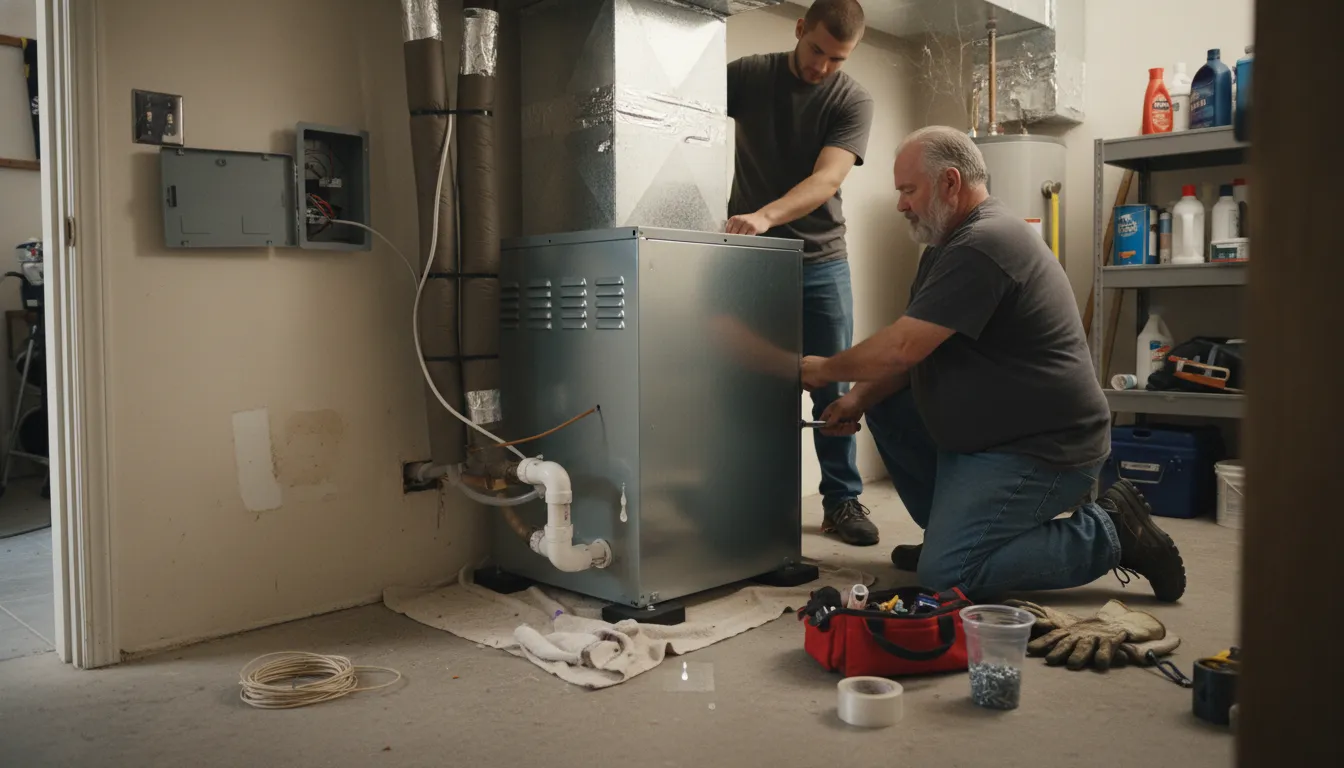
Find the Best HVAC Installers for Your Business
No obligation • Fast responses • Nationwide coverage

Why you can trust HVAC Firms
HVAC Firms is a leading United States resource for evaluating HVAC service providers. Our team researches companies, checks credentials, and reviews customer feedback to present clear, unbiased information. Listings and rankings are based on merit, and companies cannot pay to change our editorial content.
Search providers near you
Top HVAC Installers in Kenosha, Wisconsin Ranked
Installing a new heating and cooling system is a significant home improvement that directly impacts your comfort, energy bills, and indoor air quality. Whether you're replacing a failing unit, upgrading for efficiency, or installing a system in a new home, the process involves careful planning and professional expertise. This guide explains the types of systems available in Kenosha, details the installation process, and provides key information on timelines and costs to help you make an informed decision when selecting a local provider.
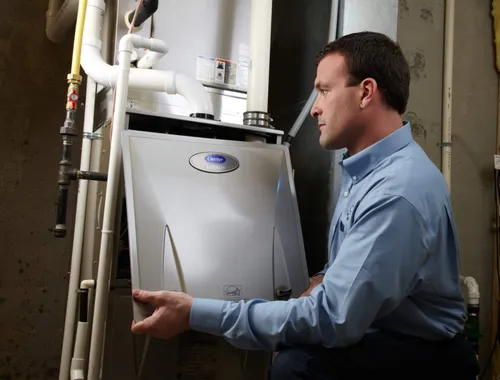
Allied Air Conditioning & Heating Corp.
203 Peterson Rd, Libertyville, IL 60048
Allied Air Conditioning & Heating Corp. is a heating and cooling company serving Chicago, IL, and the surrounding Northwest Chicagoland area. With over 55 years of experience, they provide HVAC installation, repair, and maintenance services, including air conditioning, furnace, indoor air quality, and pool dehumidifier systems. Allied is an authorized Carrier dealer and offers 24/7 emergency service to address heating and cooling issues promptly. Their NATE-certified technicians focus on delivering reliable home comfort solutions and advanced HVAC products.
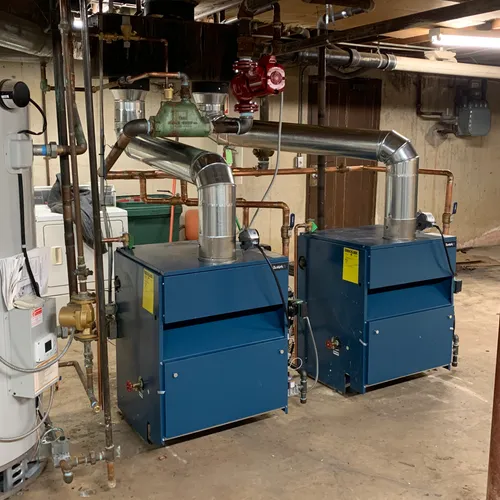
Drew Green Heating & Cooling
28835 N Herky Dr STE 113, Lake Bluff, IL 60044
Drew Green Heating & Cooling is a heating and air conditioning service provider based in Chicago, IL, serving Northern Illinois and Southern Wisconsin. The company offers a range of services including HVAC installation, repair, tune-ups, indoor air quality solutions, and emergency 24/7 HVAC service. Founded in 2009 by Andrew Green, who brings extensive hands-on experience and professional certification, the company specializes in maintaining and installing heating and cooling systems with a focus on customer satisfaction and affordable pricing.
1st Choice Heating & Cooling
S82W19246 Apollo Dr Unit B, Muskego, WI 53150
1st Choice Heating & Cooling offers heating, air conditioning, and indoor air quality services in Milwaukee, WI, and the surrounding Waukesha County area. The company provides a range of HVAC services including AC and furnace repair, installation, and tune-ups. They are equipped to handle urgent repairs with 24-hour availability, ensuring systems are restored quickly. Their team is licensed and insured, serving residential customers with straightforward pricing and free estimates on system replacements.

Air Solutions
215 E State Rd Unit D, Island Lake, IL 60042
Air Solutions is a full-service HVAC company serving Chicago, IL, and surrounding communities since 2012. They provide a wide range of heating and cooling services including installation, repair, replacement, and maintenance for air conditioners, furnaces, heat pumps, and HVAC systems. The company also specializes in indoor air quality solutions with advanced air purification and humidification systems. Their team uses professional diagnostic equipment and industry-grade tools to handle both residential and commercial HVAC needs.
A-1 Milwaukee Heating and Cooling
3206 9th Ave, South Milwaukee, WI 53172
A-1 Milwaukee Heating and Cooling provides heating and cooling services in Milwaukee, WI, serving both residential and commercial clients. They offer installation, repair, and maintenance for HVAC systems including air conditioners, furnaces, and heat pumps. The company emphasizes energy-efficient HVAC solutions and provides full consultations to help customers select systems tailored to their needs. Their skilled technicians use high-quality parts and equipment, and all services come with a warranty for added assurance.
Types of Heating and Cooling Systems for Kenosha Homes
Choosing the right equipment is the first step toward year-round comfort. The climate in Kenosha demands a system capable of handling cold winters and warm, humid summers. Here are the primary options available for residential HVAC installation.
Furnaces and Central Air Conditioners This is the most common traditional setup. A furnace (powered by natural gas, propane, or oil) provides heat through existing ductwork, while a separate central air conditioner handles cooling. This split-system approach is reliable and well-understood by most technicians. When installing, it's crucial that both units are properly matched for capacity and efficiency.
Heat Pumps Heat pumps are an increasingly popular and efficient choice because they provide both heating and cooling in one unit. They work by transferring heat rather than generating it, making them highly efficient. In Kenosha's climate, an air-source heat pump can effectively handle moderate temperatures, and many systems are paired with a furnace (creating a dual-fuel system) to provide supplemental heat during the coldest days. This can offer significant energy savings.
Ductless Mini-Split Systems For homes without existing ductwork, room additions, or for creating independent temperature zones, ductless mini-splits are an excellent solution. These systems consist of an outdoor compressor unit connected to one or more indoor air handlers mounted on walls or ceilings. They offer flexible heating and air conditioning installation for specific areas and are known for their high efficiency and quiet operation.
Air Quality and Accessories Modern HVAC installation often includes integrating components that improve indoor air quality. These add-ons can be installed alongside your new furnace or air handler and include whole-home humidifiers, dehumidifiers, advanced media air filters, and UV-C light systems designed to neutralize airborne pathogens 1. Discussing these options with your installer can enhance your home's comfort and health.
Find the perfect hvac installers for your needs
Get personalized recommendations and expert advice
The Professional Installation Process: What to Expect
A proper HVAC replacement or new installation is a multi-step project that should only be handled by licensed professionals. A correct install is vital for safety, efficiency, and the longevity of your equipment.
1. Initial Assessment and System Design This critical first phase involves a technician visiting your home to perform a load calculation (Manual J). This determines the precise heating and cooling capacity your home needs-an oversized or undersized system will lead to comfort issues and higher costs 2. The professional will also assess your existing ductwork, electrical service, and discuss your efficiency goals and budget to recommend the best system type and size.
2. Preparation and Permitting Once you approve the quote, the contractor will handle pulling any necessary local permits for the work, which is a sign of a reputable company. They will also schedule the installation date and ensure the correct equipment and materials are ordered and ready.
3. Removal of Old Equipment and Ductwork Evaluation On installation day, the crew will safely disconnect and remove your old furnace, air conditioner, or heat pump. They will also conduct a thorough inspection of your existing ductwork for leaks, damage, or insufficient sizing that could hinder the new system's performance. Necessary duct sealing, repairs, or modifications are often part of this phase.
4. Installation of New System Components This is the core physical work. It includes:
- Setting the new outdoor condenser and/or indoor air handler or furnace.
- Making all electrical connections to code.
- Installing new refrigerant lines for ACs and heat pumps (or reusing approved lines).
- Connecting gas lines for furnaces.
- Integrating thermostats and control systems.
- Completing any ductwork modifications.
5. System Startup, Testing, and Balancing After everything is physically installed, the technician will start the system, charge it with refrigerant to the manufacturer's exact specifications, and test all operations. They will check for proper airflow at all vents, ensure the heat exchanger and burners are operating safely, and verify the cooling cycle. A final walkthrough with the homeowner ensures you understand how to operate your new system and thermostat.
Timeline for HVAC System Installation
How long the project takes depends heavily on the scope and complexity of the job.
- Straightforward Replacement: Swapping out an existing furnace and air conditioner with a new, similarly sized unit where no ductwork changes are needed can often be completed in 4 to 8 hours or within a single day 3.
- Standard Full System Installation: A typical full HVAC installation, which may include some duct modifications, upgrading electrical service, or installing a more complex system like a heat pump, generally takes 1 to 2 full days.
- Complex Installations: Projects that involve installing entirely new ductwork throughout a home, converting from one fuel type to another, or installing a geothermal system are major undertakings that can take several days to over a week to complete 4.
Understanding Costs and Available Incentives
The cost of a new heating and cooling system is an investment, but understanding the factors at play and available financial incentives can make high-efficiency models more accessible.
Average Cost Range Nationally, the average cost to replace a full HVAC system is around $7,500, but the final price in Kenosha can vary widely from approximately $5,000 to over $20,000+. This range is influenced by:
- Equipment Type and Efficiency: High-efficiency models (with higher SEER ratings for cooling and AFUE ratings for heating) cost more upfront but save on utility bills.
- System Brand: Premium brands often command higher prices.
- Labor and Complexity: The cost of permits, any necessary electrical upgrades, and extensive ductwork modifications add to the total.
- Home Size and Layout: Larger homes require larger, more expensive equipment 5.
Financial Incentives and Rebates Significant incentives are available to offset the cost of high-efficiency HVAC installation:
- Federal Tax Credits: The Energy Efficient Home Improvement Credit allows you to claim 30% of the project cost (up to a $2,000 annual limit) for qualifying heat pumps, central air conditioners, and furnaces 6.
- Utility Rebates: Local utility companies, like We Energies, frequently offer rebates for installing ENERGY STAR® certified high-efficiency heating and cooling equipment. Your installer should be familiar with these programs.
- Manufacturer Rebates: Equipment manufacturers often provide seasonal promotions or instant rebates on specific models.
Getting a Quote To get an accurate price for your specific home, contact local, licensed HVAC companies such as Kenosha Heating & Cooling, Capital HVAC, or Peters Heating & Cooling LLC for a detailed, in-home assessment and written quote 7 8 9. A reputable contractor will provide a breakdown of equipment, labor, and will inform you of any applicable rebates.
Frequently asked questions
Sources
Footnotes
-
Heating and Air Conditioning Installation in Kenosha, WI at The Home Depot - https://www.homedepot.com/services/l/wi/kenosha/heating-air-conditioning-installation/c16fbb4b7 ↩
-
Step-by-Step HVAC Installation Guide - Carrier - https://www.carrier.com/residential/en/us/products/air-conditioners/hvac-installation/ ↩
-
How Long Does AC Installation Take? Your Expert Guide - https://bobsrepair.com/how-long-it-takes-to-install-new-ac-unit/ ↩
-
How Long Does It Take To Replace Your HVAC System? - https://downeyplumbing.com/blog/how-long-does-it-take-to-replace-your-hvac-system/ ↩
-
HVAC Installation Costs: AC, Heat Pump, & Furnace - https://www.thisoldhouse.com/heating-cooling/hvac-installation-cost ↩
-
How Much Does HVAC Replacement Cost? [2026 Data] | Angi - https://www.angi.com/articles/insider-s-price-guide-new-heating-and-cooling-system.htm ↩
-
Kenosha, WI Heating & Air Conditioning 24/7 | Capital HVAC - https://www.capitalhvac.com/service-areas/kenosha-wi/ ↩
-
AC Installation Kenosha WI | Peters Heating & Cooling LLC - https://www.petersheatingllc.com/ac-installation ↩
-
Residential HVAC Installation | Kenosha Heating & Cooling - https://www.kenoshaheatingandcooling.com/hvacrepair/new-home-hvac-installation ↩