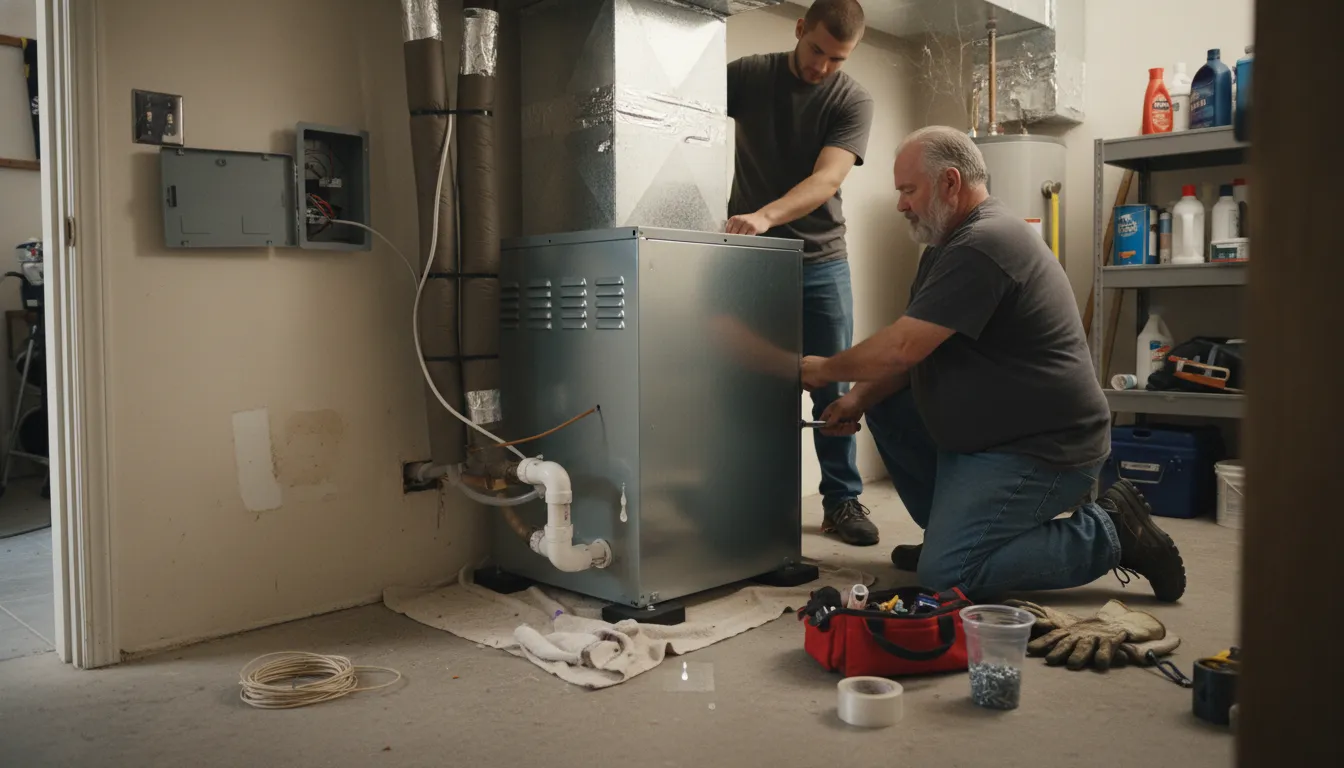
Find the Best HVAC Installers for Your Business
No obligation • Fast responses • Nationwide coverage

Why you can trust HVAC Firms
HVAC Firms is a leading United States resource for evaluating HVAC service providers. Our team researches companies, checks credentials, and reviews customer feedback to present clear, unbiased information. Listings and rankings are based on merit, and companies cannot pay to change our editorial content.
Search providers near you
Top HVAC Installers in Sparks, Nevada Ranked
Getting a new heating and cooling system installed is a significant investment in your home's comfort, efficiency, and value. In Sparks, where temperatures can swing from chilly winters to hot, dry summers, a properly sized and installed HVAC system is essential for year-round indoor climate control. This guide will help you understand the process, your equipment options, and how to navigate finding a qualified local professional to handle your project.
Mountain West Heating and Air Conditioning LLC
3265 Eastlake Blvd, New Washoe City, NV 89704
Mountain West Heating and Air Conditioning LLC provides heating, air conditioning, and HVAC services in Reno, NV. They offer installation, repair, and maintenance for furnaces, heat pumps, and air conditioning systems, along with backup generator installations and various electrical services. Their certified technicians handle energy-efficient upgrades, emergency repairs, and preventative maintenance to ensure reliable home comfort. The company also installs and maintains backup generators powered by oil, propane, or natural gas, supporting power reliability during outages.
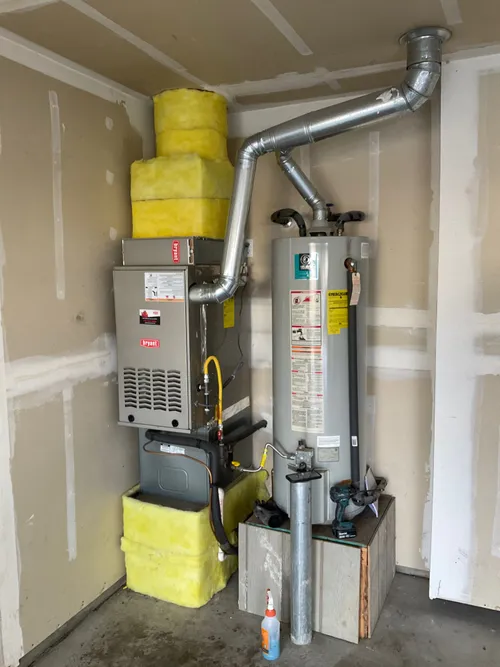
Red Bear Mechanical
4010 Technology Way Unit F, Carson City, NV 89706
Red Bear Mechanical is a certified HVAC and plumbing service provider based in Reno, NV. They offer a range of services including air conditioning and furnace repair, installation, and maintenance. Their team includes NATE-certified technicians and licensed plumbers who handle everything from emergency repairs to full system installations. Red Bear Mechanical is a Bryant Factory Authorized Dealer, ensuring professional HVAC installation and tune-up services that follow manufacturer best practices. They provide after-hours service to address urgent heating and cooling issues promptly.
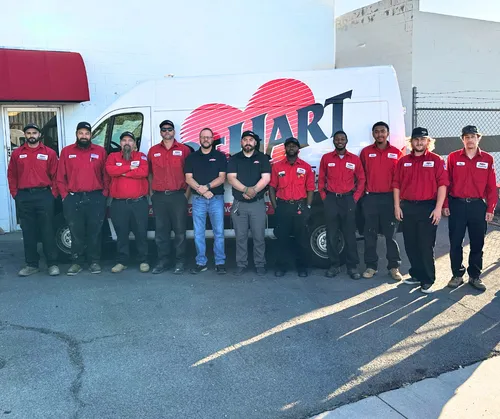
DeHart Plumbing, Heating, and Air Inc.
1842 Hymer Ave, Sparks, NV 89431
DeHart Plumbing, Heating, and Air Inc. is an HVAC and plumbing contractor serving Reno, NV, as well as the Central Valley and Modesto, CA. They offer a range of services including air conditioning, furnace, heat pump, and boiler repair and installation, along with HVAC tune-up services. Established in 1946, DeHart has a long history of providing heating and cooling solutions with NATE-certified technicians and offers an industry-leading 10-year parts and labor warranty. Their Love Club maintenance program includes biannual HVAC tune-ups and plumbing inspections, supporting ongoing home comfort and efficiency.
Anderson Heating & A/C
2578 S Curry St #8, Carson City, NV 89703
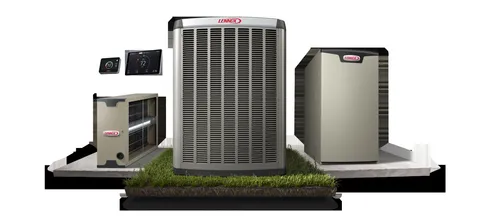
Anderson Heating & A/C is an HVAC company serving Reno, NV, and surrounding areas. They provide a range of services including air conditioning and furnace repair, installation, maintenance, duct cleaning, indoor air quality solutions, and thermostat installation. The company is a longtime Lennox partner and offers expertise with Lennox heating and cooling products. Established in 1984, Anderson Heating & A/C has decades of experience in HVAC services. They also provide 24/7 emergency support for urgent heating and cooling needs.
Elite Air Systems
5460 US-50 Suite A, Carson City, NV 89701
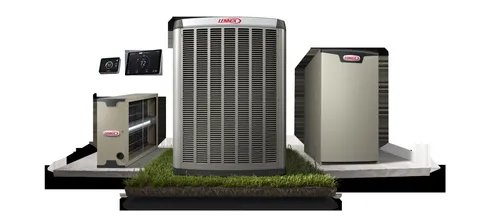
Elite Air Systems is an HVAC company serving Reno, NV, and surrounding areas including Carson City, Minden, and Sparks. Since 2007, they have provided installation, repair, and replacement services for heating, air conditioning, and furnace systems. Their team works with all major brands and offers professional assessments to determine whether repair or replacement is the best option. Elite Air Systems focuses on delivering precise and careful service while maintaining affordable pricing.
Understanding Your HVAC System Options
When it's time for a new system, you have several primary choices. The right one depends on your home's existing infrastructure, your comfort goals, and your budget.
Furnace & Central Air Conditioner Split System This is the most common setup for homes with existing ductwork that need both heating and cooling. The system consists of an indoor furnace (typically gas or electric) and an outdoor air conditioning condenser. Modern systems offer significant upgrades in efficiency and comfort control. You can choose from single-stage (basic on/off), two-stage (which operates at a lower capacity most of the time for better efficiency and more consistent comfort 1), or variable-speed systems (which offer the highest efficiency and finest temperature and humidity control).
Air-Source Heat Pumps A heat pump is an increasingly popular choice for Sparks homes. It functions as both an air conditioner and a heater, moving heat from one place to another. In summer, it extracts heat from inside your home and releases it outdoors. In winter, it reverses the process, pulling heat from the outside air (even in cold weather) and moving it indoors. Modern models are highly efficient in Northern Nevada's climate and are often paired with an electric backup heating system for the coldest days. This dual functionality makes them a streamlined and energy-conscious choice.
Ductless Mini-Split Systems If your home lacks ductwork or you want to add comfort to a specific area like an addition or garage, ductless mini-splits are an excellent solution. These systems consist of an outdoor compressor unit connected to one or more indoor air-handling units mounted on walls or ceilings. They offer high efficiency and the benefit of "zone" control, allowing you to heat or cool individual rooms independently. While the upfront cost per zone can be higher, they avoid the energy losses associated with ductwork and provide flexible installation options 2 3.
The HVAC Installation Process: A Step-by-Step Overview
A professional HVAC replacement or installation is a detailed process that ensures your system operates safely, efficiently, and reliably for years to come. A typical high-quality installation follows a multi-step framework.
1. Initial Consultation and System Sizing This critical first step is not about picking a unit off a shelf. A qualified contractor will perform a thorough assessment of your home, including its square footage, insulation, window quality, and orientation. They should perform a Manual J load calculation, which is the industry standard for determining the precise heating and cooling capacity your home needs. An oversized or undersized system will lead to comfort problems, short cycling, and higher energy bills.
2. Securing Permits Most municipalities, including Sparks, require permits for HVAC system replacements. Your contractor should handle pulling the necessary permits from the local building department. This ensures the installation will be inspected to meet current building and safety codes, protecting your investment.
3. Removal of Old Equipment The old furnace, air conditioner, or heat pump is carefully disconnected, with refrigerant properly recovered according to EPA regulations. The equipment is then removed from your home and disposed of or recycled responsibly.
4. Installation of New Equipment This is the core phase. The new indoor unit (furnace or air handler) and outdoor unit (condenser or heat pump) are set in place. New refrigerant lines are often installed, electrical connections are made, and the system's drain is configured. If you are switching fuel types (e.g., from an old electric furnace to a high-efficiency gas model), this will involve new gas line work.
5. Ductwork Evaluation and Modification Your contractor will inspect your existing ductwork for leaks, proper sizing, and insulation. It's common for older duct systems to be leaky or poorly configured. Sealing ducts with mastic and ensuring proper insulation, especially in unconditioned spaces like attics, is one of the most cost-effective ways to improve system performance and efficiency. In some cases, new ductwork or major modifications may be recommended 4 5.
6. System Testing and Commissioning Once everything is physically installed, the system is charged with refrigerant. The contractor will test all components, check refrigerant levels, measure airflow at the vents, and ensure the system is balanced and operating at its specified efficiency. They will also test safety controls and the thermostat's operation.
7. Startup and Homeowner Education Finally, the contractor will start the system and walk you through its operation. They should explain how to use your new thermostat, change the air filter, and understand basic maintenance schedules. You'll receive all manufacturer paperwork and warranty information.
What to Expect: Timeline and Investment
Project Timeline A straightforward system replacement with no ductwork changes can often be completed in 1 to 3 days 6. The overall project timeline, from initial consultation to completion, usually spans 1 to 2 weeks to allow for quote comparisons, equipment ordering, and permit acquisition. More complex jobs involving extensive ductwork modifications or a full system changeover (like adding central air to a home that never had it) will understandably take longer 6.
Understanding the Costs The total cost for a new HVAC system in Sparks varies widely based on the equipment type, brand, efficiency rating, home size, and complexity of the installation. For a standard replacement in a 2,000-square-foot home, you can expect a range of $8,000 to $14,000 or more for a high-efficiency split system. A full system, including a high-efficiency heat pump or furnace/AC combo, can range from $6,000 to over $20,000 depending on the factors mentioned.
Find the perfect hvac installers for your needs
Get personalized recommendations and expert advice
Maximizing Your Investment with Rebates and Credits
A significant portion of the upfront cost for a high-efficiency system can be offset by financial incentives. Taking advantage of these can make a superior system more affordable.
Federal Tax Credits The federal Energy Efficient Home Improvement Credit allows you to claim up to $2,000 for the purchase and installation of qualified energy-efficient HVAC equipment. This includes central air conditioners with a SEER2 rating >16, heat pumps with specific efficiency metrics, and gas furnaces with an AFUE rating of 97% or higher. This is a direct credit against your tax liability, not a deduction.
Local Utility Rebates Always check with local utilities for additional savings. NV Energy and Southwest Gas frequently offer rebates for upgrading to high-efficiency heat pumps, air conditioners, and furnaces. These rebates change periodically, so your contractor should be aware of current programs, or you can check the utility websites directly. Combining a utility rebate with the federal tax credit can lead to substantial overall savings on your project.
Key Considerations for Sparks Homeowners
When planning your HVAC installation in Sparks, keep these local factors in mind:
- Efficiency Ratings: Focus on SEER2 (Seasonal Energy Efficiency Ratio) for cooling and AFUE (Annual Fuel Utilization Efficiency) for furnaces. For heat pumps, look at both SEER2 and HSPF (Heating Seasonal Performance Factor). Higher numbers mean greater efficiency and lower utility bills. Aim for a SEER2 of 16+ and an AFUE of 95%+ for significant savings 7 8.
- Heat Pump Viability: Given our climate, a high-efficiency air-source heat pump is a strong, all-in-one solution for both heating and cooling that qualifies for robust incentives.
- Contractor Selection: Choose a licensed, insured, and NATE-certified contractor with strong local references. They should perform a Manual J calculation, provide a detailed written quote, and clearly explain the proposed equipment and process.
Frequently asked questions
Sources
Footnotes
-
What Is a Two-Stage HVAC System? | American Standard® - https://www.americanstandardair.com/resources/glossary/two-stage-heating-and-cooling/ ↩
-
Cost to Install Central Air in 2026: How to Save - NerdWallet - https://www.nerdwallet.com/home-ownership/home-improvement/learn/cost-to-install-central-air ↩
-
Sparks Heating & Air Conditioning | Reno & Sparks - https://sparksheatingair.com/ ↩
-
Factors to Consider When Installing a New HVAC | Fahnestock - https://fahnestockhvac.com/2023/03/13/10-factors-to-consider-when-installing-a-new-hvac-system-in-your-home/ ↩
-
Air Conditioning Installation: A Step-by-Step Process - https://nexgenairandplumbing.com/blog/air-conditioning-installation-a-step-by-step-process/ ↩
-
Step-by-Step HVAC Installation Guide - Carrier - https://www.carrier.com/residential/en/us/products/air-conditioners/hvac-installation/ ↩ ↩2
-
Heating and Air Conditioning Installation in Sparks, NV - https://www.homedepot.com/services/l/NV/sparks/heating-air-conditioning-installation/c16fbb4b7 ↩
-
How Much Does an Air Conditioner Cost for a 2000-Square-Foot Home? - https://www.thisoldhouse.com/heating-cooling/air-conditioner-cost-for-2000-square-foot-home ↩