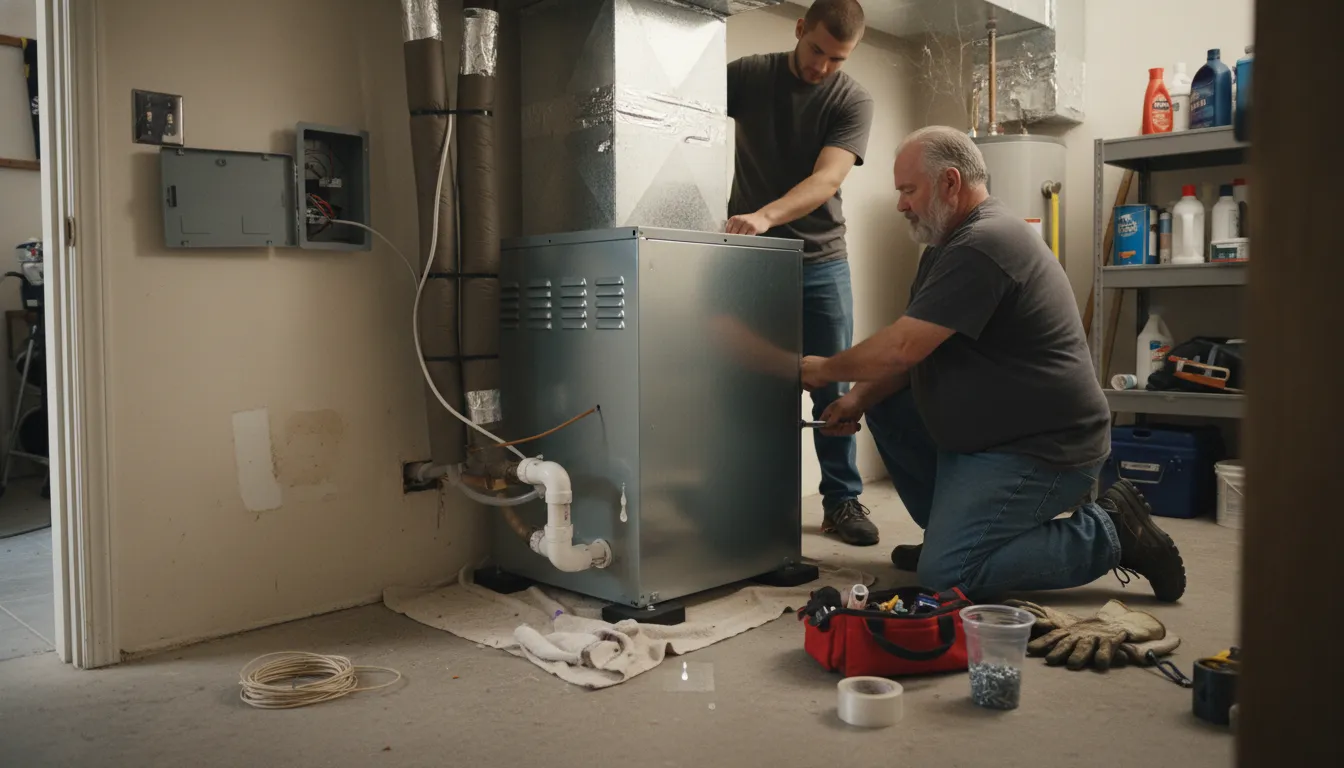
Find the Best HVAC Installers for Your Business
No obligation • Fast responses • Nationwide coverage

Why you can trust HVAC Firms
HVAC Firms is a leading United States resource for evaluating HVAC service providers. Our team researches companies, checks credentials, and reviews customer feedback to present clear, unbiased information. Listings and rankings are based on merit, and companies cannot pay to change our editorial content.
Search providers near you
Top HVAC Installers in Bridgewater, New Jersey Ranked
Installing a new heating, ventilation, and air conditioning system is a significant investment in your home's comfort, energy efficiency, and long-term value. For Bridgewater residents, navigating the options for a new furnace, central air conditioner, or heat pump can be complex, with choices heavily influenced by your home's size, existing ductwork, and local climate needs. This guide is designed to help you understand the process, equipment choices, and local considerations for a successful HVAC installation project, connecting you with the information needed to make an informed decision with a qualified local professional.
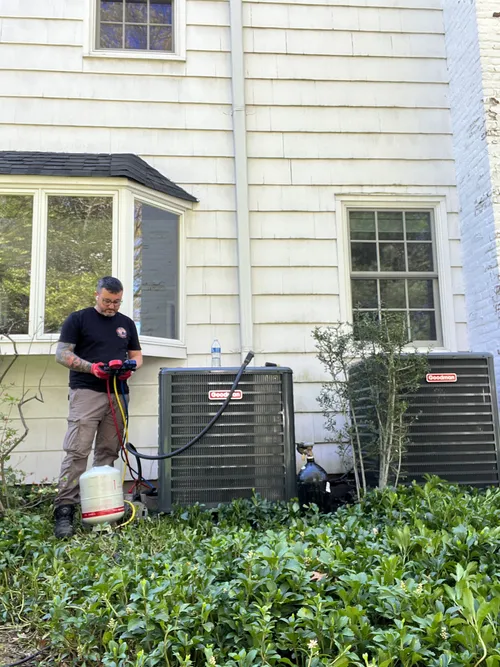
Air Cubes HVAC
2431 Dorchester Rd, Union, NJ 07083
Air Cubes HVAC is a family-owned HVAC contractor serving Newark, NJ, and surrounding areas in Essex, Hudson, Middlesex, and Union counties. They provide heating and air conditioning services including installation, repair, and maintenance for furnaces, air conditioners, heat pumps, and duct systems. The company is fully licensed and insured, with a master HVACR contractor leading the team. Air Cubes HVAC offers duct cleaning and HVAC tune-up services to help maintain system efficiency and comfort year-round.
Aeromark Mechanical Inc
153 Morgan St, Jersey City, NJ 07302
Aeromark Mechanical Inc provides residential and commercial HVAC services in New York, NY, and the surrounding Northern New Jersey area. They specialize in heating and air conditioning repair, installation, and maintenance, including heat pumps, ductless HVAC systems, and indoor air quality solutions. With over 15 years of experience, Aeromark Mechanical offers seasonal maintenance plans and has expertise in installing advanced systems like VRF and high-velocity HVAC. Their certified technicians also handle smart thermostat installations and duct repair services.
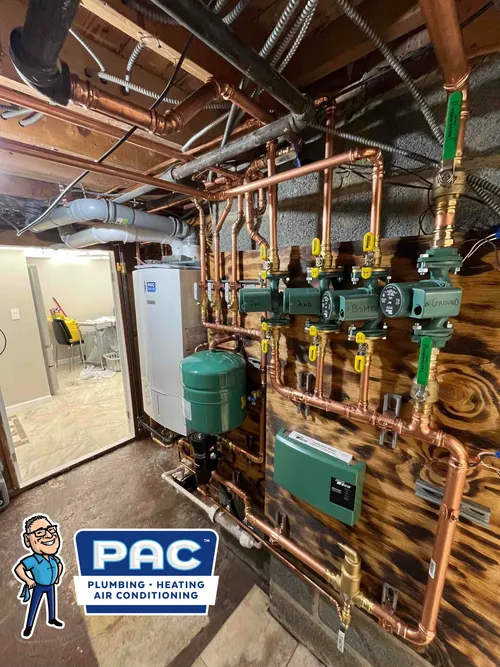
P.A.C. Plumbing, Heating, & A/C
545 Port Richmond Ave, Staten Island, NY 10302
P.A.C. Plumbing, Heating, & A/C is a full-service plumbing and HVAC company serving Newark, NJ, and surrounding areas. They provide a range of services including air conditioning and furnace repair and installation, as well as indoor air quality solutions. The company is known for offering accurate diagnoses and tailored service options to fit different budgets. Their team is experienced in handling various plumbing and HVAC issues, with a focus on long-term comfort through maintenance plans. P.A.C. Plumbing, Heating, & A/C has been recognized locally for its service quality and commitment to the community.
Meyer & Depew Co., Inc.
309 Lafayette Ave, Kenilworth, NJ 07033
Meyer & Depew Co., Inc. is an HVAC company serving Newark, NJ, specializing in air conditioning, furnace, and boiler installation, repair, and maintenance. They offer services including central AC installation, heating system tune-ups, and ductless mini split system installations. The company provides 24/7 availability for heating and air conditioning repairs and maintenance. Their technicians are licensed and experienced in handling high-efficiency heating and cooling systems, including Energy Star® boilers and furnaces. Meyer & Depew has a strong presence in central and northern New Jersey and is known for its preventative maintenance plans and technical expertise.
Airtek Mechanical Heating & Cooling LLC
400 Valley Brook Ave, Lyndhurst, NJ 07071
Airtek Mechanical Heating & Cooling LLC is an HVAC contractor based in Newark, NJ, providing residential and commercial heating, cooling, and refrigeration services. They offer repairs, installations, and maintenance for air conditioning, furnaces, boilers, and ductless mini-split systems. Their capabilities include 24-hour emergency HVAC repairs and servicing a variety of unit types such as rooftop package units and wall air conditioners. With over 10 years of experience, Airtek Mechanical serves Newark and surrounding areas with a focus on comprehensive HVAC solutions.
Understanding Your HVAC System Options in Bridgewater
Choosing the right system is the first and most critical step. The climate in Somerset County demands reliable heating for cold winters and efficient cooling for humid summers. The most common configurations address both needs.
Central Air Conditioner with a Furnace This is the traditional and most common setup for full-home comfort. It pairs a gas or oil furnace for heating with a separate central air conditioning unit for cooling. This combination is a dependable choice for homes with existing ductwork and is often selected during a straightforward system replacement.
Heat Pumps An increasingly popular and efficient option, electric heat pumps provide both heating and cooling in one system. They work by transferring heat rather than generating it, making them exceptionally efficient for moderate climates. Modern cold-climate heat pumps are effective even in New Jersey winters and may qualify for special rebates 1.
Ductless Mini-Split Systems These systems are an excellent solution for homes without existing ducts, for room additions, or for creating independent temperature zones. A mini-split consists of an outdoor compressor/condenser and one or more indoor air-handling units. They are highly energy-efficient and offer flexible installation, though installing multiple zones for a whole home can be an investment.
The Step-by-Step Installation Process
A professional HVAC installation follows a meticulous sequence to ensure safety, efficiency, and compliance with local codes. Understanding this process can help you know what to expect from your contractor.
1. Initial Assessment and System Design A reputable technician will conduct a thorough evaluation of your home. This includes calculating the correct system size (a crucial step called a Manual J load calculation), inspecting existing ductwork for leaks or inadequacies, and discussing your comfort goals. This is also when necessary local building permits are secured.
2. Preparation and Removal The installation team will prepare the work area, which may involve setting a new concrete pad for the outdoor condenser unit. The old furnace, air conditioner, evaporator coil, and related components are carefully disconnected and removed.
3. New Equipment Installation The new furnace is positioned and secured. The new evaporator coil is installed atop the furnace or in the air handler. The outdoor condenser is placed on its pad. Refrigerant line sets are run between the indoor and outdoor units, new electrical wiring is connected, and a new thermostat is installed.
4. System Testing and Commissioning Once everything is physically installed, the system is charged with refrigerant, all electrical connections are verified, and the system is started. Technicians will test for proper operation, check refrigerant levels, ensure adequate airflow, and calibrate the thermostat. Finally, they will clean the work area and review the system's operation with you 2.
What to Expect: Timelines and Disruption
The duration of your HVAC installation project in Bridgewater depends largely on the scope of work.
- Standard Replacement: A straightforward swap of a furnace and central air conditioner in a home with existing, adequate ductwork typically takes 1 to 3 days 3.
- Complex Installations: Projects that involve installing new ductwork, adding zoning systems, or putting in a multi-zone ductless mini-split system can extend the timeline to a week or more.
While contractors strive to minimize disruption, expect some noise and activity in the areas where they are working, typically the basement/utility room (furnace) and the side or rear of the home (condenser). They will use protective coverings and are responsible for removing all old equipment and job-site debris.
Find the perfect hvac installers for your needs
Get personalized recommendations and expert advice
Navigating Costs and Financial Incentives
The cost of a new HVAC system in Bridgewater varies widely based on equipment type, home size, and installation complexity. Understanding the full financial picture, including available incentives, is key.
Equipment and Installation Costs A basic system replacement for a smaller home can start around $5,000, while a complete installation for a larger home, especially one requiring new ductwork or high-efficiency equipment, can reach $20,000 or more 4 5. It's essential to get detailed, written estimates that break down equipment, labor, and permit costs.
New Jersey Clean Energy Program Rebates New Jersey offers valuable incentives for homeowners who install high-efficiency equipment. The NJ Clean Energy Program provides rebates for qualifying ENERGY STAR® certified heat pumps and central air conditioners. Checking their website for current offers is a must before making a purchase.
Federal Tax Credits The federal government offers tax credits for the installation of certain high-efficiency heat pumps and central air conditioning systems. These credits can directly reduce the amount of income tax you owe. Details and eligibility requirements can be found on the ENERGY STAR federal tax credit page.
Financing Options Many local HVAC contractors offer financing plans to help manage the upfront cost of a new system. These can include low-interest loans or payment plans, making it easier to invest in a high-efficiency unit that will save on monthly energy bills.
The Importance of Proper Sizing and Permits
Two non-negotiable aspects of a quality installation are correct sizing and proper permitting.
An oversized system will short-cycle (turn on and off too frequently), leading to uneven temperatures, higher humidity, and increased wear. An undersized system will struggle to keep your home comfortable. Professional contractors use industry-standard calculations to determine the perfect size for your Bridgewater home 6.
In New Jersey, a building permit is generally required for the installation of a new HVAC system. This ensures the work is inspected for compliance with state and local building codes, which cover electrical connections, fuel gas lines, and structural safety. A legitimate contractor will handle the permit process for you 7.
Choosing a Bridgewater HVAC Installation Professional
Your choice of contractor is as important as your choice of equipment. Look for a licensed, insured, and locally established company with strong references. They should be willing to perform a detailed home assessment, provide a clear written estimate, explain the proposed equipment's efficiency ratings (SEER for cooling, AFUE for heating), and handle all permitting. A focus on customer education and post-installation support is a hallmark of a reputable service provider.