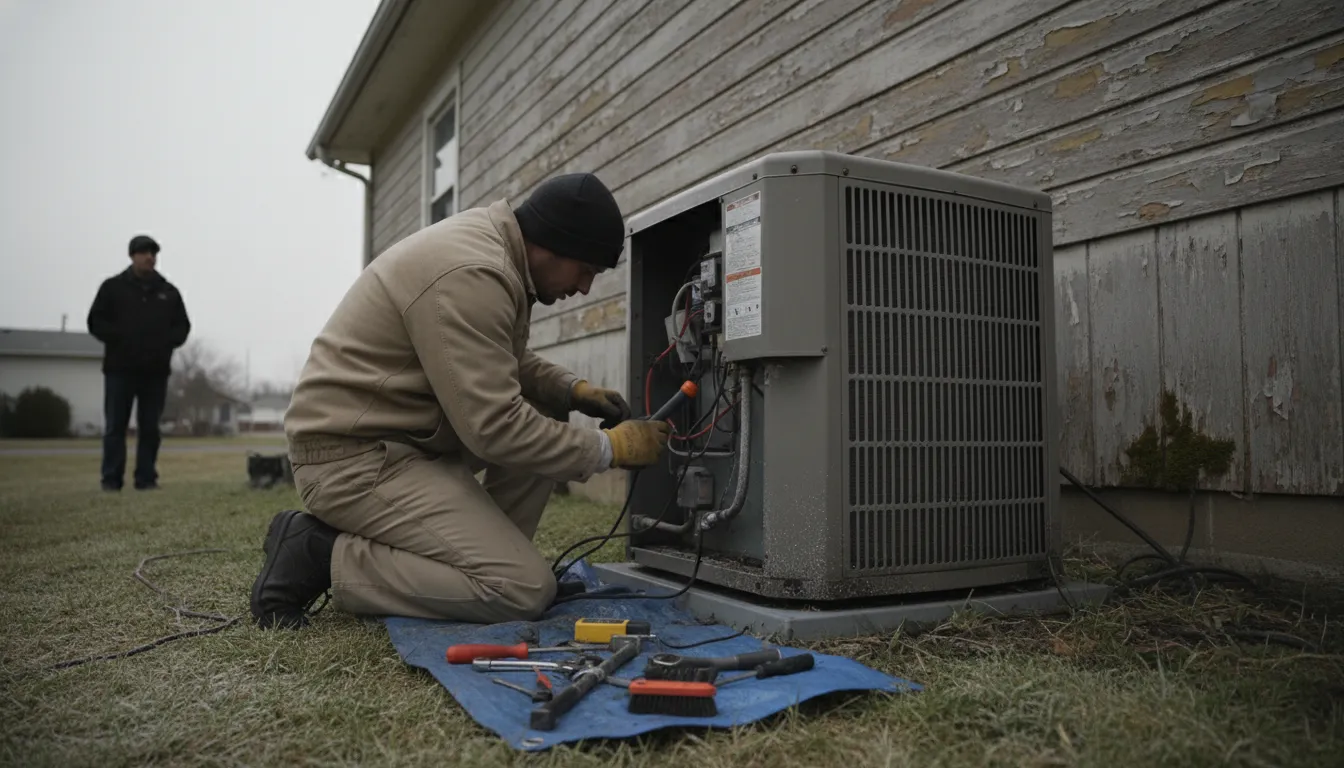
Find the Best Heat Pump Repair Contractors for Your Business
No obligation • Fast responses • Nationwide coverage

Why you can trust HVAC Firms
HVAC Firms is a leading United States resource for evaluating HVAC service providers. Our team researches companies, checks credentials, and reviews customer feedback to present clear, unbiased information. Listings and rankings are based on merit, and companies cannot pay to change our editorial content.
Search providers near you
Top Heat Pump Repair Contractors in Philadelphia, Pennsylvania Ranked
Keeping your home comfortable year-round in Philadelphia requires a reliable heat pump. These efficient systems provide both heating and cooling, but like any complex mechanical system, they can develop issues, especially given our local climate with its high humidity, seasonal pollen, and temperature swings. When your heat pump isn't performing, it can lead to discomfort, skyrocketing energy bills, and potential system failure. This guide helps you understand common local problems, what to expect from a service visit, and how to find qualified professionals to restore your system's efficiency and comfort.
McGinley Services Heating & Cooling
746 Chester Pike STE A, Prospect Park, PA 19076
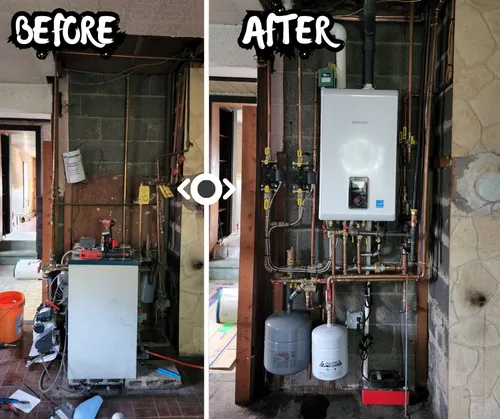
McGinley Services Heating & Cooling is a family-owned HVAC company serving Philadelphia, PA, and nearby Delaware and Montgomery counties. Since 2020, they have provided heating, air conditioning, indoor air quality, and water heating services, including installations, repairs, duct cleaning, and maintenance. The company offers 24/7 emergency service and same-day appointments, ensuring support during inconvenient times. Their licensed and insured team is experienced in heat pump and furnace installations as well as boiler repairs, focusing on safety and quality.
Perfect Degree HVAC
4610 State Rd, Drexel Hill, PA 19026
Perfect Degree HVAC is a full-service HVAC contractor based in Philadelphia, PA, providing installation, repair, and maintenance for residential and commercial heating and cooling systems. They service furnaces, heat pumps, air conditioners, mini-splits, and thermostats, handling all makes and models with certified expertise. The company is certified by HVAC, EPA, Air Flow, and NATE, and offers 24-hour emergency services to address urgent needs. Perfect Degree HVAC also recommends AirEase™ products, known for their long-lasting performance.
Done Rite Heating & Cooling
736 Eayrestown Rd, Lumberton Township, NJ 08048
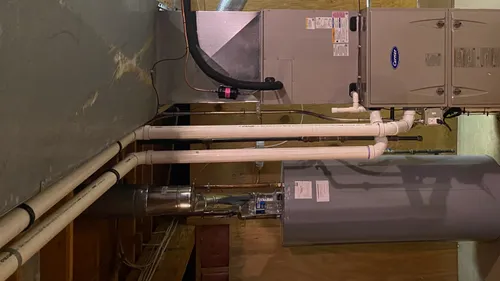
Done Rite Heating & Cooling provides a full range of HVAC services including air conditioning, furnace, and heat pump repair, installation, and maintenance in Philadelphia, PA. They also offer commercial HVAC solutions, air duct cleaning, and indoor air quality testing and improvement services. Their team is experienced in handling refrigerant leaks, compressor issues, furnace ignition problems, and heat pump electrical or mechanical failures. Serving the Philadelphia area, they focus on ensuring efficient and reliable heating and cooling systems for both residential and commercial clients.
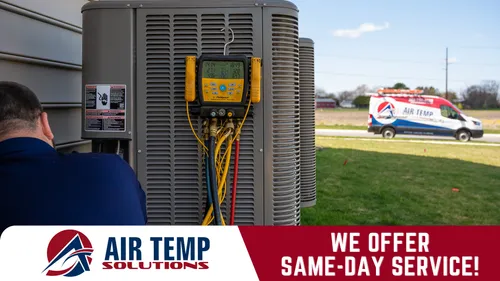
Air Temp Solutions - AC Repair, Heating Repair, Water Heater Repair & Plumbing Devon PA
Philadelphia, PA
Air Temp Solutions - AC Repair, Heating Repair, Water Heater Repair & Plumbing Devon PA is an HVAC and plumbing contractor serving Philadelphia, PA, and surrounding areas including Newark, DE. They offer a wide range of services such as heating repair and installation, furnace and boiler services, heat pump and geothermal system installation and maintenance, as well as ductless mini-split systems. Their plumbing services cover repairs, water heater installation and maintenance, gas line work, sump pump services, leak detection and repair, pipe and water line services, and comprehensive drain and sewer solutions including trenchless repairs. They also provide indoor air quality services like duct cleaning and UV light filtration installation. The company emphasizes specialized capabilities such as geothermal system installation and trenchless sewer line repairs to minimize disruption. While no specific business history is stated, their team includes technicians with an average of 16 years of experience in heating services.
Downtown Mechanical LLC
2501 E Venango St, Philadelphia, PA 19134
Downtown Mechanical LLC is an HVAC company based in Philadelphia, PA, offering a range of services including air conditioning, furnace, heat pump, and boiler repair and installation. They also specialize in mini split installations and HVAC tune-ups. The team is known for clean, professional work and attention to detail, such as aesthetically pleasing ductwork installation. Downtown Mechanical has experience handling complex projects like system expansions and replacements, with a focus on clear communication and customer education. The company is recognized for quick response times and thorough service across Philadelphia and nearby areas.
Understanding Philadelphia's Climate and Your Heat Pump
Philadelphia's weather presents unique challenges for HVAC systems. Our humid summers cause heat pumps to work harder in cooling mode, often leading to excessive condensation and frost issues. Spring and fall bring significant pollen and dust, which can quickly clog air filters and coils. In winter, the system reverses to extract heat from the outside air, and when temperatures dip, defrost cycles become critical. A system struggling with any of these climate-induced stresses will be less efficient, leading to higher PECO bills and uneven temperatures in your home. Regular, climate-aware maintenance is key to longevity.
Common Heat Pump Problems in Philadelphia Homes
Local technicians frequently encounter a specific set of issues tied to our environment and typical system wear and tear.
Ice Buildup on Outdoor Coils
While some frost is normal during winter operation, a thick layer of ice on the outdoor unit is a red flag. In Philadelphia's humidity, this often points to problems with the defrost cycle, low refrigerant, or restricted airflow from dirty filters or coils. Ice buildup severely reduces heating capacity and can damage the fan motor.
Reduced Airflow and Clogged Components
Pennsylvania's pollen and urban dust are relentless. A dirty air filter is the most common culprit for weak airflow, but the indoor and outdoor coils can also become matted with debris. This restriction forces the system to run longer, straining components and spiking your energy consumption. Poor airflow can also cause the indoor coil to freeze over.
Refrigerant Leaks
The refrigerant is the lifeblood of your heat pump. Small leaks can develop in the copper lines or coils over time, reducing the system's charge 1 2. A low refrigerant level makes the compressor work excessively hard to move heat, leading to poor performance, ice formation, and ultimately, compressor failure-a very costly repair.
Electrical Component Failures
The electrical system includes capacitors that help motors start, contactors that engage the compressor, and various sensors. These components can fail due to age, power surges, or heat stress. A faulty capacitor, for example, might prevent the outdoor fan or compressor from starting, often accompanied by a humming sound.
Unusual Noises and Odors
Your heat pump should operate relatively quietly. New sounds like grinding (often a failing motor bearing), squealing (a belt or motor issue), or persistent buzzing (an electrical problem) signal trouble. Musty odors from your vents typically indicate mold or mildew growth in the ductwork or on the damp indoor coil, a common issue in our humid climate.
Water Leaks and Drainage Issues
In cooling mode, your heat pump removes humidity, creating condensation. This water should drain away via a condensate line. Algae and mold can clog this PVC line, especially in humid Philadelphia summers, causing water to back up and potentially leak into your home.
Find the perfect heat pump repair contractors for your needs
Get personalized recommendations and expert advice
What to Expect During a Professional Service Visit
When you call a technician for heat pump service or repair in Philadelphia, a thorough visit follows a standard diagnostic and repair process to ensure your system is restored correctly.
Step 1: Comprehensive System Diagnosis
The technician will start by discussing the symptoms you've noticed. They will then perform a visual inspection, listen for unusual noises, and use specialized tools to measure key metrics. This includes checking refrigerant pressures with gauges, measuring airflow at the vents, testing electrical voltages and amperage at the compressor and fan motors, and inspecting the thermostat's calibration and wiring. This step identifies the root cause, not just the symptom.
Step 2: Cleaning and Preparation
Before any repair, the technician will often clean essential components. This includes replacing the air filter, gently cleaning the indoor evaporator and outdoor condenser coils of dirt and pollen, and clearing the condensate drain line with a vacuum or nitrogen 3. Sometimes, cleaning alone can resolve performance issues.
Step 3: Repair or Part Replacement
Based on the diagnosis, the technician will execute the necessary fix. This could involve sealing a refrigerant leak, replacing a failed capacitor or contactor, installing a new fan motor, or repairing damaged electrical connections. They will use manufacturer-approved parts to ensure compatibility and reliability.
Step 4: System Testing and Verification
After the repair, the final and crucial step is testing. The technician will restart the system, monitor its operation through a full cycle, re-check pressures and temperatures, and verify that the thermostat is controlling the system properly 4. They will ensure the issue is resolved and that the system is operating safely and efficiently before considering the job complete.
Repair Timelines: From Quick Fixes to Major Overhauls
The time required to fix your heat pump depends heavily on the problem's complexity and part availability in the local supply chain.
- Minor Repairs (Same Day Service): Issues like a clogged filter, a tripped breaker, a dirty condensate line, or a single failed capacitor can often be diagnosed and repaired within 1 to 3 hours during a single visit 5.
- Moderate Repairs (1-2 Days): Repairs such as fixing a refrigerant leak, replacing a fan motor, or installing a new reversing valve may take 3 to 6 hours of labor. However, if the needed part isn't on the service truck, it may require a follow-up visit the next day once the part is sourced from a local supplier.
- Major Repairs (Several Days): Significant failures, like a compromised compressor or a leaking coil, are more involved. These repairs often require 1 to 3 days or more, as the system must be carefully recovered of refrigerant, the major component replaced, and then recharged and tested. Special-order parts can extend this timeline.
Understanding Service Costs and Financial Assistance
Repair costs in Philadelphia vary based on the part needed, labor time, and the company's service rates. It's always wise to get a detailed estimate before work begins.
- Typical Repair Range: Most repairs fall between $200 and $1,000+. For example, replacing a start capacitor might cost $200-$400, while repairing a refrigerant leak could range from $300-$800 depending on its location and severity 6 7.
- Preventative Maintenance: A seasonal tune-up or maintenance visit, which can prevent many common problems, typically costs between $100 and $250 8. Many companies offer annual service plans that bundle these visits.
- Financial Assistance for Eligible Residents: The City of Philadelphia, through the Philadelphia Housing Development Corporation (PHDC), offers the Basic Systems Repair Program (BSRP). This program provides free repairs to essential home systems, including heating, for income-eligible homeowners 9. It's a vital resource for qualifying residents facing critical heat pump failures.
Choosing the Right Service Provider in Philadelphia
Selecting a qualified professional is as important as the repair itself. Look for a company that is fully licensed and insured in Pennsylvania. Check for positive reviews on independent platforms and ask about their experience specifically with your heat pump brand or model. A reputable technician will be transparent about their diagnostic process, provide a clear written estimate, and stand behind their work with a warranty on both parts and labor.
Frequently asked questions
Sources
Footnotes
-
Heat Pump Troubleshooting: 11 Heat Pump Issues & Their Fixes - https://cielowigle.com/blog/heat-pump-troubleshooting/ ↩
-
Heat Pump Repair in Philadelphia - City Plumbing - https://www.mycityplumbing.com/heat-pump-repair/ ↩
-
Commercial HVAC Preventive Maintenance Checklists - FMX - https://www.gofmx.com/blog/hvac-maintenance-checklist/ ↩
-
Operating and Maintaining Your Heat Pump | Department of Energy - https://www.energy.gov/energysaver/operating-and-maintaining-your-heat-pump ↩
-
How to maintain your heat pump - https://www.youtube.com/watch?v=rpANlj_leho&t=85 ↩
-
Heat Pump Maintenance Darby PA | Heat-N-Air Guys - https://www.heatnairguys.com/heat-pump/maintenance ↩
-
The 2025 Guide to Sump Pump Repair Costs - https://vocal.media/lifehack/the-2025-guide-to-sump-pump-repair-costs ↩
-
Philadelphia HVAC Maintenance Costs: Essential Facility ... - https://www.myshyft.com/blog/commercial-hvac-preventative-maintenance-cost-philadelphia-pennsylvania/ ↩
-
Basic Systems Repair Program - PHDC - https://phdcphila.org/residents-and-landlords/home-repair-and-improvements/basic-systems-repair-program/ ↩