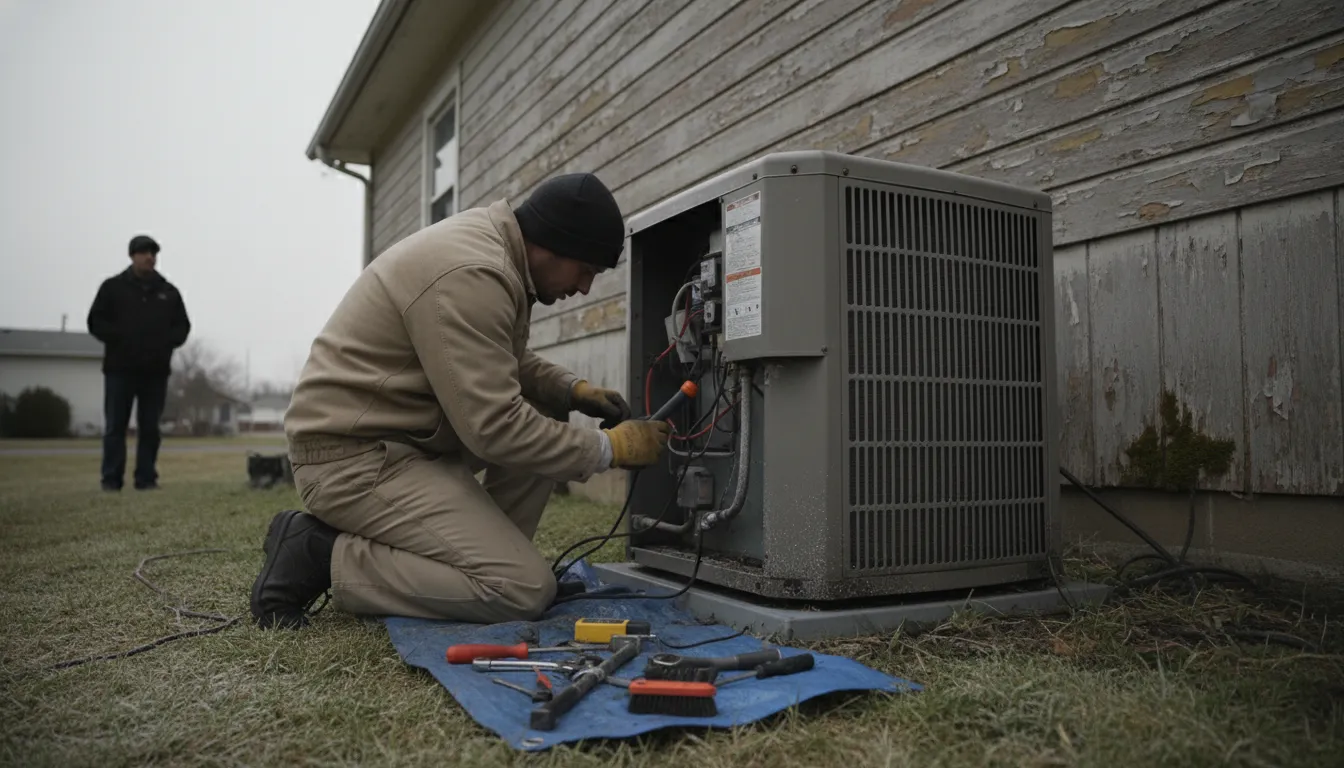
Find the Best Heat Pump Repair Contractors for Your Business
No obligation • Fast responses • Nationwide coverage

Why you can trust HVAC Firms
HVAC Firms is a leading United States resource for evaluating HVAC service providers. Our team researches companies, checks credentials, and reviews customer feedback to present clear, unbiased information. Listings and rankings are based on merit, and companies cannot pay to change our editorial content.
Search providers near you
Best Heat Pump Repair Contractors in Pennsylvania Ranked
A heat pump is a versatile and efficient system for both heating and cooling your Pennsylvania home. However, the state's varied climate, from humid summers to significant winters, can put stress on these units, leading to performance issues or breakdowns. When your heat pump isn't working correctly, it affects your comfort and energy bills. This guide explains common heat pump problems in Pennsylvania, typical repair steps, and how to find qualified local professionals to restore your system's efficiency.
McGinley Services Heating & Cooling
746 Chester Pike STE A, Prospect Park, PA 19076
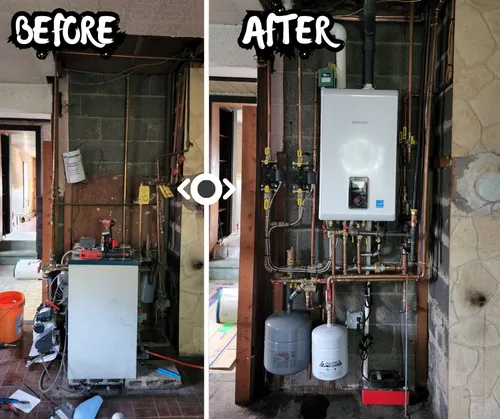
McGinley Services Heating & Cooling is a family-owned HVAC company serving Philadelphia, PA, and nearby Delaware and Montgomery counties. Since 2020, they have provided heating, air conditioning, indoor air quality, and water heating services, including installations, repairs, duct cleaning, and maintenance. The company offers 24/7 emergency service and same-day appointments, ensuring support during inconvenient times. Their licensed and insured team is experienced in heat pump and furnace installations as well as boiler repairs, focusing on safety and quality.
Supreme Heating and Cooling
1475 Frey Rd, Penn Hills Township, PA 15235
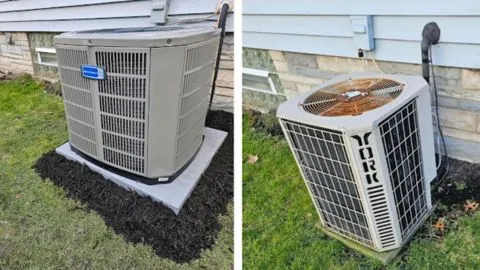
Supreme Heating and Cooling is an HVAC company based in Pittsburgh, PA, offering a wide range of heating and cooling services. They provide installation, repair, and maintenance for air conditioners, furnaces, heat pumps, boilers, mini split systems, and indoor air quality equipment. Their certified technicians also handle electrical services related to HVAC systems. The company emphasizes energy efficiency and improved indoor air quality in their work. Supreme Heating and Cooling is known for working with trusted brands and offers comprehensive HVAC solutions to keep homes comfortable year-round.
Perfect Degree HVAC
4610 State Rd, Drexel Hill, PA 19026
Perfect Degree HVAC is a full-service HVAC contractor based in Philadelphia, PA, providing installation, repair, and maintenance for residential and commercial heating and cooling systems. They service furnaces, heat pumps, air conditioners, mini-splits, and thermostats, handling all makes and models with certified expertise. The company is certified by HVAC, EPA, Air Flow, and NATE, and offers 24-hour emergency services to address urgent needs. Perfect Degree HVAC also recommends AirEase™ products, known for their long-lasting performance.
Done Rite Heating & Cooling
736 Eayrestown Rd, Lumberton Township, NJ 08048
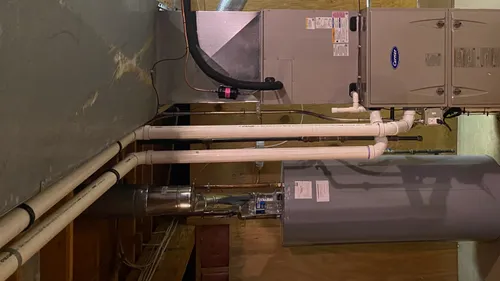
Done Rite Heating & Cooling provides a full range of HVAC services including air conditioning, furnace, and heat pump repair, installation, and maintenance in Philadelphia, PA. They also offer commercial HVAC solutions, air duct cleaning, and indoor air quality testing and improvement services. Their team is experienced in handling refrigerant leaks, compressor issues, furnace ignition problems, and heat pump electrical or mechanical failures. Serving the Philadelphia area, they focus on ensuring efficient and reliable heating and cooling systems for both residential and commercial clients.
Air Temp Solutions - AC Repair, Heating Repair, Water Heater Repair & Plumbing Devon PA
Philadelphia, PA
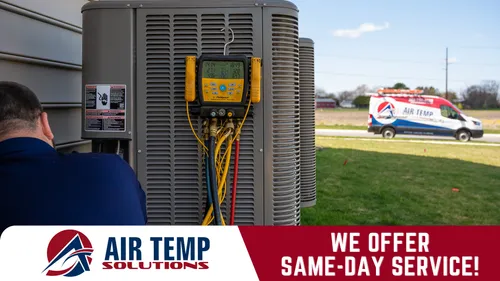
Air Temp Solutions - AC Repair, Heating Repair, Water Heater Repair & Plumbing Devon PA is an HVAC and plumbing contractor serving Philadelphia, PA, and surrounding areas including Newark, DE. They offer a wide range of services such as heating repair and installation, furnace and boiler services, heat pump and geothermal system installation and maintenance, as well as ductless mini-split systems. Their plumbing services cover repairs, water heater installation and maintenance, gas line work, sump pump services, leak detection and repair, pipe and water line services, and comprehensive drain and sewer solutions including trenchless repairs. They also provide indoor air quality services like duct cleaning and UV light filtration installation. The company emphasizes specialized capabilities such as geothermal system installation and trenchless sewer line repairs to minimize disruption. While no specific business history is stated, their team includes technicians with an average of 16 years of experience in heating services.
Understanding Heat Pump Challenges in Pennsylvania's Climate
Pennsylvania's weather presents unique challenges for heat pump systems. While modern units are designed to operate efficiently in cold temperatures, the state's significant winter conditions can push undersized or poorly maintained systems to their limits. During extreme cold snaps, a heat pump may struggle to extract sufficient heat from the outdoor air, potentially leading to a reliance on more expensive auxiliary (or "emergency") heat strips. This can result in unexpectedly high energy bills. Conversely, during hot, humid summers, the system must work hard to cool and dehumidify your home. This year-round demand makes regular maintenance and prompt repair essential for Pennsylvania homeowners to ensure system longevity and cost-effective operation.
Common Heat Pump Problems in PA Homes
Recognizing the symptoms of a failing heat pump is the first step toward a solution. Here are the most frequent issues reported across the state:
- Inadequate Heating or Cooling: This is the most common complaint. It can stem from several underlying causes, including low refrigerant, dirty coils, airflow restrictions, or a failing component like the reversing valve.
- Refrigerant Leaks: Over time, vibration and wear can cause small leaks in the refrigerant lines or coils. A low refrigerant charge is a primary cause of reduced heating/cooling capacity and can lead to coil freezing.
- Frozen or Icing Coils: Ice buildup on the indoor or outdoor unit is a clear sign of trouble. Common culprits include low refrigerant levels, dirty air filters or coils restricting airflow, malfunctioning blower fans, or a stuck reversing valve.
- Short Cycling: If your unit turns on and off every few minutes, it's called short cycling. This wastes energy, increases wear, and fails to properly condition your home. Causes can include an oversized unit, a faulty thermostat, or electrical issues like a bad capacitor or sensor.
- Electrical Component Failures: The capacitors (which help start and run the motors) and contactors (electrical relays) are common points of failure due to constant electrical stress and heat. Symptoms include the unit humming but not starting, or intermittent operation.
- Reversing Valve Failure: This valve is what allows your heat pump to switch between heating and cooling modes. When it fails, the system may be stuck in one mode or not work at all, requiring specialized repair.
A Step-by-Step Guide to Heat Pump Troubleshooting
Before calling a professional, you can safely perform a few basic checks. These steps can sometimes resolve simple issues or provide valuable information to your technician.
- Check the Thermostat: Ensure it is set to the correct mode ("HEAT" or "COOL") and that the temperature setting is appropriate. If it's a programmable model, check the schedule. Try replacing the batteries.
- Inspect Circuit Breakers: Go to your home's electrical panel and verify that the breakers for both the indoor air handler and the outdoor condenser unit are in the "ON" position. If tripped, reset them. If they trip again immediately, do not continue resetting-this indicates an electrical fault requiring professional attention.
- Examine and Replace the Air Filter: A clogged air filter is a leading cause of reduced airflow, which can lead to freezing coils and system shutdowns 1 2. Check your filter monthly and replace it if it's dirty. This is the simplest and most effective maintenance task a homeowner can do.
- Clear the Outdoor Unit: Ensure the condenser unit outside is free of debris like leaves, grass clippings, and shrubbery. In winter, gently clear away snow and ice from around the unit to allow for proper airflow. Never use sharp tools on the delicate fins.
- Listen and Observe: Note any unusual sounds (grinding, squealing, hissing) or if the outdoor fan is not spinning when the system is on. This information is very helpful for a technician.
Find the perfect heat pump repair contractors for your needs
Get personalized recommendations and expert advice
Professional Diagnosis and Common Repairs
When basic troubleshooting doesn't solve the problem, it's time to call a certified HVAC technician. A professional will perform a comprehensive diagnosis, typically checking:
- Refrigerant Pressure and Charge: Using gauges to determine if the system is properly charged and checking for leaks.
- Electrical Integrity: Testing capacitors, contactors, wiring, and voltage to all components.
- Airflow Measurement: Ensuring the system is moving the correct volume of air across the coils.
- Component Function: Manually testing the operation of the reversing valve, compressor, and fan motors.
Based on the diagnosis, here are some of the most common professional repairs and their general cost ranges in Pennsylvania:
- Capacitor Replacement: One of the most frequent repairs. A failed capacitor prevents motors from starting properly. Cost: $150 - $400.
- Refrigerant Leak Repair and Recharge: The technician must locate the leak, repair it (often by brazing), evacuate the system, and then recharge it with the correct amount of refrigerant. Cost: $300 - $1,000+, depending heavily on leak location and severity 3.
- Fan Motor Replacement: The blower motor (indoor) or condenser fan motor (outdoor) can wear out. Cost: $400 - $1,000+ including parts and labor.
- Reversing Valve Replacement: A complex repair that involves recovering refrigerant, replacing the valve, and recharging the system. Cost: $700 - $1,500+4.
- Compressor Replacement: The compressor is the heart of the heat pump. Replacing it is a major repair that often approaches the cost of a new system, especially if the unit is older. Cost: $1,500 - $4,500+5 6 7.
The Critical Role of Annual Maintenance in PA
The single best way to avoid costly repairs and extend the life of your Pennsylvania heat pump is through annual professional maintenance 8 9. A thorough tune-up typically includes:
- Cleaning indoor evaporator and outdoor condenser coils.
- Checking and tightening all electrical connections.
- Lubricating moving parts (if required).
- Measuring refrigerant charge and inspecting for leaks.
- Checking system controls and the thermostat sequence.
- Inspecting ductwork for leaks (in accessible areas).
This proactive service ensures your system runs efficiently, catches small problems before they become big ones, and helps maintain manufacturer warranties. For Pennsylvania's climate, scheduling maintenance in the spring (before cooling season) and fall (before heating season) is ideal.
When to Consider Repair vs. Replacement
Deciding whether to repair an aging heat pump or invest in a new one is a significant financial consideration. As a general rule, if the repair cost exceeds 50% of the value of a new system, replacement often becomes the more economical long-term choice. Other factors favoring replacement include:
- Age of System: Heat pumps over 10-15 years old are less efficient and more prone to failures.
- Frequency of Repairs: If you're calling for repairs multiple times a year, you're throwing good money after bad.
- Rising Energy Bills: An aging, inefficient system works harder, costing you more every month.
- Use of R-22 Refrigerant: If your older system uses R-22 (Freon), repairs involving refrigerant are extremely expensive due to its phased-out status. New systems use environmentally friendly refrigerants.
A reputable HVAC professional can provide a detailed cost-benefit analysis to help you make an informed decision.
Frequently asked questions
Sources
Footnotes
-
5 Common Causes of HVAC Breakdowns & How To Prevent Them - https://www.moncriefair.com/blog/5-causes-of-hvac-breakdowns-and-how-to-prevent-them ↩
-
Heat pump not heating: 5 Quick Fixes - Southern Air - https://www.southern-air.com/blog/heat-pump-not-heating ↩
-
Professional Heat Pump Repair in Warminster, Pennsylvania - https://getlions.com/heat-pump/repair ↩
-
Heat Pump Repair Lancaster PA | Smart Air Heating & Cooling - https://www.smartairhvac.com/heat-pump/repair ↩
-
Heat Pump Troubleshooting: 12 Common Issues & Steps to Take - https://www.conwayservices.net/blog/heat-pump-troubleshooting-12-common-issues-and-tips-for-what-to-do ↩
-
How Much Does It Cost To Repair A Carrier Heat Pump? - https://carrierohio.com/how-much-does-it-cost-to-repair-a-carrier-heat-pump/ ↩
-
HVAC Replacement Cost Pennsylvania: Factors Influencing ... - https://www.leokobco.com/post/hvac-replacement-cost-pennsylvania ↩
-
Do Heat Pumps Work Well in Pennsylvania? | Learn the Facts - https://hallerent.com/blog/do-heat-pumps-work-well-pennsylvania/ ↩
-
Operating and Maintaining Your Heat Pump | Department of Energy - https://www.energy.gov/energysaver/operating-and-maintaining-your-heat-pump ↩