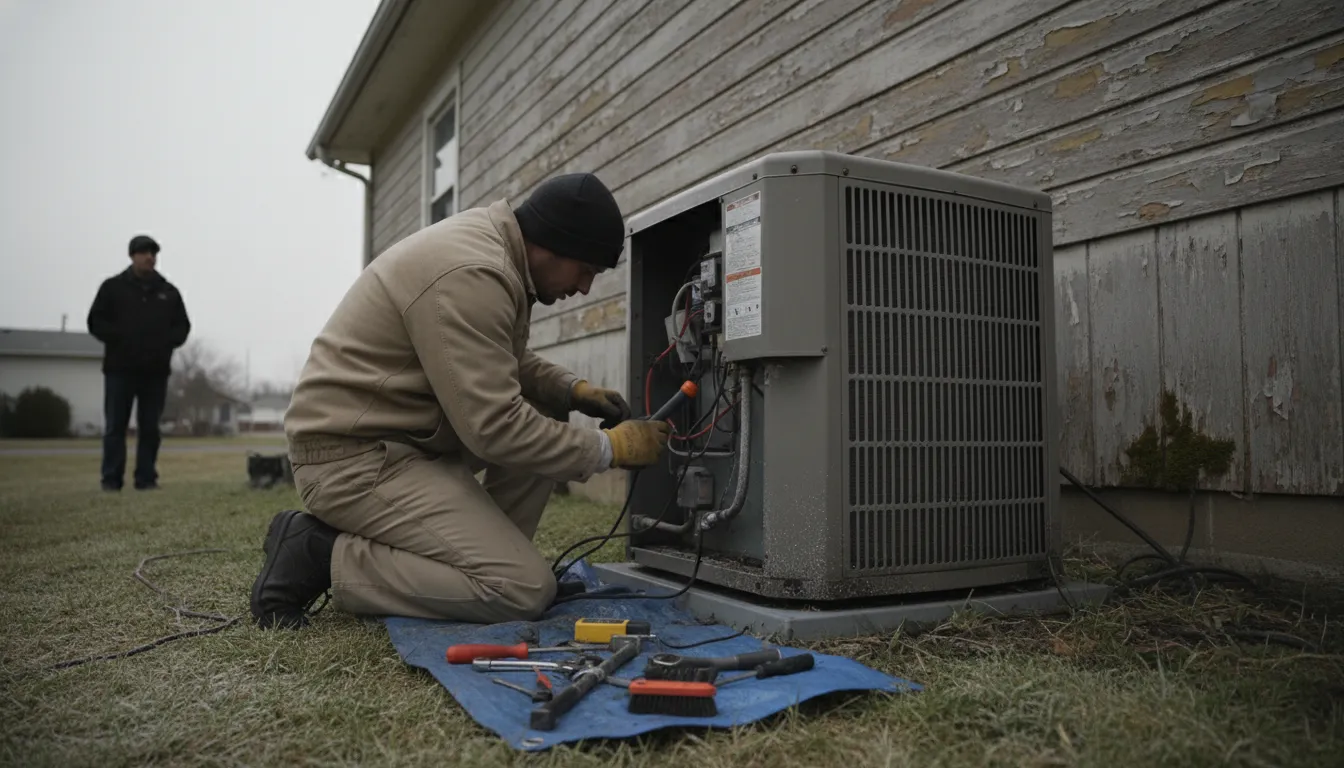
Find the Best Heat Pump Repair Contractors for Your Business
No obligation • Fast responses • Nationwide coverage

Why you can trust HVAC Firms
HVAC Firms is a leading United States resource for evaluating HVAC service providers. Our team researches companies, checks credentials, and reviews customer feedback to present clear, unbiased information. Listings and rankings are based on merit, and companies cannot pay to change our editorial content.
Search providers near you
Top Heat Pump Repair Contractors in Reno, Nevada Ranked
A heat pump is a versatile and efficient system that provides both heating and cooling for your home. When it malfunctions, it can disrupt your comfort and lead to higher energy bills. Understanding common repair issues and the service process can help you make informed decisions and get your system running efficiently again. This guide outlines what to expect from heat pump service in Reno, from typical problems to the repair timeline, helping you connect with qualified local professionals.
Mountain West Heating and Air Conditioning LLC
3265 Eastlake Blvd, New Washoe City, NV 89704
Mountain West Heating and Air Conditioning LLC provides heating, air conditioning, and HVAC services in Reno, NV. They offer installation, repair, and maintenance for furnaces, heat pumps, and air conditioning systems, along with backup generator installations and various electrical services. Their certified technicians handle energy-efficient upgrades, emergency repairs, and preventative maintenance to ensure reliable home comfort. The company also installs and maintains backup generators powered by oil, propane, or natural gas, supporting power reliability during outages.
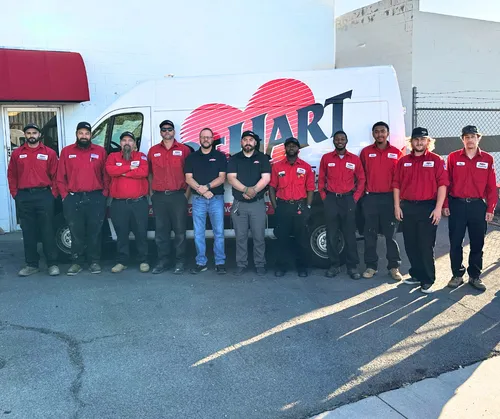
DeHart Plumbing, Heating, and Air Inc.
1842 Hymer Ave, Sparks, NV 89431
DeHart Plumbing, Heating, and Air Inc. is an HVAC and plumbing contractor serving Reno, NV, as well as the Central Valley and Modesto, CA. They offer a range of services including air conditioning, furnace, heat pump, and boiler repair and installation, along with HVAC tune-up services. Established in 1946, DeHart has a long history of providing heating and cooling solutions with NATE-certified technicians and offers an industry-leading 10-year parts and labor warranty. Their Love Club maintenance program includes biannual HVAC tune-ups and plumbing inspections, supporting ongoing home comfort and efficiency.

Galdarisi Heating and Air Conditioning
4477 Reno Hwy, Fallon, NV 89406
Galdarisi Heating and Air Conditioning is an HVAC and plumbing contractor based in Fallon, NV, serving the Reno area. The company offers a range of services including installation and repair of air conditioning, furnaces, and heat pumps. Recently licensed for plumbing, they also provide plumbing services. Galdarisi Heating and Air Conditioning emphasizes a personalized customer experience with a focus on transparency and hard work. They provide emergency service calls on weekends.
Climate Pros of Northern Nevada
5635 Riggins Ct #18, Reno, NV 89502
Climate Pros of Northern Nevada is a family-owned HVAC company serving Reno, NV, and the broader Northern Nevada region. With over 30 years of experience, they provide a full range of heating and cooling services including installation, repair, tune-ups, duct cleaning, and indoor air quality solutions. Their licensed and certified technicians handle AC, furnace, and heat pump systems with expertise and offer 24/7 emergency repair services. The company is fully licensed and insured, holding the Nevada State Contractors License and employing NATE and EPA Universal certified technicians.
Lund Mechanical
Reno, NV
Lund Mechanical is an HVAC company based in Reno, NV, offering residential and commercial heating and cooling services. They provide repair, installation, and maintenance for air conditioners, furnaces, heat pumps, boilers, mini split systems, and geothermal heating solutions. The company emphasizes honest service without unnecessary upselling and has experience working with complex systems like Variable Refrigerant Flow (VRF) and combination boilers. Founded by Brian Lund, who has deep local roots and years of experience, Lund Mechanical is committed to clear communication and practical solutions for home comfort needs.
Common Heat Pump Malfunctions in Reno's Climate
Reno's climate, with its hot summers and cold winters, puts consistent demand on heat pump systems. This cycle of heavy use can lead to specific, recurring issues. Local technicians frequently encounter a core set of problems that are often interconnected.
- Refrigerant Leaks or Low Charge: This is one of the most common issues. The refrigerant is the lifeblood of your heat pump, responsible for absorbing and releasing heat. Over time, wear and tear or vibration can cause small leaks in the coil or connecting lines. A low charge significantly impacts the system's ability to heat or cool your home effectively, causing it to run longer and work harder.
- Dirty Air Filters and Coils: The dry, dusty conditions around Reno can lead to a rapid buildup of dirt and debris on air filters and both the indoor and outdoor coils. A clogged filter restricts airflow, forcing the system to strain. Dirty coils cannot transfer heat efficiently, drastically reducing the system's performance and putting extra stress on components like the compressor.
- Electrical Component Failures: The system relies on a network of electrical parts. Common failures include faulty capacitors (which help motors start), compromised contactors, malfunctioning thermostats, and damaged wiring 1. These issues can prevent the system from starting, cause it to short cycle, or lead to inconsistent operation.
- Frozen Evaporator Coils: You might notice ice building up on the indoor coil. This is typically a symptom, not the root cause. It often stems from the two issues above: extremely low refrigerant levels or severely restricted airflow from a dirty filter or blocked return vent 2.
What to Expect During a Professional Service Visit
When you schedule a repair, a certified technician will follow a systematic process to diagnose and resolve your heat pump's issue. Knowing these steps can demystify the service and set clear expectations.
- Arrival and Initial Consultation: The technician will arrive and discuss the symptoms you've observed. They will listen to your description of the problem (e.g., not heating, strange noises, ice buildup) and check the most basic settings, such as the thermostat mode and power supply to the unit.
- Comprehensive System Diagnosis: This is the core of the visit. The technician will perform a series of checks to pinpoint the fault 3. This includes:
- Visual Inspection: Examining air filters, indoor and outdoor coils, fan blades, and ductwork for obvious blockages, dirt, or damage.
- Refrigerant Check: Using gauges to measure the system's pressure and refrigerant charge, and often using a leak detector to find the source of any loss.
- Electrical Testing: Using a multimeter to test capacitors, contactors, wiring, and the thermostat for proper voltage and continuity.
- Airflow and Performance Verification: Checking the temperature differential across the coils and ensuring airflow meets specifications.
- Solution Presentation and Discussion: After diagnosis, the technician should clearly explain what they found, why it's causing your problem, and present your repair options. For a straightforward repair, this will be a single recommendation. In cases where the system is very old or the repair is exceptionally costly, they may discuss the pros and cons of repair versus replacement.
- Repair and System Verification: Once authorized, the technician will perform the necessary work. This could involve sealing a refrigerant leak, recharging the system to the correct level, replacing a failed motor or capacitor, or performing a deep clean of the coils. After the repair, they will restart the system, monitor its operation, and ensure it is functioning correctly before considering the job complete.
Find the perfect heat pump repair contractors for your needs
Get personalized recommendations and expert advice
Understanding Repair Timelines and Complexity
The time required to fix your heat pump depends entirely on the nature of the problem. A simple fix may have you back to comfort in under an hour, while a complex repair could take most of the day.
- Simple Repairs and Maintenance: Tasks like replacing a dirty air filter, cleaning an accessible coil, resetting a tripped breaker, or replacing a readily available capacitor are often completed within 1 to 2 hours.
- Moderate to Complex Repairs: Issues like repairing a refrigerant leak, replacing a blower motor, or fixing extensive electrical wiring require more labor and precision. These jobs can take 3 to 6 hours or more. If a specialized part needs to be ordered, the repair may require a second visit 4.
The Critical Role of Annual Maintenance
Many of the common repair issues listed above can be prevented or caught early with routine professional maintenance. An annual tune-up, typically performed in the spring or fall, is not just a cleaning service. A technician will perform essential tasks like checking refrigerant levels, cleaning coils, tightening electrical connections, lubricating moving parts, and testing system controls 5. This proactive service helps maintain peak efficiency, extends the lifespan of your equipment, and can identify small problems before they turn into expensive, disruptive breakdowns. For Reno homeowners, scheduling maintenance before the intense summer heat or winter cold sets in is a smart strategy.
Navigating Repair Costs and Decisions
While exact prices vary based on the service provider, part brands, and the specific repair needed, understanding general cost ranges can be helpful. Minor electrical component replacements or simple cleans are typically on the lower end. Mid-range costs often involve tasks like repairing a refrigerant leak and recharging the system, which can be a significant portion of a repair bill 6. Major component replacements, such as a compressor or blower motor, represent the highest repair costs and often lead homeowners to consider whether investing in a new, more efficient system is a better long-term financial decision 6. A reputable technician will provide a clear, upfront estimate and help you weigh the costs and benefits of repair versus replacement based on the age and condition of your existing heat pump.
Frequently asked questions
Sources
Footnotes
-
Reno, NV Heat Pump Repair & Installation - https://lincolnheating.com/heating/heat-pump-repair/ ↩
-
My Heat Pump Isn't Heating: A Homeowner's Troubleshooting Guide - https://www.southern-air.com/blog/heat-pump-not-heating ↩
-
Premiere Heat Pump Repair In The Reno, NV Metro - https://allhoursair.com/hvac-services/heat-pump-repair/ ↩
-
Heat Pump & HVAC Maintenance Auckland | AC Repair Services - EPS - https://epservices.co.nz/electrical-services/heat-pump-repairs/ ↩
-
Operating and Maintaining Your Heat Pump | Department of Energy - https://www.energy.gov/energysaver/operating-and-maintaining-your-heat-pump ↩
-
Heat Pump Costs in Reno: Installation, Repair, and Upgrades - https://paramountnv.com/2025/02/23/understanding-heat-pump-costs-in-reno-installation-repair-and-upgrades/ ↩ ↩2