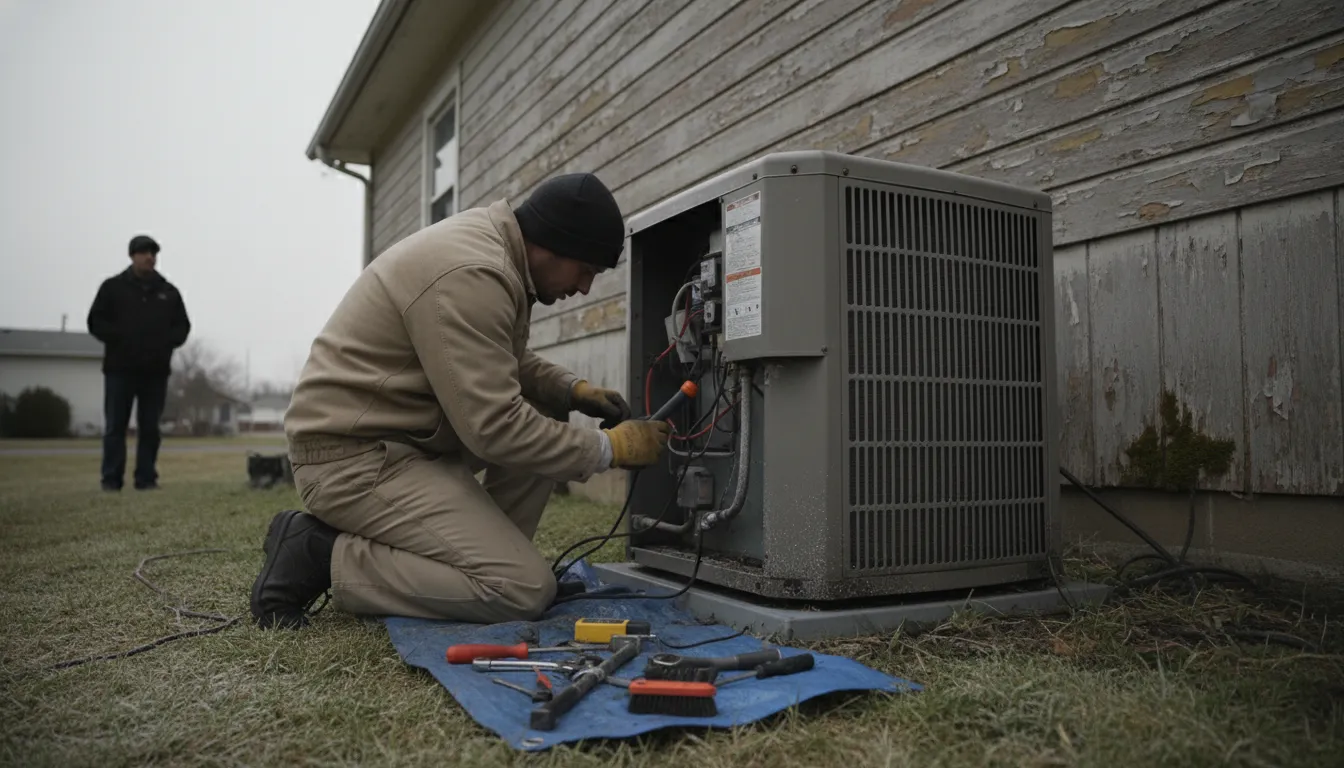
Find the Best Heat Pump Repair Contractors for Your Business
No obligation • Fast responses • Nationwide coverage

Why you can trust HVAC Firms
HVAC Firms is a leading United States resource for evaluating HVAC service providers. Our team researches companies, checks credentials, and reviews customer feedback to present clear, unbiased information. Listings and rankings are based on merit, and companies cannot pay to change our editorial content.
Search providers near you
Top Heat Pump Repair Contractors in Phoenix, Arizona Ranked
When your heat pump struggles in Phoenix's extreme climate, it's more than an inconvenience-it's a threat to your comfort and energy bills. Heat pump repair is the specialized service that restores your system's ability to both cool and heat your home efficiently. This guide explains the common problems Phoenix systems face, the repair process, and how you can connect with qualified local technicians to get your climate control back on track.
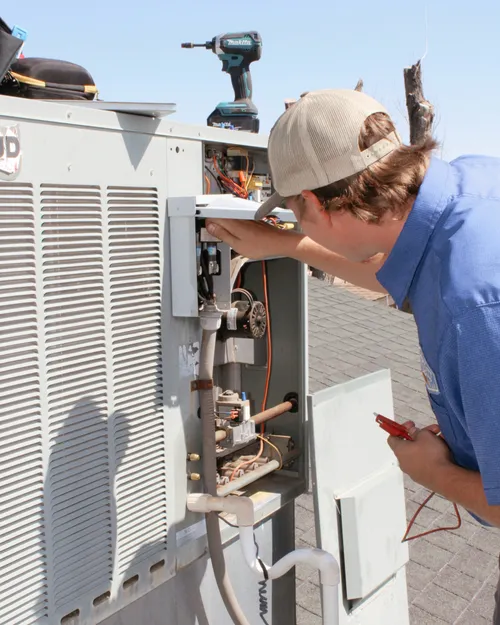
Reliance Heating and Air Conditioning
302 W Lone Cactus Dr, Phoenix, AZ 85027
Reliance Heating and Air Conditioning is a family-owned HVAC company serving Phoenix, AZ, and the surrounding areas. They offer a range of services including air conditioning, furnace, and heat pump repair and installation, as well as HVAC tune-ups and thermostat installation. As a Trane Comfort Specialist, they provide expertise with Trane systems known for reliability and quality. With over 40 years of experience as a third-generation family business, Reliance Heating and Air Conditioning emphasizes treating customers' homes with care and professionalism.

Island Breeze Air Conditioning & Heating LLC
809 E Fairmount Ave, Phoenix, AZ 85014
Island Breeze Air Conditioning & Heating LLC is a firefighter-owned HVAC company serving Phoenix, AZ, and surrounding areas including Gilbert, Mesa, Peoria, and Surprise. They provide residential and light commercial services such as air conditioning, furnace, heat pump, and ductless HVAC installation, repair, and maintenance. Their NATE-certified technicians focus on energy-efficient solutions and indoor air quality improvements. The company emphasizes integrity, accountability, and continuous improvement in their work. Island Breeze also offers after-hours service to address urgent HVAC needs.
HVAC Near Me
947 W Redwood Dr, Chandler, AZ 85248
HVAC Near Me is an HVAC repair and installation company serving Phoenix, AZ, and the surrounding metro area. They offer a wide range of services including air conditioner, heat pump, furnace, and ductless system repair and installation, as well as thermostat installation and duct cleaning. The company provides 24/7 same-day and emergency HVAC services and works with most major air conditioner brands. Their technicians are licensed, bonded, insured, and receive ongoing training to maintain service quality. HVAC Near Me serves numerous cities across the Phoenix valley, ensuring comprehensive coverage for residential and commercial customers.

Savage Air Conditioning
2315 W Fairmont Dr, Tempe, AZ 85282
Savage Air Conditioning is a family-owned HVAC company serving Phoenix, AZ, with over 30 years of experience since 1988. They provide installation, repair, and maintenance services for air conditioning, furnaces, heat pumps, and ductless mini splits for both residential and commercial clients. The company also offers indoor air quality solutions to improve home environments and has maintenance plans to help prolong system lifespan and efficiency.
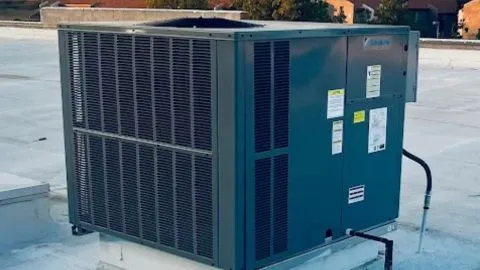
The Cooling & Plumbing Co
5026 E Main St UNIT 16, Mesa, AZ 85205
The Cooling & Plumbing Co is a veteran-operated HVAC and plumbing company serving Phoenix, AZ. They provide a full range of services including installation, maintenance, and repair of air conditioning, heating, heat pumps, mini-splits, and plumbing systems. The company has over 21 years of experience and works with well-known brands like Goodman, Amana, Daikin, and Navien. Their services cover both HVAC and plumbing needs to ensure home comfort and efficiency.
Understanding Heat Pump Malfunctions in the Desert Climate
A heat pump is a versatile year-round system, but the relentless Phoenix summer pushes it to its limits. The intense, prolonged heat accelerates wear on components and exacerbates specific failures. Understanding these common issues is the first step toward a solution. Unlike a standard air conditioner, a heat pump contains a reversing valve and other components that allow it to provide both cooling and heating, which means its repair needs can be more complex.
The most frequent service calls in our area stem from a handful of core problems directly linked to the environment. Technicians often find that systems working overtime to combat 110+ degree days are prone to specific failures.
Refrigerant Problems: The Lifeblood of Your System
Refrigerant is the essential fluid that absorbs and releases heat. In Phoenix's heat, coils operate under extreme pressure, making joints and connections more susceptible to developing small leaks over time. A low refrigerant charge is a primary culprit for poor cooling performance and can lead to more severe damage, like a frozen evaporator coil. A technician will check the charge and use specialized tools to locate and repair any leak before recharging the system to the manufacturer's precise specification.
Electrical Component Failures
The constant cycling in hot weather is brutal on electrical parts. Two of the most common replacements are:
- Capacitors: These components help start the compressor and fan motors. They can weaken and fail, often heard as a humming sound without the unit starting.
- Contactors: These are heavy-duty relays that send power to the compressor and fan. The constant electrical arcing can cause them to pit and burn out, leading to a complete system shutdown.
Fan and Motor Wear
The outdoor unit's condenser fan motor runs nearly continuously during the summer. Exposure to extreme heat, dust, and debris can cause the motor bearings to seize or the windings to burn out 1. Similarly, the indoor blower motor can fail, stopping airflow through your home. A failing motor may produce grinding noises or cause the system to overheat and trip safety switches.
Thermostat and Control Issues
Sometimes the problem isn't with the pump itself but with its brain-the thermostat. Incorrect calibration, faulty wiring, or a dead battery can cause the system to short-cycle, run constantly, or not respond at all. With modern heat pumps, communication errors between the thermostat and the outdoor unit can also cause performance issues.
The Professional Heat Pump Service Process
When you call a professional for heat pump servicing, they follow a systematic approach to diagnose and resolve your issue efficiently. This isn't a guessing game; it's a methodical troubleshooting procedure.
Step 1: Comprehensive Diagnosis A skilled technician starts by listening to your description of the problem. They will then perform a visual inspection of the indoor and outdoor units, checking filters, coils for ice or dirt, and looking for obvious damage. The core of the diagnosis involves using gauges to measure refrigerant pressures, a multimeter to test electrical components (capacitors, contactors, motors), and an anemometer to check airflow at the vents. This data pinpoints the root cause.
Step 2: Clear Explanation and Repair Plan The technician should explain what they found, why it failed, and what the repair entails. They will provide a detailed estimate for the necessary parts and labor. For reputable companies, this quote is transparent and provided before any work begins.
Step 3: Precision Repair or Replacement With approval, the technician proceeds with the repair. This could involve tasks like:
- Sealing a refrigerant leak and recharging the system.
- Swapping out a failed capacitor or contactor.
- Replacing a burned-out fan motor.
- Cleaning a clogged condensate drain line to prevent water damage.
- Installing a new, compatible thermostat.
Step 4: System Testing and Verification After the repair, the final and most critical step is testing. The technician will start the system, verify it operates correctly in both cooling and heating modes (if seasonally appropriate), confirm safe electrical readings, check that refrigerant levels are perfect, and ensure airflow is adequate 2 3. Only after the system passes all checks is the job considered complete.
Find the perfect heat pump repair contractors for your needs
Get personalized recommendations and expert advice
Repair Timelines and Cost Considerations in Phoenix
Understanding what to expect in terms of time and investment can help you plan. Repair durations and costs in Phoenix vary significantly based on the complexity of the issue and the parts required.
How Long Will the Repair Take?
- Minor Repairs: Common fixes like replacing a capacitor, contactor, or thermostat are typically completed in a few hours during a single service visit 4.
- Major Repairs: Addressing a failed compressor or replacing a fan motor takes longer. While diagnosis happens quickly, the repair itself is more involved. If the part is not in the technician's truck stock, it may require a second visit once the part is ordered, potentially extending the timeline.
A Guide to Heat Pump Repair Costs
Costs are driven primarily by the price of the replacement part and the labor to install it. Below is a general range for common repairs in the Phoenix market, though your final price will depend on your specific system model and the service provider's rates 5 6.
- Capacitor Replacement: $250 - $600. This is one of the most common and relatively affordable fixes.
- Contactor Replacement: $500 - $700.
- Condenser Fan Motor Replacement: $600 - $2,500. The wide range depends on motor type (standard vs. variable speed) and accessibility.
- Compressor Replacement: $1,500 - $3,500. This is a major repair, often involving significant labor and refrigerant recovery/recharge.
- Thermostat Replacement: $300 - $2,000. A basic model is at the lower end, while a full-featured smart thermostat with professional programming is at the higher end.
Important Note: These are repair cost ranges. If your system is very old, has multiple failures, or uses obsolete refrigerant (like R-22), a full system replacement may be a more cost-effective and reliable long-term solution. A trustworthy technician will discuss all your options.
The Critical Role of Preventative Maintenance
In Phoenix, an annual maintenance visit isn't just a recommendation; it's a necessity for your heat pump's health and longevity. A preseason tune-up can identify and correct small issues-like a slightly low refrigerant charge or a wearing capacitor-before they lead to a catastrophic breakdown on the hottest day of the year 7 8.
A thorough maintenance visit includes cleaning coils, checking refrigerant levels, tightening electrical connections, lubricating moving parts (if applicable), testing system controls, and inspecting the condensate drain. This proactive service helps maintain peak efficiency, lowers your energy bills, extends the system's life, and provides peace of mind. Many repair issues stem from a lack of regular maintenance, making this a wise investment for any Phoenix homeowner.
Frequently asked questions
Sources
Footnotes
-
Heat Pump Troubleshooting: 11 Heat Pump Issues & Their Fixes - https://cielowigle.com/blog/heat-pump-troubleshooting/ ↩
-
Ducted Heat Pump Repair & Maintenance in Phoenix - https://www.hometown-ac.com/heat-pump/repair ↩
-
What to Expect From a Heat Pump Service - Ideal Heating - https://idealheating.com/tips-and-advice/heat-pump-service-guide-what-to-expect ↩
-
Heat Pump Repair in Phoenix, AZ | Bucksworth Home Services - https://getyourbucksworth.com/phoenix/hvac-services/residential/heat-pump-services/repair/ ↩
-
Heat Pump Repair in Phoenix AZ | George Brazil HVAC - https://georgebrazilhvac.com/heating/heat-pump-repair ↩
-
Heat Pump Troubleshooting | Heat Pump Problems & Solutions - Carrier - https://www.carrier.com/residential/en/us/products/heat-pumps/heat-pump-troubleshooting/ ↩
-
Operating and Maintaining Your Heat Pump | Department of Energy - https://www.energy.gov/energysaver/operating-and-maintaining-your-heat-pump ↩
-
Annual Heat Pump Maintenance For Scottsdale, AZ Residents - https://forbesrefrigeration.com/heating/heat-pump-maintenance/ ↩