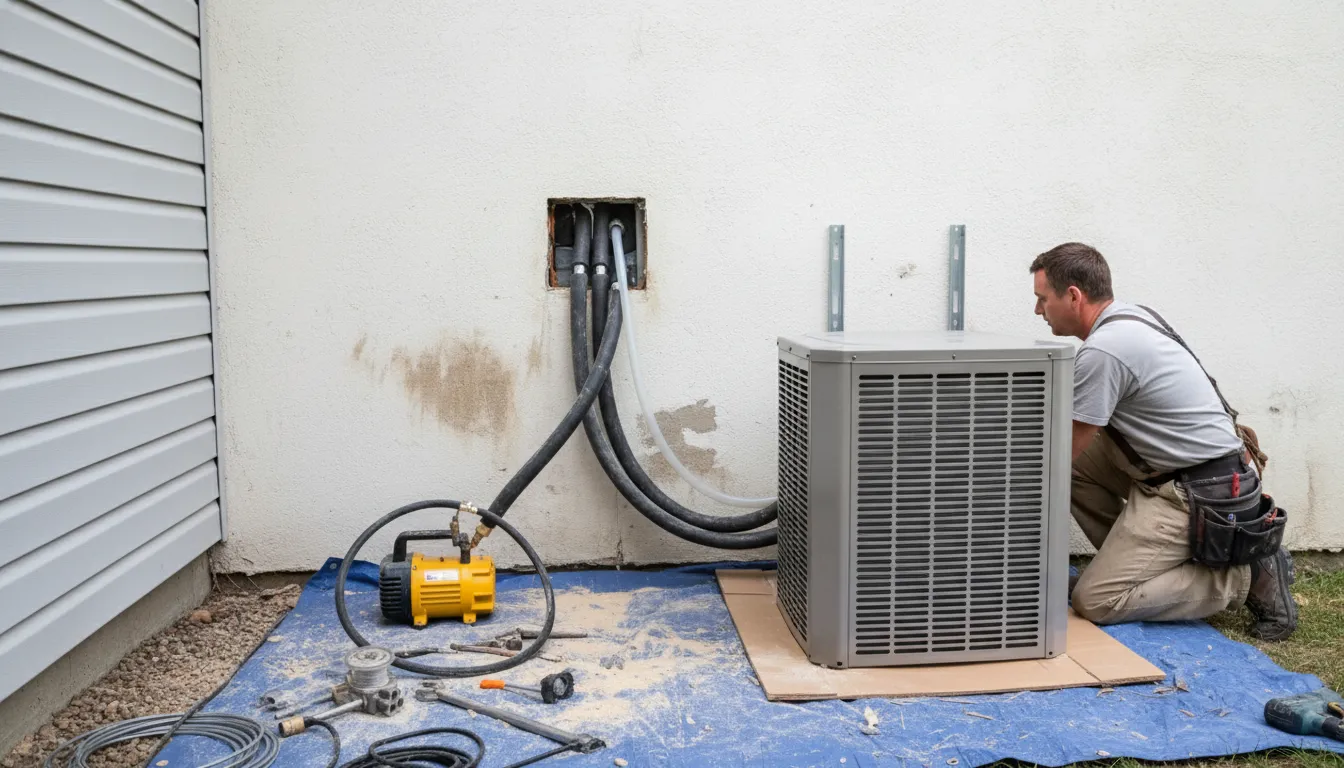
Find the Best Heat Pump Installation & Replacement Contractors for Your Business
No obligation • Fast responses • Nationwide coverage

Why you can trust HVAC Firms
HVAC Firms is a leading United States resource for evaluating HVAC service providers. Our team researches companies, checks credentials, and reviews customer feedback to present clear, unbiased information. Listings and rankings are based on merit, and companies cannot pay to change our editorial content.
Search providers near you
Top Heat Pump Installation & Replacement Contractors in Pittsburgh, Pennsylvania Ranked
Upgrading your home's heating and cooling system with a heat pump is a smart move for Pittsburgh homeowners seeking year-round comfort, lower energy bills, and a reduced carbon footprint. These versatile systems provide efficient heating in the winter and cooling in the summer by moving heat rather than generating it. Finding the right system and a qualified professional for your installation or replacement is crucial, as Pittsburgh's distinct climate and your home's specific needs demand a tailored approach. This guide will help you understand your options, from cold-climate air-source models to ductless mini-splits, so you can make an informed decision for your home.
Supreme Heating and Cooling
1475 Frey Rd, Penn Hills Township, PA 15235
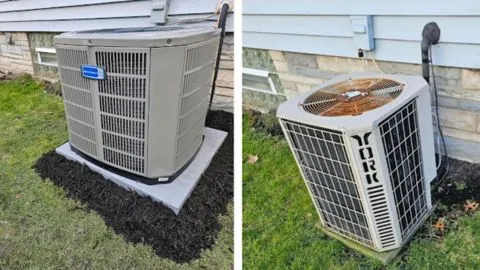
Supreme Heating and Cooling is an HVAC company based in Pittsburgh, PA, offering a wide range of heating and cooling services. They provide installation, repair, and maintenance for air conditioners, furnaces, heat pumps, boilers, mini split systems, and indoor air quality equipment. Their certified technicians also handle electrical services related to HVAC systems. The company emphasizes energy efficiency and improved indoor air quality in their work. Supreme Heating and Cooling is known for working with trusted brands and offers comprehensive HVAC solutions to keep homes comfortable year-round.
Kenders Heating & Air Conditioning
Pittsburgh, PA
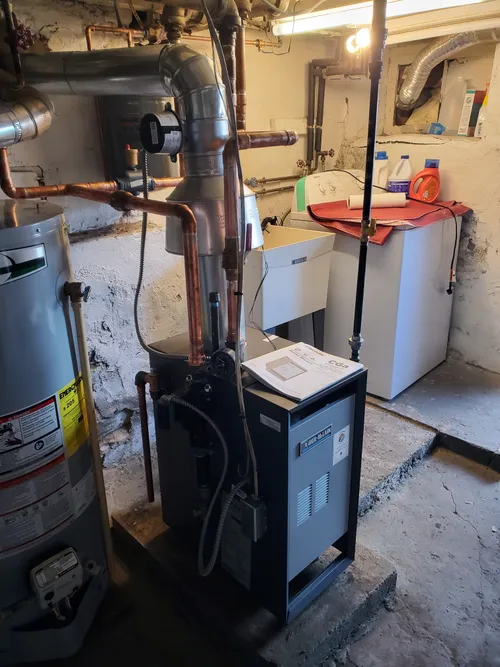
Kenders Heating & Air Conditioning provides HVAC installation and repair services in Pittsburgh, PA. They handle air conditioning, furnace, heat pump, and boiler systems, along with indoor air quality solutions. The company offers capabilities such as installing air purifiers, humidifiers, and UV lights to improve home air quality. Kenders Heating & Air Conditioning serves residential customers seeking comprehensive heating and cooling services in the Pittsburgh area.
One Hour Heating & Air
5330 Progress Blvd, Bethel Park, PA 15102
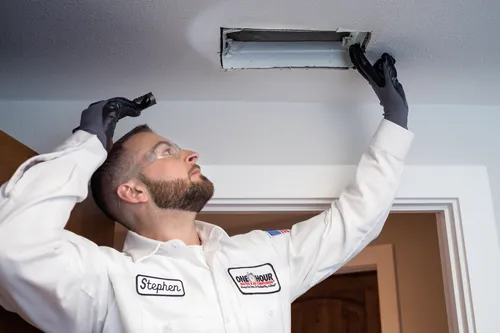
One Hour Heating & Air is an HVAC service provider based in Pittsburgh, PA. They offer repair, installation, and maintenance services for heating, air conditioning, furnaces, heat pumps, and mini splits. The company provides 24/7 emergency availability and backs their work with a two-year satisfaction guarantee. Known for punctuality and straightforward pricing, One Hour Heating & Air serves residential customers with a focus on local community investment.
Comfy Kozy® Heating Cooling Plumbing
1451 5th Ave, North Versailles Township, PA 15137
Comfy Kozy® Heating Cooling Plumbing is a family- and veteran-owned business serving Pittsburgh, PA, with plumbing, heating, cooling, and indoor air quality services. Established in 1919, the company offers installation, repair, and maintenance for HVAC systems including air conditioners, furnaces, heat pumps, and boilers. They specialize in hydronic heating systems and provide safety inspections to ensure efficient and safe operation of heating and cooling equipment. Comfy Kozy® also addresses indoor air quality needs with humidification, dehumidification, and air filtration solutions.
Woodruff and Smith Heating and Cooling, Inc.
4138 Library Rd, Pittsburgh, PA 15234
Woodruff and Smith Heating and Cooling, Inc. is a full-service HVAC and plumbing company based in Pittsburgh, PA. They provide a wide range of services including air conditioning repair and installation, furnace repair and replacement, heat pump maintenance, and HVAC tune-ups. The company also offers plumbing services such as leak detection, water heater installation, and gas line repair. As a certified Trane Comfort Specialist, they install energy-efficient heating and cooling systems designed for lasting performance. Their service area covers Pittsburgh and nearby communities including Bethel Park, McMurray, and Upper St. Clair.
Understanding Heat Pump Technology for Pittsburgh Homes
At its core, a heat pump is a two-way air conditioner. It uses refrigerant to transfer heat from one place to another. In the summer, it moves heat from inside your home to the outside. In the winter, it reverses the process, extracting available heat from the outdoor air (or ground) and pumping it indoors. This process of moving heat is significantly more efficient than traditional systems that create heat by burning fuel, which is why heat pumps are celebrated for their energy savings.
Modern advancements, especially in cold-climate heat pump technology, have made these systems highly effective for Pennsylvania winters. While older models struggled in freezing temperatures, today's units are engineered to extract heat efficiently from sub-freezing air, making them a reliable primary heating source for most Pittsburgh homes. This efficiency is measured by key ratings: the Seasonal Energy Efficiency Ratio (SEER) for cooling and the Heating Seasonal Performance Factor (HSPF) for heating. For our climate, a mid-range system with a SEER of 14-16 and a high HSPF offers an excellent balance of performance and cost.
Types of Heat Pump Systems Available
Not all heat pumps are the same. The right choice depends on your home's layout, existing infrastructure, and budget. Here are the primary types available for installation in the Pittsburgh area.
Air-Source Heat Pumps (ASHPs)
This is the most common type of heat pump installation. Air-source systems have an outdoor unit that exchanges heat with the outside air. They are ideal for homes with existing ductwork, as they can connect to the same vents used by a former furnace or central air system. For Pittsburgh, selecting a cold-climate air-source heat pump is non-negotiable to ensure consistent warmth during our coldest months.
Ductless Mini-Split Heat Pumps
Ductless systems are perfect for homes without ductwork, such as older Pittsburgh houses, or for adding zoned comfort to specific areas like sunrooms, garages, or attic conversions. A mini-split consists of a compact outdoor unit connected to one or more indoor air handlers mounted on walls or ceilings. This allows for zoned temperature control, meaning you can heat or cool only the rooms you're using, leading to further energy savings.
Geothermal (Ground-Source) Heat Pumps
Geothermal systems offer the highest efficiency by exchanging heat with the stable temperature of the earth below the frost line. While they have the highest upfront installation cost due to the need to install ground loops (either horizontally in trenches or vertically in boreholes), they provide unparalleled energy savings and are incredibly effective in Pittsburgh's climate, as the ground temperature remains relatively constant year-round.
Key Factors Influencing Cost and Selection
The investment for a new heat pump system in Pittsburgh varies widely. Understanding what drives the cost will help you budget and evaluate quotes effectively.
System Type and Size: As noted, geothermal systems are the most expensive, typically ranging from $10,000 to $30,000+ installed. A central air-source heat pump replacement often falls between $5,000 and $10,000+, while ductless mini-splits cost $3,000 to $8,000+ per indoor zone 1 2 3 4. The size, or capacity, of the unit is paramount. An oversized system will short-cycle, reducing efficiency and comfort, while an undersized one will struggle to maintain temperature. A professional must perform a Manual J load calculation to determine the precise size needed for your home's square footage, insulation levels, window quality, and local climate 5 6 7.
Home Infrastructure: The condition of your existing ductwork is a major factor. If you're replacing a traditional forced-air system with an air-source heat pump, your ducts may need sealing, modification, or even full replacement, adding to the project cost. For mini-splits or geothermal systems that don't use ducts, this cost is avoided, but the complexity of installing new linesets and electrical work is factored in.
Labor, Permits, and Brand: Installation complexity, local permit fees in Allegheny County, and the equipment brand (e.g., Carrier, Trane, Mitsubishi) all influence the final price. Higher-efficiency models with better SEER and HSPF ratings command a premium but offer greater long-term savings.
Find the perfect heat pump installation & replacement contractors for your needs
Get personalized recommendations and expert advice
Navigating Incentives and the Installation Process
A significant factor that can dramatically reduce your net cost is available incentives. Pennsylvania, along with federal programs, offers rebates and tax credits for installing high-efficiency heat pumps. These financial incentives are designed to offset the initial investment and accelerate the adoption of clean energy technology 8 9. It's essential to research current programs with your installer or through state energy office websites, as these offers can change.
The installation process itself should begin with a thorough in-home assessment. Reputable contractors will not give a quote over the phone without seeing your property. They should inspect your attic, basement, ductwork, electrical panel, and discuss your household's comfort needs. This visit is when the critical load calculation should be discussed. Once you have 3-4 detailed written estimates, you can compare not just the price, but the proposed equipment, warranty terms, and the scope of work 10 11.
Post-installation, proper maintenance is key to longevity and efficiency. This includes regular cleaning of filters (monthly for many systems), keeping the outdoor unit clear of debris and vegetation, and scheduling professional preventative maintenance at least once a year. A well-maintained heat pump can provide reliable, efficient service for 15 years or more in the Pittsburgh area.
Why a Heat Pump is a Smart Choice for Pittsburgh
Pittsburgh's climate, with its hot, humid summers and cold, snowy winters, is actually well-suited for modern heat pump technology. The efficiency gains mean that even when operating on electricity, a heat pump can be cheaper to run than a standard efficiency gas furnace or boiler when considering both heating and cooling annually. Furthermore, by moving away from fossil fuel combustion at the point of use, you're contributing to better local air quality and reducing your home's carbon emissions.
For many homeowners, the ideal solution is a hybrid or dual-fuel system, which pairs a cold-climate air-source heat pump with a traditional gas furnace. The heat pump handles moderate temperatures efficiently, and the furnace automatically takes over during extreme cold snaps (typically below a set temperature, like 20°F). This setup maximizes efficiency and cost savings while guaranteeing comfort on the very coldest days 12. Discussing this option with your installer can provide the ultimate balance of efficiency, reliability, and cost for your specific situation.
Frequently asked questions
Sources
Footnotes
-
HVAC Replacement Cost Pennsylvania: Factors Influencing ... - https://www.leokobco.com/post/hvac-replacement-cost-pennsylvania ↩
-
Heat Pump Installation & Replacement Services | Pittsburgh, PA - https://www.mcvayplumbing.com/residential/heat-pump-installation/ ↩
-
Heat Pump Cost Analysis: What To Expect & How It's Determined - https://clinesairconditioning.com/heat-pump-cost/ ↩
-
Heat Pump Installation Costs: Price Factors & Budgeting Tips - https://www.creativecomfortsolutions.com/blog/heat-pump-service/heat-pump-installation-cost-what-homeowners-should-know/ ↩
-
Do Heat Pumps Work in Pittsburgh? - Calfo Home Services - https://calfohomeservices.com/blog/do-heat-pumps-work-in-pittsburgh/ ↩
-
Cost to Replace AC Unit - 2025 Homeowner's Guide - https://regionserviceco.com/cost-to-replace-ac-unit/ ↩
-
What Size Heat Pump Do I Need? | Metamora, MI - https://kapalaheating.com/what-size-heat-pump-do-i-need/ ↩
-
2026 Heat Pump Cost Guide: Purchase, Installation & Repair - Carrier - https://www.carrier.com/residential/en/us/products/heat-pumps/how-much-does-a-heat-pump-cost/ ↩
-
Cost of a Heat Pump Installation in 2025 - https://www.cabshvac.com/heat-pump-installation-cost/ ↩
-
How Much Do Heat Pumps Cost? (2024 Price Estimate Guide) - https://jarboes.com/knowledge-center/how-much-do-heat-pumps-cost/ ↩
-
Heat Pump Installation & Repair in Pittsburgh, PA| Restano - https://www.restano.com/services/heat-pumps ↩
-
Heat Pump Cost Explained: What to Expect for Your Home Upgrade - https://www.leokobco.com/post/heat-pump-cost-explained ↩