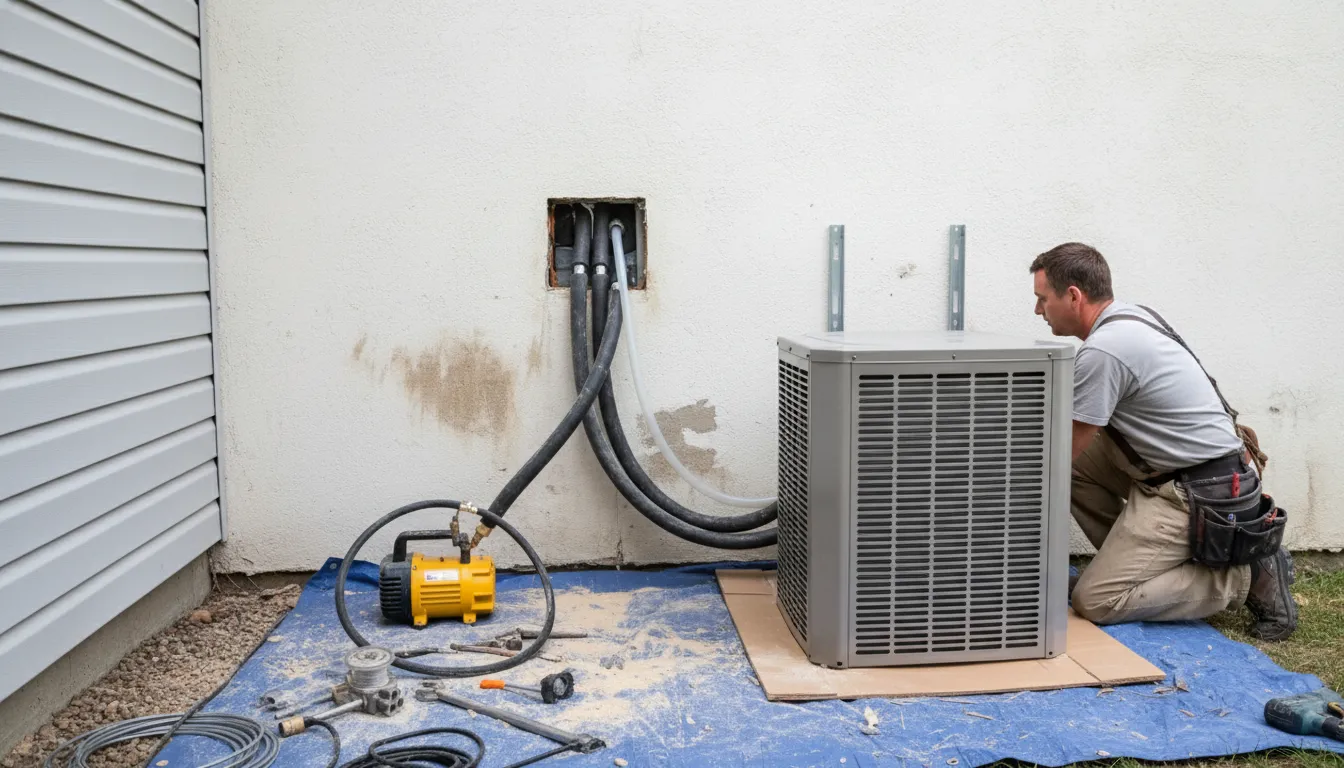
Find the Best Heat Pump Installation & Replacement Contractors for Your Business
No obligation • Fast responses • Nationwide coverage

Why you can trust HVAC Firms
HVAC Firms is a leading United States resource for evaluating HVAC service providers. Our team researches companies, checks credentials, and reviews customer feedback to present clear, unbiased information. Listings and rankings are based on merit, and companies cannot pay to change our editorial content.
Search providers near you
Top Heat Pump Installation & Replacement Contractors in Tulsa, Oklahoma Ranked
Upgrading your home's heating and cooling system with a heat pump is a smart investment for Tulsa homeowners. This versatile technology provides efficient year-round comfort, acting as both an air conditioner and a heater by moving heat rather than generating it. For our local climate, a properly sized and installed heat pump can significantly reduce energy bills while maintaining consistent indoor temperatures. This guide will help you understand your options, from system types and costs to finding qualified local professionals for your project.
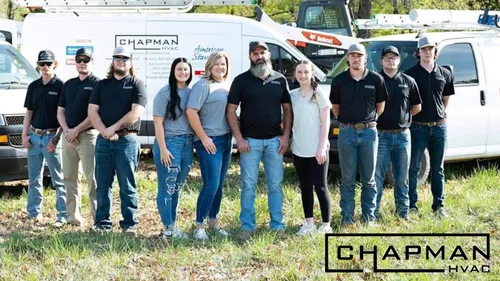
Chapman HVAC
51321 S 36400 Rd, Cleveland, OK 74020
Chapman HVAC is a licensed and insured HVAC company serving Tulsa, OK, and surrounding areas including Cleveland, Mannford, and Sand Springs. They provide a wide range of residential and commercial heating and air conditioning services, including repair, installation, and maintenance of furnaces, heat pumps, mini splits, geothermal systems, and refrigeration equipment. Their team is equipped to handle both heating and cooling needs with expertise in commercial air conditioning and heating solutions. Chapman HVAC offers 24/7 emergency HVAC services to ensure reliable comfort for their customers. With years of experience in the Cleveland area, they focus on delivering dependable HVAC solutions tailored to the specific needs of each client.
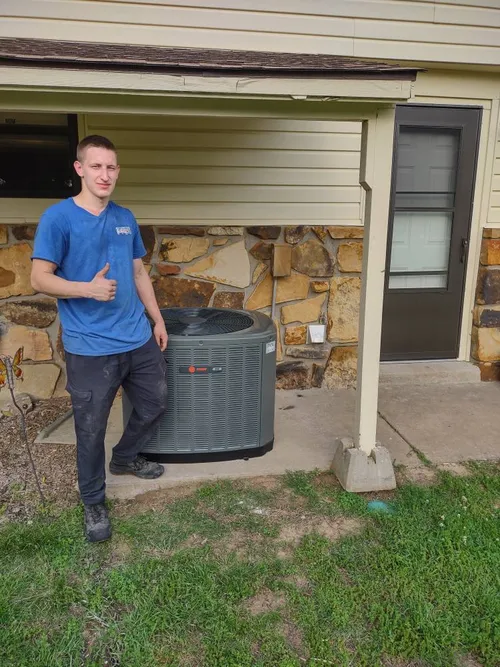
TemperaturePro
10404 E 55th Pl Suite Y, Tulsa, OK 74146
TemperaturePro is a locally owned and family-operated HVAC company serving Tulsa, OK. They provide comprehensive heating and cooling services including installation, repair, and maintenance for systems such as air conditioners, furnaces, heat pumps, boilers, and ductless mini splits. Their technicians also specialize in indoor air quality solutions, including air scrubbers and filtration systems. TemperaturePro offers 24/7 emergency service and supports a wide range of brands including Trane, Goodman, and Daikin. They emphasize transparent pricing and honest service to help customers maintain comfortable and efficient HVAC systems year-round.

American Home Pros
912 W Main St, Collinsville, OK 74021
American Home Pros is a veteran-owned HVAC and plumbing company based in Tulsa, OK. They provide a range of services including air conditioning, furnace, and heat pump repair and installation, as well as indoor air quality solutions such as duct cleaning, filtration, and humidity control. The company is known for its skilled technicians and offers maintenance memberships that include indoor air quality tests and drain treatments. They also specialize in heat pump systems suited for cold weather and provide plumbing services like water heater replacement and pipe installations.
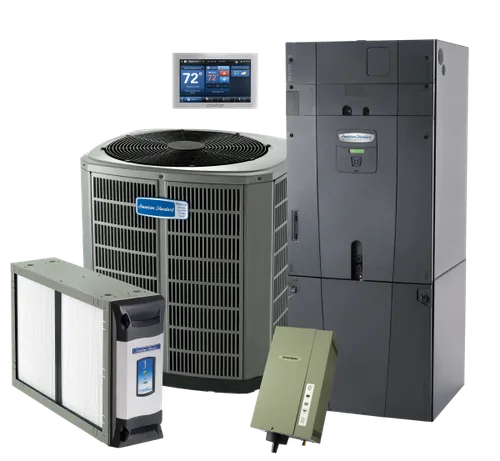
Baker's Mechanical Services
2608 W Kenosha St Ste.242, Broken Arrow, OK 74012
Baker's Mechanical Services is a residential HVAC company based in Tulsa, OK, providing installation, maintenance, and repair for heating and cooling systems. They offer services including air quality solutions such as humidifiers, air cleaners, and air purification systems. Serving Tulsa and surrounding areas, the company has been operating since 2009 and focuses on optimizing HVAC efficiency and lifespan through semi-annual maintenance programs.
ASAP Heating & Air
Tulsa, OK
ASAP Heating & Air is an HVAC company based in Tulsa, OK, offering a range of heating and cooling services for both residential and commercial customers. Their services include repair, installation, and maintenance of air conditioners, furnaces, heat pumps, and indoor air quality systems. They are a certified Lennox dealer and provide after-hours and emergency service, available 24/7. The company also offers plumbing services and financing options for new system installations.
Understanding Heat Pumps for Tulsa Homes
A heat pump is an all-in-one HVAC solution that transfers heat between your home and the outdoors. In the summer, it extracts heat from inside your house and releases it outside, functioning as an air conditioner. During Tulsa's milder winter periods, it reverses this process, pulling ambient heat from the outside air to warm your interior spaces. This method of heat transfer is inherently more energy-efficient than traditional systems that create heat through combustion or electric resistance.
For Oklahoma's specific weather patterns, which feature hot, humid summers and winters with occasional sharp cold snaps, a heat pump can be an excellent primary system. However, its efficiency in heating mode decreases as outdoor temperatures drop significantly. This makes understanding system capabilities and the potential need for supplemental heat a critical part of the planning process for any Tulsa installation.
Types of Heat Pump Systems
Not all heat pumps are the same. The right choice for your home depends on your existing infrastructure, budget, and comfort goals. Here are the primary systems available in the Tulsa market.
Air-Source Heat Pumps (Split Systems)
This is the most common type of heat pump installation. It consists of an outdoor unit (condenser) and an indoor unit (air handler), connected by refrigerant lines. These systems utilize your home's existing ductwork to distribute conditioned air. Costs and performance vary widely based on the unit's efficiency ratings, which we'll detail in a later section 1.
Ductless Mini-Split Heat Pumps
Mini-splits are ideal for homes without existing ductwork, such as older properties, room additions, sunrooms, or for creating zoned comfort in specific areas. They feature a compact outdoor unit connected to one or more sleek, wall-mounted indoor units. This setup allows for individual temperature control in different "zones" of your home, potentially saving energy by not conditioning unoccupied spaces 2.
Geothermal (Ground-Source) Heat Pumps
Geothermal systems offer the highest efficiency by exchanging heat with the relatively constant temperature of the earth, rather than the variable outside air. While they have a significantly higher upfront cost due to the required ground loop installation (drilling or trenching), they provide exceptionally low operating costs and are incredibly effective in both extreme heat and cold. They are a premium, long-term investment in home efficiency 3.
Efficiency Ratings: SEER, HSPF, and ENERGY STAR
When comparing heat pump options, you'll encounter key efficiency metrics. Understanding these will help you evaluate long-term value beyond the initial installation price.
- SEER (Seasonal Energy Efficiency Ratio): Measures cooling efficiency. The higher the SEER, the more efficient the unit is at cooling. Modern standards start around 14 SEER, with high-efficiency models reaching 20+ SEER. For Tulsa's hot summers, a higher SEER rating can lead to substantial savings on your cooling bills.
- HSPF (Heating Seasonal Performance Factor): Measures heating efficiency. Look for a rating of 8.5 or higher for good performance in our climate. The most efficient models boast HSPF ratings of 10 or above.
- ENERGY STAR® Certification: Products that earn the ENERGY STAR label meet strict efficiency guidelines set by the U.S. EPA. For heat pumps, this typically means a SEER of 15 or greater and an HSPF of 8.5 or higher, with many models offering 18-27.5 SEER and 8.5-12.5 HSPF. Choosing an ENERGY STAR certified heat pump ensures you're getting a top-tier efficient product.
Climate Considerations for Tulsa, OK
Tulsa's climate is classified as humid subtropical, which is generally well-suited for heat pump operation. Summers are long, hot, and humid, where a heat pump's efficient cooling mode excels. Winters are typically short and mild, but they are punctuated by periods of intense cold where temperatures can dip into the teens or even below 10°F.
This is the most critical factor for Tulsa homeowners to consider: supplemental heat. During these extreme cold snaps, an air-source heat pump's capacity to extract heat from the outside air diminishes. To maintain home comfort, virtually all heat pump systems in our area are installed with a form of auxiliary or backup heat. This is most commonly an electric resistance heating strip (located in the air handler) that activates when the heat pump alone cannot meet the thermostat's demand. Some hybrid systems pair the heat pump with a gas furnace, which takes over during the coldest weather. A professional installer will design a system with the appropriate supplemental heat to ensure you stay warm all winter 4 5.
Cost Guide for Heat Pump Installation & Replacement
Investing in a new heat pump is a significant decision, and costs can vary based on system type, efficiency, and home specifics. The following ranges are based on typical installations in the Tulsa area and should be used as a guideline. The only way to get an accurate price is through a professional, in-home estimate that includes a load calculation 6.
- Standard Air-Source Heat Pump: For a complete replacement of a standard-efficiency, single-stage system, homeowners can expect costs ranging from $4,500 to $8,000+. This typically includes the outdoor unit, matching indoor air handler, and standard installation with existing ductwork.
- High-Efficiency Air-Source Heat Pump: Upgrading to a variable-speed, high-SEER/HSPF model or an ENERGY STAR certified system increases the investment, with prices generally between $8,000 and $12,000+. The premium pays for advanced comfort features and lower utility bills.
- Ductless Mini-Split System: For a single-zone system (one outdoor unit, one indoor head), prices often start around $3,500. Multi-zone systems, which use one outdoor unit to serve multiple indoor heads, can range from $5,000 to $10,000+, depending on the number of zones and head types.
- Geothermal Heat Pump System: Due to the ground loop excavation or drilling, these systems have the highest upfront cost, typically between $10,000 and $30,000+. Federal tax credits and long-term energy savings can help offset this initial investment.
- Typical Complete Upgrade: For most Tulsa homes undergoing a full system change-out, factoring in equipment, labor, potential ductwork modifications, and electrical updates, a realistic total project cost often falls in the range of $9,000 to $17,000 7 8.
Find the perfect heat pump installation & replacement contractors for your needs
Get personalized recommendations and expert advice
The Professional Installation Process
A successful heat pump project hinges on proper professional installation. The process typically involves several key steps that ensure your system delivers optimal performance, efficiency, and longevity.
- Consultation & Load Calculation: A reputable technician will not simply replace your old unit with one of the same size. They will perform a Manual J load calculation, which considers your home's square footage, insulation, window types, orientation, and local climate to determine the precise heating and cooling capacity (measured in tons) your home needs. An oversized or undersized unit will lead to comfort issues, frequent cycling, and higher energy costs 9.
- Ductwork Assessment: Your existing duct system will be inspected for leaks, proper sizing, and insulation. Leaky or poorly designed ducts can sabotage the efficiency of even the best heat pump. Sealing and insulating ducts, or in some cases modifying them, may be recommended as part of the installation.
- Equipment Selection & Proposal: Based on the load calculation and your goals, the professional will recommend specific equipment models and provide a detailed written proposal outlining the scope of work, equipment specifications, and total cost.
- Installation Day: The crew will remove the old equipment, prepare the installation sites, set the new outdoor and indoor units, connect refrigerant and electrical lines, and integrate the system with your thermostat and any supplemental heat sources.
- Testing & Commissioning: After installation, the system is charged with refrigerant, started, and thoroughly tested. The technician will measure airflow, check refrigerant levels, verify thermostat operation, and ensure the supplemental heat activates correctly. They should also walk you through basic operation and maintenance.
Finding the Right Local Professional
Given the complexity and importance of a proper installation, choosing the right contractor is paramount. Look for a licensed, insured, and experienced HVAC company in Tulsa that specializes in heat pump work. Many established local firms offer free, no-obligation estimates and will include the crucial load calculation in their assessment 10. Check for positive reviews, ask for references, and verify that they are familiar with the specific requirements of installing heat pumps in Oklahoma's variable climate. A trustworthy professional will be transparent about all costs, explain your options clearly, and focus on designing a system for long-term comfort and value, not just making a sale.
Frequently asked questions
Sources
Footnotes
-
What to Consider about Heat Pump Installation in Oklahoma's Climate - https://www.pippinbrothers.com/blog/selecting-energy-efficient-heat-pump ↩
-
Heat Pump Cost Explained: What to Expect for Your Home Upgrade - https://www.leokobco.com/post/heat-pump-cost-explained ↩
-
Heat Pump Price Guides - https://heatpumppriceguides.com/ ↩
-
Heat Pump Installation & Replacement Service near Tulsa, OK - https://americanhomepros.com/heating/heat-pump-replacement-installation/ ↩
-
Heat Pumps vs. Furnaces: Which is Right for Your Home? - https://www.siglerheatandair.com/hvac/heat-pumps-vs-furnaces/ ↩
-
Heat Pump Cost Analysis: What To Expect & How It's Determined - https://clinesairconditioning.com/heat-pump-cost/ ↩
-
Heat Pump Cost & Replacement Cost Guide - Rahn Industries - https://rahnindustries.com/2023/08/08/heat-pump-replacement-cost-guide/ ↩
-
How Much Does Installing a Heat Pump Cost in 2025? Actual ... - https://thefurnaceoutlet.com/blogs/hvac-tips/how-much-does-installing-a-heat-pump-cost-in-2025-actual-estimates-advice ↩
-
Heating Installation & Replacement in Tulsa, OK - https://aircomfortsolutions.net/tulsa/heating/installation/ ↩
-
Heat Pump Maintenance & Installation in Tulsa by Sigler Heat ... - https://www.siglerheatandair.com/residential-service/heat-pumps/ ↩