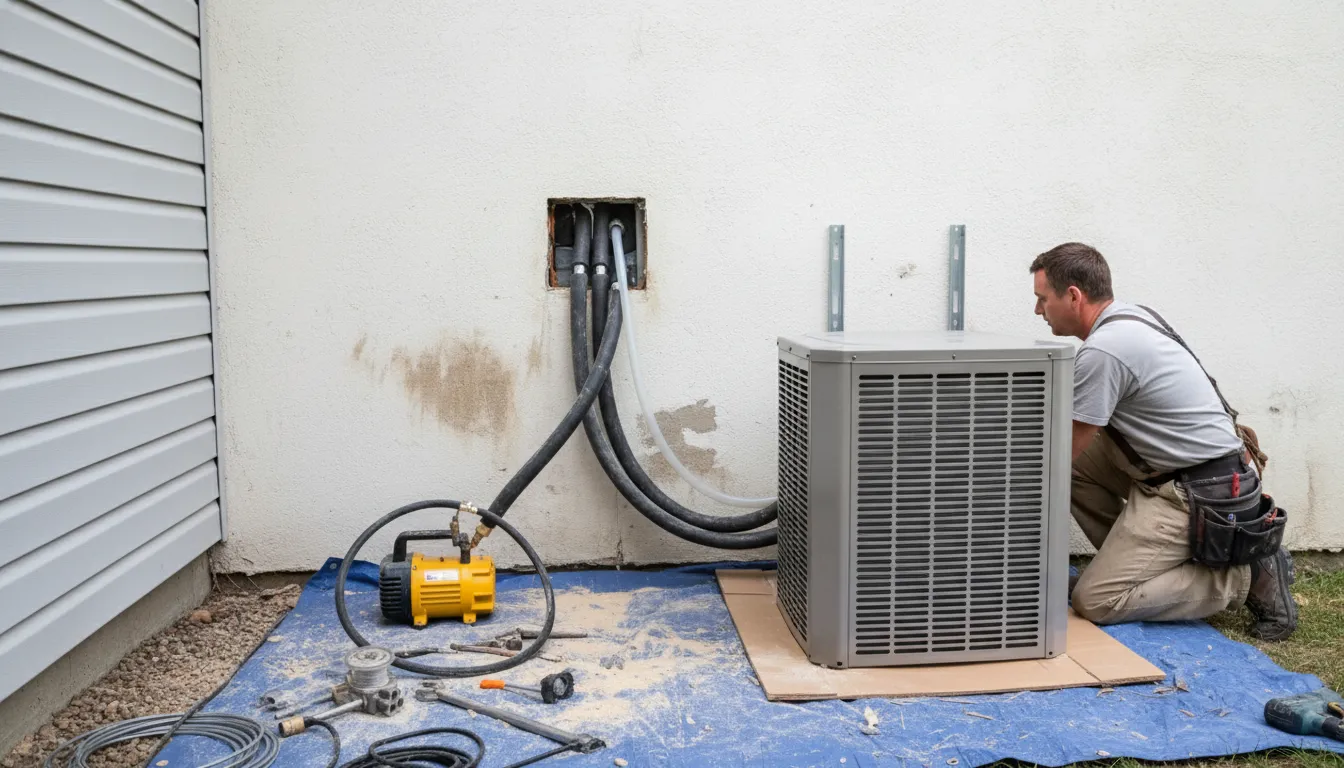
Find the Best Heat Pump Installation & Replacement Contractors for Your Business
No obligation • Fast responses • Nationwide coverage

Why you can trust HVAC Firms
HVAC Firms is a leading United States resource for evaluating HVAC service providers. Our team researches companies, checks credentials, and reviews customer feedback to present clear, unbiased information. Listings and rankings are based on merit, and companies cannot pay to change our editorial content.
Search providers near you
Top Heat Pump Installation & Replacement Contractors in Oklahoma City, Oklahoma Ranked
For Oklahoma City homeowners, upgrading your home's climate control system with a heat pump is a smart move toward year-round comfort and energy savings. A heat pump is an all-in-one heating and cooling system that efficiently transfers heat, offering a versatile solution for our region's hot summers and variable winters. This guide will help you understand the types of systems available, what to look for in a quality installation, and how to connect with experienced local professionals who can assess your home's specific needs.
A&T Mechanical Heat&Air Services, Inc.
14900 Santa Fe Crossing Dr, Edmond, OK 73013
A&T Mechanical Heat&Air Services, Inc. is a family-owned HVAC contractor based in Oklahoma City, OK, with over 40 years of experience. They provide a wide range of services including air conditioning repair, furnace and heat pump installation and repair, as well as HVAC tune-ups for residential and commercial clients. Their certified technicians serve the greater Oklahoma City area and surrounding communities, offering comprehensive heating, cooling, electrical, and plumbing solutions. The company is known for managing statewide commercial HVAC systems and emphasizes regular maintenance to ensure system efficiency and code compliance.
Ingram Mechanical
325 Koloa Ave, Edmond, OK 73034
Ingram Mechanical is an HVAC company serving Oklahoma City, OK, offering a wide range of heating and cooling services. Their expertise includes installation, repair, and maintenance of air conditioners, furnaces, heat pumps, mini splits, and geothermal heat pumps. They also provide tankless water heater services and preventative HVAC maintenance. The company emphasizes doing the job right the first time and uses state-of-the-art diagnostic equipment to efficiently address HVAC issues. Ingram Mechanical has built a reputation for quality service and customer care through years of industry experience.
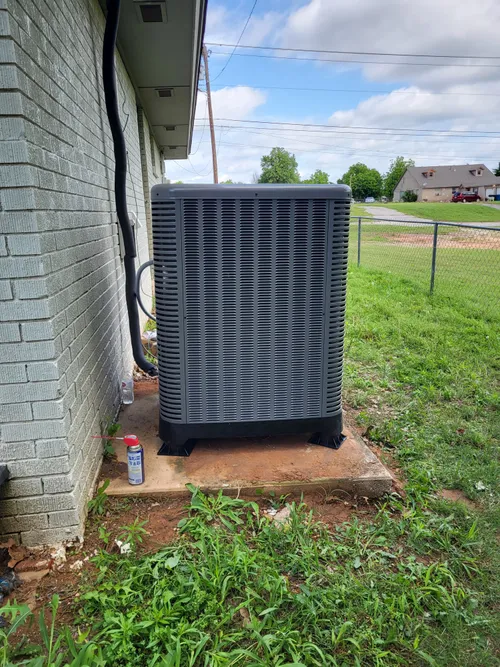
Papa T's Heating and Air LLC.
4809 Chester St, Spencer, OK 73084
Papa T's Heating and Air LLC is an HVAC contractor serving Oklahoma City, OK, and surrounding areas. With 30 years of experience, they provide installation and repair services for air conditioners, furnaces, heat pumps, and indoor air quality systems. The company is licensed, bonded, and insured, emphasizing professionalism and compliance with state requirements.
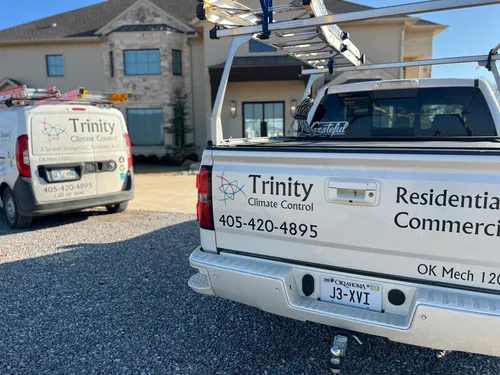
Trinity Climate Control
Oklahoma City, OK
Trinity Climate Control is a family-owned HVAC company serving Oklahoma City, OK. They provide repair, installation, and tune-up services for air conditioners, furnaces, heat pumps, and boilers. The company maintains a large inventory of parts to complete repairs and installations efficiently. Trinity Climate Control also offers emergency services to address urgent HVAC needs.

Hodge Heat and Air LLC
11200 Ashford Dr, Yukon, OK 73099
Hodge Heat and Air LLC provides residential HVAC services in Oklahoma City, OK. They specialize in the installation, repair, and maintenance of air conditioners, furnaces, heat pumps, boilers, mini splits, and geothermal heat pumps. The company offers HVAC tune-up services and is available around the clock to address heating and cooling needs. Their team consists of qualified professionals focused on delivering reliable HVAC solutions for home comfort.
Understanding Heat Pump Technology
A heat pump operates on a simple principle: it moves heat from one place to another. In the summer, it extracts heat from inside your home and releases it outdoors, functioning as an air conditioner. In the winter, the process reverses, pulling ambient heat from the outside air (or ground) and transferring it indoors to warm your living spaces. This method of heat transfer is far more energy-efficient than generating heat through combustion, as in a traditional furnace. For Oklahoma City's climate, which sees a wide temperature range, this technology provides a unified and efficient solution for both primary seasons.
Types of Heat Pump Systems for OKC Homes
Choosing the right type of heat pump system depends on your home's existing infrastructure, budget, and efficiency goals. The three main categories are:
Air-Source Heat Pumps (Split Systems)
This is the most common and widely installed type of heat pump. It consists of an outdoor unit (condenser) and an indoor unit (air handler), connected by refrigerant lines. If your Oklahoma City home already has functional ductwork for a forced-air system, an air-source heat pump can often be integrated seamlessly. These systems are a popular choice for whole-home replacements due to their balance of performance and cost. Modern models are effective even in colder temperatures, though they may use supplemental electric heat strips during deep cold snaps 1.
Ductless Mini-Split Heat Pumps
Ideal for homes without existing ductwork, room additions, sunrooms, or for creating independent temperature zones. A ductless mini-split system has a compact outdoor unit connected to one or more sleek, wall-mounted indoor units. This setup allows for targeted heating and cooling without the energy losses associated with ductwork. They are excellent for improving comfort in specific areas and can be a more affordable initial investment for single-zone applications.
Geothermal Heat Pumps (Ground-Source)
This is the premium, high-efficiency option. Geothermal systems use the stable temperature of the earth several feet below the surface to exchange heat. While they have a significantly higher upfront installation cost due to the required ground loop excavation, they offer unparalleled efficiency and stability, especially during Oklahoma City's most extreme summer heat and winter cold. Their operation is exceptionally quiet and they have the longest lifespan of any HVAC equipment 2.
Key Efficiency Ratings: SEER, HSPF, and What They Mean for You
When comparing heat pump systems, efficiency ratings are critical for understanding long-term operating costs and comfort.
- SEER (Seasonal Energy Efficiency Ratio): Measures cooling efficiency. The higher the SEER rating, the more efficient the system is at cooling. For Oklahoma, the minimum standard is 14 SEER, but high-efficiency models start at 16 SEER and can go much higher 3 4.
- HSPF (Heating Seasonal Performance Factor): Measures heating efficiency. A higher HSPF indicates better heating performance and lower electricity use during the winter months.
- Variable-Speed Technology: High-efficiency heat pumps often feature variable-speed compressors and fans. Unlike single-stage systems that simply turn on and off, variable-speed systems adjust their output in small increments. This leads to more consistent temperatures, better humidity control in summer, and significantly quieter operation, all while using less energy.
Investing in a system with superior SEER and HSPF ratings, coupled with variable-speed technology, translates to lower utility bills and enhanced comfort throughout the year, making it a wise choice for the OKC climate.
Heat Pump Performance in the Oklahoma City Climate
Oklahoma City experiences a humid subtropical climate with hot, humid summers and winters that can bring both mild spells and periods of intense cold. This variability is a key consideration for heat pump performance.
Air-source heat pumps are designed to work efficiently in cold weather, but their capacity to extract heat from the air diminishes as temperatures drop significantly below freezing. Modern systems are equipped with auxiliary or "backup" electric heating elements that automatically engage to provide supplemental warmth during these deep cold periods, ensuring your home stays comfortable. This is why proper system sizing and design by a qualified professional is non-negotiable.
Geothermal heat pumps have a distinct advantage in this climate. Because they exchange heat with the earth, which maintains a relatively constant temperature year-round, their efficiency remains stable regardless of how hot or cold the air temperature gets outside. This makes them exceptionally reliable and efficient for handling OKC's temperature extremes.
Find the perfect heat pump installation & replacement contractors for your needs
Get personalized recommendations and expert advice
Understanding Investment and Incentives
The cost of a new heat pump installation in Oklahoma City varies widely based on the system type, size, efficiency, and complexity of the installation in your specific home.
- Air-Source Heat Pump: For a standard, whole-home split system replacement, homeowners can expect a general range of $9,000 to $14,000+, with higher-efficiency models commanding a premium.
- Ductless Mini-Split: A single-zone system typically starts around $3,500 to $7,000+, with costs increasing for multi-zone setups that cool multiple rooms.
- Geothermal Heat Pump: These systems represent a major investment, with installation costs generally ranging from $10,000 to over $45,000, heavily dependent on the ground loop type and property characteristics 5.
Financial Incentives Can Lower Your Cost
Significant rebates and tax credits are available to make high-efficiency heat pumps more affordable:
- Federal Tax Credit: The Residential Clean Energy Credit offers a 30% tax credit on the total cost of installing an Energy Star-qualified geothermal heat pump. For other qualified heat pump property, a credit of up to $2,000 is available. This credit applies through 2032 6 7.
- Oklahoma State Rebates: The Oklahoma Department of Commerce's State Energy Office administers rebate programs for income-qualified households. These can provide substantial assistance, with potential rebates ranging from $8,000 to $14,000 for eligible energy-efficient upgrades, including heat pumps 8 9.
A reputable local installer will be knowledgeable about these programs and can help you determine your eligibility.
The Importance of Professional Sizing and Installation
A heat pump is a significant investment, and its performance, efficiency, and lifespan are directly tied to the quality of the installation. An improperly sized unit-too large or too small-will cycle inefficiently, struggle to control humidity, and lead to higher energy bills and premature wear.
A professional contractor will perform a Manual J load calculation, which considers your home's square footage, insulation levels, window quality, air leakage, and local climate data to determine the precise heating and cooling capacity (measured in tons) your home requires. They will also assess your existing ductwork (if applicable) for leaks and proper sizing to ensure the new system can deliver air effectively.
Choosing a licensed, insured, and experienced installer is the most important step in ensuring you get the full comfort and savings benefits your new heat pump system is designed to provide.
Frequently asked questions
Sources
Footnotes
-
Heat Pump Services in Oklahoma City - https://www.rhinoheatandair.com/heat-pumps/ ↩
-
Heat Pump vs. Geothermal Systems for Your OKC Home - https://suntechokc.com/blog/heat-pump-vs-geothermal/ ↩
-
2026 Heat Pump Cost Guide: Purchase, Installation & Repair - Carrier - https://www.carrier.com/residential/en/us/products/heat-pumps/how-much-does-a-heat-pump-cost/ ↩
-
New 2023 Energy Efficiency Standards | True Climate Heat & Air - https://mytrueclimate.com/what-to-know-about-the-new-2023-energy-efficiency-standards/ ↩
-
Heat Pump Cost Explained: What to Expect for Your Home Upgrade - https://www.leokobco.com/post/heat-pump-cost-explained ↩
-
The Best Geothermal Heat Pump Services in Oklahoma City - https://suntechokc.com/geothermal-heating-cooling-services/geothermal-heat-pump-installation/ ↩
-
Top Heat Pump Installation Contractors In Oklahoma City, OK - https://modernize.com/near-me?find=heat-pump-installation&location=oklahoma-city,ok ↩
-
Oklahoma State Energy Office - https://www.okcommerce.gov/community-development/local-governments-edos/oklahoma-state-energy-office/ ↩
-
R-32 Efficiency Guide: SEER2, EER, and Energy Savings Explained - https://thefurnaceoutlet.com/blogs/hvac-tips/r-32-efficiency-guide-seer2-eer-and-energy-savings-explained ↩