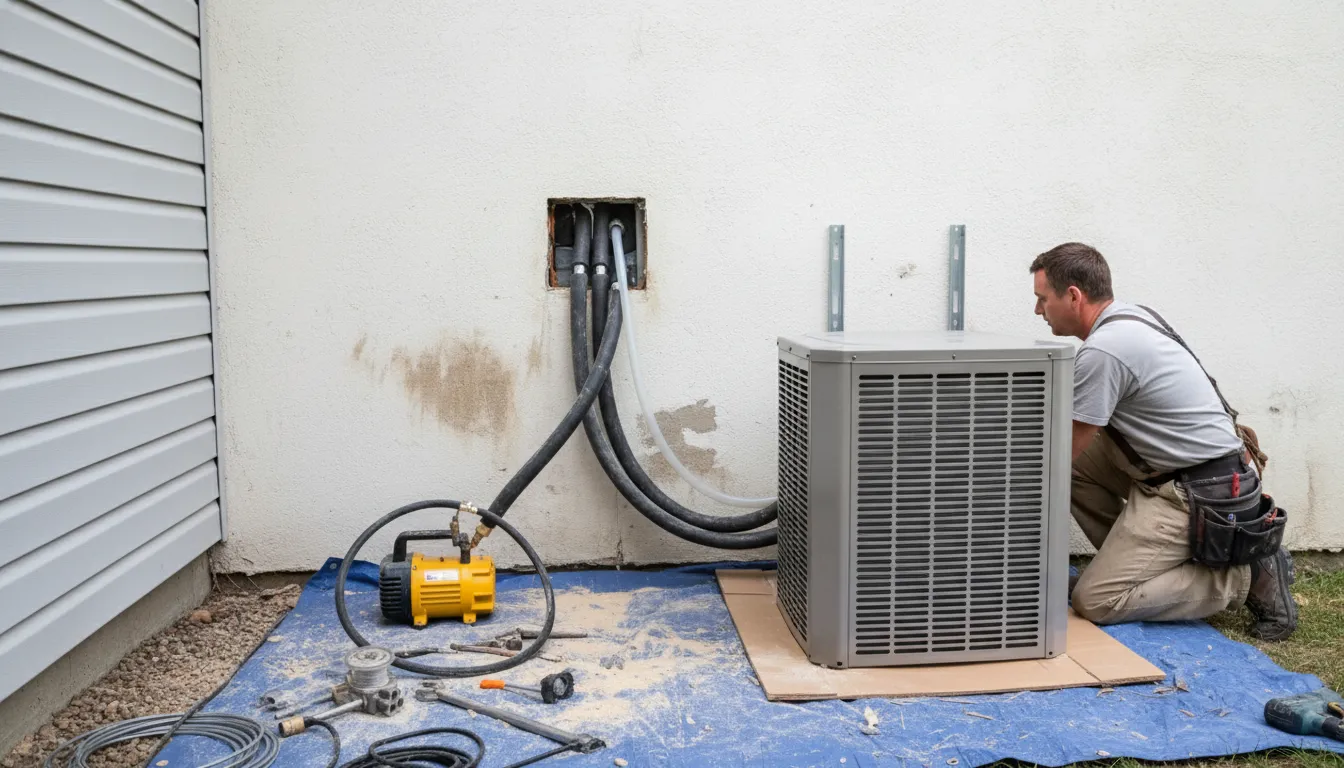
Find the Best Heat Pump Installation & Replacement Contractors for Your Business
No obligation • Fast responses • Nationwide coverage

Why you can trust HVAC Firms
HVAC Firms is a leading United States resource for evaluating HVAC service providers. Our team researches companies, checks credentials, and reviews customer feedback to present clear, unbiased information. Listings and rankings are based on merit, and companies cannot pay to change our editorial content.
Search providers near you
Top Heat Pump Installation & Replacement Contractors in Wake Forest, North Carolina Ranked
For Wake Forest homeowners, upgrading your home's heating and cooling system with a heat pump is a smart investment in year-round comfort and energy efficiency. These versatile systems provide both heating and cooling from a single unit, making them exceptionally well-suited to North Carolina's climate. This guide will help you understand the types of systems available, key considerations for our area, and how to navigate the process of selecting and installing a new heat pump.
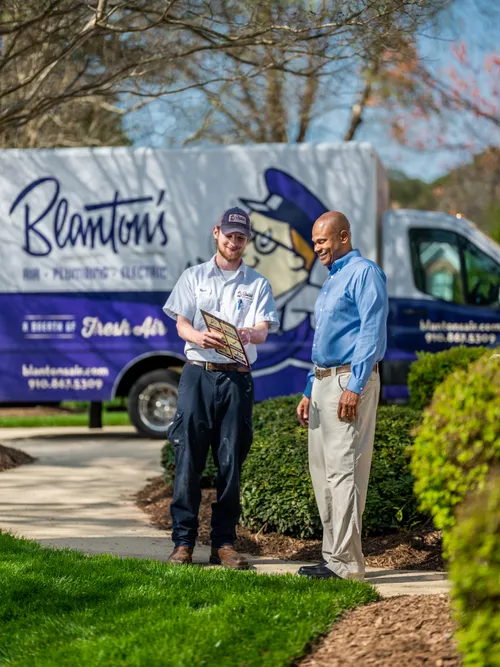
Blanton's Air, Plumbing & Electric
2000 Citation Dr Ste 100, Garner, NC 27529
Blanton's Air, Plumbing & Electric has been serving Raleigh, NC, and the surrounding Triangle area since 1951. They provide a wide range of home services including HVAC repair and installation for air conditioners, furnaces, heat pumps, and boilers. With over 75 years of experience, they offer comprehensive maintenance and emergency services to ensure home comfort and safety year-round. Their team is available 24/7, including after-hours support through an AI representative and live customer care, prioritizing urgent needs and flexible scheduling.
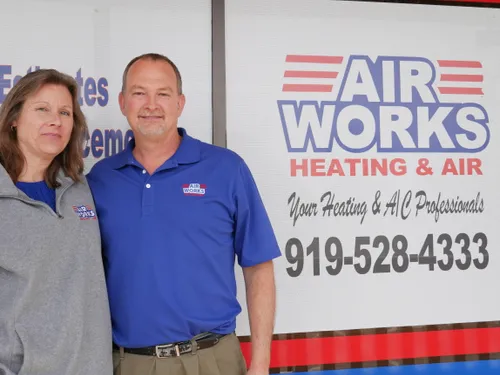
Air Works Heating & Air
5100 Unicon Dr #107, Wake Forest, NC 27587
Air Works Heating & Air is a family-owned HVAC and plumbing company serving Raleigh, NC, and the surrounding Wake County area. Since 2007, they have provided furnace and air conditioning repairs, installations, indoor air quality services, and duct cleaning. Their certified technicians work with top brands like American Standard and Mitsubishi Electric, offering services such as furnace replacements, AC tune-ups, and ductless mini split installations. The company emphasizes straightforward pricing and backs their work with a one-year parts and labor warranty.
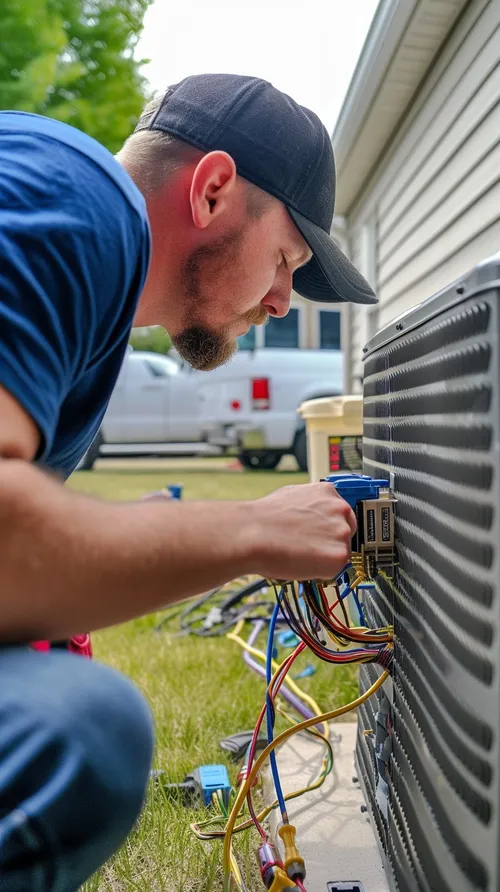
Jay's Heating and Cooling
6616 Prescott Shore Dr, Wake Forest, NC 27587
Jay's Heating and Cooling is a locally owned HVAC company serving Raleigh, NC. They provide a range of services including air conditioning repair and installation, furnace repair and installation, heat pump maintenance and repair, and HVAC tune-ups for both residential and commercial clients. The company uses advanced equipment and employs NATE certified technicians skilled in handling various HVAC systems, including those using A2L refrigerants. With over 60 years of combined experience, Jay's Heating and Cooling emphasizes quality workmanship and long-term client relationships.
Smart Home Comfort
Raleigh, NC
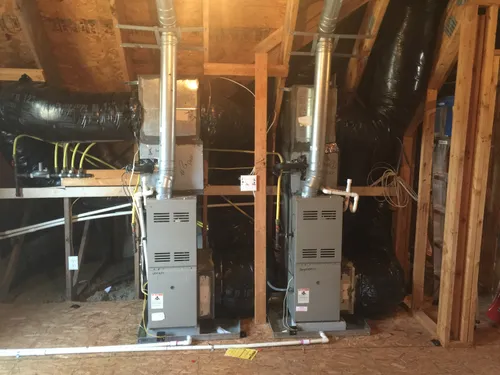
Smart Home Comfort is an HVAC company serving Raleigh, NC, specializing in heating and cooling installation, repair, and maintenance. They offer services including air conditioning and furnace repair, heat pump installation, duct cleaning, and indoor air quality improvements. The company provides AeroSeal duct sealing to improve airflow and energy efficiency. Smart Home Comfort operates with a focus on personalized service and is available 24/7 for emergency HVAC needs.
AC Today Heating & Air Conditioning Cary
1750 NW Maynard Rd Suite 105, Cary, NC 27513
AC Today Heating & Air Conditioning Cary provides a range of HVAC services in Raleigh, NC. They handle installation, maintenance, diagnostics, repairs, system replacements, and indoor air quality solutions. Their expertise includes air conditioning, furnace, and heat pump services, as well as tune-ups to keep systems running efficiently.
Why Consider a Heat Pump in Wake Forest?
The primary appeal of a heat pump is its dual functionality and high efficiency. Unlike a furnace that creates heat, a heat pump moves existing heat from one place to another-extracting warmth from the outdoor air to heat your home in winter and reversing the process to cool it in summer. This method of heat transfer is significantly more energy-efficient than traditional combustion or electric resistance heating. For the mild winters and humid summers typical of Wake Forest, this efficiency translates to substantial savings on utility bills throughout the year. While they perform excellently in our climate, it's important to note that during rare, severe cold snaps, most air-source systems utilize built-in electric resistance strips as a supplemental heat source to maintain comfort 1.
Common Types of Heat Pump Systems
Choosing the right type of system depends heavily on your home's existing infrastructure and your specific comfort goals. Here are the most common configurations installed in Wake Forest area homes.
Air-Source Split Systems
This is the most prevalent type of heat pump installation, especially in homes with existing ductwork. The system consists of an outdoor unit (condenser) and an indoor unit (air handler) that work together to circulate conditioned air through your home's vents. They are a reliable and cost-effective choice for whole-home comfort and are highly efficient for our regional weather patterns.
Ductless Mini-Split Systems
For homes without ducts, room additions, or for creating independent temperature zones, ductless mini-splits are an excellent solution. These systems involve one or more quiet, wall-mounted indoor units connected to a single outdoor condenser via a small conduit. They offer tremendous flexibility and avoid the energy losses associated with ductwork, leading to high efficiency for the spaces they serve 2 3.
Geothermal (Ground-Source) Heat Pumps
Representing the pinnacle of efficiency, geothermal systems exchange heat with the stable temperature of the earth through underground loops. While they have the highest upfront cost due to the excavation or drilling required, they offer the lowest operating costs and are incredibly durable. They are exceptionally effective in both heating and cooling modes, regardless of outdoor air temperature 4 5.
Packaged Units
Less common in residential settings, packaged heat pumps are single, self-contained units typically installed on the roof or a concrete slab beside the home. All components are housed together, and conditioned air is ducted into the home. They can be a space-saving solution where indoor closet or attic space is limited.
Understanding Efficiency: SEER and HSPF Ratings
When comparing heat pumps, you'll encounter two critical efficiency metrics: SEER and HSPF. Understanding these will help you balance upfront cost with long-term savings.
- SEER (Seasonal Energy Efficiency Ratio): Measures cooling efficiency. The higher the SEER number, the more efficient the unit is at cooling. Modern standards start around SEER 15.
- HSPF (Heating Seasonal Performance Factor): Measures heating efficiency. A higher HSPF indicates better heating performance and efficiency.
For Wake Forest, where the system will be used heavily for both seasons, paying attention to both ratings is crucial. Standard efficiency models might offer SEER 15-16 and HSPF 8.3-8.8, providing good performance at a moderate cost. High-efficiency and ENERGY STAR® certified models, with SEER ratings of 17-18+ and HSPF 9.5+, command a higher initial price but can reduce energy consumption significantly, often qualifying for valuable rebates and incentives 6.
Find the perfect heat pump installation & replacement contractors for your needs
Get personalized recommendations and expert advice
Cost Considerations for Installation and Replacement
The investment for a new heat pump in Wake Forest varies widely based on several factors. On average, homeowners can expect a cost range between $3,000 and $10,000 or more for a full system installation or replacement 7 8. This broad range is influenced by:
- System Size and Capacity: Proper sizing, measured in tons or BTUs, is non-negotiable. An undersized unit will struggle, while an oversized one will short-cycle, reducing efficiency, comfort, and lifespan. A professional load calculation is essential.
- System Type and Efficiency: As discussed, ductless mini-splits, multi-zone systems, and high-SEER/HSPF models have higher equipment costs. Geothermal systems represent the top end of the investment scale.
- Existing Infrastructure: The condition of your ductwork can greatly impact cost. Repairing, modifying, or sealing existing ducts adds to the project, while installing a ductless system avoids this altogether.
- Labor and Complexity: The difficulty of the installation, such as the need for a crane, extensive electrical work, or custom fabrication, affects labor costs.
It's important to view this purchase through the lens of total cost of ownership. A more efficient, properly sized system, while potentially more expensive initially, will deliver lower monthly energy bills. Replacing an old, inefficient system with a modern heat pump can reduce heating and cooling costs by 30-50% 9.
Key Steps in the Wake Forest Installation Process
- Schedule Professional Consultations: Start by getting detailed estimates from several licensed, insured, and experienced local HVAC contractors. They should perform a manual J load calculation to determine the correct size for your home.
- Evaluate Quotes and Options: Compare not just the bottom-line price, but the proposed equipment, its efficiency ratings, warranty terms, and the scope of work. A reputable contractor will explain their recommendations clearly.
- Explore Rebates and Incentives: Before making a final decision, investigate available financial incentives. These can include federal tax credits, rebates from Duke Energy or other local utilities, and state programs for ENERGY STAR® qualified equipment, which can substantially lower your net cost 10.
- Focus on Quality Installation: The best equipment will underperform if installed incorrectly. Ensure your chosen contractor has a strong reputation for quality workmanship, follows all local codes, and will handle necessary permits.
Maintaining Your New Heat Pump
To protect your investment and ensure it operates at peak efficiency for its full lifespan (typically 10-15 years), regular maintenance is key. This includes simple homeowner tasks like keeping the outdoor unit clear of debris, leaves, and snow, and changing indoor air filters regularly. Professional maintenance, ideally performed twice a year in the spring and fall, should include checking refrigerant levels, cleaning coils, inspecting electrical components, and verifying system performance. A well-maintained heat pump is a reliable and efficient one.
Frequently asked questions
Sources
Footnotes
-
North Carolina Heating Showdown: Heat Pumps and Furnaces - https://caseyserviceshvac.com/blog/north-carolina-heating-showdown-heat-pumps-and-furnaces/ ↩
-
Heat Pump Services in Wake Forest, NC - https://callelement.com/service-areas/wake-forest/heat-pump-services ↩
-
Heat Pump Price Guides - https://heatpumppriceguides.com/ ↩
-
Is Replacing a Heat Pump Expensive in North Carolina? - https://www.yourcomfortfirst.com/blog/is-replacing-a-heat-pump-expensive-in-north-carolina/ ↩
-
Heat Pump Installation Cost Guide: Types, Factors & Savings - https://statclimate.ca/heat-pump-installation-cost-guide/ ↩
-
Purchasing Energy-Efficient Residential Air-Source Heat Pumps - https://www.energy.gov/femp/purchasing-energy-efficient-residential-air-source-heat-pumps ↩
-
2026 Heat Pump Cost Guide: Purchase, Installation & Repair - https://www.carrier.com/residential/en/us/products/heat-pumps/how-much-does-a-heat-pump-cost/ ↩
-
Heat Pump Replacement Cost: A Complete Guide for Wake ... - https://caseyserviceshvac.com/blog/heat-pump-replacement-cost-a-complete-guide-for-wake-forest-raleigh-homeowners/ ↩
-
How Much Does a Heat Pump Cost? 2025 Expert Guide - https://www.solarreviews.com/blog/heat-pump-costs ↩
-
2026 Heat Pumps Installation Cost Guide: Types, Sizes and Brands - https://modernize.com/hvac/heating-repair-installation/heat-pump ↩