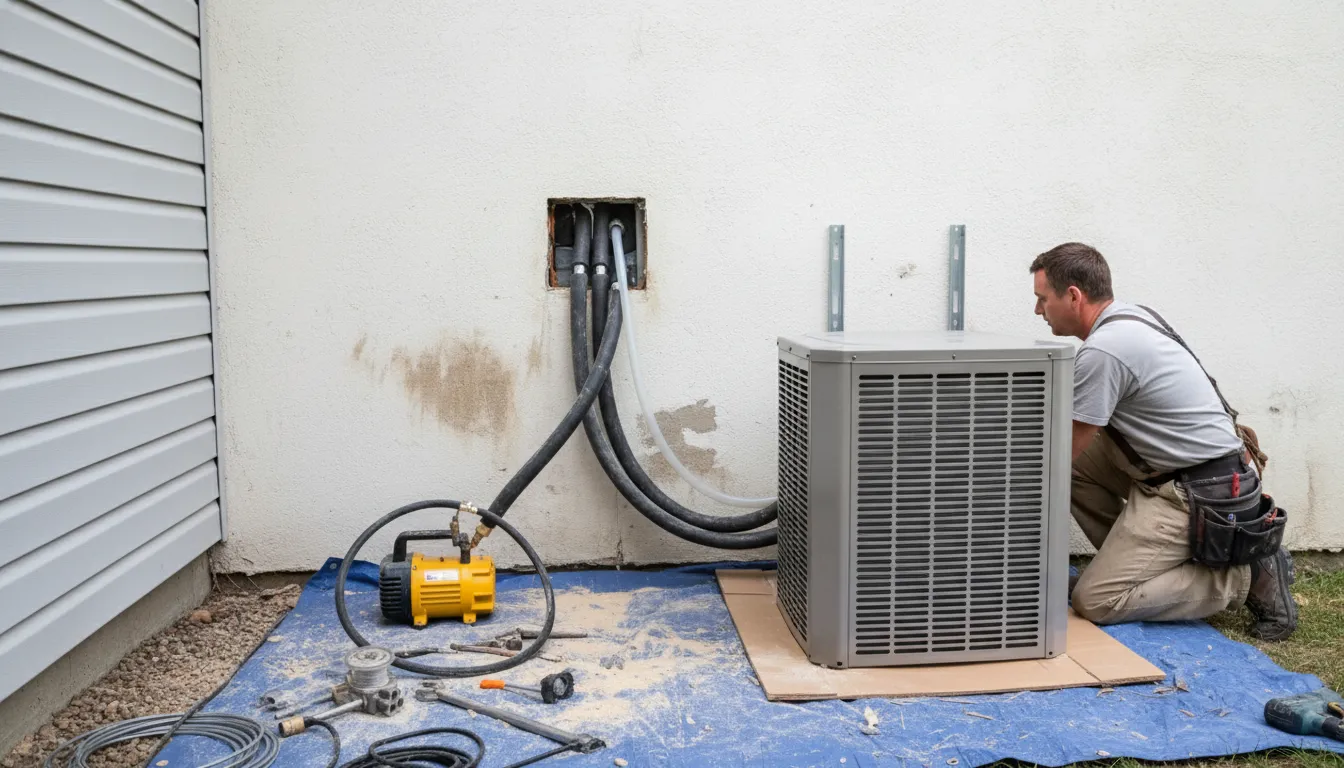
Find the Best Heat Pump Installation & Replacement Contractors for Your Business
No obligation • Fast responses • Nationwide coverage

Why you can trust HVAC Firms
HVAC Firms is a leading United States resource for evaluating HVAC service providers. Our team researches companies, checks credentials, and reviews customer feedback to present clear, unbiased information. Listings and rankings are based on merit, and companies cannot pay to change our editorial content.
Search providers near you
Top Heat Pump Installation & Replacement Contractors in Charlotte, North Carolina Ranked
A heat pump is an efficient, all-in-one system for both heating and cooling your home, making it an ideal choice for Charlotte's climate. By moving heat rather than generating it, these systems can offer significant energy savings and year-round comfort. This guide will help you understand the types of systems available, the factors that influence cost, and how to find qualified local professionals for your project.
McClintock Heating and Cooling
3032 Eaton Avenue Suite 103, Indian Trail, NC 28079
McClintock Heating and Cooling is a locally owned and fully licensed HVAC company serving Charlotte, NC, and surrounding areas. They offer a range of heating and cooling services including repair and installation of air conditioners, furnaces, heat pumps, and indoor air quality solutions. The company also provides plumbing and electrical services, expanding their support for home and commercial comfort needs. With over 24 years of experience, McClintock Heating and Cooling focuses on tailored solutions that improve energy efficiency and system performance.
Panther Heating and Cooling
722 Corporate Blvd Suite 105, Rock Hill, SC 29730
Panther Heating and Cooling is an HVAC company based in Charlotte, NC, offering a full range of heating and cooling services including installation, repair, and maintenance of furnaces, air conditioners, heat pumps, and mini-split systems. They also provide indoor air quality solutions and smart thermostat installations. The company serves Charlotte and surrounding areas such as Rock Hill, Tega Cay, Fort Mill, Indian Land, York, Clover, Matthews, and Waxhaw. Panther Heating and Cooling emphasizes skilled, certified technicians and offers 24/7 emergency HVAC services to address urgent needs promptly.
City Air Experts Heating and Cooling
411 Foster Ave, Charlotte, NC 28203
City Air Experts Heating and Cooling is a Charlotte, NC-based company providing residential and commercial HVAC services. They offer installation, repair, and maintenance for air conditioning, furnaces, heat pumps, mini splits, and general HVAC systems. The company is a certified Trane Comfort Specialist and employs NATE-certified technicians, ensuring skilled service. Established in 2009, City Air Experts provides 24/7 emergency HVAC services to respond to urgent needs any time of day or night.

NASCAIR Heating & Cooling
377 Rubin Center Dr Suite 210, Fort Mill, SC 29708
NASCAIR Heating & Cooling is a veteran-owned HVAC company serving Charlotte, NC, and nearby areas since 2004. They specialize in the repair, maintenance, and installation of heating and air conditioning systems, including furnaces, heat pumps, mini splits, and ductless systems. NASCAIR is known for its skilled technicians who handle all makes and models, offering services such as HVAC tune-ups and ductwork replacement. With over 20 years of experience, the company focuses on ensuring safe, efficient, and comfortable home environments.
Super Cool HVAC
954 N Davidson St, Charlotte, NC 28206
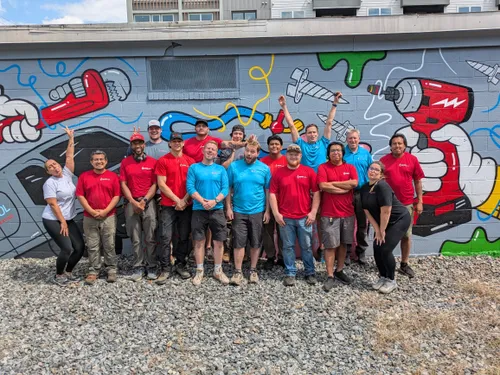
Super Cool HVAC is a locally owned company based in Charlotte, NC, offering residential and commercial heating and cooling services. They provide installation, repair, and maintenance for air conditioners, furnaces, heat pumps, and HVAC systems. The company emphasizes clear communication and customer partnership throughout scheduling, diagnosis, and system replacement. They also handle warranty registration and offer labor warranties for new installations. Regular maintenance plans are available to help ensure efficient and reliable system operation and to prevent unexpected breakdowns.
Why Choose a Heat Pump for Your Charlotte Home?
Charlotte's mild winters and humid summers create the perfect environment for heat pump technology. Unlike a traditional furnace that burns fuel to create heat, a heat pump simply transfers warmth from the outside air into your home during winter, and reverses the process to cool your home in summer. This method of heat transfer is inherently more energy-efficient, with the potential to cut energy use by up to 50% compared to electric furnace setups 1 2. For many homeowners, this translates to lower utility bills and a reduced carbon footprint, all while maintaining consistent comfort.
The efficiency of modern heat pumps, measured by SEER (Seasonal Energy Efficiency Ratio) for cooling and HSPF (Heating Seasonal Performance Factor) for heating, has improved dramatically. Even on cooler Charlotte nights, advanced models can effectively extract heat from the outdoor air. This makes a heat pump a cost-effective primary heating and cooling solution for our region, often outperforming the operating costs of a separate furnace and air conditioner combination.
Understanding Heat Pump System Types
Not all heat pump installations are the same. The right system for your home depends on your existing infrastructure and specific comfort needs. Here are the primary configurations available.
Ducted Heat Pump Systems
This is the most common type of installation, especially in homes with existing ductwork. A ducted system uses a single outdoor unit connected to an indoor air handler, which distributes conditioned air throughout your home via ducts. It's a straightforward replacement for a traditional central air system and provides whole-home comfort. If your home already has functional ductwork, a ducted heat pump is often the most practical and cost-effective choice 3.
Ductless Mini-Split Heat Pumps
For homes without existing ducts, such as older properties, additions, sunrooms, or converted garages, ductless mini-splits are an excellent solution. These systems consist of an outdoor compressor unit connected to one or more indoor air-handling units mounted on walls or ceilings. They offer "zoning" capabilities, allowing you to control the temperature in individual rooms. This can lead to additional energy savings by not conditioning unoccupied spaces.
Hybrid or Dual-Fuel Systems
A hybrid system pairs a heat pump with a gas furnace. The heat pump handles heating during milder temperatures (which covers most of Charlotte's winter), while the gas furnace automatically takes over during periods of extreme cold when the heat pump's efficiency drops. This setup offers the best of both worlds: the superior efficiency of a heat pump for most of the year, with the powerful, reliable backup of a furnace for the coldest days. It's a popular choice for homeowners seeking maximum efficiency and peace of mind in all weather conditions.
Factors Influencing Heat Pump Cost in Charlotte
The cost for a new heat pump system in Charlotte can vary widely, typically ranging from $7,000 to $18,000 or more for a full installation 4. This broad range is due to several key factors.
System Type and Efficiency: The choice between a ducted, ductless, or hybrid system forms the foundation of your cost. Furthermore, the unit's efficiency rating (SEER/SEER2) has a direct impact. Higher SEER ratings indicate greater efficiency and come with a higher upfront cost but promise lower operating expenses.
- Entry-Level (14-16 SEER): $7,000 - $9,000. Reliable for basic performance needs.
- Mid-Range (17-18 SEER): $9,000 - $13,000. Offers better efficiency and quieter operation.
- Premium (19-22+ SEER): $13,000 - $18,000+. Features variable-speed technology for the highest efficiency, superior humidity control, and ultra-quiet performance 5 6.
Installation Complexity: Are you replacing an old heat pump with a similar model, or is this a first-time installation? A straightforward replacement is generally less expensive. Costs increase if the job requires new electrical lines, modifying existing ductwork, or installing an entirely new duct system. The physical accessibility of the installation site can also affect labor time and cost 7 8.
System Capacity (Sizing): A critical step performed by a professional is a Manual J load calculation. This determines the correctly sized system (measured in tons) for your home's square footage, insulation, window quality, and other factors. An undersized unit will struggle to keep up, while an oversized unit will short-cycle, leading to poor humidity control, uneven temperatures, and higher wear and tear. Proper sizing is non-negotiable for efficiency and comfort.
Find the perfect heat pump installation & replacement contractors for your needs
Get personalized recommendations and expert advice
The Installation Process: What to Expect
A professional heat pump installation is a multi-step process that ensures optimal performance and longevity.
- Consultation and Load Calculation: A reputable technician will assess your home, discuss your needs, and perform a Manual J calculation to determine the perfect system size and type.
- Equipment Removal: The old HVAC equipment is safely disconnected and removed from your property.
- Site Preparation and Installation: The new outdoor unit is placed on a stable, level pad. The indoor unit (air handler or furnace) is installed and connected to existing or new ductwork and refrigerant lines. All electrical and drain line connections are made.
- System Testing and Commissioning: This is the most crucial phase. The technician will charge the system with refrigerant, test for leaks, start the system, and calibrate it. They will measure airflow, check temperature differentials, and ensure the thermostat is communicating correctly with all components.
- Customer Education: A good installer will walk you through the basic operation of your new system, explain your thermostat, and review maintenance requirements.
Maximizing Your Investment: Rebates and Maintenance
While the upfront cost is an important consideration, the long-term value of a heat pump includes potential rebates and reliable operation.
Available Incentives: Homeowners in North Carolina may have access to rebates from local utilities or state programs for installing high-efficiency equipment. There are also federal tax credits available for qualifying heat pump installations. A qualified local installer should be informed about current incentives and can help you understand what you may qualify for, which can significantly offset the initial investment.
The Importance of Maintenance: To protect your investment and ensure it delivers the promised efficiency for its full lifespan (typically 10-15 years), regular maintenance is key. This includes seasonal checks, cleaning coils, changing air filters, and having a professional perform an annual tune-up. Proper maintenance prevents minor issues from becoming major repairs and keeps your system running at peak efficiency.
Finding the Right Professional in Charlotte
Choosing the right contractor is as important as choosing the right equipment. Look for a licensed, insured, and experienced company with positive reviews from Charlotte-area homeowners. They should conduct a thorough in-home assessment, provide a detailed written estimate, and clearly explain their recommendations. Don't hesitate to ask for references and verify their familiarity with the specific models they propose. A trustworthy professional will be your partner in home comfort for years to come.
Frequently asked questions
Sources
Footnotes
-
North Carolina Heating Showdown: Heat Pumps and Furnaces - https://caseyserviceshvac.com/blog/north-carolina-heating-showdown-heat-pumps-and-furnaces/ ↩
-
Heat Pump Price Guides - Heat Pump Prices and Replacement Costs - https://heatpumppriceguides.com/ ↩
-
Heat Pump Installation in Charlotte, NC - Parks HVAC - https://www.parkshvac.com/heating/heat-pump-installation/ ↩
-
Heat Pumps | Installation, Repairs, Maintenance in Charlotte - https://www.rudycools.com/residential/heat-pumps/ ↩
-
Heat Pumps in Charlotte: Complete Guide for NC Homeowners - https://www.callkodiakhvac.com/learning-center/system-guides/heat-pumps-charlotte-nc ↩
-
New HVAC System Cost Charlotte NC (2026 Prices) - https://www.callkodiakhvac.com/learning-center/cost-guides/new-hvac-system-cost-charlotte ↩
-
New HVAC System Cost Charlotte NC (2026 Prices) - https://callkodiakhvac.com/learning-center/cost-guides/new-hvac-system-cost-charlotte ↩
-
Is Replacing a Heat Pump Expensive in North Carolina? - https://www.yourcomfortfirst.com/blog/is-replacing-a-heat-pump-expensive-in-north-carolina/ ↩