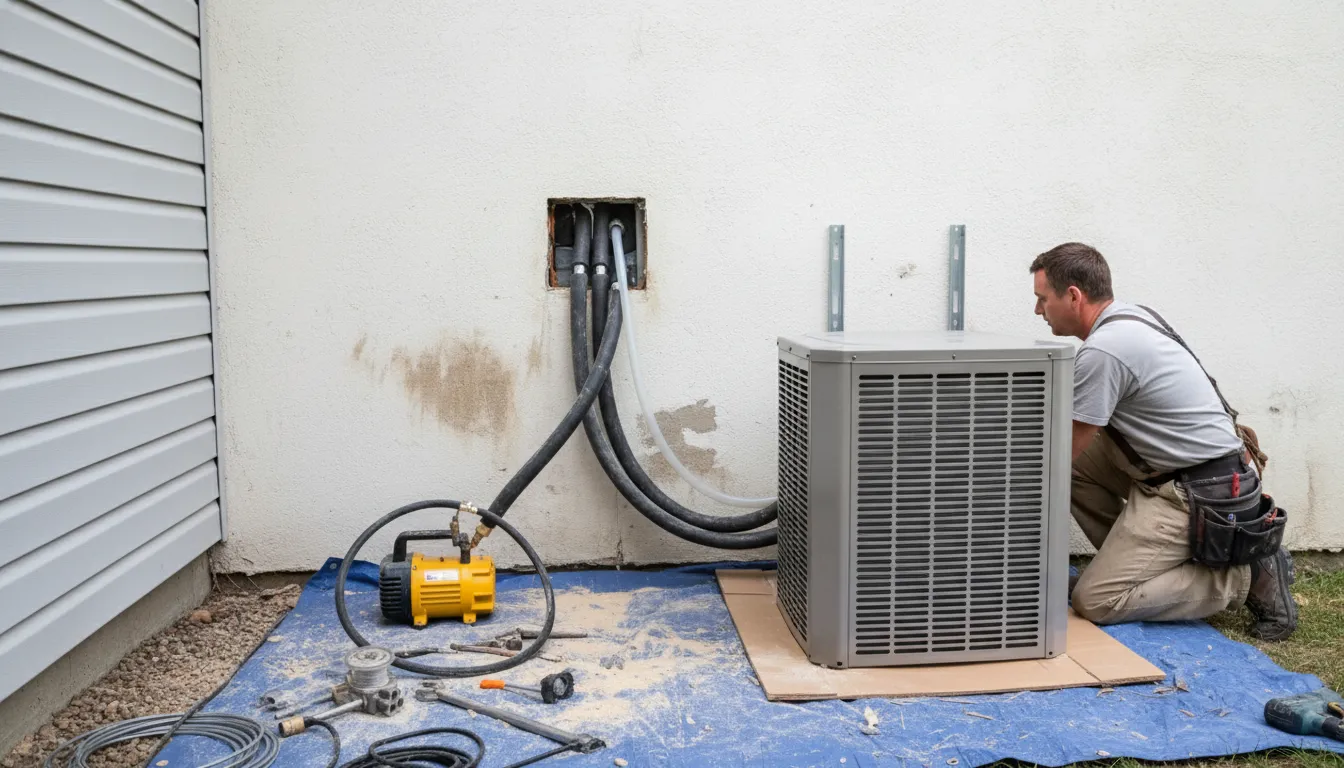
Find the Best Heat Pump Installation & Replacement Contractors for Your Business
No obligation • Fast responses • Nationwide coverage

Why you can trust HVAC Firms
HVAC Firms is a leading United States resource for evaluating HVAC service providers. Our team researches companies, checks credentials, and reviews customer feedback to present clear, unbiased information. Listings and rankings are based on merit, and companies cannot pay to change our editorial content.
Search providers near you
Top Heat Pump Installation & Replacement Contractors in San Jose, California Ranked
Upgrading your home's heating and cooling system to a heat pump is one of the most impactful energy decisions a San Jose homeowner can make. This versatile technology provides both efficient heating and cooling in one unit, making it an ideal solution for the region's mild climate. This guide will help you understand your options, from ducted central systems to ductless mini-splits, and how to navigate the process of finding a qualified professional for your installation or replacement project.
Heating And Air Experts - Affordable HVAC Contractor in Fremont, California
4991 Seneca Park Loop, Fremont, CA 94538
Heating And Air Experts - Affordable HVAC Contractor in Fremont, California provides heating and cooling services in San Jose, CA. They handle installation and repair of air conditioners, furnaces, heat pumps, and boilers. Their work covers both new system setups and emergency repairs to maintain efficient and safe climate control throughout the year.
Fuse service
349 Everett Ave, Palo Alto, CA 94301
Fuse Service is an HVAC company serving Fremont, CA, offering heating and air conditioning installation, repair, and maintenance. Their services include AC and heat pump repair, furnace installation, and HVAC tune-ups. They also provide refrigeration, electrical, and plumbing services, including hydro jetting and water heater installation. Fuse Service emphasizes licensed and certified technicians, up-to-date training, and offers warranties on parts and labor.
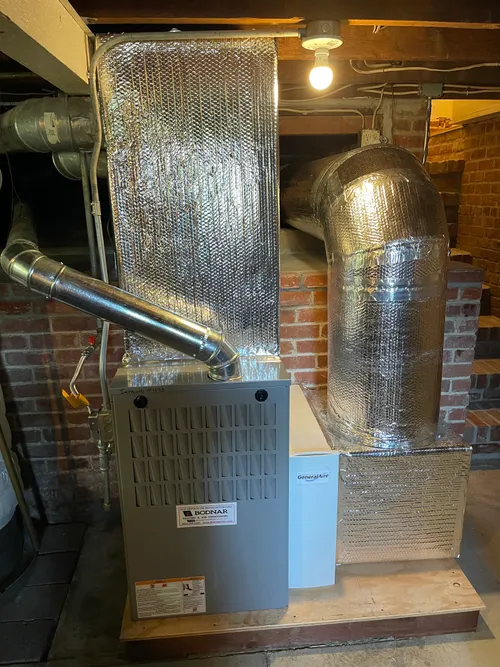
Bodnar Heating & Air Conditioning, Inc.
1251 Fifth Ave, Redwood City, CA 94063
Bodnar Heating & Air Conditioning, Inc. provides residential heating and cooling repair, installation, and maintenance services in Fremont, CA. They specialize in air conditioning, furnace, and heat pump systems, including thermostat installation and indoor air quality improvements. The company emphasizes honest recommendations without commission-based incentives and offers expertise backed by three generations of residential HVAC knowledge. Their services cover a broad area including Redwood City and nearby communities. Bodnar Heating & Air Conditioning, Inc. is committed to thorough system maintenance and proper installation to ensure long-lasting performance and energy efficiency.
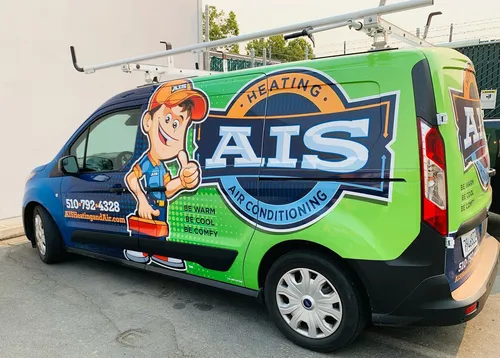
AIS Heating & Air Conditioning
76 Wright Brothers Ave, Livermore, CA 94551
AIS Heating & Air Conditioning is an HVAC contractor serving Oakland, CA, and nearby areas including Fremont and Livermore. Since 2008, they have provided a full range of heating and cooling services such as air conditioning repair and installation, furnace and heat pump services, and indoor air quality solutions. Their capabilities include ductwork installation and air duct sealing to improve home air quality. The company offers comprehensive HVAC maintenance and repair to keep homes comfortable throughout the year.
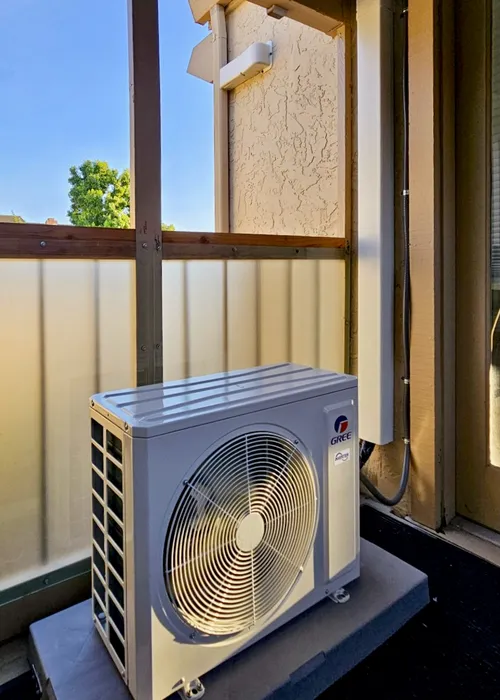
Freon HVAC, Electrical & Appliance
299 E McGlincy Ln Suite A, Campbell, CA 95008
Freon HVAC, Electrical & Appliance provides a range of heating and air conditioning services in San Jose, CA. They specialize in HVAC installation, repair, and maintenance, including air conditioning, furnaces, heat pumps, mini splits, and thermostat installation. Their team handles ductwork repair and indoor air quality services to support comfortable indoor environments. Freon HVAC offers expertise in refrigerant replacement and commercial HVAC solutions, focusing on efficient system operation throughout the year.
Why a Heat Pump is Perfect for San Jose's Climate
San Jose's weather pattern-characterized by mild winters where temperatures rarely dip below 30°F and warm summers that can exceed 100°F-creates an ideal environment for heat pump operation. Unlike traditional systems that generate heat, a heat pump simply moves existing heat from one place to another, making it exceptionally efficient in moderate climates. This efficiency translates directly to savings on your monthly energy bills. Modern heat pump technology has advanced significantly, allowing these systems to handle the Bay Area's temperature swings with ease, providing consistent comfort year-round1.
Understanding Your Heat Pump Options
Choosing the right type of system is crucial for maximizing comfort and efficiency. The main configurations available for San Jose homes include:
- Ducted (Central) Heat Pumps: This is the most common replacement for a traditional forced-air furnace and central air conditioner. It uses your home's existing ductwork to provide whole-home heating and cooling. This is an excellent choice if your ducts are in good condition and you want a seamless, whole-house solution.
- Ductless Mini-Split Systems: Perfect for homes without existing ducts, room additions, or for creating independent temperature zones. These systems consist of an outdoor compressor unit connected to one or more indoor air-handling units mounted on walls or ceilings. They offer tremendous flexibility and can be a more affordable starting point for targeted comfort.
- Hybrid (Dual-Fuel) Systems: This configuration pairs an air-source heat pump with a gas furnace. The system intelligently switches between the two fuel sources based on outdoor temperature and efficiency, using the heat pump for moderate weather and the furnace for the coldest snaps, potentially optimizing operating costs.
- Geothermal (Ground-Source) Heat Pumps: While less common due to higher upfront costs, these systems are the pinnacle of efficiency. They exchange heat with the ground, which maintains a relatively constant temperature year-round, leading to extraordinary energy savings.
Key Efficiency Metrics: SEER and HSPF
When comparing heat pump models, you'll encounter two critical ratings: SEER and HSPF. Understanding these will help you select a system that saves you the most money over its lifespan.
- SEER (Seasonal Energy Efficiency Ratio): Measures cooling efficiency. The higher the SEER, the more efficient the cooling. For California, aiming for a SEER rating of 14 or higher is recommended, with premium models reaching into the 20s.
- HSPF (Heating Seasonal Performance Factor): Measures heating efficiency. A higher HSPF indicates a more efficient heater. Look for a minimum HSPF of 8, with top-tier models achieving 10 or above2.
- Variable-Speed Technology: The most efficient heat pumps feature variable-speed compressors. Unlike single-stage units that are either fully on or off, variable-speed systems adjust their output incrementally to match the exact heating or cooling demand. This results in superior comfort, quieter operation, and significant energy savings3.
What to Expect: Installation Process and Timeline
A professional heat pump installation is a coordinated process. For a standard replacement using existing ducts, the project typically takes 1 to 3 days 4. The process involves removing the old equipment, setting the new outdoor condenser and indoor air handler, making electrical and refrigerant line connections, and thoroughly testing the system. A critical first step is the load calculation, where a technician determines the precise capacity needed for your home's size, insulation, and layout. Installing the wrong size system can lead to poor performance and higher costs.
Most installations in San Jose require a permit from the city's building department, which your installer should handle. The inspection that follows ensures the work meets all safety and electrical codes. It's also a common time to discover if your home's electrical panel needs an upgrade to handle the new system's requirements, which can be an additional consideration.
Find the perfect heat pump installation & replacement contractors for your needs
Get personalized recommendations and expert advice
Navigating Costs and Financial Incentives
The total investment for a heat pump installation in San Jose varies based on system type, efficiency, and home complexity. For a complete system replacement in a single-family home, total project costs typically range from $15,000 to $22,700, inclusive of equipment, labor, and permits, before applying any rebates or incentives 5.
- Standard Efficiency System: Equipment and installation can range from $9,000 to $14,000.
- High-Efficiency System: For units with better SEER/HSPF ratings, expect $13,000 to $18,000.
- Premium Variable-Speed System: Top-tier models with the best comfort and efficiency features range from $16,000 to $22,000.
- Ductless Mini-Split System: A great solution for zones or homes without ducts can start between $3,000 and $10,000, depending on the number of indoor heads6 7.
Crucially, significant rebates are available to offset these costs. San Jose Clean Energy, the city's community choice energy provider, offers incentives for heat pump installations 8. Additionally, federal tax credits and other state-level programs may apply, making the net cost much more attractive. A qualified installer will be up-to-date on all available financial incentives.
Choosing the Right Professional for the Job
Selecting an experienced, licensed contractor is the most important step in ensuring a successful heat pump installation. Look for a company that specializes in heat pump technology and can clearly explain the benefits of different models for your specific home. They should perform a detailed load calculation, provide a written, itemized estimate, and clearly outline the permitting process. Check for proper licensing (California Contractors State License Board HVAC classification), insurance, and read reviews from past customers. A reputable professional will also conduct a thorough assessment of your existing ductwork and electrical system to identify any needed upgrades before work begins.
Long-Term Benefits and Maintenance
Once installed, a high-efficiency heat pump provides decades of reliable service. The primary benefits include dramatically lower energy bills due to efficiencies of 300-400% compared to traditional electric resistance heating, reduced carbon footprint, and improved year-round comfort with both heating and cooling in one system9. To protect your investment, regular maintenance is key. This includes changing air filters monthly, keeping the outdoor unit clear of debris, and scheduling an annual professional tune-up. A maintenance check ensures the system is operating at peak efficiency, catches small issues before they become major repairs, and helps extend the lifespan of your equipment.
Frequently asked questions
Sources
Footnotes
-
Heat Pump vs. Central AC: What's Better for California Homes? - https://airandplumbing.com/heat-pump-vs-central-ac-whats-better-for-california-homes/ ↩
-
San Jose Furnace Replacement: 2025 Costs, Options & What to ... - https://bayareaclimatecontrol.com/blog/san-jose-furnace-replacement-cost-2025/ ↩
-
Heat Pumps in California: Everything You Need to Know - QuitCarbon - https://www.quitcarbon.com/blog/heat-pumps/california ↩
-
San Jose, CA Heat Pump Installation Experts - https://www.pelleheatandairconditioning.com/residential/heat-pumps/heat-pump-installation/ ↩
-
Heat Pump Installation in San Jose - https://www.a1hc.com/heating/heat-pump-installation-replacement/ ↩
-
Heat Pump HVAC System - San Jose Clean Energy - https://sanjosecleanenergy.org/heat-pump-hvac/ ↩
-
How Much Does it Cost to Install Heat Pump in Southern California? - https://www.burgesons.com/blog/how-much-does-it-cost-to-install-a-heat-pump-in-southern-california ↩
-
Heat Pump HVAC Systems in San Jose: Costs and Benefits - https://pheating.com/blog/heat-pump-installation-san-jose-complete-guide ↩
-
Why You Should Install a Heat Pump - TemperaturePro - https://temperaturepro.com/san-jose-ca/blog/why-install-heat-pump/ ↩