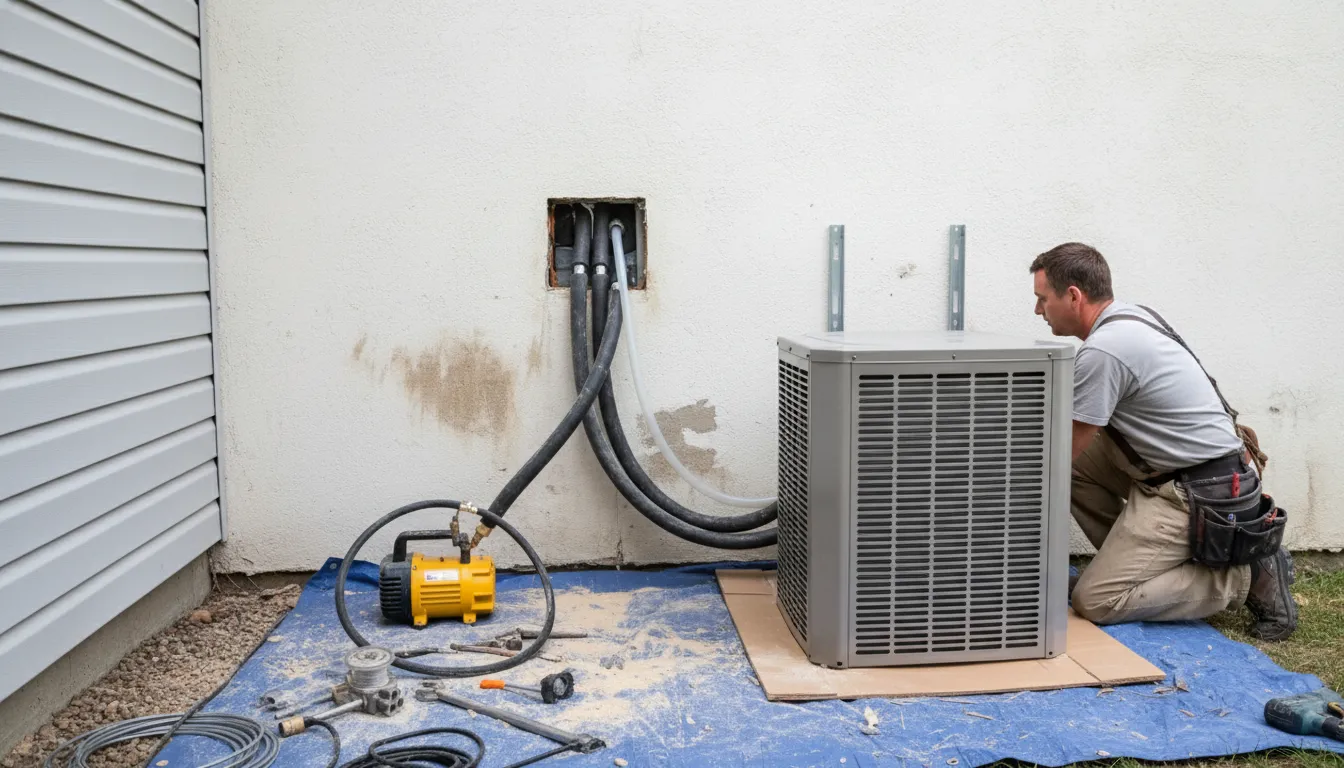
Find the Best Heat Pump Installation & Replacement Contractors for Your Business
No obligation • Fast responses • Nationwide coverage

Why you can trust HVAC Firms
HVAC Firms is a leading United States resource for evaluating HVAC service providers. Our team researches companies, checks credentials, and reviews customer feedback to present clear, unbiased information. Listings and rankings are based on merit, and companies cannot pay to change our editorial content.
Search providers near you
Top Heat Pump Installation & Replacement Contractors in Rancho Palos Verdes, California Ranked
Upgrading your home's heating and cooling system to a modern heat pump is a smart investment for comfort, efficiency, and long-term savings in Rancho Palos Verdes. These versatile systems provide both heating and cooling from a single unit, moving heat rather than generating it, which makes them exceptionally energy-efficient. For homeowners on the Palos Verdes Peninsula, navigating the options-from ductless mini-splits for zoned comfort to whole-home ducted systems-can be straightforward with the right local guidance. This resource is designed to help you understand the types of systems suitable for our coastal climate, what to expect in terms of performance and investment, and how to connect with qualified professionals for your project.

Comfort Time Plumbing Heating & Cooling
8038 Freestone Ave, Santa Fe Springs, CA 90670
Comfort Time Plumbing Heating & Cooling is a family-owned company based in Los Angeles, CA, providing comprehensive HVAC and plumbing services for homes and businesses. They specialize in the repair and installation of air conditioning, furnaces, heat pumps, boilers, mini splits, and commercial refrigeration systems. Comfort Time Plumbing Heating & Cooling offers same-day service and uses advanced techniques such as trenchless sewer line replacement to address plumbing issues efficiently. Since 2008, they have served the local community with trained technicians who maintain up-to-date certifications and prioritize respect for customers' homes.
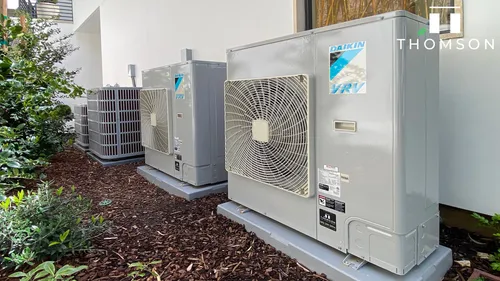
Thomson Air Conditioning & Heating
5731 McFadden Ave A, Huntington Beach, CA 92649
Thomson Air Conditioning & Heating provides HVAC repair, installation, and indoor air quality services in Long Beach, CA. They serve both residential and commercial customers across Southern California, offering solutions for air conditioning, heating, heat pumps, ductless systems, and HVAC tune-ups. Their team includes certified technicians who focus on honest recommendations and reliable workmanship. The company emphasizes transparent service without upselling and guarantees their labor for five years on repairs.

All City Plumbing, Air & Electrical
221 Allen Ave, Glendale, CA 91201
All City Plumbing, Air & Electrical is a family-owned business serving Los Angeles, CA, and nearby areas with plumbing, heating, air conditioning, and electrical services. Their team handles a wide range of HVAC needs including furnace, heat pump, boiler, and mini split installation and repair, as well as indoor air quality and thermostat services. The company is known for its ACE-certified technicians and offers comprehensive capabilities such as hydro-jetting and whole house filtration system installation. With over 13 years of experience, All City Plumbing, Air & Electrical emphasizes quality workmanship and customer satisfaction.
Pristine Air Conditioning, Heating & Plumbing
555 Anton Blvd suit 150, Costa Mesa, CA 92626
Pristine Air Conditioning, Heating & Plumbing provides a full range of HVAC services in Long Beach, CA. They handle installation, repair, and maintenance for air conditioners, furnaces, heat pumps, and boilers, along with indoor air quality solutions. With over 30 years of experience, the company emphasizes energy-efficient and environmentally responsible options. Their skilled technicians use modern tools and techniques to deliver precise service. Pristine also offers financing options and serves the broader Orange County area.
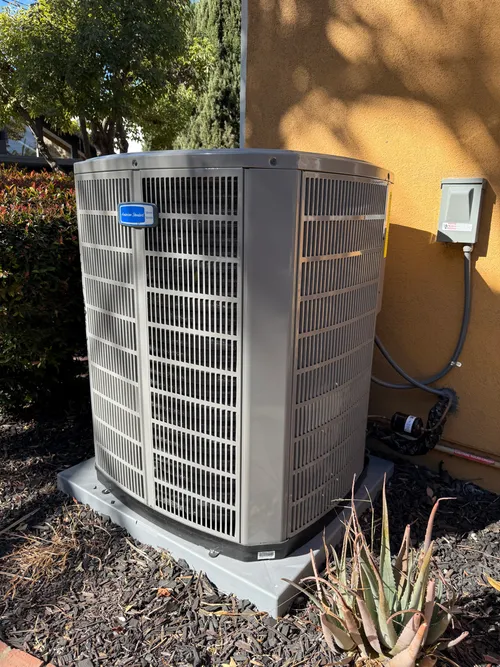
So Cal Air
440 W Dryden St, Glendale, CA 91202
So Cal Air is an HVAC company serving Los Angeles, CA, specializing in residential installations, repairs, maintenance, and duct cleaning. Their services include air duct design, heat pump installation and repair, furnace and AC services, and indoor air quality improvements. The team focuses on high-efficiency systems and is certified by TECH Clean California and HEEHRA, offering expertise in heat pump rebates. Founded by experienced technicians from national HVAC companies, So Cal Air aims to provide honest assessments and quality work at competitive prices.
Understanding Heat Pump Technology for Your Home
A heat pump is the heart of a highly efficient home climate control system. Unlike traditional furnaces that burn fuel to create heat, a heat pump transfers existing heat from one place to another. In the winter, it extracts warmth from the outside air (or ground) and moves it indoors. In the summer, the process reverses, pulling heat from your home and releasing it outside, functioning as an air conditioner. This method of heat transfer is significantly more efficient than generation, which is why modern heat pumps can provide substantial energy savings.
This technology is particularly well-suited to the climate of Rancho Palos Verdes. Our mild winters and moderate summers mean the system rarely has to work in extreme conditions, allowing it to operate at peak efficiency year-round. For residents, this translates to consistent comfort, lower utility bills, and a reduced carbon footprint, aligning with both personal savings and broader environmental goals for the community.
Types of Heat Pump Systems Available
Choosing the right system depends on your home's layout, existing infrastructure, and specific comfort needs. Here are the primary options available to RPV homeowners:
Ductless Mini-Split Heat Pumps Ideal for homes without existing ductwork, room additions, sunrooms, or for creating zoned comfort in specific areas. These systems consist of an outdoor compressor unit connected to one or more indoor air-handling units mounted on walls or ceilings.
- Benefits: Excellent for zoning, allowing different temperatures in different rooms. They are highly efficient, relatively quiet, and avoid the energy losses associated with ductwork.
- Typical Scope: Installation can range from a single-zone system for one room to multi-zone setups for an entire floor or home.
Air-Source Heat Pumps (Ducted) This is the most common type of system for whole-home heating and cooling, utilizing the home's existing forced-air ductwork.
- Benefits: Provides centralized, whole-house comfort. It's a direct replacement for a traditional central air conditioner and furnace combo.
- Considerations: The efficiency and performance of a ducted system are heavily influenced by the condition, design, and sealing of your existing ducts. An assessment by a professional is crucial.
Hybrid or Dual-Fuel Systems This configuration pairs an air-source heat pump with a traditional gas furnace. The system intelligently switches between the two based on outdoor temperature to maximize efficiency and cost-effectiveness.
- Benefits: In very cold weather (less common in RPV), the system can use the gas furnace for powerful heating, while the heat pump handles milder temperatures and all cooling needs efficiently.
- Best For: Homeowners who want maximum flexibility and have access to natural gas.
Geothermal Heat Pumps (Ground-Source) These systems use the stable temperature of the earth several feet below the surface as the exchange medium instead of the outside air.
- Benefits: They offer the highest efficiency and lowest operating costs of any heating and cooling system. They are incredibly durable and quiet.
- Considerations: The installation involves significant excavation or drilling for ground loops, leading to a much higher upfront cost. They represent a premium, long-term investment.
Key Performance Metrics: SEER2 and HSPF2
When comparing heat pump options, you'll encounter two critical ratings that indicate efficiency:
- SEER2 (Seasonal Energy Efficiency Ratio): Measures cooling efficiency. The higher the SEER2 number, the more efficient the system is at cooling your home. Modern standards require high ratings, with many premium models offering even greater efficiency.
- HSPF2 (Heating Seasonal Performance Factor): Measures heating efficiency. Similarly, a higher HSPF2 rating means the unit provides more heat for less electrical energy consumed, which is key for winter performance even in our mild climate 1 2.
Investing in a unit with high SEER2 and HSPF2 ratings will maximize your energy savings over the lifespan of the system. A qualified installer can help you model the payback period based on these ratings and your home's specific characteristics.
Climate Considerations for the Palos Verdes Peninsula
Rancho Palos Verdes' unique coastal environment presents specific factors to consider for a successful heat pump installation.
- Mild Climate Suitability: The Peninsula's weather is nearly ideal for standard air-source heat pumps. They operate efficiently throughout the year without the severe strain seen in regions with extreme heat or sub-freezing winters. This means homeowners typically do not need to invest in specialized "cold-climate" heat pump models, keeping options more straightforward and cost-effective 3 4.
- Quiet Operation: The quiet hum of a modern, well-installed heat pump aligns perfectly with the serene, upscale lifestyle of RPV. Many residents prioritize low-noise systems to preserve the peaceful ambiance of their homes and neighborhoods.
- Coastal Air and Durability: The salty, humid ocean air can accelerate corrosion on metal components. It's essential to discuss this with local installers who are familiar with the environment. They can recommend and source units with corrosion-resistant coatings, such as on coils and cabinets, to ensure longevity and reliable performance.
Find the perfect heat pump installation & replacement contractors for your needs
Get personalized recommendations and expert advice
Understanding Installation Costs and Timelines
The total investment for a new heat pump system varies widely based on the type of system, the size and complexity of your home, and the scope of supporting work required.
Typical Cost Ranges:
- Ductless Mini-Split (Single Zone): $3,000 - $10,000+
- Standard Air-Source/Ducted System (Whole Home): $10,500 - $30,000
- Geothermal System: $25,000 - $50,000+ 5 6 7 8
These costs are comprehensive and generally include the equipment, professional labor, any necessary modifications to ductwork or electrical systems, permits, and final system testing and commissioning. For ducted systems, if new or significantly modified ductwork is needed, this will be a major factor in the final price.
What Influences the Timeline? A typical residential installation for a standard ducted system can often be completed in 1 to 3 days. Installing a single ductless mini-split head usually takes about 4 to 8 hours. Several factors can extend this timeline:
- System Complexity: Multi-zone mini-splits or geothermal systems take longer.
- Home Readiness: The condition of existing ducts, the need for electrical panel upgrades, or custom carpentry for indoor units.
- Permitting: The time required for the city to review and issue permits, and for mandatory inspections to be scheduled and passed 9 10.
A reputable local provider will give you a detailed timeline as part of your project estimate.
The Professional Installation Process
A proper installation is just as important as the quality of the equipment itself. The process typically follows these key steps:
- Initial Consultation and Load Calculation: A technician will assess your home's size, insulation, window quality, and orientation to perform a Manual J load calculation. This determines the precise heating and cooling capacity (in tons) your home needs-not a guess based on square footage alone.
- System Design and Proposal: Based on the load calculation and your goals, the installer will design a system, select appropriate equipment, and provide a detailed written proposal covering costs, timeline, and equipment specifications.
- Permitting: Your installer will handle pulling the required permits from the City of Rancho Palos Verdes, ensuring the work complies with all building and mechanical codes.
- Installation Day: The crew will install the outdoor unit, connect refrigerant lines and electrical wiring, and install or integrate indoor components (air handler, ductwork, or mini-split heads).
- Commissioning and Testing: This critical final step involves charging the system with refrigerant, testing airflow, verifying electrical connections, and ensuring the entire system operates as designed. The installer should provide a walkthrough, explaining your new thermostat and system operation.
Maintaining Your Heat Pump for Peak Performance
To protect your investment and ensure efficiency, regular maintenance is key. This includes simple homeowner tasks like keeping the outdoor unit clear of debris, leaves, and vegetation, and changing the indoor air filters regularly (typically every 1-3 months). It is also highly recommended to schedule a professional maintenance check-up twice a year-once in the spring before the cooling season and once in the fall before the heating season. A professional service will include cleaning coils, checking refrigerant levels, inspecting electrical components, and ensuring all systems are calibrated for optimal performance.
Frequently asked questions
Sources
Footnotes
-
Heat Pumps in California: Everything You Need to Know - QuitCarbon - https://www.quitcarbon.com/blog/heat-pumps/california ↩
-
Reliable Heat Pump Installation Services in California - Save Up to ... - https://www.americanarraysolar.com/reliable-heat-pump-installation-services-in-california-save-up-to-30-on-energy-bills/ ↩
-
Comprehensive Guide to Heat Pumps for California Homeowners 🌞🏠 - https://www.calljazz.com/blog/comprehensive-guide-to-heat-pumps-for-california-homeowners/ ↩
-
Rancho Palos Verdes Heat Pump Comfort & Quiet Living - https://keithkelleyrealestate.com/blog/heat-pumps-on-the-peninsula-quiet-comfort-in-rancho-palos-verdes ↩
-
New Heat Pump Installation Costs in Southern California - https://www.callwiseowl.com/blog/new-heat-pump-installation-costs-in-southern-california/ ↩
-
How Much Does Heat Pump Installation Cost in California in 2026? - https://modernize.com/hvac/heating-repair-installation/heat-pump/california ↩
-
How Much Does it Cost to Install Heat Pump in Southern California? - https://www.burgesons.com/blog/how-much-does-it-cost-to-install-a-heat-pump-in-southern-california ↩
-
Heat Pump Costs: Your SoCal Guide (2025) - https://bakerhomeenergy.com/blog/2022-09-30/heat-pump-cost-bk/ ↩
-
Heating Services in Rancho Palos Verdes, CA - Install - https://www.jerrysheatingandairconditioning.com/locations/rancho-palos-verdes-ca ↩
-
Heat Pump Installation: What California Homeowners Need To Know - https://bakerhomeenergy.com/kc/heat-pump-installation-bk/ ↩