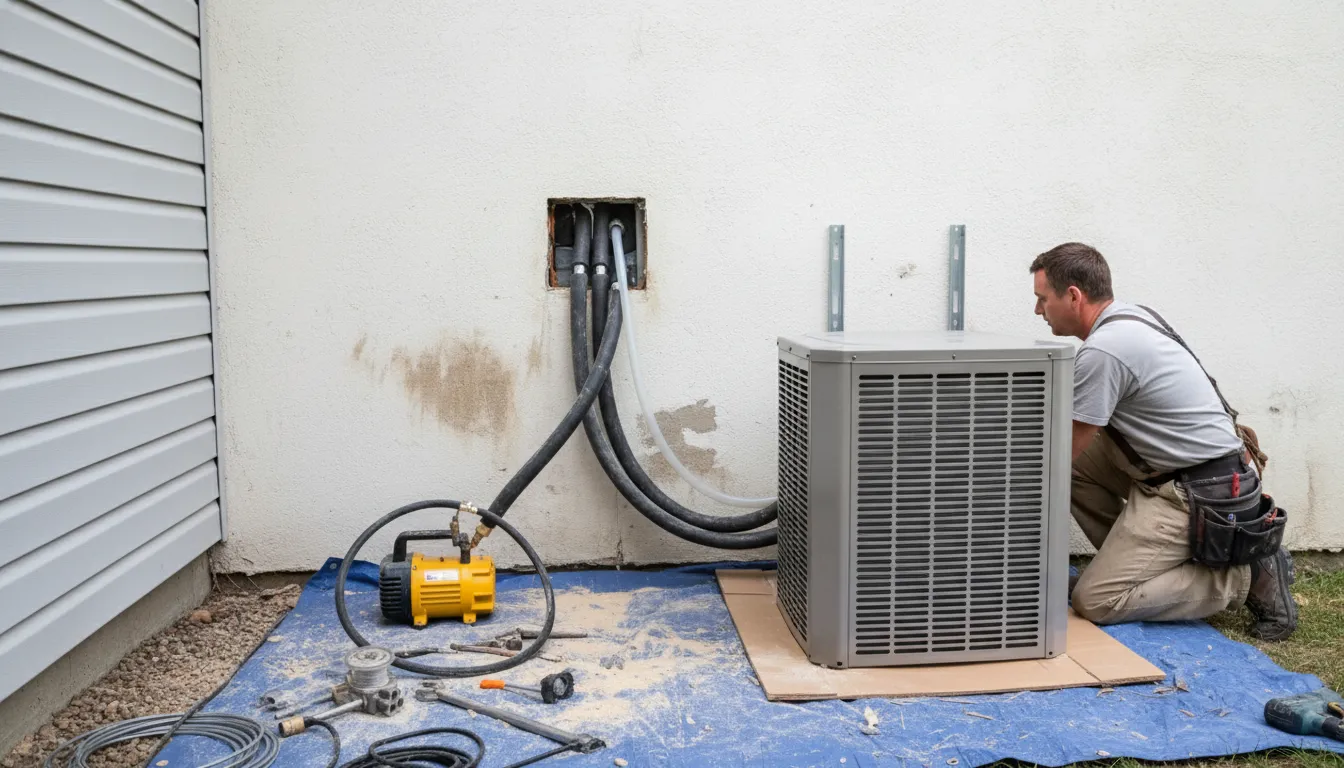
Find the Best Heat Pump Installation & Replacement Contractors for Your Business
No obligation • Fast responses • Nationwide coverage

Why you can trust HVAC Firms
HVAC Firms is a leading United States resource for evaluating HVAC service providers. Our team researches companies, checks credentials, and reviews customer feedback to present clear, unbiased information. Listings and rankings are based on merit, and companies cannot pay to change our editorial content.
Search providers near you
Top Heat Pump Installation & Replacement Contractors in Madera, California Ranked
Upgrading your home's heating and cooling system to a modern heat pump is a smart investment in year-round comfort and energy efficiency. For residents of Madera, this technology is particularly well-suited, offering a single, high-efficiency solution for both hot summers and mild winters. This guide explains the key considerations for heat pump projects, helping you understand your options, the importance of professional sizing, and how to navigate available financial incentives to find qualified local specialists for your installation or replacement.
Balanced Comfort Cooling, Heating & Plumbing
1318 E Shaw Ave Ste 280, Fresno, CA 93710
Balanced Comfort Cooling, Heating & Plumbing is an HVAC and plumbing company based in Fresno, CA. They provide a range of services including air conditioning, furnace, and heat pump repair and installation. Serving Fresno and many surrounding towns in the Central Valley, they offer comprehensive cooling, heating, plumbing, water restoration, and reconstruction services. Their expertise covers a broad service area including cities like Visalia, Madera, Clovis, and more.
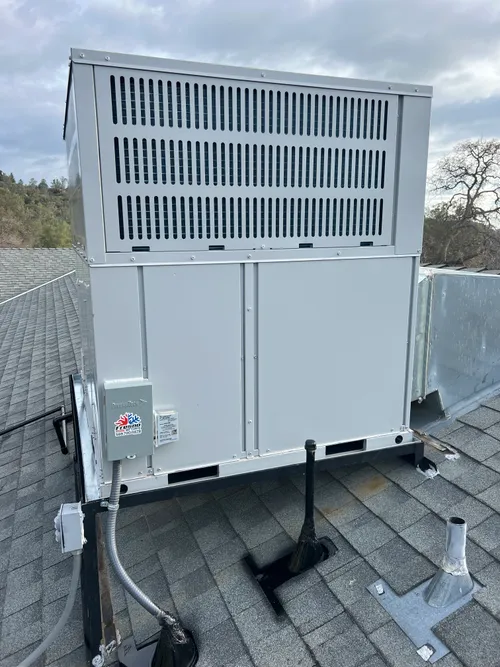
Fresno Heating and Cooling
4051 N Valentine Ave #108, Fresno, CA 93722
Fresno Heating and Cooling is a family-owned HVAC company serving Fresno, CA, and surrounding counties including Kings, Tulare, and Madera. They offer a wide range of services such as air conditioner and furnace repair, installation of heat pumps and mini splits, duct cleaning, and indoor air quality solutions. The company specializes in installing and repairing high-efficiency heating and cooling systems from brands like Bosch, American Standard, and Goodman. They focus on providing tailored HVAC solutions and emphasize transparency to help customers make informed decisions. Fresno Heating and Cooling also participates in rebate programs to support energy-efficient upgrades.
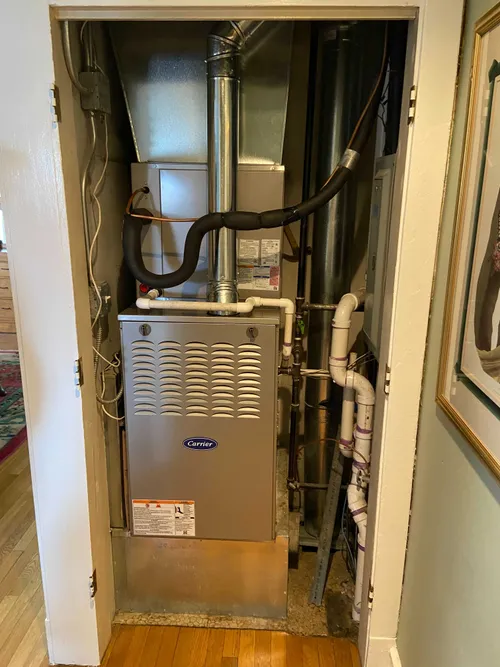
Golden Comfort AC & Heating Repair
155 E Shaw Ave Unit 206, Fresno, CA 93710
Golden Comfort AC & Heating Repair is an HVAC company based in Fresno, CA, providing a wide range of heating and cooling services. They specialize in air conditioning repair and installation, furnace repair and replacement, heat pump services, duct cleaning, thermostat installation, and indoor air quality improvements. Their team includes certified HVAC technicians who serve Fresno, Clovis, and nearby Central Valley communities. The company offers 24/7 emergency repairs and focuses on energy-efficient systems to enhance home comfort and reduce utility costs.
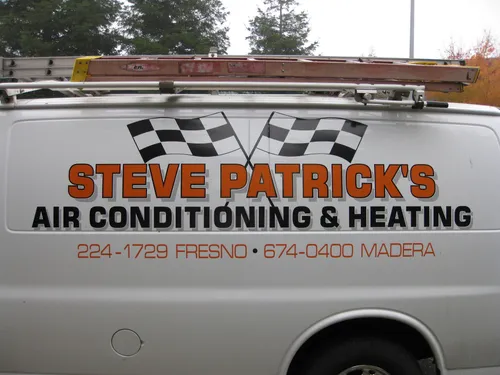
Steve Patrick Air Conditioning & Heating
2561 N Purdue Ave, Fresno, CA 93727
Steve Patrick Air Conditioning & Heating has been serving Fresno, CA, and the surrounding Central Valley area since 1981. They provide a full range of HVAC services including air conditioner, furnace, and heat pump repair and installation, as well as thermostat installation and HVAC tune-ups. The company also offers solar power integration and energy efficiency upgrades. Steve Patrick Air Conditioning & Heating is a HEEHRA trained contractor, assisting customers with California rebate incentives for qualifying heat pump systems. Their technicians are available 24/7 for emergency repairs and carry common parts to complete most jobs on the first visit.
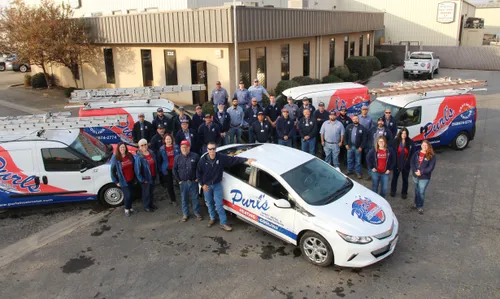
Purl's Sheet Metal & Air Conditioning
232 S Schnoor Ave, Madera, CA 93637
Purl's Sheet Metal & Air Conditioning is an HVAC and sheet metal service provider based in Fresno, CA. Serving Fresno, Madera, and the Central Valley since 1952, they offer installation, repair, and maintenance for air conditioners, furnaces, heat pumps, and indoor air quality systems. Their certified technicians also provide custom sheet metal fabrication, including ductwork and rain gutter solutions. The company combines decades of experience with specialized capabilities such as whole-house generator installation and advanced sheet metal fabrication.
Why a Heat Pump is Ideal for Madera's Climate
Madera's climate in California's Central Valley is characterized by long, hot summers and relatively mild winters. This weather pattern makes a heat pump an exceptionally effective choice for home comfort. Unlike a traditional air conditioner that only cools, a heat pump provides both efficient cooling and heating by moving heat rather than generating it.
During the sweltering summer months, a heat pump operates as a highly efficient air conditioner, extracting heat from inside your home and releasing it outdoors. In the winter, the process reverses; even when the outside air feels cool, the system can extract available heat energy and transfer it indoors to warm your living spaces. Because Madera's winters rarely see extreme cold, a standard air-source heat pump can reliably handle nearly all heating demands, potentially reducing or eliminating reliance on a natural gas furnace and lowering your utility bills.
Types of Heat Pump Systems
Understanding the different types of heat pump systems is the first step in determining which is best for your home. The main categories are defined by their heat source and distribution method.
Air-Source Ducted Heat Pumps This is the most common type and is an excellent replacement for a traditional central air conditioner and furnace. It uses an outdoor unit connected to an indoor air handler, distributing conditioned air through the existing ductwork in your home. This provides whole-house comfort and is often the most straightforward swap for an older HVAC system. Their efficiency is measured by SEER2 (Seasonal Energy Efficiency Ratio) for cooling and HSPF2 (Heating Seasonal Performance Factor) for heating; higher ratings indicate better efficiency and potential savings.
Ductless Mini-Split Heat Pumps Perfect for homes without existing ductwork or for adding zoned comfort to specific areas like room additions, garages, or sunrooms. A ductless system consists of a compact outdoor unit connected to one or more sleek, wall-mounted indoor air handlers. Each indoor unit can be controlled independently, allowing for customized temperatures in different "zones" of your home. This can prevent energy waste in rooms that are not frequently used.
Hybrid or Dual-Fuel Heat Pump Systems This system pairs an air-source heat pump with a traditional gas furnace. The intelligent control system automatically switches to the most cost-effective heat source based on the outdoor temperature. In Madera's mild winter, the heat pump would do most of the work. On the rare colder nights, the system would engage the gas furnace for maximum heating power. This option provides an extra layer of heating assurance and can be a good fit depending on local utility rates.
Geothermal Heat Pumps Also known as ground-source heat pumps, these are the most efficient type available because they exchange heat with the relatively constant temperature of the earth. However, they involve significant excavation for ground loops and carry a much higher upfront installation cost, making them less common for residential retrofits in Madera 1.
The Critical Importance of Professional Sizing
One of the most crucial steps in your heat pump project is not choosing a brand first, but ensuring the system is correctly sized for your specific home. "Sizing" refers to calculating the required heating and cooling capacity, measured in British Thermal Units (BTUs) or tons (one ton equals 12,000 BTUs).
An undersized system will struggle to keep your home comfortable, running constantly during peak summer heat and driving up energy costs while wearing out prematurely. An oversized system is equally problematic; it will cool or heat your home too quickly in short, frequent cycles. This "short cycling" fails to properly remove humidity in the summer, leads to uneven temperatures, and causes unnecessary wear on components.
A qualified professional will perform a Manual J load calculation. This is not a simple rule of thumb based on square footage. It is a comprehensive analysis that considers your home's insulation levels, window types and orientation, air infiltration, local climate data, and even internal heat gains from appliances and occupants. Only with this detailed calculation can you be confident your new heat pump will deliver optimal efficiency, comfort, and longevity.
Find the perfect heat pump installation & replacement contractors for your needs
Get personalized recommendations and expert advice
Understanding Heat Pump Costs and Incentives
The total investment for a heat pump installation in Madera varies widely based on the system type, size, efficiency rating, and the complexity of the installation in your home.
Typical Cost Ranges For a standard ducted air-source heat pump system replacing an existing central system, homeowners can expect a range of approximately $8,500 to $25,000 or more2 3. A ductless mini-split system for a single zone typically starts around $3,000 to $5,000, with costs increasing for multi-zone setups 4. These are installed costs that include equipment and professional labor.
Several key factors influence the final price:
- System Capacity and Efficiency: Larger capacity (more tons) and higher SEER2/HSPF2 ratings generally increase the equipment cost but offer greater long-term savings.
- Existing Infrastructure: The condition of your ductwork (for ducted systems) may need assessment and sealing or modification. Homes may also require an electrical panel upgrade to support the new system, which can add $1,000 to $3,500 to the project 5.
- Installation Complexity: The physical layout of your home, accessibility for equipment, and any necessary custom fabrication can affect labor time and cost.
Financial Incentives to Reduce Cost Significant rebates and tax credits are available to make heat pump technology more accessible:
- TECH Clean California: This statewide initiative offers substantial point-of-sale rebates for installing qualifying high-efficiency heat pumps. Rebates can often exceed $3,000, dramatically reducing the net project cost. Eligibility and amounts depend on your household income and the specific equipment installed 6.
- Federal Tax Credits: The Inflation Reduction Act provides a federal income tax credit of up to $2,000 for the installation of a qualified heat pump 7 8. This credit can be combined with state-level incentives.
Always verify current program details with your contractor or the official program websites, as incentives can change.
Choosing the Right Contractor for Your Project
The success of your heat pump installation hinges on the skill and expertise of the contractor you choose. Look for a licensed, insured, and established local professional with specific experience in heat pump systems. Credentials such as NATE (North American Technician Excellence) certification are a strong indicator of technicians who have proven their knowledge in system installation, maintenance, and repair.
A reputable contractor will start with a thorough home evaluation, perform the Manual J load calculation, and discuss all your options-including system type, efficiency levels, and potential rebates-before ever giving you a price. They should provide a detailed, written estimate that breaks down equipment, labor, and any ancillary costs. Be wary of quotes given over the phone without a site visit or those that seem unusually low, as they may be based on incorrect sizing or cut corners.
Maintaining Your New Heat Pump System
To protect your investment and ensure your heat pump operates at peak efficiency for its full lifespan, regular maintenance is essential. Homeowners should keep the outdoor unit clear of debris, leaves, and vegetation to ensure proper airflow. Schedule professional maintenance at least once a year. A technician will check refrigerant levels, clean coils, inspect electrical connections, and verify system performance. Proper maintenance not only prevents unexpected breakdowns but also maintains the system's efficiency, keeping your energy bills as low as possible.
Frequently asked questions
Sources
Footnotes
-
2026 Heat Pump Cost Guide: Purchase, Installation & Repair - Carrier - https://www.carrier.com/residential/en/us/products/heat-pumps/how-much-does-a-heat-pump-cost/ ↩
-
Heat Pumps in California: Everything You Need to Know - https://www.quitcarbon.com/blog/heat-pumps/california ↩
-
How Much Does Heat Pump Installation Cost in California in 2026? - https://modernize.com/hvac/heating-repair-installation/heat-pump/california ↩
-
New Heat Pump Installation Costs in Southern California - https://www.callwiseowl.com/blog/new-heat-pump-installation-costs-in-southern-california/ ↩
-
How Much Does it Cost to Install Heat Pump in Southern California? - https://www.burgesons.com/blog/how-much-does-it-cost-to-install-a-heat-pump-in-southern-california ↩
-
Complete Guide to Heat Pump Installation in CA - https://www.calveyheatingandair.com/blog/heat-pump-installation-california-guide/ ↩
-
Heat Pumps vs. Traditional HVAC: Which is Right for Orange County? - https://www.jmartiniaq.com/blog/heat-pumps-vs-traditional-hvac-which-is-right-for-orange-county ↩
-
Heat Pump vs. Central AC: What's Better for California Homes? - https://airandplumbing.com/heat-pump-vs-central-ac-whats-better-for-california-homes/ ↩