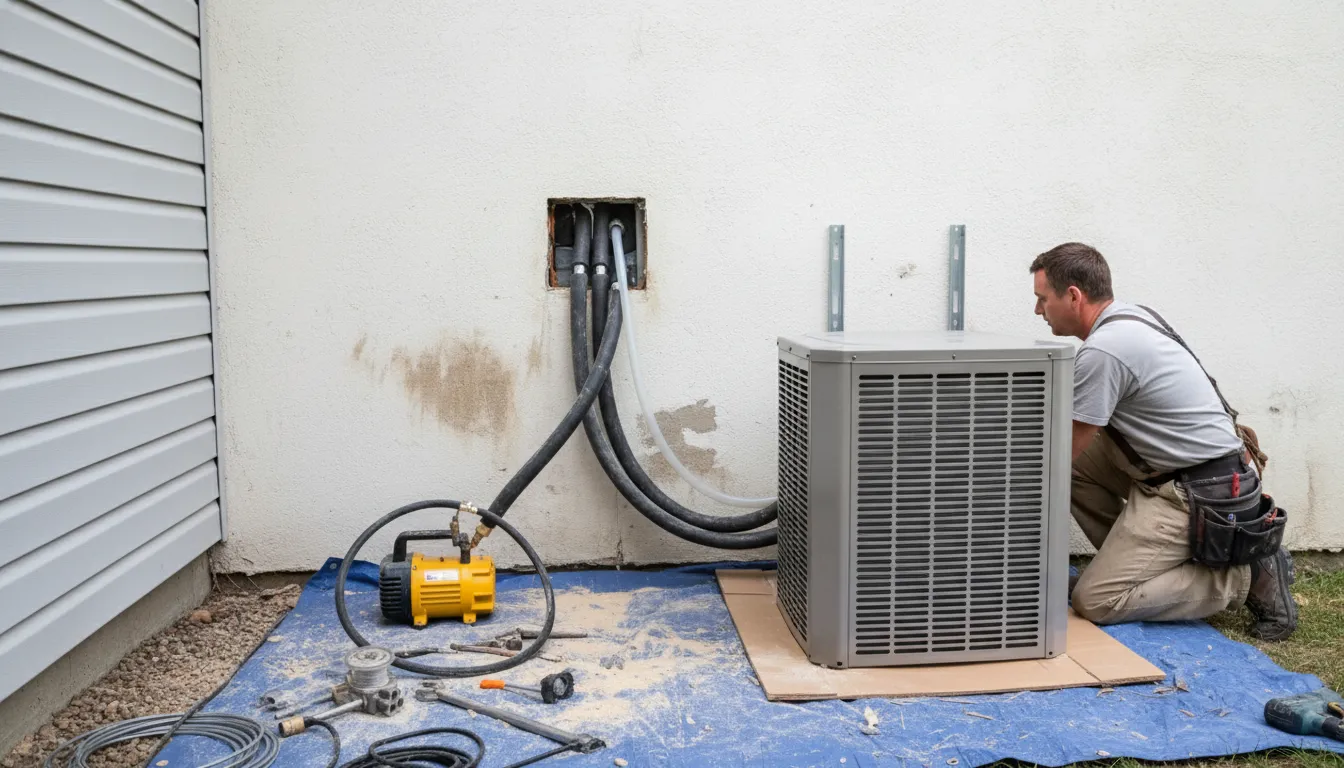
Find the Best Heat Pump Installation & Replacement Contractors for Your Business
No obligation • Fast responses • Nationwide coverage

Why you can trust HVAC Firms
HVAC Firms is a leading United States resource for evaluating HVAC service providers. Our team researches companies, checks credentials, and reviews customer feedback to present clear, unbiased information. Listings and rankings are based on merit, and companies cannot pay to change our editorial content.
Search providers near you
Top Heat Pump Installation & Replacement Contractors in Hanford, California Ranked
Upgrading your home's heating and cooling system to a heat pump is a smart investment in year-round comfort and energy efficiency. This technology provides both heating and cooling from a single unit, moving heat rather than generating it, which can lead to significant utility savings. For Hanford residents, navigating the options for heat pump installation and replacement is key to maximizing these benefits. This guide will help you understand the types of systems available, what to consider for your home, and how to connect with qualified local professionals to ensure a successful project.
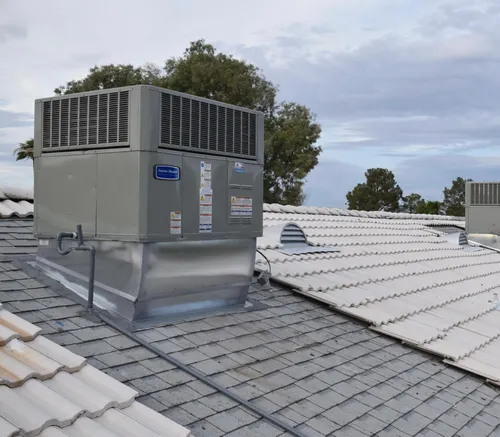
Polar Air Heating And Cooling (HVAC air conditioning service and replacement)
Fresno, CA
Polar Air Heating And Cooling is a family-owned HVAC company based in Fresno, CA, providing residential and commercial heating, ventilation, and air conditioning services. They offer repair, installation, and maintenance for air conditioners, furnaces, heat pumps, and duct systems. The company services systems from most manufacturers and supplies parts from trusted vendors. Polar Air Heating And Cooling operates daily from 8 a.m. to 6 p.m., offering a range of services including duct cleaning and HVAC tune-ups.
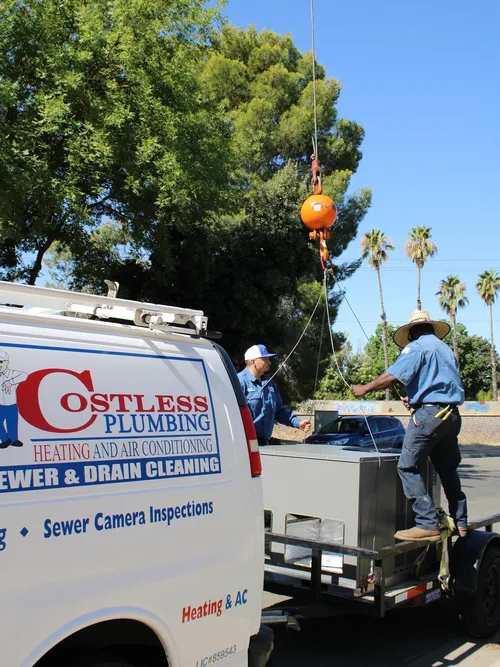
Costless Plumbing Heating & Air Conditioning
1143 N Cypress Ave, Fresno, CA 93727
Costless Plumbing Heating & Air Conditioning is a licensed HVAC and plumbing service provider based in Fresno, CA. They offer a range of services including air conditioning repair and installation, furnace repair and installation, heat pump installation, and HVAC tune-ups. The company also provides plumbing services such as faucet and toilet repairs, water and gas line work, sewer line services including trenchless sewer lines and hydro-jetting, and water leak detection. Costless Plumbing Heating & Air Conditioning is known for providing upfront pricing and customer satisfaction guarantees. Their team is experienced in installing high-efficiency heat pump systems and performing comprehensive A/C tune-ups to maintain system performance. They have a history of completing installations quickly and efficiently, with some projects finished in as little as two days.
Why Consider a Heat Pump in Hanford's Climate?
Hanford's moderate Central Valley climate is exceptionally well-suited for air-source heat pump technology. Unlike regions with extreme, prolonged cold, our winters are mild, which minimizes the efficiency drop some heat pumps experience in freezing temperatures. This makes a heat pump a highly effective primary heating and cooling solution for most of the year. By replacing an aging furnace and air conditioner with a single, efficient heat pump system, homeowners can often see a reduction in their overall energy consumption while maintaining consistent comfort.
Types of Heat Pump Systems
Understanding the different configurations is the first step in choosing the right system for your home.
Ducted Air-Source Heat Pumps
This is the most common type and functions similarly to a central air conditioning system but with a reversing valve for heating. It uses your home's existing ductwork to distribute conditioned air throughout the house. If your home already has functional ducts, a ducted system is often the most straightforward replacement for a traditional furnace and AC unit, providing whole-home comfort from one outdoor unit.
Ductless Mini-Split Heat Pumps
Mini-split systems are ideal for homes without existing ductwork, for room additions, or for creating zoned comfort control. They consist of an outdoor compressor unit connected to one or more indoor air handlers mounted on walls or ceilings. This allows you to heat or cool specific rooms as needed, which can improve efficiency. They are a popular choice for older homes or for supplementing the comfort in specific areas like a sunroom or garage conversion.
Geothermal (Ground-Source) Heat Pumps
Geothermal systems offer the highest efficiency by exchanging heat with the relatively constant temperature of the earth. While they provide exceptional energy savings and operate quietly, they come with a significantly higher upfront cost due to the excavation required to install the ground loops 1. For most Hanford homes, a high-efficiency air-source model provides an excellent balance of performance and cost.
Key Factors for Your Installation Project
A successful heat pump installation hinges on more than just choosing a unit. Several critical factors will determine your system's performance, efficiency, and cost.
Professional Sizing (Manual J Calculation)
Perhaps the most important step is ensuring your new heat pump is correctly sized for your home's specific characteristics. An oversized unit will "short cycle," turning on and off frequently, which wastes energy, increases wear, and fails to properly dehumidify your air in summer. An undersized unit will run constantly, struggling to maintain temperature and driving up your bills. A reputable contractor will perform a Manual J load calculation, which considers your home's square footage, insulation, window types, and local climate to determine the precise capacity needed.
Efficiency Ratings: SEER2, HSPF2, and EER2
Modern heat pumps are rated with updated metrics. Look for high SEER2 (Seasonal Energy Efficiency Ratio) for cooling efficiency and high HSPF2 (Heating Seasonal Performance Factor) for heating efficiency. In Hanford's climate, a system with a SEER2 of 18 or higher and a strong HSPF2 rating will deliver optimal energy savings 2. The EER2 (Energy Efficiency Ratio) measures efficiency at peak cooling conditions. Higher ratings often qualify for better rebates and incentives.
The Need for Supplemental Heat
While Hanford's winters are generally mild, occasional cold snaps can occur. Modern cold-climate heat pumps are effective at lower temperatures, but it's prudent to plan for backup heat. Most systems can integrate an electric resistance heating strip for supplemental warmth during rare, extreme dips 3. Some homeowners with existing natural gas lines may opt for a dual-fuel system, which pairs a heat pump with a gas furnace, automatically switching to the most cost-effective fuel source based on the outdoor temperature.
Electrical Service and Ductwork Assessment
A new heat pump installation will require a dedicated electrical circuit. Your contractor should assess if your home's electrical panel has the capacity to support it. For ducted systems, a thorough inspection of your existing ducts is essential. Leaky, poorly insulated, or undersized ductwork can sabotage the efficiency of even the best heat pump. Sealing and insulating ducts may be a recommended part of the project.
Find the perfect heat pump installation & replacement contractors for your needs
Get personalized recommendations and expert advice
Understanding Heat Pump Costs in Hanford
The total investment for a new heat pump system varies widely based on the type of system, your home's requirements, and the equipment's efficiency. Here's a general overview of what homeowners in our area can expect 4 5:
- Ductless Mini-Split System: Installation for a single-zone system (one outdoor unit, one indoor head) typically starts around $7,000. Multi-zone systems that cool and heat several rooms can range from $10,000 to $20,000 or more, depending on the number of indoor units and the complexity of the installation.
- Ducted Central System: Replacing an old central AC and furnace with a new ducted heat pump generally falls between $10,000 and $30,000. The final cost depends on the system size (tons), efficiency ratings, whether new ductwork is needed, and the scope of any required electrical upgrades.
- Geothermal System: Given the ground-loop excavation, these are premium installations often starting well above $20,000.
Remember, these are installed costs that encompass the equipment, labor, permits, and any necessary ancillary work. Always obtain detailed, written estimates from multiple contractors that break down all costs.
Maximizing Your Investment: Rebates and Savings
Investing in a high-efficiency heat pump can be offset by significant financial incentives. California, along with federal programs and local utilities, offers various rebates and tax credits for qualifying installations6 7. These incentives are designed to promote energy efficiency and can reduce your net project cost by thousands of dollars. A knowledgeable local installer will be up-to-date on the latest available programs, such as those from the Inflation Reduction Act (IRA), and can help you identify which ones you qualify for based on your household income and the equipment selected.
The long-term savings come from reduced energy bills. By moving heat instead of creating it through combustion, heat pumps can be 2-3 times more efficient than a standard gas furnace or electric resistance heat8. Over the system's lifespan, these monthly savings can substantially outweigh the initial installation cost.
Choosing a Qualified Hanford Installation Professional
The quality of the installation is just as important as the quality of the equipment. A proper installation ensures efficiency, reliability, and longevity. Look for contractors who are licensed, insured, and have specific experience with heat pump installations. They should be willing to perform a thorough home evaluation, including a Manual J calculation, and provide a clear, detailed proposal. Check online reviews and ask for references from recent heat pump projects. A reputable professional will also handle the permitting process and ensure your system is registered for any applicable warranties.
Frequently asked questions
Sources
Footnotes
-
Understanding New Heating System Costs In Southern California - https://www.callwiseowl.com/blog/understanding-new-heating-system-costs-in-southern-california/ ↩
-
Heat Pump Installation Guide for California Homes - 2025 - https://bakerhomeenergy.com/kc/heat-pump-installation-bk/ ↩
-
Complete Guide to Heat Pump Installation in CA - https://www.calveyheatingandair.com/blog/heat-pump-installation-california-guide/ ↩
-
How Much Does Heat Pump Installation Cost in California in 2026? - https://modernize.com/hvac/heating-repair-installation/heat-pump/california ↩
-
New Heat Pump Installation Costs in Southern California - https://www.callwiseowl.com/blog/new-heat-pump-installation-costs-in-southern-california/ ↩
-
Heat Pumps in California: Everything You Need to Know - https://www.quitcarbon.com/blog/heat-pumps/california ↩
-
Comprehensive Guide to Heat Pumps for California Homeowners 🌞🏠 - https://www.calljazz.com/blog/comprehensive-guide-to-heat-pumps-for-california-homeowners/ ↩
-
Heat Pumps vs. Traditional HVAC: Which is Right for Orange County? - https://www.jmartiniaq.com/blog/heat-pumps-vs-traditional-hvac-which-is-right-for-orange-county ↩