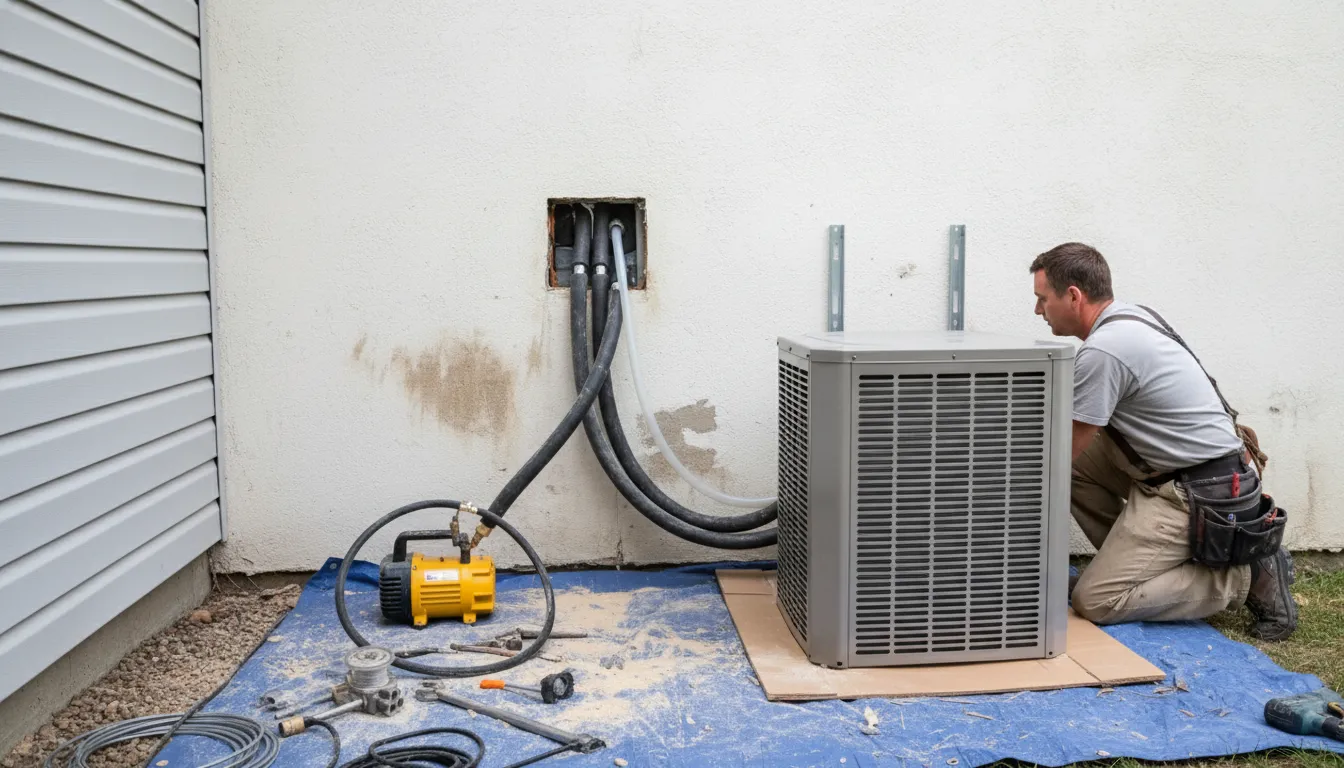
Find the Best Heat Pump Installation & Replacement Contractors for Your Business
No obligation • Fast responses • Nationwide coverage

Why you can trust HVAC Firms
HVAC Firms is a leading United States resource for evaluating HVAC service providers. Our team researches companies, checks credentials, and reviews customer feedback to present clear, unbiased information. Listings and rankings are based on merit, and companies cannot pay to change our editorial content.
Search providers near you
Top Heat Pump Installation & Replacement Contractors in Covina, California Ranked
Upgrading your home's heating and cooling system to a modern heat pump is a smart investment for comfort, efficiency, and long-term savings. This technology provides both heating and cooling from a single unit, moving heat rather than generating it, which makes it exceptionally energy-efficient. For Covina homeowners, navigating the options for heat pump setup, from ducted systems to ductless mini-splits, can help you find the right local professionals for a seamless installation or replacement.
Sano Heating & Air Conditioning
5546 E La Palma Ave, Anaheim, CA 92807
Sano Heating & Air Conditioning is an HVAC company based in Anaheim, CA, providing a range of heating and cooling services. They offer repair and installation for air conditioners, furnaces, heat pumps, mini splits, and perform HVAC tune-ups. The company also specializes in indoor air quality solutions and energy-efficient options like ductless and zoned systems. Serving Anaheim and the surrounding Orange County area, they handle new construction projects and have sheet metal capabilities to support their HVAC services.
Comfort Time Plumbing Heating & Cooling
8038 Freestone Ave, Santa Fe Springs, CA 90670
Comfort Time Plumbing Heating & Cooling is a family-owned company based in Los Angeles, CA, providing comprehensive HVAC and plumbing services for homes and businesses. They specialize in the repair and installation of air conditioning, furnaces, heat pumps, boilers, mini splits, and commercial refrigeration systems. Comfort Time Plumbing Heating & Cooling offers same-day service and uses advanced techniques such as trenchless sewer line replacement to address plumbing issues efficiently. Since 2008, they have served the local community with trained technicians who maintain up-to-date certifications and prioritize respect for customers' homes.
Haven Air Conditioning
1450 N Lakeview Ave, Anaheim, CA 92807
Haven Air Conditioning is an HVAC company based in Anaheim, CA, offering a range of services including air conditioning, furnace, heat pump, and mini split installation and repair. They also provide HVAC tune-ups, duct cleaning, and thermostat installation. The company is experienced in handling complex HVAC systems and offers detailed inspections and maintenance advice to improve system efficiency. Customers appreciate their thoroughness and clear communication throughout the service process. Haven Air Conditioning has built a reputation for professional installations and repairs in the Anaheim area.
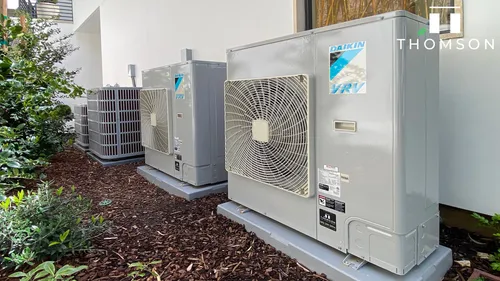
Thomson Air Conditioning & Heating
5731 McFadden Ave A, Huntington Beach, CA 92649
Thomson Air Conditioning & Heating provides HVAC repair, installation, and indoor air quality services in Long Beach, CA. They serve both residential and commercial customers across Southern California, offering solutions for air conditioning, heating, heat pumps, ductless systems, and HVAC tune-ups. Their team includes certified technicians who focus on honest recommendations and reliable workmanship. The company emphasizes transparent service without upselling and guarantees their labor for five years on repairs.
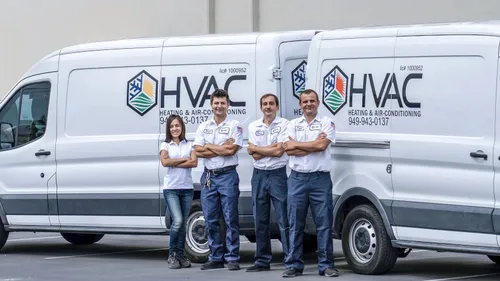
Air Blue HVAC
18707 Vanderlip Ave, Santa Ana, CA 92705
Air Blue HVAC is an HVAC installation contractor based in Long Beach, CA. They specialize in installing heat pumps, air conditioning units, and gas furnaces, serving customers throughout the area. Their services include multi-stage air conditioning systems and dual fuel heat pump installations that combine electric heat pumps with gas furnace options for enhanced efficiency and comfort.
Why Choose a Heat Pump for Your Covina Home?
Covina's climate is exceptionally well-suited for heat pump technology. With mild winters where temperatures rarely dip below 30°F and hot, dry summers, an air-source heat pump operates with high efficiency year-round 1. Unlike a traditional air conditioner paired with a gas furnace, a heat pump reverses its operation to provide warmth in the winter, eliminating the need for separate heating and cooling systems. This dual functionality not only simplifies your home's HVAC equipment but can also lead to significant reductions in your energy bills, especially when replacing an older, less efficient system.
Modern advancements have also produced "cold-climate" heat pumps that maintain excellent performance even during occasional temperature dips, making them a reliable sole source of heating for the region 2. By choosing a heat pump, you're opting for a cleaner technology that reduces reliance on fossil fuels, aligning with California's environmental goals and often qualifying for attractive rebates and incentives 3.
Understanding Heat Pump Types and Technology
Not all heat pump installations are the same. The right system for your home depends on its existing infrastructure and your specific comfort needs. The three primary types are:
Ducted Heat Pump Systems Often referred to as central heat pumps, these units integrate with your home's existing ductwork to provide whole-home heating and cooling. This is a common choice for replacing a traditional central air conditioner and furnace combo. The outdoor unit connects to an indoor air handler, and conditioned air is distributed through the vents in each room. This option is ideal if your Covina home already has functional, well-sealed ductwork.
Ductless Mini-Split Heat Pumps For homes without existing ducts, or for adding comfort to specific zones like a new addition or a converted garage, ductless mini-splits are a perfect solution. These systems consist of an outdoor compressor unit connected to one or more indoor air-handling units mounted on walls or ceilings. They offer incredible flexibility for zoning, allowing you to control temperatures in individual rooms, which can lead to further energy savings. They are also typically quieter and avoid the energy losses associated with ductwork.
Geothermal Heat Pumps While less common for standard replacements due to higher upfront costs, geothermal (or ground-source) systems are the pinnacle of efficiency. They use the stable temperature of the earth to heat and cool your home. Although the installation is more invasive, requiring underground loop installation, the operational savings over time can be substantial. For Covina properties with ample yard space and a long-term outlook, this can be a worthwhile consideration.
Key Factors in Heat Pump Efficiency and Performance
When selecting a unit, efficiency ratings are your best guide to long-term value and performance. For cooling, look for the SEER2 (Seasonal Energy Efficiency Ratio) rating. For heating efficiency, examine the HSPF2 (Heating Seasonal Performance Factor). Higher numbers indicate greater efficiency. ENERGY STAR® certified models meet strict guidelines set by the U.S. Environmental Protection Agency and typically offer the best combination of performance and energy savings.
Proper sizing is arguably more critical for heat pumps than for traditional systems. An undersized unit will struggle to maintain temperature on the hottest or coldest days, while an oversized unit will short-cycle-turning on and off frequently-leading to uneven temperatures, higher humidity in summer, and increased wear and tear. A reputable installer will perform a Manual J load calculation, which considers your home's square footage, insulation, window types, and local climate to determine the precise capacity needed.
Find the perfect heat pump installation & replacement contractors for your needs
Get personalized recommendations and expert advice
The Investment: Heat Pump Installation Costs in Covina
Understanding the potential costs helps in planning your upgrade. Pricing for heat pump setup varies widely based on system type, capacity, brand, and the complexity of the installation.
- Ductless Mini-Split System: For a single-zone system (one outdoor unit, one indoor head), homeowners can expect costs ranging from $7,000 to $12,000 or more. Multi-zone systems that cool and heat several rooms with one outdoor unit will be at the higher end of this range or above.
- Ducted Central System: Replacing a whole-home central AC and furnace with a ducted heat pump typically ranges from $15,000 to $25,000+. This price usually includes the outdoor unit, an indoor air handler, and connection to existing ductwork 4 5.
- Additional Work: The final quote may include necessary upgrades. This can involve ductwork modifications, sealing, or repairs ($500 - $3,000) to ensure efficiency, or an electrical panel upgrade ($500 - $2,000) if your current panel cannot handle the new system's requirements 6 7 8.
Crucially, these upfront costs are often offset by significant rebates and incentives. Programs like TECH Clean California and utility rebates from Southern California Edison can provide substantial point-of-sale discounts or rebates after installation 9. Always ask your installer about available incentives, as they can dramatically improve the return on your investment.
The Professional Installation Process
A successful heat pump replacement hinges on quality installation. The process generally follows these steps:
- Consultation and Load Calculation: A certified technician will assess your home, discuss your needs, and perform the essential load calculation to determine the correct system size.
- System Selection and Quote: Based on the assessment, the professional will recommend a system type and model, providing a detailed written quote that includes equipment, labor, and any ancillary work.
- Site Preparation and Installation: On installation day, the old equipment is safely removed. The new outdoor and indoor units are placed, refrigerant lines and electrical connections are run, and the system is integrated with your ductwork or indoor heads.
- Testing and Commissioning: Once installed, the technician will charge the system with refrigerant, test all components, verify airflow, and ensure the thermostat controls are working correctly. They will also review the system's operation with you.
- Rebate Assistance: Many reputable installers will help you navigate the paperwork for available state and utility rebates, simplifying the process of recouping some of your costs 10 11.
Choosing a licensed, bonded, and insured contractor with specific experience in heat pumps is non-negotiable. Look for certifications from organizations like NATE (North American Technician Excellence) and check reviews from other Covina residents.
Maintaining Your New Heat Pump System
To protect your investment and ensure peak efficiency, regular maintenance is key. Homeowners should change or clean the system's air filters every 1-3 months. Keep the outdoor unit clear of debris, leaves, and vegetation to allow for proper airflow. It's also advisable to schedule a professional tune-up at least once a year. A technician will check refrigerant levels, inspect electrical components, clean coils, and ensure the system is operating at its specified efficiency ratings 12. Proper maintenance extends the lifespan of your unit and helps prevent costly repairs.