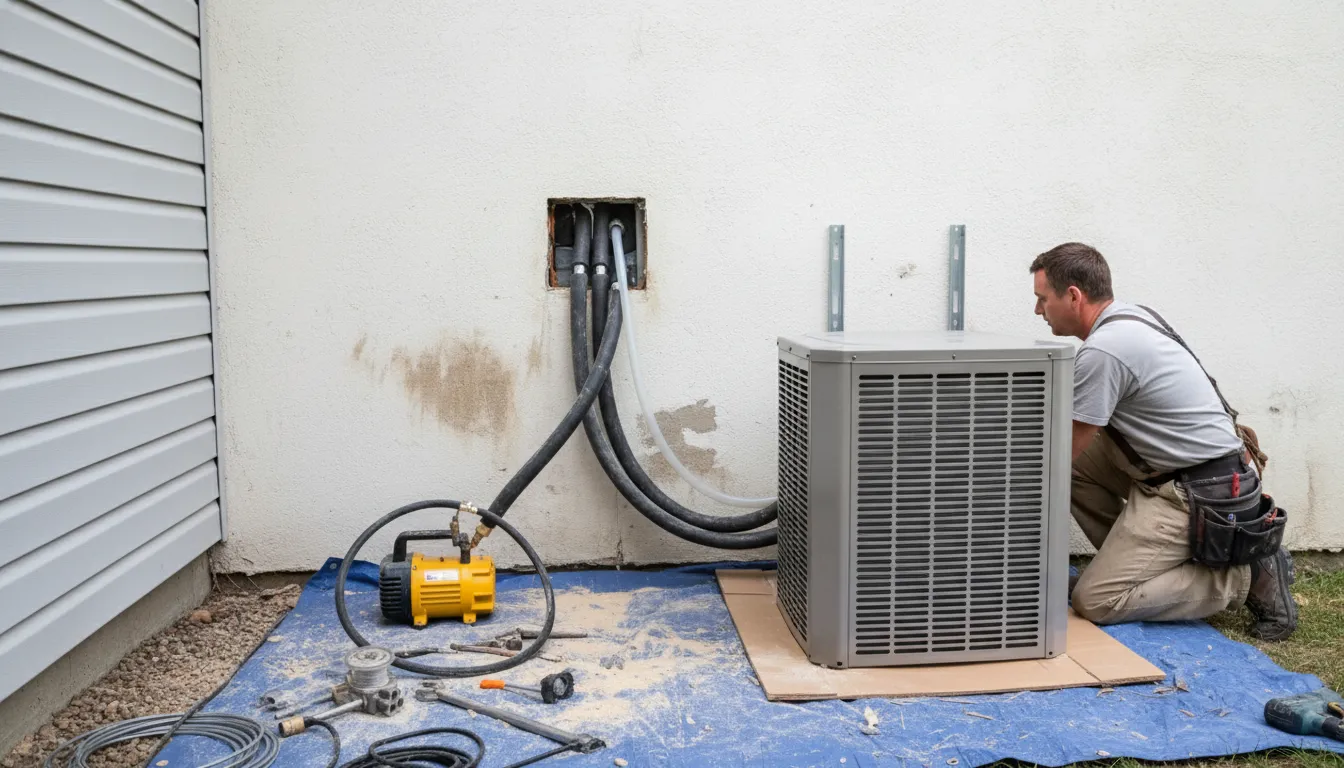
Find the Best Heat Pump Installation & Replacement Contractors for Your Business
No obligation • Fast responses • Nationwide coverage

Why you can trust HVAC Firms
HVAC Firms is a leading United States resource for evaluating HVAC service providers. Our team researches companies, checks credentials, and reviews customer feedback to present clear, unbiased information. Listings and rankings are based on merit, and companies cannot pay to change our editorial content.
Search providers near you
Top Heat Pump Installation & Replacement Contractors in Clovis, California Ranked
Upgrading your home's heating and cooling system to a modern heat pump is a smart investment for comfort and efficiency in Clovis. This technology provides both heating and cooling from a single unit, offering year-round climate control while reducing energy consumption. For homeowners in the Central Valley, navigating the options for heat pump installation, from ducted systems to ductless mini-splits, can unlock significant savings and improved indoor air quality. This guide will help you understand the key considerations, costs, and benefits specific to Clovis, empowering you to make an informed decision and connect with qualified local professionals for your project.
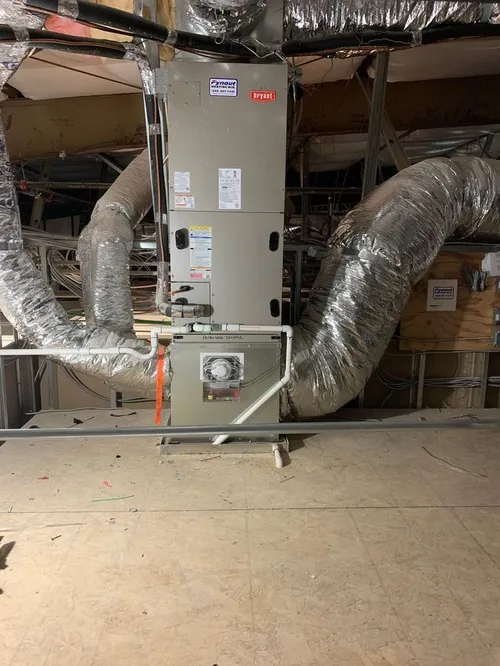
Fynaut & Johnson Inc
1930 W Whitesbridge Ave, Fresno, CA 93706
Fynaut & Johnson Inc is a family- and veteran-owned HVAC, plumbing, and general sheet metal company serving Fresno, CA. Since 2009, they have provided residential and commercial installation, maintenance, and repair services for heating, air conditioning, and heat pump systems. They offer extensive warranties on residential work and provide emergency service availability. The company also supports the transition to all-electric heating and cooling systems, helping customers take advantage of available incentives.
Balanced Comfort Cooling, Heating & Plumbing
1318 E Shaw Ave Ste 280, Fresno, CA 93710
Balanced Comfort Cooling, Heating & Plumbing is an HVAC and plumbing company based in Fresno, CA. They provide a range of services including air conditioning, furnace, and heat pump repair and installation. Serving Fresno and many surrounding towns in the Central Valley, they offer comprehensive cooling, heating, plumbing, water restoration, and reconstruction services. Their expertise covers a broad service area including cities like Visalia, Madera, Clovis, and more.
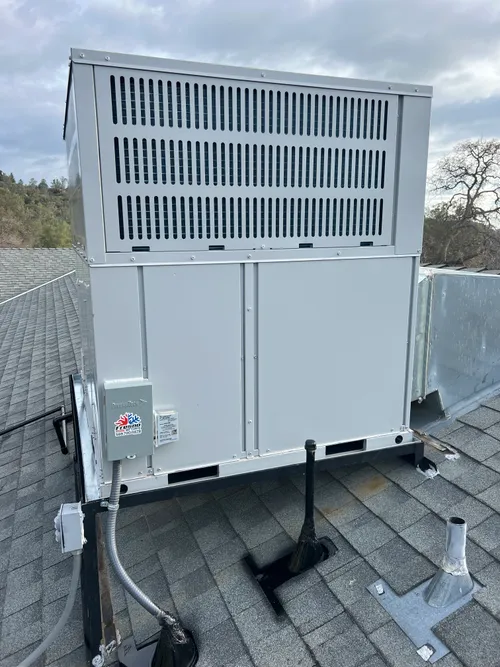
Fresno Heating and Cooling
4051 N Valentine Ave #108, Fresno, CA 93722
Fresno Heating and Cooling is a family-owned HVAC company serving Fresno, CA, and surrounding counties including Kings, Tulare, and Madera. They offer a wide range of services such as air conditioner and furnace repair, installation of heat pumps and mini splits, duct cleaning, and indoor air quality solutions. The company specializes in installing and repairing high-efficiency heating and cooling systems from brands like Bosch, American Standard, and Goodman. They focus on providing tailored HVAC solutions and emphasize transparency to help customers make informed decisions. Fresno Heating and Cooling also participates in rebate programs to support energy-efficient upgrades.
Golden Comfort AC & Heating Repair
155 E Shaw Ave Unit 206, Fresno, CA 93710
Golden Comfort AC & Heating Repair is an HVAC company based in Fresno, CA, providing a wide range of heating and cooling services. They specialize in air conditioning repair and installation, furnace repair and replacement, heat pump services, duct cleaning, thermostat installation, and indoor air quality improvements. Their team includes certified HVAC technicians who serve Fresno, Clovis, and nearby Central Valley communities. The company offers 24/7 emergency repairs and focuses on energy-efficient systems to enhance home comfort and reduce utility costs.

Steve Patrick Air Conditioning & Heating
2561 N Purdue Ave, Fresno, CA 93727
Steve Patrick Air Conditioning & Heating has been serving Fresno, CA, and the surrounding Central Valley area since 1981. They provide a full range of HVAC services including air conditioner, furnace, and heat pump repair and installation, as well as thermostat installation and HVAC tune-ups. The company also offers solar power integration and energy efficiency upgrades. Steve Patrick Air Conditioning & Heating is a HEEHRA trained contractor, assisting customers with California rebate incentives for qualifying heat pump systems. Their technicians are available 24/7 for emergency repairs and carry common parts to complete most jobs on the first visit.
Why Choose a Heat Pump for Your Clovis Home?
Heat pumps are uniquely suited to the climate of California's Central Valley. Unlike traditional furnaces that generate heat, a heat pump transfers heat, moving it indoors during winter and outdoors during summer. This process is inherently more energy-efficient, especially in regions with mild winters like ours. For Clovis residents, this means a single, high-efficiency system can comfortably manage the hot, dry summers and the relatively gentle winters, often eliminating the need for separate air conditioning and heating units.
The primary advantage is operational cost savings. By using electricity to move heat rather than create it, a high-efficiency heat pump system can significantly lower your monthly energy bills compared to an older air conditioner and furnace combo. Furthermore, modern cold-climate heat pump models are designed to operate efficiently even when outdoor temperatures dip, making them a reliable sole source of heat for most winter days in Clovis.
Types of Heat Pump Systems
Understanding the different configurations available is the first step in planning your installation or replacement project.
Ducted Air-Source Heat Pumps
This is the most common type of whole-home system, ideal for houses with existing ductwork. A ducted heat pump replaces both your traditional air conditioner and furnace, utilizing the same network of air ducts to distribute conditioned air throughout your home. Installation typically involves placing an outdoor condenser unit and an indoor air handler. This option is excellent for providing consistent, centralized comfort and is often the most straightforward replacement for an aging HVAC system.
Ductless Mini-Split Heat Pumps
For homes without existing ducts, or for adding comfort to specific zones like a new addition or converted garage, ductless mini-splits are a perfect solution. These systems consist of an outdoor compressor connected to one or more indoor air-handling units mounted on walls or ceilings. They are exceptionally efficient because they eliminate energy losses associated with ductwork. Mini-splits offer flexible zoning, allowing you to control temperatures in individual rooms, which can lead to additional energy savings.
Geothermal (Ground-Source) Heat Pumps
Geothermal systems offer the highest efficiency by exchanging heat with the stable temperature of the earth. While they have very low operating costs, they come with a significantly higher upfront cost due to the extensive excavation required to install the underground loop system. For Clovis properties with sufficient land, this can be a long-term, ultra-efficient solution, but it represents a major investment compared to air-source options 1.
Key Specifications: SEER2 and HSPF Ratings
When comparing heat pumps, two efficiency ratings are critical: SEER2 and HSPF. SEER2 (Seasonal Energy Efficiency Ratio) measures cooling efficiency. The higher the number, the more efficient the unit is at cooling. For Clovis's hot summers, aiming for a SEER2 rating of 15 or higher is advisable and often required to qualify for rebates 2.
HSPF (Heating Seasonal Performance Factor) measures heating efficiency. A higher HSPF means better heating performance per unit of electricity. Modern cold-climate heat pumps have high HSPF ratings, ensuring they provide cost-effective heat during our mild winters. Selecting a unit with strong ratings in both categories ensures optimal year-round performance and energy savings 3 4.
Climate Considerations for Clovis Installations
Clovis experiences a classic inland valley climate with very hot, dry summers and cool, damp winters. This profile is excellent for heat pump performance.
- Hot Summers (100°F+): Modern heat pumps are fully capable of handling extreme summer heat. Proper sizing by a qualified technician is crucial; an undersized unit will struggle, while an oversized one will cycle on and off too frequently, reducing efficiency and comfort. A correctly sized, high-SEER2 unit will keep your home cool efficiently all season long.
- Mild Winters (Rarely below 30°F): Heat pumps excel in this temperature range. They provide heat more efficiently than electric resistance heating (like baseboard heaters) at these temperatures. While most cold-climate models operate efficiently into the 20s, some systems may include auxiliary electric heat strips for backup during the region's occasional frosts or deep freezes, ensuring uninterrupted comfort 5.
Find the perfect heat pump installation & replacement contractors for your needs
Get personalized recommendations and expert advice
Understanding Installation Costs in Clovis
The cost of a new heat pump system in Clovis varies widely based on the system type, your home's size, and the complexity of the installation. It's important to view these costs as an investment in long-term savings and comfort.
Ductless Mini-Split System: For a single-zone system (one outdoor unit, one indoor head), you might expect a range of $2,000 to $8,000. Multi-zone systems serving multiple rooms can range from $8,000 to $15,000 or more, depending on the number of indoor units 6.
Standard Ducted System: Replacing a central AC and furnace with a ducted heat pump for an average-sized home typically falls between $8,000 and $20,000+. For larger homes (requiring 4-5 ton systems) or those needing significant ductwork modifications, the price can reach $25,000 to $30,000+ 7 8 9.
The final price is influenced by several factors:
- Home Size & System Tonnage: Larger homes require more powerful (higher tonnage) systems.
- Ductwork Condition: Existing ducts may need sealing, repair, or replacement.
- Electrical Upgrades: A new heat pump may require an electrical panel upgrade or new circuit.
- Labor & Permits: Costs for professional installation and local building permits.
Despite the upfront investment, the operational savings and available financial incentives make modern heat pump installation a cost-effective choice for Clovis homeowners 10.
Financial Incentives and Rebates
A significant factor in the affordability of a new heat pump are the federal and state incentives designed to encourage these high-efficiency upgrades.
- Federal Tax Credit: The federal government offers a tax credit of up to $2,000 for the installation of a qualifying high-efficiency heat pump system. This credit is applied directly to your tax liability.
- California State & Utility Rebates: California, through various energy programs and local utilities, often provides additional rebates. These can range from $100 to over $3,000, depending on the efficiency of the installed equipment and your specific utility provider. These rebates are typically point-of-sale or direct reimbursements, lowering your net cost immediately 11.
Combining these incentives can reduce the total installed cost by several thousand dollars, improving the return on investment and shortening the payback period through energy bill savings.
The Professional Installation Process
A successful heat pump installation hinges on professional expertise. The process generally involves:
- Consultation and Load Calculation: A technician will assess your home's size, insulation, windows, and layout to perform a Manual J load calculation. This determines the precise system capacity needed-not too big, not too small.
- System Selection and Proposal: Based on the calculation, your comfort needs, and budget, the professional will recommend a specific system type, model, and configuration.
- Site Preparation and Installation: This includes setting the outdoor unit, installing or modifying the indoor unit/ductwork, running refrigerant and electrical lines, and ensuring proper drainage.
- Testing and Commissioning: The system is charged with refrigerant, started, and tested for proper operation, airflow, and efficiency. The technician will also explain the basic operation of your new thermostat and system.
Choosing a licensed, insured, and NATE-certified installer is crucial for ensuring the system performs at its rated efficiency and provides reliable service for years to come.
Frequently asked questions
Sources
Footnotes
-
Heat Pumps in California: Everything You Need to Know - https://www.quitcarbon.com/blog/heat-pumps/california ↩
-
What's a Good SEER2 Rating? - https://www.trane.com/residential/en/resources/blog/whats-good-seer-rating/ ↩
-
Comprehensive Guide to Heat Pumps for California Homeowners 🌞🏠 - https://www.calljazz.com/blog/comprehensive-guide-to-heat-pumps-for-california-homeowners/ ↩
-
Heat Pump Sizing in 2025: Avoid Costly Mistakes with SEER2 & HSPF2 - https://thefurnaceoutlet.com/blogs/news/heat-pump-sizing-in-2025-avoid-costly-mistakes-with-seer2-amp-hspf2-ratings ↩
-
Heat Pump vs. Central AC: What's Better for California Homes? - https://airandplumbing.com/heat-pump-vs-central-ac-whats-better-for-california-homes/ ↩
-
New Heat Pump Installation Costs in Southern California - https://www.callwiseowl.com/blog/new-heat-pump-installation-costs-in-southern-california/ ↩
-
Understanding New Heating System Costs In Southern California - https://www.callwiseowl.com/blog/understanding-new-heating-system-costs-in-southern-california/ ↩
-
Heat Pump Installation: What California Homeowners Need To Know - https://bakerhomeenergy.com/kc/heat-pump-installation-bk/ ↩
-
Heat Pump Cost Analysis: What To Expect & How It's ... - https://clinesairconditioning.com/heat-pump-cost/ ↩
-
Heat Pump Installation Cost California - HVAC - Modernize - https://modernize.com/hvac/heating-repair-installation/heat-pump/california ↩
-
Complete Guide to Heat Pump Installation in CA - https://www.calveyheatingandair.com/blog/heat-pump-installation-california-guide/ ↩