Find the Best Heat Pump Installation & Replacement Contractors for Your Business
No obligation • Fast responses • Nationwide coverage

Why you can trust HVAC Firms
HVAC Firms is a leading United States resource for evaluating HVAC service providers. Our team researches companies, checks credentials, and reviews customer feedback to present clear, unbiased information. Listings and rankings are based on merit, and companies cannot pay to change our editorial content.
Search providers near you
Top Heat Pump Installation & Replacement Contractors in Antioch, California Ranked
For homeowners in Antioch, upgrading your home's heating and cooling system with a heat pump is a smart move toward greater comfort, efficiency, and long-term savings. This all-in-one system provides both heating and cooling by transferring heat, making it exceptionally energy-efficient compared to traditional furnaces and air conditioners. With Antioch's mild-to-warm climate, a properly sized heat pump can be an ideal year-round solution. Finding the right local specialist for your installation or replacement project is crucial, as professional sizing and expert installation directly impact system performance, efficiency, and lifespan.
Chill Heating and Cooling
23 Beta Ct suite f, San Ramon, CA 94583
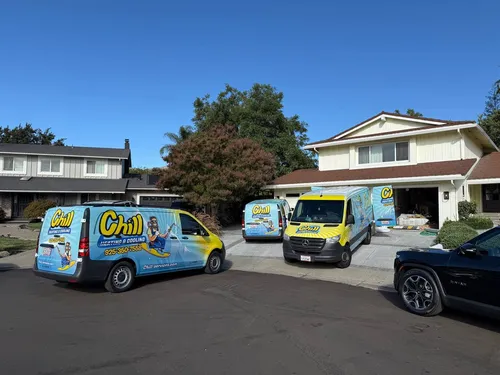
Chill Heating and Cooling is a full-service HVAC company based in Oakland, CA, offering heating and cooling repairs, maintenance, and installations for residential and commercial clients. They provide services including air conditioning, furnace, heat pump, mini split, and thermostat installation and repair. The company is an authorized Carrier dealer and serves the Oakland area with expertise in diagnosing and repairing HVAC systems, as well as installing new units tailored to home or business needs. Chill Heating and Cooling is available for emergency calls and offers same-day service to address urgent heating and cooling issues.

Elite Comfort Systems
570 Valdry Ct C3, Brentwood, CA 94513
Elite Comfort Systems is a family-owned HVAC company serving Oakland, CA, and the surrounding East Bay area. They provide heating and air conditioning repair and installation services, including heat pump installation and indoor air quality solutions. The company has been serving the community since 2008 and offers 24/7 emergency service to ensure homes remain comfortable year-round. Their technicians focus on quality workmanship and maintain a clean work environment during service visits.
Chill Heating and Cooling
11 Cll Este, Walnut Creek, CA 94597
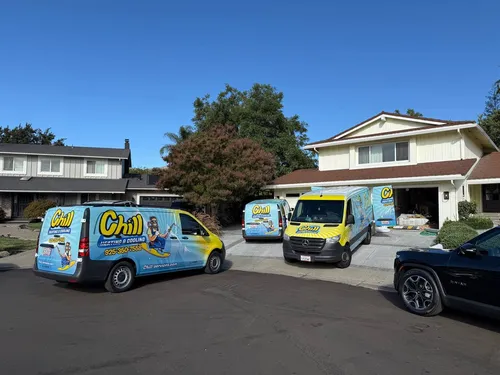
Chill Heating and Cooling is a full-service HVAC company serving Oakland, CA. They provide expert heating and cooling repairs, maintenance, and installations for residential and commercial customers. Their services include air conditioning, furnace, heat pump, mini split, and thermostat installation and repair. The company is an authorized Carrier dealer and works with major brands such as American Standard and Lennox. They offer emergency service availability and support new construction projects with fast and reliable HVAC system installations. Chill Heating and Cooling emphasizes customer satisfaction and provides professional diagnostics and repairs to maintain comfortable indoor environments year-round.
AIS Heating & Air Conditioning
76 Wright Brothers Ave, Livermore, CA 94551
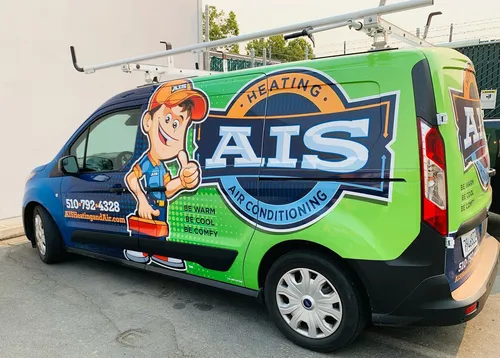
AIS Heating & Air Conditioning is an HVAC contractor serving Oakland, CA, and nearby areas including Fremont and Livermore. Since 2008, they have provided a full range of heating and cooling services such as air conditioning repair and installation, furnace and heat pump services, and indoor air quality solutions. Their capabilities include ductwork installation and air duct sealing to improve home air quality. The company offers comprehensive HVAC maintenance and repair to keep homes comfortable throughout the year.
3rdGen Heating & Cooling
1230 Fourth St Unit A, Berkeley, CA 94710
3rdGen Heating & Cooling is an HVAC contractor based in Berkeley, serving Oakland, CA, and the broader San Francisco Bay Area. They specialize in the design and installation of high-efficiency, fully electric HVAC systems including heat pumps, ductless mini-splits, and mechanical systems for custom homes, multifamily developments, and commercial projects. Their services include integrated HVAC system design and mechanical design-build, with a focus on energy-efficient and precision-engineered comfort solutions. 3rdGen is a certified Mitsubishi Electric Diamond Contractor, offering factory-trained technicians and extended warranties on Mitsubishi heat pump installations.
Why Choose a Heat Pump for Your Antioch Home?
Antioch's climate, characterized by hot, dry summers and cool, damp winters, is well-suited for heat pump technology. These systems excel in moderate temperatures, providing efficient heating when it's cool and exceptionally efficient cooling when it's hot 1. Unlike a traditional air conditioner that only cools, a heat pump reverses its cycle to extract heat from the outdoor air (even on cool days) and move it inside to warm your home. This process of moving heat, rather than generating it through combustion like a furnace, is what leads to significant energy savings, particularly with Pacific Gas and Electric (PG&E) rates 1.
The benefits extend beyond just temperature control. Modern heat pumps improve indoor air quality through advanced filtration and dehumidification during the cooling cycle. For homeowners looking to reduce their carbon footprint, switching from a gas furnace to an electric heat pump is a major step toward electrification and utilizing California's increasingly renewable grid.
Types of Heat Pump Systems
Understanding the different types of heat pump systems available will help you determine the best fit for your home's layout and your comfort goals.
Air-Source Heat Pumps (Ducted): This is the most common type and is an excellent choice for homes with existing, functional ductwork. A ducted system uses the central air ducts to distribute conditioned air throughout the entire house, providing whole-home comfort from a single, outdoor unit. It's a straightforward replacement for an old central air conditioner and furnace combo.
Ductless Mini-Split Heat Pumps: Perfect for homes without ducts, for room additions, or for creating customized "zones" of comfort. A mini-split system has a compact outdoor unit connected to one or more indoor air handlers mounted on walls or ceilings. They offer independent temperature control for different areas (like a hot master bedroom or a sunroom) and are often less expensive to install since they require no ductwork.
Cold Climate Heat Pumps (CCHPs): These are advanced air-source models engineered to maintain high efficiency in lower outdoor temperatures. While Antioch's winters are mild, a Cold Climate Heat Pump can provide superior performance and reliability during the region's cooler nights and transitional seasons, ensuring consistent comfort and efficiency.
Geothermal Heat Pumps (Ground-Source): This is the most efficient type of heat pump available, as it exchanges heat with the stable temperature of the earth. While it offers the lowest operating costs, it comes with a very high upfront installation cost due to the need to install ground loops, either horizontally in trenches or vertically in boreholes 2. It's a significant investment that pays back over a very long period.
Understanding Efficiency Ratings: SEER2 & HSPF2
When comparing heat pump models, you'll encounter two key efficiency ratings: SEER2 and HSPF2. These standards help you understand how much cooling and heating you get for your energy dollar.
- SEER2 (Seasonal Energy Efficiency Ratio 2): Measures cooling efficiency. The higher the SEER2 number, the more efficient the unit is at cooling. In California's warm summers, a higher SEER2 rating can lead to substantial savings on your electric bill.
- HSPF2 (Heating Seasonal Performance Factor 2): Measures heating efficiency. A higher HSPF2 indicates a more efficient heater. This is especially important for getting the most warmth during Antioch's winter months without high energy use.
Look for units that are ENERGY STAR® certified, as they meet strict efficiency guidelines set by the U.S. Environmental Protection Agency. Investing in a higher-efficiency model, while costing more initially, typically results in lower monthly utility bills, making it a wise choice for long-term ownership 3.
Find the perfect heat pump installation & replacement contractors for your needs
Get personalized recommendations and expert advice
What Influences Heat Pump Installation Cost in Antioch?
The cost for a new heat pump installation or full system replacement in Antioch can vary widely based on several factors. The overall price range for a complete installation typically falls between $6,000 and $30,000+ 4 5. A ductless mini-split system for a single zone may start around $5,000, while a full, high-efficiency ducted system for a large home can reach $25,000 or more 6 7 8.
Key cost factors include:
- System Type and Size: The most critical factor. An undersized unit will run constantly, and an oversized unit will short-cycle, both leading to poor comfort and efficiency. A professional contractor will perform a "Manual J" load calculation to determine the perfectly sized system for your home's square footage, insulation, windows, and layout.
- Equipment Efficiency: Higher SEER2 and HSPF2 rated units come with a higher purchase price but offer operational savings.
- Existing Infrastructure: Installing a ducted system is more affordable if you have usable existing ducts. If new ductwork needs to be designed and installed, or if you're adding zones with a mini-split, costs will increase.
- Labor and Complexity: The experience of the installer, the difficulty of the installation site (e.g., multi-story home, roof vs. ground placement), and any necessary electrical upgrades will affect the final price.
Crucially, significant incentives are available to offset these costs. The federal Inflation Reduction Act (IRA) offers tax credits for qualified heat pump installations. Additionally, California-specific programs like TECH Clean California provide point-of-sale rebates that can reduce your upfront cost dramatically 9. A qualified local installer can help you navigate these incentives.
The Professional Installation Process
A successful heat pump installation is a multi-step process that ensures optimal performance.
- Consultation and Load Calculation: A reputable technician will assess your home, discuss your needs, and perform the essential Manual J calculation to determine the correct system size.
- System Design and Quote: They will recommend the best type and model of heat pump for your situation and provide a detailed, written estimate that includes equipment, labor, and timeline.
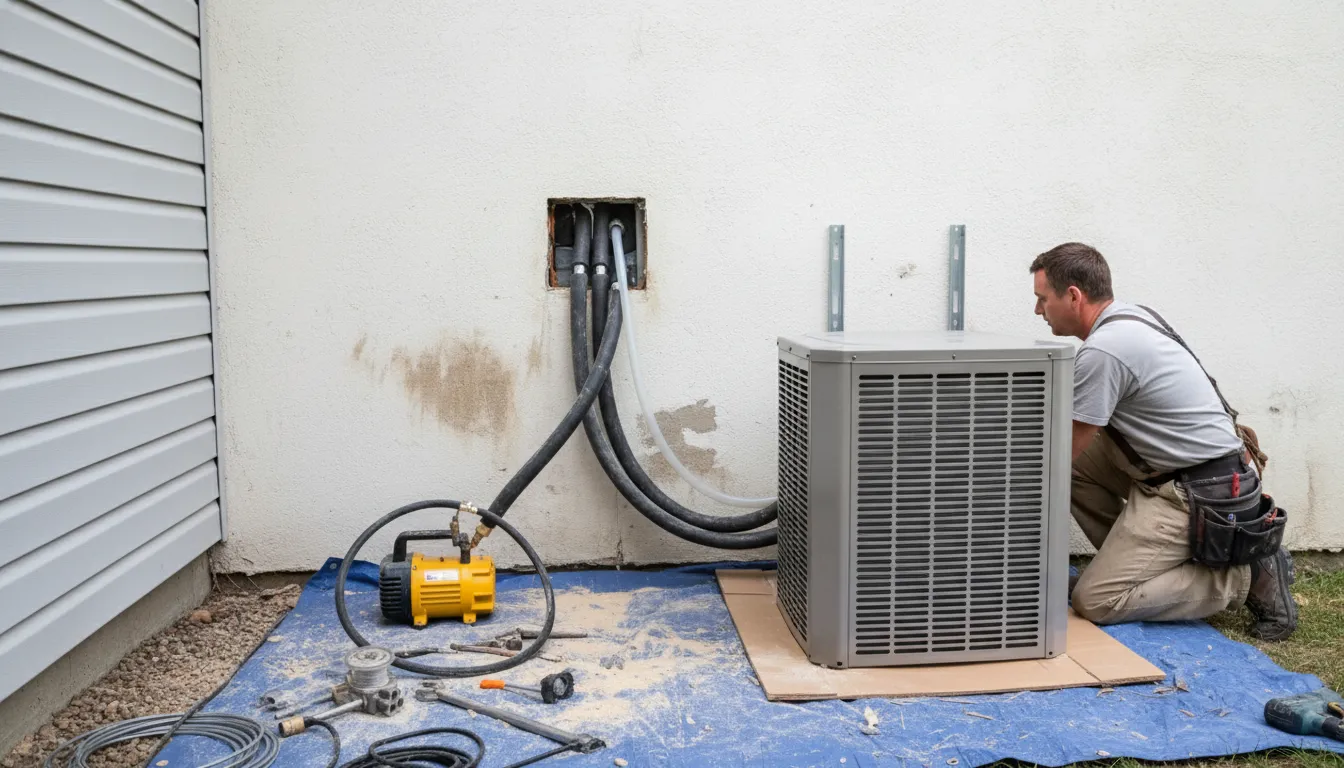
- Preparation and Installation: The old equipment is safely removed. The new outdoor unit is placed on a stable pad, the indoor unit (air handler or evaporator coil) is installed, and all refrigerant lines, electrical connections, and ductwork (if applicable) are secured.
- Testing and Commissioning: The system is charged with refrigerant, started, and thoroughly tested for proper airflow, temperature differential, and thermostat operation. The installer should review the system's operation with you.
The single most important step you can take is to get multiple detailed quotes from licensed, insured, and well-reviewed local HVAC contractors 10 11. This allows you to compare not only price but also the proposed equipment, warranty offerings, and your confidence in the installer's expertise.
Frequently asked questions
Sources
Footnotes
-
The Benefits of Heat Pump Installation for Antioch Homeowners - https://www.americanarraysolar.com/the-benefits-of-heat-pump-installation-for-antioch-homeowners/ ↩ ↩2
-
Comprehensive Guide to Heat Pumps for California Homeowners 🌞🏠 - https://www.calljazz.com/blog/comprehensive-guide-to-heat-pumps-for-california-homeowners/ ↩
-
Heat Pump vs. Central AC: What's Better for California Homes? - https://airandplumbing.com/heat-pump-vs-central-ac-whats-better-for-california-homes/ ↩
-
Heat Pumps in California: Everything You Need to Know - https://www.quitcarbon.com/blog/heat-pumps/california ↩
-
Heat Pump Installation Cost California - HVAC - Modernize - https://modernize.com/hvac/heating-repair-installation/heat-pump/california ↩
-
Understanding New Heating System Costs In Southern California - https://www.callwiseowl.com/blog/understanding-new-heating-system-costs-in-southern-california/ ↩
-
New Heat Pump Installation Costs in Southern California - https://www.callwiseowl.com/blog/new-heat-pump-installation-costs-in-southern-california/ ↩
-
Heat Pump Installation Cost Guide: Types, Factors & Savings - https://statclimate.ca/heat-pump-installation-cost-guide/ ↩
-
Heat Pumps vs. Traditional HVAC: Which is Right for Orange County? - https://www.jmartiniaq.com/blog/heat-pumps-vs-traditional-hvac-which-is-right-for-orange-county ↩
-
Heat Pump Installation Guide for California Homes - 2025 - https://bakerhomeenergy.com/kc/heat-pump-installation-bk/ ↩
-
What's The Cost To Install A Heat Pump In CA? - https://truehomehvac.com/blog/cost-install-heat-pump-ca ↩