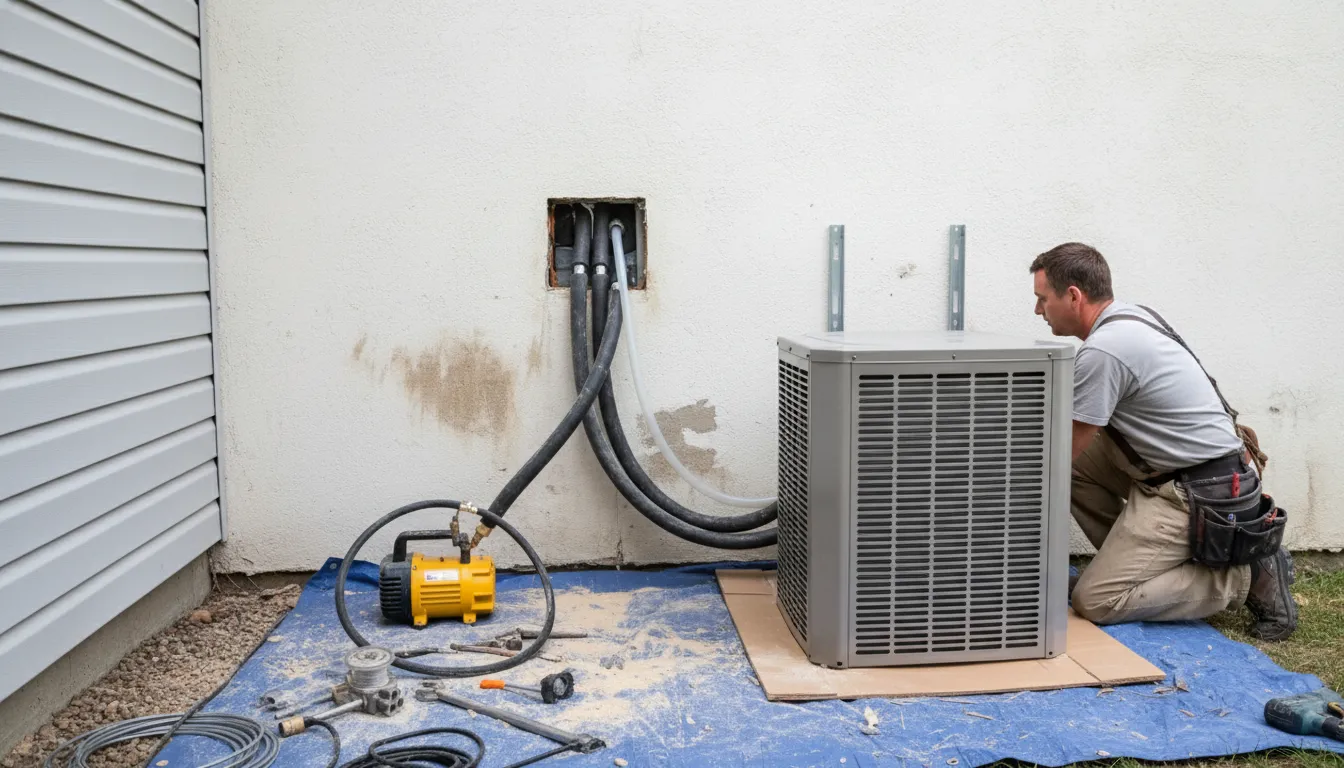
Find the Best Heat Pump Installation & Replacement Contractors for Your Business
No obligation • Fast responses • Nationwide coverage

Why you can trust HVAC Firms
HVAC Firms is a leading United States resource for evaluating HVAC service providers. Our team researches companies, checks credentials, and reviews customer feedback to present clear, unbiased information. Listings and rankings are based on merit, and companies cannot pay to change our editorial content.
Search providers near you
Top Heat Pump Installation & Replacement Contractors in Surprise, Arizona Ranked
Upgrading your home's heating and cooling system to a modern heat pump is a smart investment for Surprise residents. This versatile technology provides efficient, year-round comfort by moving heat rather than generating it, making it ideal for our cooling-heavy climate and mild winters. Finding the right local specialist for your heat pump project ensures you get a system sized and selected for the unique demands of the Sonoran Desert, maximizing your comfort, energy savings, and potential tax incentives.
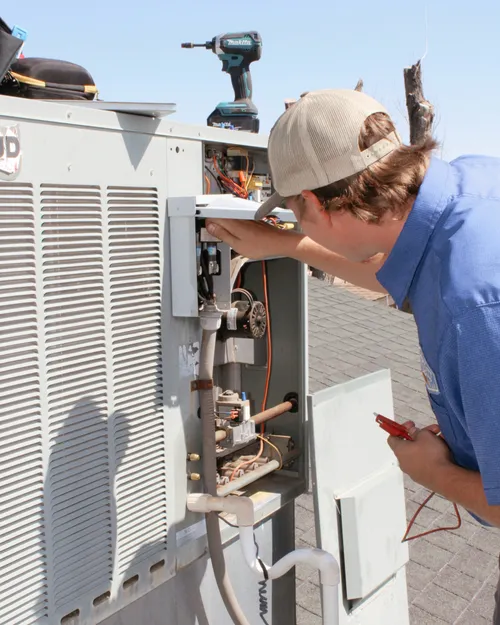
Reliance Heating and Air Conditioning
302 W Lone Cactus Dr, Phoenix, AZ 85027
Reliance Heating and Air Conditioning is a family-owned HVAC company serving Phoenix, AZ, and the surrounding areas. They offer a range of services including air conditioning, furnace, and heat pump repair and installation, as well as HVAC tune-ups and thermostat installation. As a Trane Comfort Specialist, they provide expertise with Trane systems known for reliability and quality. With over 40 years of experience as a third-generation family business, Reliance Heating and Air Conditioning emphasizes treating customers' homes with care and professionalism.

Island Breeze Air Conditioning & Heating LLC
809 E Fairmount Ave, Phoenix, AZ 85014
Island Breeze Air Conditioning & Heating LLC is a firefighter-owned HVAC company serving Phoenix, AZ, and surrounding areas including Gilbert, Mesa, Peoria, and Surprise. They provide residential and light commercial services such as air conditioning, furnace, heat pump, and ductless HVAC installation, repair, and maintenance. Their NATE-certified technicians focus on energy-efficient solutions and indoor air quality improvements. The company emphasizes integrity, accountability, and continuous improvement in their work. Island Breeze also offers after-hours service to address urgent HVAC needs.

Savage Air Conditioning
2315 W Fairmont Dr, Tempe, AZ 85282
Savage Air Conditioning is a family-owned HVAC company serving Phoenix, AZ, with over 30 years of experience since 1988. They provide installation, repair, and maintenance services for air conditioning, furnaces, heat pumps, and ductless mini splits for both residential and commercial clients. The company also offers indoor air quality solutions to improve home environments and has maintenance plans to help prolong system lifespan and efficiency.
WISE Cooling & Heating
Phoenix, AZ
WISE Cooling & Heating is a family-owned HVAC company serving Phoenix, AZ, and surrounding areas. Founded in 1999 in Cave Creek, they provide installation, repair, and maintenance services for air conditioning, furnace, and heat pump systems. Their technicians are experienced with all major HVAC brands and offer services including HVAC tune-ups and thermostat installations. With over 27 years in business, WISE Cooling & Heating brings extensive knowledge to residential and commercial HVAC needs.
One Hour Heating & Air Conditioning
9831 S 51st St Suite D133, Phoenix, AZ 85044
One Hour Heating & Air Conditioning provides comprehensive HVAC services in Phoenix, AZ, including air conditioning, heating, heat pump, and mini split installation and repair. They also offer duct cleaning, thermostat installation, indoor air quality services, and HVAC tune-ups. Known for their punctuality and customer-focused approach, they serve the Phoenix metropolitan area and the West Valley with a range of capabilities such as emergency HVAC repairs and duct inspections. The company guarantees satisfaction with every job and offers 24/7 emergency service to address unexpected HVAC issues promptly.
Why a Heat Pump is Ideal for Surprise, Arizona
Surprise's climate, characterized by extremely hot, long summers and short, mild winters, is perfectly suited for high-efficiency heat pump technology. Unlike traditional air conditioners that only cool, a heat pump provides both cooling and heating from a single unit. During our scorching summers, it operates as a highly efficient air conditioner. In the winter, it reverses the process, extracting available heat from the outside air-even when it's cool-and moving it indoors. This dual functionality eliminates the need for separate heating and cooling systems, simplifying your home's mechanicals. For our region, the primary focus is on selecting a system engineered to excel at extreme cooling, as this will be its dominant function for much of the year.
Types of Heat Pump Systems
Understanding the different configurations available is the first step in choosing the right system for your Surprise home.
Air-Source Split Systems This is the most common type of heat pump installation. It consists of an outdoor unit (containing the compressor and condenser coil) and an indoor air handler. They are designed to move heat between your home and the outside air. These systems typically utilize existing ductwork, making them a straightforward replacement for an old central AC and furnace. They perform very well in Arizona's climate, though in rare, extended cold snaps, a supplemental or backup heat source may be engaged.
Ductless Mini-Split Systems Mini-splits are an excellent option for homes without existing ductwork, for room additions, or for creating "zones" with independent temperature control. They feature a compact outdoor condenser connected to one or more indoor air-handling units mounted on walls or ceilings. Each indoor unit can be controlled separately, allowing you to cool or heat only the rooms you're using. This can lead to significant energy savings and customized comfort 1.
Packaged Units In a packaged heat pump system, all components-the compressor, condenser, and air handler-are housed in a single cabinet, usually placed on a rooftop or a concrete slab beside the home. They are less common for residential applications in our area but can be a space-saving solution where indoor equipment closet space is limited.
Geothermal Heat Pumps Also known as ground-source heat pumps, these are the most efficient type available. They exchange heat with the relatively constant temperature of the earth via a loop of pipes buried underground. While they offer unparalleled efficiency and low operating costs, the upfront installation cost is significantly higher due to the extensive excavation required for the ground loop, making them a less common choice in Surprise 2.
Key Features for Desert Performance
Not all heat pumps are created equal, especially for the demands of the Arizona desert. When evaluating options, prioritize these features:
High SEER and SEER2 Ratings The Seasonal Energy Efficiency Ratio (SEER) and its updated metric, SEER2, measure cooling efficiency. In Surprise, where air conditioning runs for most of the year, a high rating is non-negotiable. Experts recommend aiming for a SEER of 18 or higher (or its SEER2 equivalent) for our climate. Lower-SEER units will struggle during peak heat, leading to higher energy bills and reduced system longevity.
Variable-Speed or Inverter Technology Traditional single-speed compressors operate at 100% capacity or are off. Variable-speed compressors can adjust their output in small increments to match the exact cooling or heating demand of your home. This technology provides superior comfort by maintaining more consistent temperatures and humidity levels, operates much more quietly, and is significantly more energy-efficient. It also allows the system to handle extreme temperatures more effectively 3 4.
Durable Construction for Desert Conditions The outdoor unit of a heat pump must withstand relentless sun, high temperatures, and potential dust storms. Look for units with robust, corrosion-resistant coatings, high-quality coils, and features designed for reliable operation in harsh environments. Investing in a quality, durable system from a reputable brand pays off in reliability and lifespan in our desert climate 5.
Find the perfect heat pump installation & replacement contractors for your needs
Get personalized recommendations and expert advice
Understanding Installation Costs in Surprise
The cost of a heat pump installation in Surprise varies widely based on your home's specific needs. Here's a general breakdown of what homeowners can expect:
- Standard Ducted System Replacement: If you are replacing an existing central AC and furnace with a new heat pump and your ductwork is in good condition, costs typically range from $5,000 to over $10,000. The final price depends heavily on the system's capacity and efficiency.
- High-Efficiency (18+ SEER) System: Upgrading to a premium, high-efficiency variable-speed model will be at the higher end of the scale, often ranging from $6,000 to $7,500 or more for the equipment and professional installation 6.
- Ductless Mini-Split System: For a single-zone system (one outdoor unit, one indoor head), installation costs generally start between $5,000 and $8,000. Each additional indoor head (for multi-zone setups) will add to the total cost 7 8.
- New Ductwork Installation: If your home lacks ducts or the existing ductwork is damaged or inefficient, installing new ducts can add $6,000 to $10,000+ to the total project cost 9 10.
The primary factors influencing your final quote include your home's square footage and layout, the type and efficiency of the heat pump selected, the condition of existing electrical service and ductwork, and the complexity of the installation labor.
Financial Incentives and Long-Term Savings
A modern heat pump installation is an investment that pays back over time through lower utility bills and available incentives.
Federal Tax Credits The Inflation Reduction Act provides a federal tax credit for qualifying high-efficiency heat pump installations. You can claim 30% of the total project cost, up to a maximum of $2,000. This credit applies to both the equipment and installation labor, making a significant dent in the upfront investment 11 12 13.
Monthly Energy Savings The most compelling financial reason to upgrade is the reduction in your monthly energy bills. Replacing an old, inefficient AC unit (e.g., a 10 SEER system) with a high-efficiency heat pump (18+ SEER) can dramatically cut your summer cooling costs. Since the heat pump also handles your winter heating more efficiently than a standard electric furnace or heat strips, you'll save year-round. The exact savings depend on your old system's efficiency, your new system's performance, and your household's usage patterns.
The Professional Installation Process
A successful heat pump installation is a meticulous process that ensures optimal performance and longevity.
- Initial Consultation and Load Calculation: A qualified technician will visit your home to assess its cooling and heating needs. They should perform a Manual J load calculation, which considers your home's size, insulation, window orientation, and other factors to determine the precise system capacity (in tons) needed. An oversized or undersized system will lead to comfort issues and inefficiency.
- System Selection and Proposal: Based on the load calculation and your budget, the contractor will recommend specific heat pump models and configurations. They should explain the efficiency ratings, features, warranty, and projected operating costs of each option.
- Site Preparation and Installation: On installation day, the crew will carefully remove the old equipment. They will prepare the site, ensuring a stable, level pad for the outdoor unit. Electrical and refrigerant lines will be connected with precision. For ducted systems, the existing ductwork will be inspected, sealed, and insulated as needed.
- Commissioning and Testing: After installation, the system is not simply turned on. The technician will charge it with the correct amount of refrigerant, test airflow across the coils, verify electrical connections, and calibrate the thermostat. They will ensure the system is operating at its specified efficiency and explain its basic operation to you.
- Final Inspection and Documentation: The contractor should provide you with all manufacturer warranty paperwork and a record of the installation. They will also register your equipment for you, which is often required to activate the full warranty.
Frequently asked questions
Sources
Footnotes
-
How Much Does Heat Pump Installation Cost? - https://www.rivervalleyac.com/how-much-does-heat-pump-installation-cost/ ↩
-
Heat Pump Price Guides - https://heatpumppriceguides.com/ ↩
-
Energy-Efficient HVAC Systems for Arizona Homes - https://forbesrefrigeration.com/blog/hvac-systems-for-arizona-homes/ ↩
-
Pros and Cons of Installing a Heat Pump - AZ Perfect Comfort - https://www.azperfectcomfort.com/blog/air-conditioning-service/pros-and-cons-of-installing-a-heat-pump/ ↩
-
Arizona HVAC Guide: Choosing the Right System for Your ... - https://comfortairsolutionsaz.com/choosing-the-right-hvac-system-for-arizona/ ↩
-
New HVAC System Cost in Phoenix, Arizona | Wolfgangs - https://wolfgangscooling.com/air-conditioning-ac/the-true-cost-of-a-new-hvac-system-in-arizona/ ↩
-
2026 Heat Pump Cost Guide: Purchase, Installation & Repair - https://www.carrier.com/residential/en/us/products/heat-pumps/how-much-does-a-heat-pump-cost/ ↩
-
The Smart Homeowner's Guide to Heat Pump Installations - Majic Air - https://www.majicair.com/the-smart-homeowners-guide-to-heat-pump-installations ↩
-
Heat Pump Installation Prices in Arizona: What to Expect - https://www.markdanielsac.com/heat-pump-installation-prices-arizona-what-to-expect/ ↩
-
Heat Pump Guide: Cost, Rebates, and Efficiency Explained - https://www.sumzeroenergysystems.com/blog/heat-pump-guide-cost-rebates-efficiency-explained ↩
-
AC Replacement Cost in Arizona: What to Expect in 2025 - https://azhomeservices.group/ac-replacement-cost-in-arizona-what-to-expect-in-2025/ ↩
-
Install a Heat Pump - Phoenix, Arizona - https://www.azenergyefficienthome.com/services/heat-pump-phoenix-arizona/ ↩
-
HVAC Heat Pump Systems - SCE - https://www.sce.com/factsheet/HVACHeatPumpSystems ↩